
Spring dresses are lightweight, seasonal dresses built from cotton, linen, or chiffon that carry you from cool mornings to warm afternoons. The catch is fabric weight: a winter-weight knit maxi will overheat you fast, while a cotton or thin jersey version actually lifts with the breeze. This year’s floral prints run loud, saturated magentas and acid yellows grounded with deep green stems, and the scale of the bloom changes who can wear it. A large print on a petite frame overwhelms; medium repeats with open ground between motifs flatter most bodies without flattening the look.
Floral Dresses
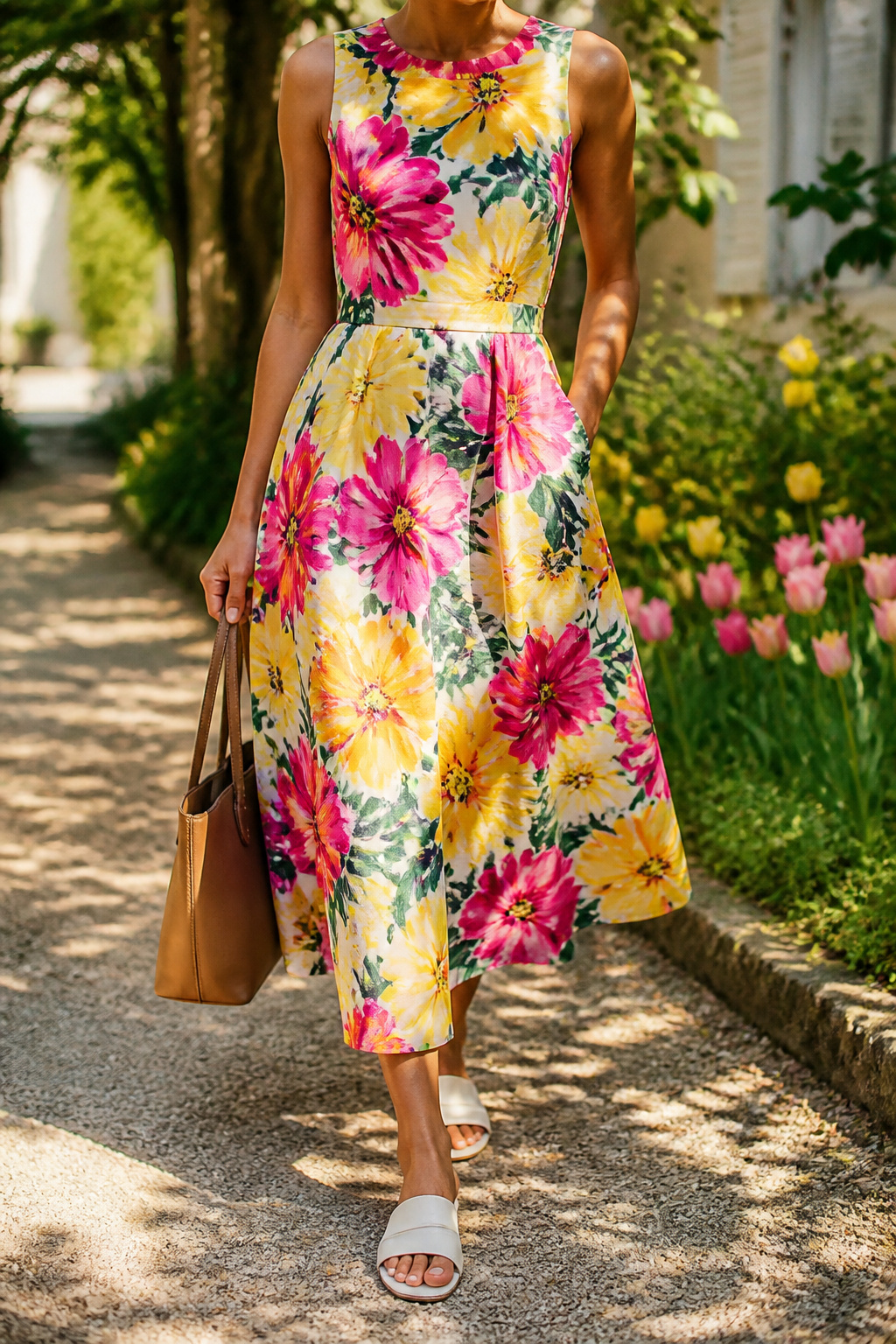
Floral prints own spring because nothing else reads as immediately seasonal. The pattern signals you have put the coat away and mean it.
This year the colors lean loud: saturated magentas, acid yellows, orange grounded with deep green stems. A busy print needs quiet shoes. White leather, tan suede, a solid bag in one of the dress’s secondary colors, that is the pairing that works. Let the dress carry the noise and everything else step back.
Scale changes who can wear it. A large bloom on a petite frame overwhelms; the eye reads the dress before the person. Small, scattered florals work almost everywhere but can feel safe to the point of dull. The middle ground, a medium repeat with some open ground between motifs, tends to flatter most bodies without flattening the look entirely. If the print has no breathing room, the dress wears you.
Maxi Dresses
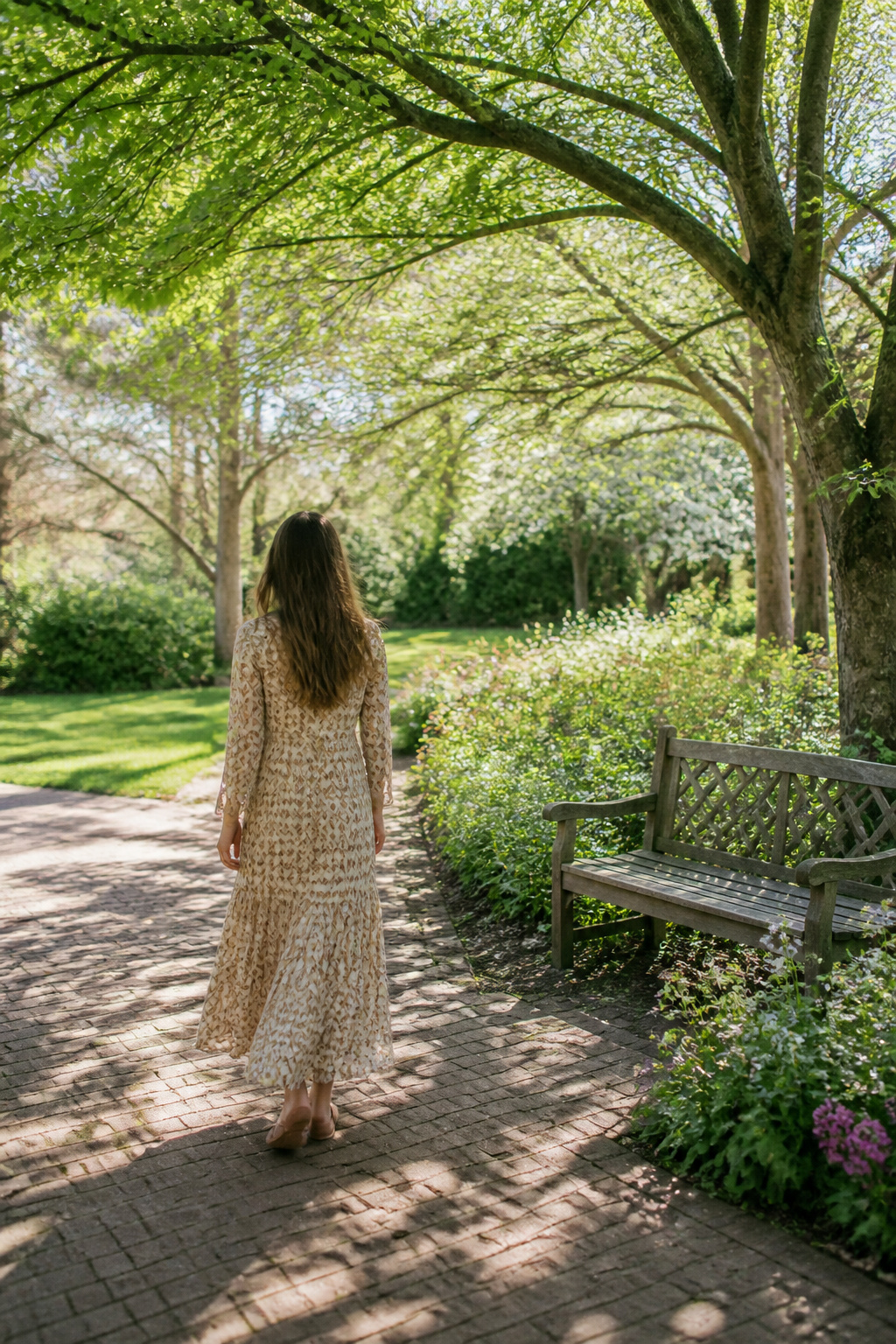
A maxi dress gives you full coverage without the weight of layers, which is exactly what you want when the days warm up but you are not ready to bare much skin. The hem brushes the ankle, the skirt moves with air, and you get the sun protection of pants with none of the constriction. The mistake is picking the fabric you wore in February. A winter-weight knit maxi will overheat you fast; the same silhouette in lightweight cotton or a thin jersey breathes and drapes instead of clinging. You will notice the difference the first time you walk through a warm afternoon and the skirt actually lifts with the breeze rather than sealing heat against your legs. Stick to fabrics you can pinch between two fingers and almost see through, and save the heavier stuff for fall.
Midi Dresses
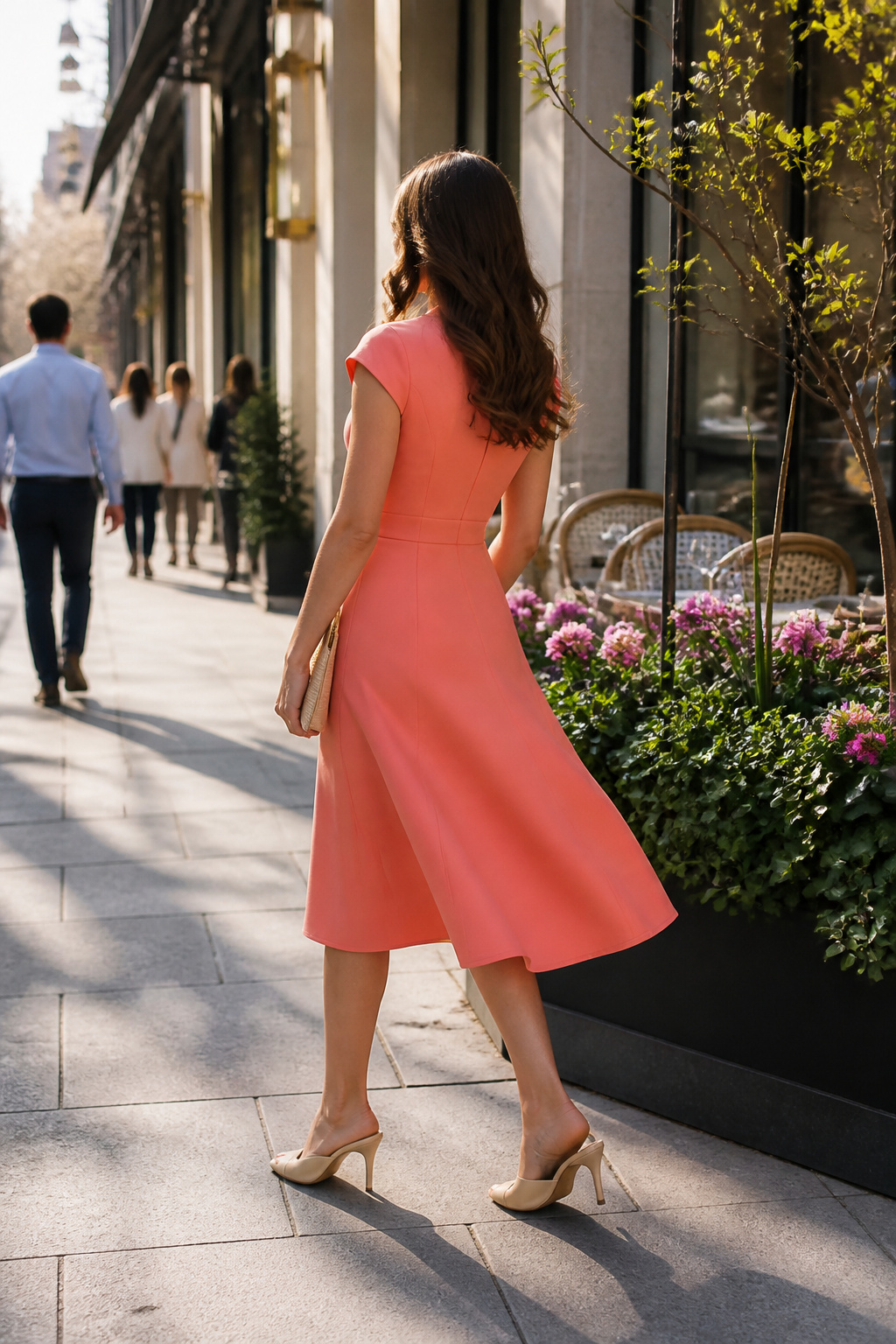
A midi dress hits somewhere between the knee and ankle, which is exactly the range that buys you the most mileage in spring. Wear it in the morning with flat sandals and a crossbody bag for errands, then swap in heeled mules and drop earrings for dinner that same evening. The length does the heavy lifting here: it reads as polished in almost any fabric, so you are not rebuilding the outfit from scratch.
The shoe change matters more than you might expect. A midi hem cuts the leg at a different point than a mini or a maxi, so the silhouette shifts noticeably with heel height. Flat shoes keep the line relaxed and daytime-appropriate; a low or medium heel raises the hem just enough to feel dressed up without looking like you tried too hard.
Jewelry follows the same rule of escalation. Small hoops or a thin chain work for daylight, while something weightier, a cuff or longer pendant, picks up the formality the shoes introduced. You do not need both at once. One shift, shoe or jewelry, is often enough to move the dress across occasions.
Wrap Dresses
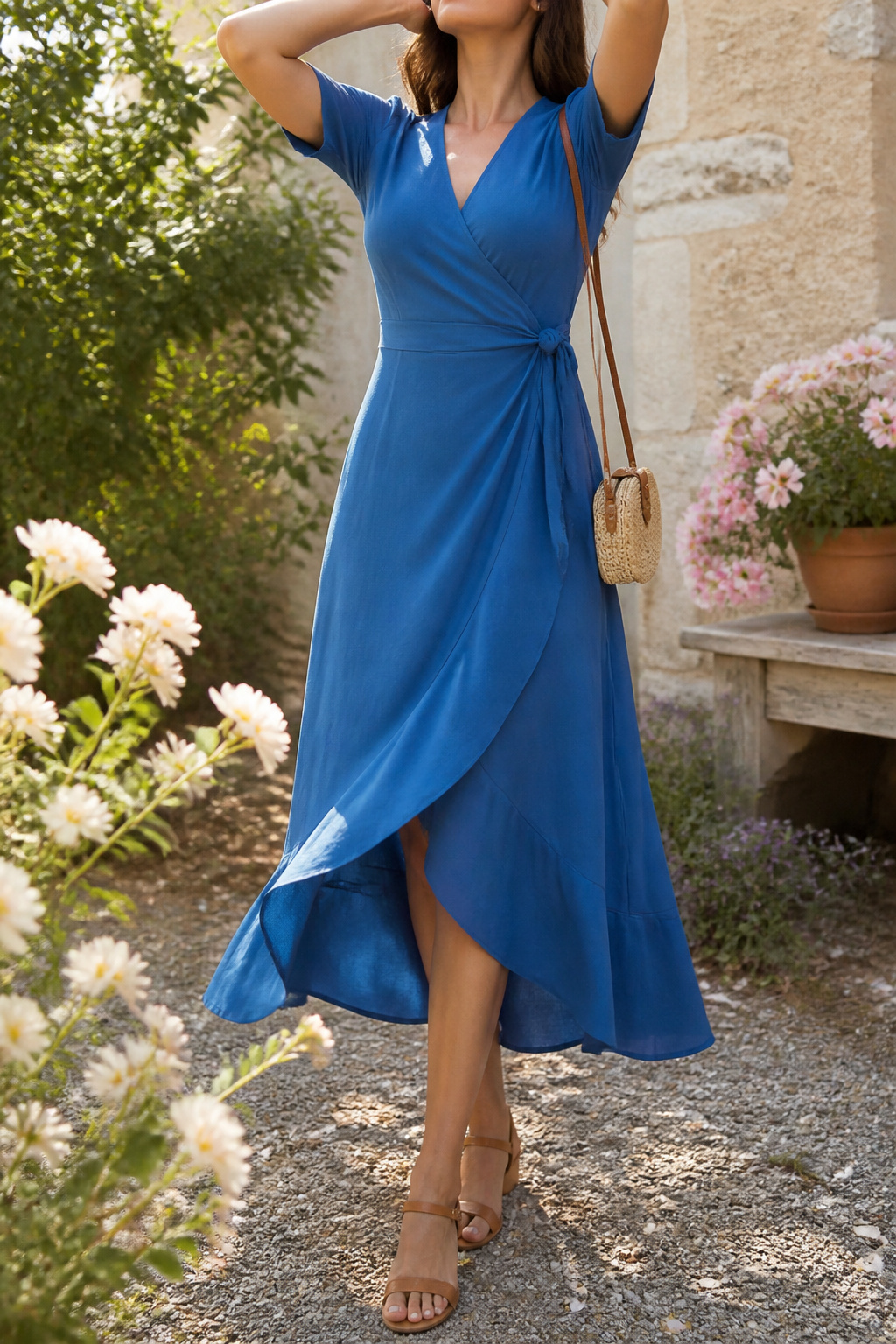
A wrap dress works because the fabric crosses over and ties at your natural waist, creating a line that adjusts to your own shape rather than fighting it. The V-neck opens the collarbone area and the skirt falls in soft folds that skim rather than cling. You can tighten or loosen the tie by an inch or two depending on the day, which is more forgiveness than most fixed seams offer.
The tie itself is the part that fails. After enough wears and washes, shorter ties fray at the ends or shrink just enough that you cannot secure a clean bow. A tie that lands above your hip bone rather than at it will ride up and gape; one that is too short to wrap fully around twice will slip loose as you move. When you try one on, check that the tie extends at least eight to ten inches past the closure point with room to spare. If it barely reaches, that is the wear you will notice first.
Shirt Dresses
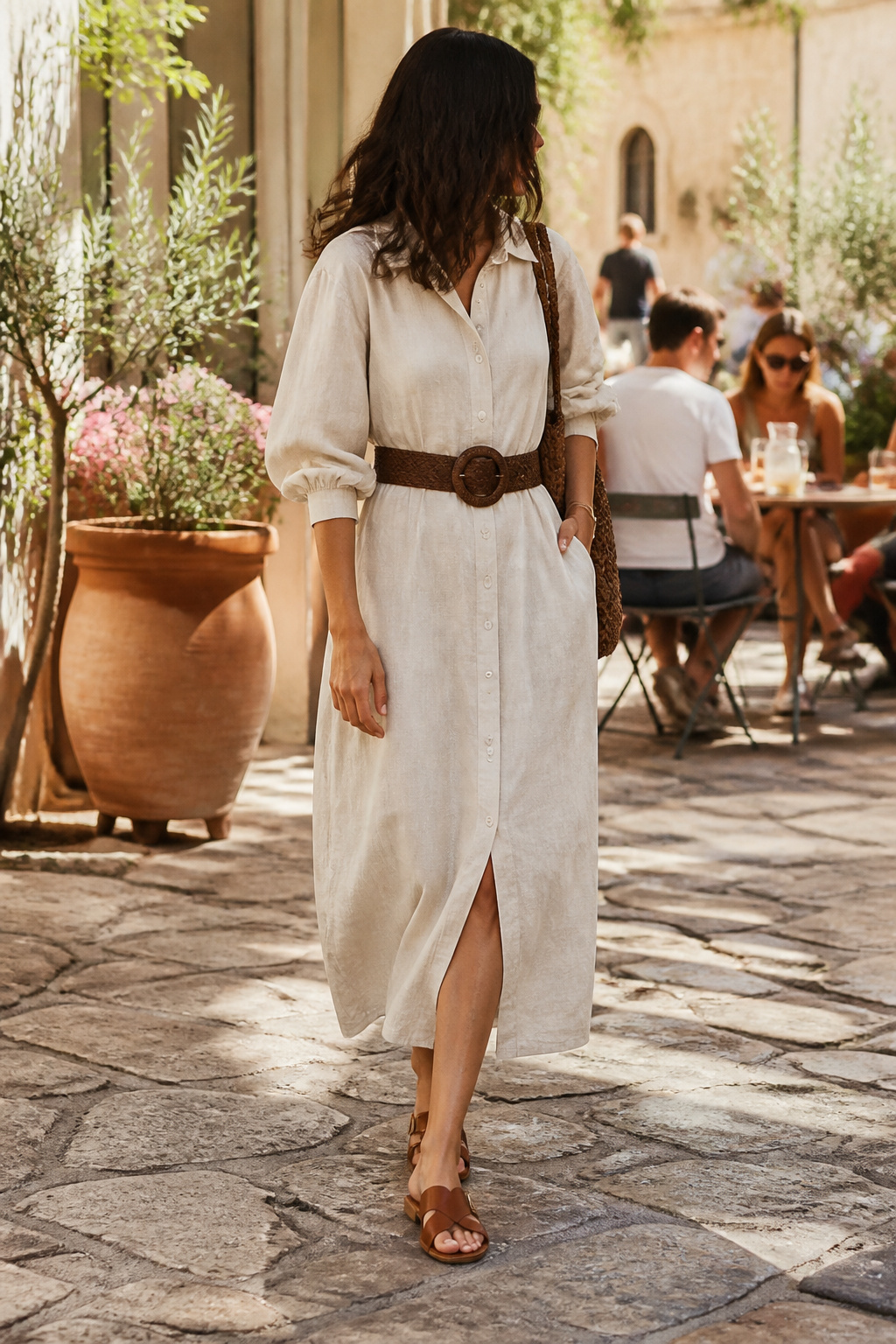
The shirt dress borrows its button-front build directly from menswear, usually cut in lightweight cotton or linen that breathes through a warm afternoon. That collar and placket give it structure other casual spring dresses lack; the line along the front is doing work a simple pullover never does. Belt it and the dress turns office-appropriate; leave it loose and it reads as weekend wear—same garment, two entirely different situations. The belted version nips in at the waist and pairs cleanly with loafers or low heels, while the untied shape needs only flat sandals to look intentional rather than sloppy. Linen will wrinkle, which is part of the point, but the cotton holds a press longer if you need to look pulled together straight off a commute. Sleeve length shifts the formality too: a rolled short sleeve keeps it easy, a three-quarter or full sleeve pushes it toward dinner out. You will reach for this one more than you expect because it solves the problem of looking dressed without trying to look dressed up.
A-Line Dresses
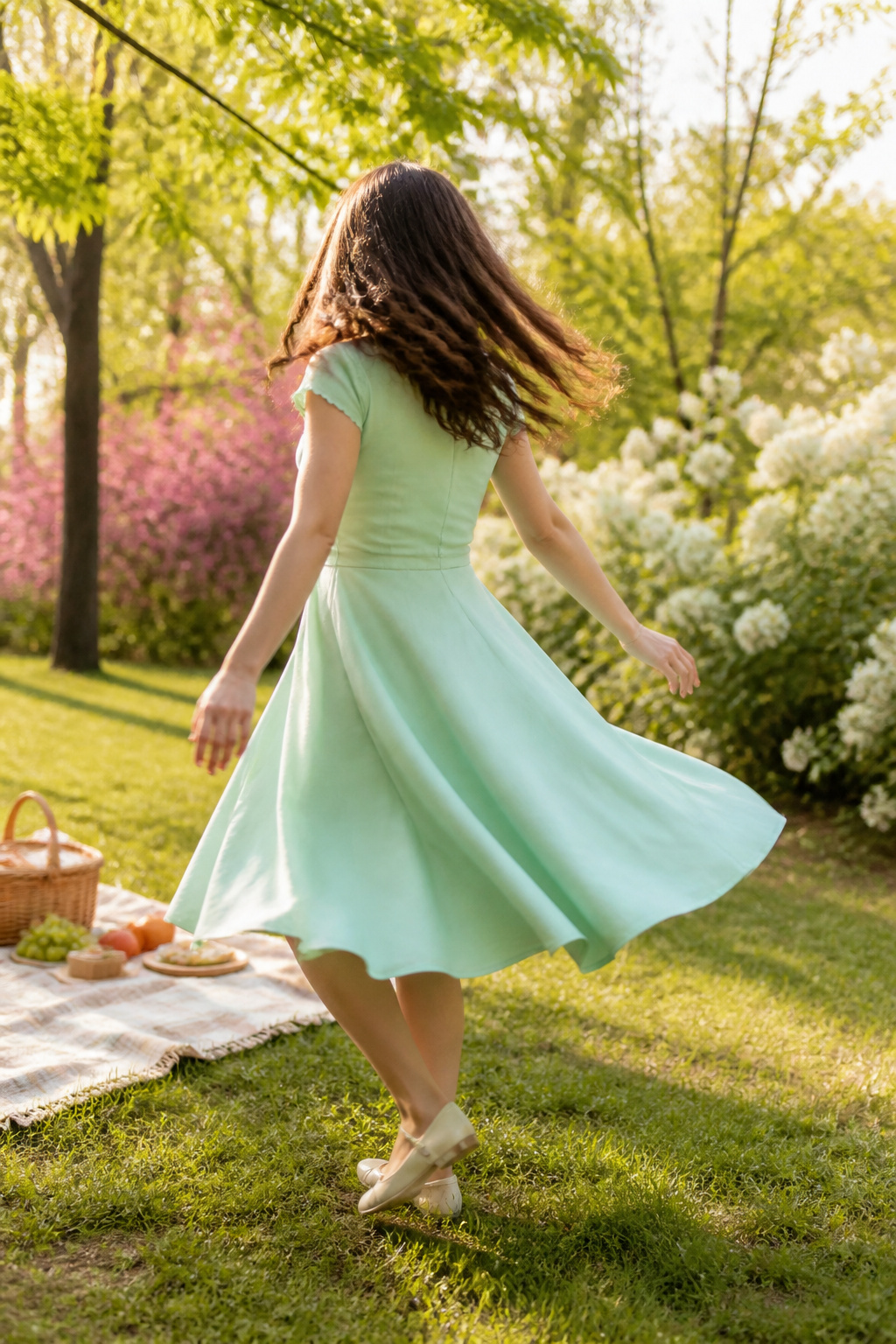
The fitted top and flared hem of an A-line dress creates a silhouette that narrows at the shoulders and widens gradually toward the hem, forming a shape like the letter A. That flare typically begins at the natural waist, the narrowest point of your torso, and this placement matters more than most people notice. When the flare starts higher, near the ribcage, it can shorten the torso and draw the eye upward; when it starts lower, near the hip, it loses the elongating effect that makes the cut so reliable.
The natural waist placement hits a midpoint that flatters most body types without requiring precise tailoring. It defines the waistline without clinging to the hips or stomach, which means the dress moves comfortably through a full day. You get structure where you want it and ease where you need it.
For spring, this silhouette works particularly well in lighter cottons or linens that hold the shape without adding bulk. The flare allows air to circulate, and the fitted top keeps the overall look intentional rather than shapeless. It is the dress you reach for when you want to look put-together without planning an outfit around it.
Sundresses
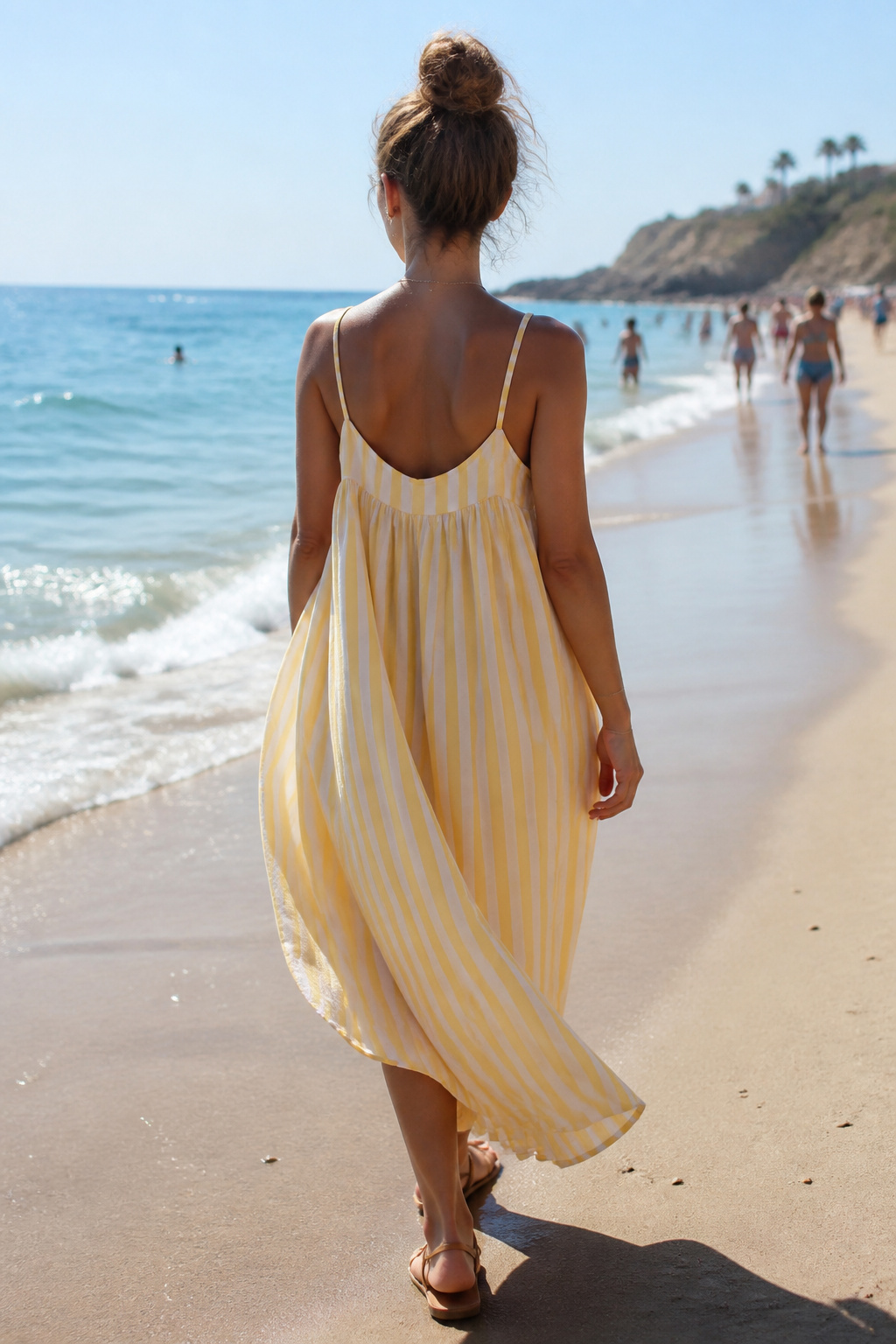
A sundress earns its place in a spring wardrobe on the strength of construction that does not fight the heat. Thin straps sit on the shoulders, a smocked or elasticized bodice holds the shape without structure, and the skirt falls with minimal layering between you and the air. The best versions move like a slip and weigh about as much.
The detail that ruins the look is fabric transparency. Light cottons, voiles, and certain eyelet weaves turn sheer in direct sun or against a bright window. Check the dress in daylight before you leave the house, backlit if possible. A lining helps, but many sundresses skip it to save weight, so the test matters more than the label.
Smocking across the bodice gives the dress its fit without darts or belts, which is why it works across a range of figures. The trade is that the stretch relaxes over a season of wear. Buy for the snug fit, not the loose one.
Off-the-Shoulder Dresses
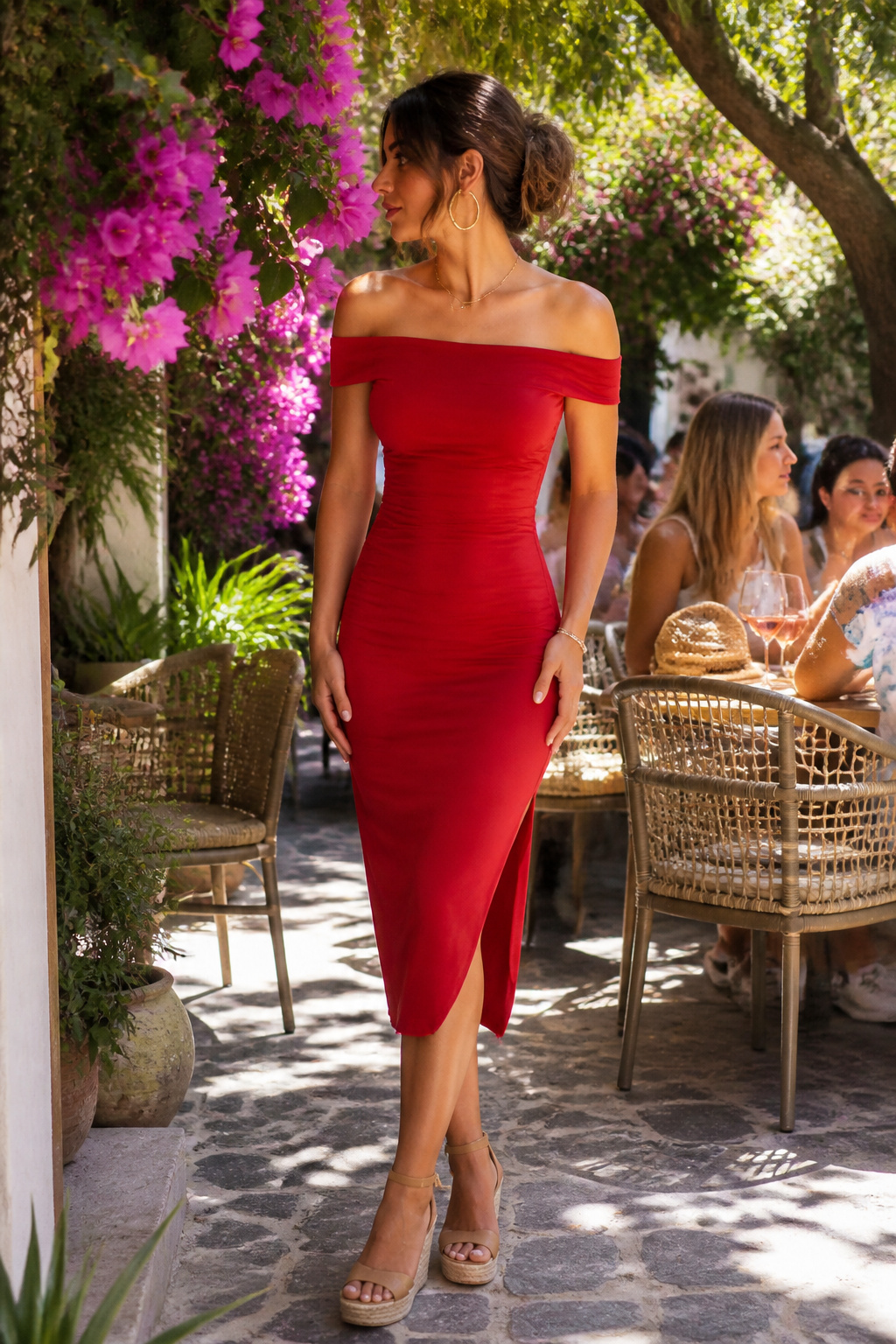
An off-the-shoulder neckline sits below the points where your shoulders meet your arms, framing the collarbone while the fabric itself stays up through a fitted band. That band either carries elastic or is cut structured and close, and you will feel it working the first time you lift your arms overhead. The dress either stays put or it does not, and that is the fitting point to test in a mirror before you buy.
Strapless bra compatibility is the practical concern most people overlook. The neckline sits low enough that regular bra straps show at exactly the spot you are trying to bare. A strapless bra solves the visible line, but not every off-the-shoulder cut leaves enough room across the upper back for a wide band. If the dress fits snugly through the bodice, a thick bra closure can bunch or ride. You are better off checking this combination in the fitting room than discovering it an hour before you leave the house.
Casual Day Dresses
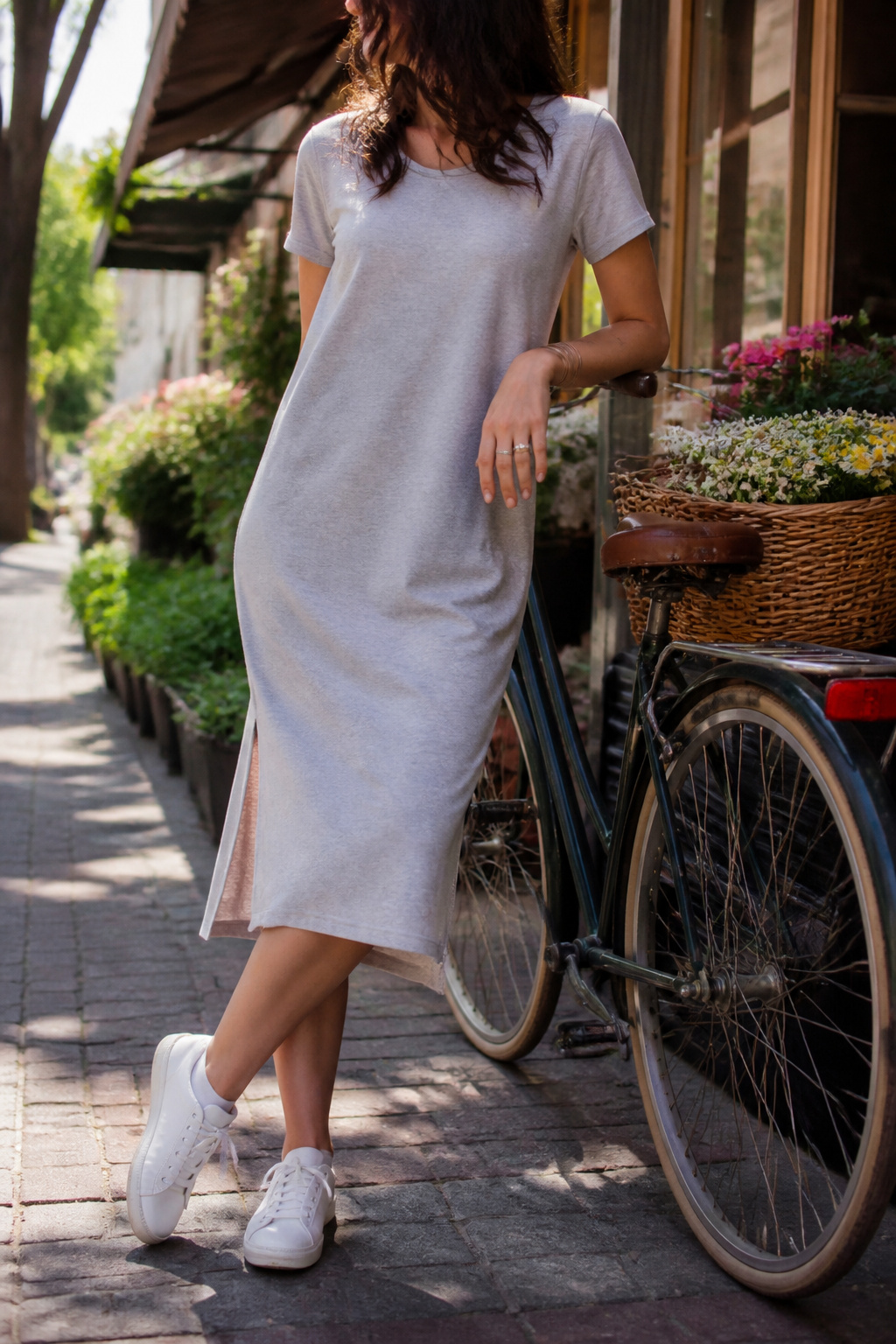
A t-shirt dress looks effortless until the neckline starts to sag after four washes or the side seams torque around your body. That twist happens because the factory skimped on the neckband or skipped stay-stitching, and on a piece you pull on three times a week, you notice it by June. The same goes for slip dresses in jersey or washed silk. A good one falls straight from the shoulder without a lining; a cheap one clings to your hip and bags at the knee by noon. Check that the shoulder seam sits flat when you lift your arm; if it rides toward your neck, the armhole is cut too shallow for actual movement.
Pilling is the other tell. Cotton-modal blends feel soft in the store, but the short fibers work loose fast under a seatbelt or crossbody bag. Look for a tighter knit you cannot see daylight through, or a cotton with some length to the staple. An easy pullover dress in piqué or a substantial interlock holds its surface longer than something brushed for immediate softness. You are buying for April through September, not just the first wear.
Cocktail Dresses
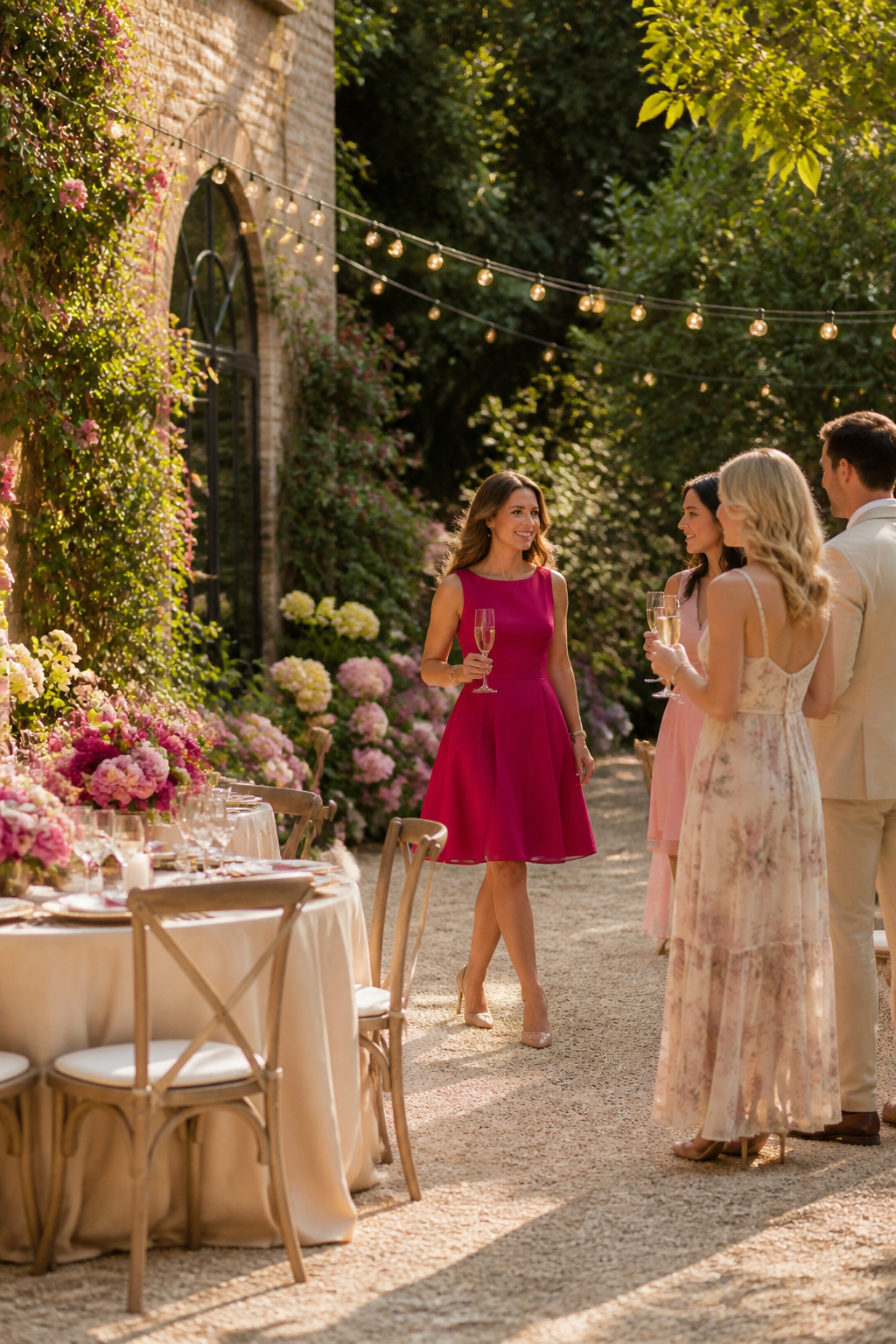
Cocktail dresses for spring sit in a narrower gap than most shoppers expect. You need more structure than a daytime dress allows, but lighter weight and brighter color than winter cocktail attire. Silk crepe or a lined chiffon holds the shape without the wool or velvet you wore in December.
A spring wedding calls for something that reads celebration without competing with the bridal party. Graduations lean slightly more conservative; you will be photographed against academic backdrops and seated in metal folding chairs, so a hem that stays put matters. Garden parties are the most forgiving, though grass and gravel punish any heel over two inches and any train at all.
Color works harder in April than in October. A winter navy reads as safe; a spring navy can look like you forgot to check the calendar. Berry tones, soft coral, or a saturated green do the seasonal signaling for you. If the invitation specifies "creative black tie," that is your opening for a structured dress in an unexpected color rather than actual black.
The mistake most people make is treating "spring event" as one uniform dress code. It is not. The same dress that works at a 5 p.m. garden wedding becomes noticeably underdressed at an evening hotel reception. Buy for the specific event, not for an abstract spring calendar.
Fabric Choices
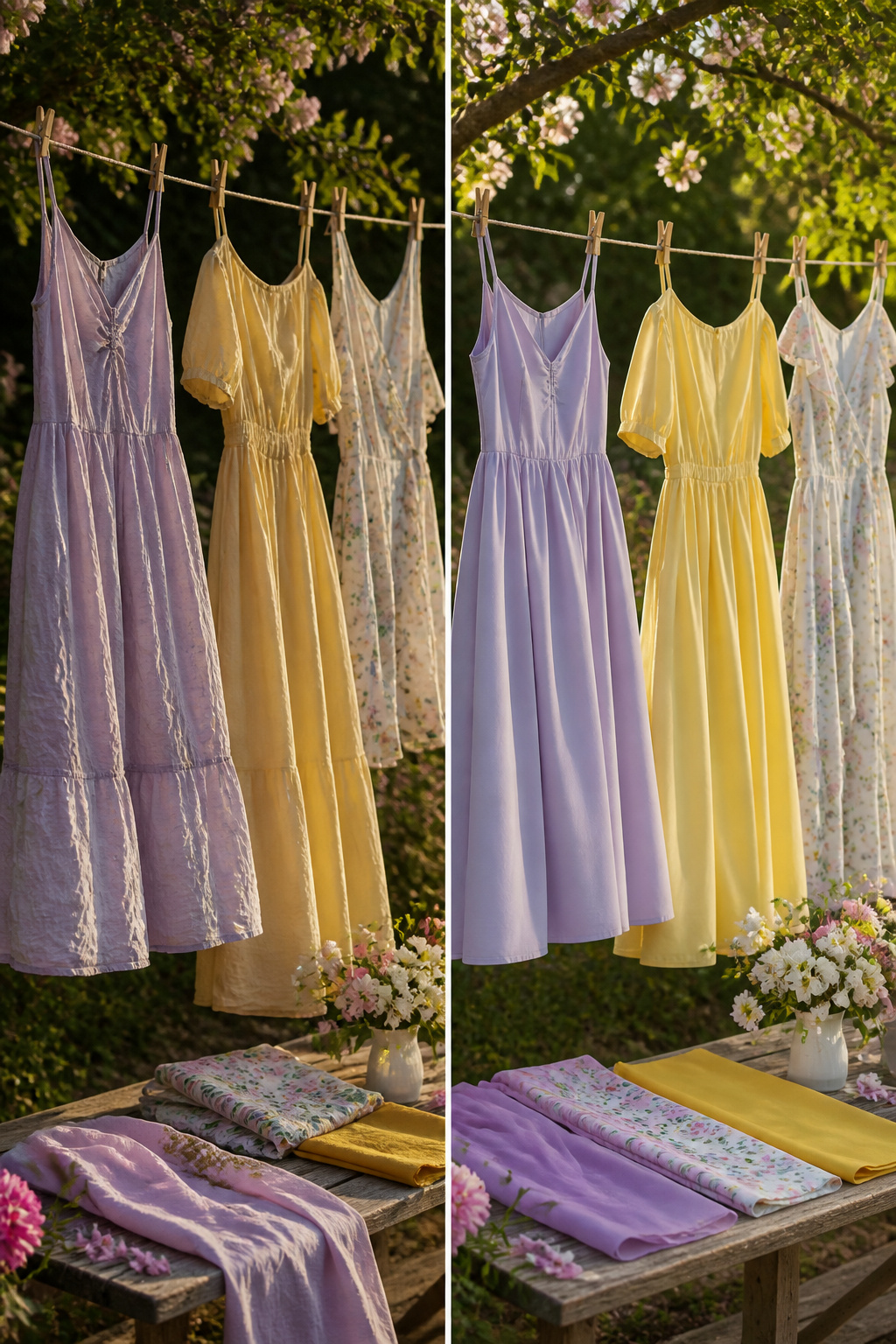
Cotton, linen, and chiffon each solve a different problem for spring dresses, and each creates its own.
Cotton handles heat and repeated washing without much fuss. It breathes, it softens, and it keeps its shape well enough for everyday wear. The catch is shrinkage in the dryer, which is why you buy cotton dresses with the expectation that the first few washes will tighten the fit slightly. Line-dry cotton and you keep the length you paid for.
Linen moves heat away from the body better than almost anything else, which matters on humid afternoons when cotton starts to cling. The wrinkling is not a flaw to fix; it is the trade you accept for that cooling structure. You do not wear linen to look pressed. You wear it because the creases prove it is doing its job.
Chiffon layers well and catches spring light, but it snags on jewelry, zippers, and rough fingernails. It is not a fabric for careless movement. Where cotton forgives and linen wrinkles openly, chiffon demands attention to what brushes against it.
Color Trends
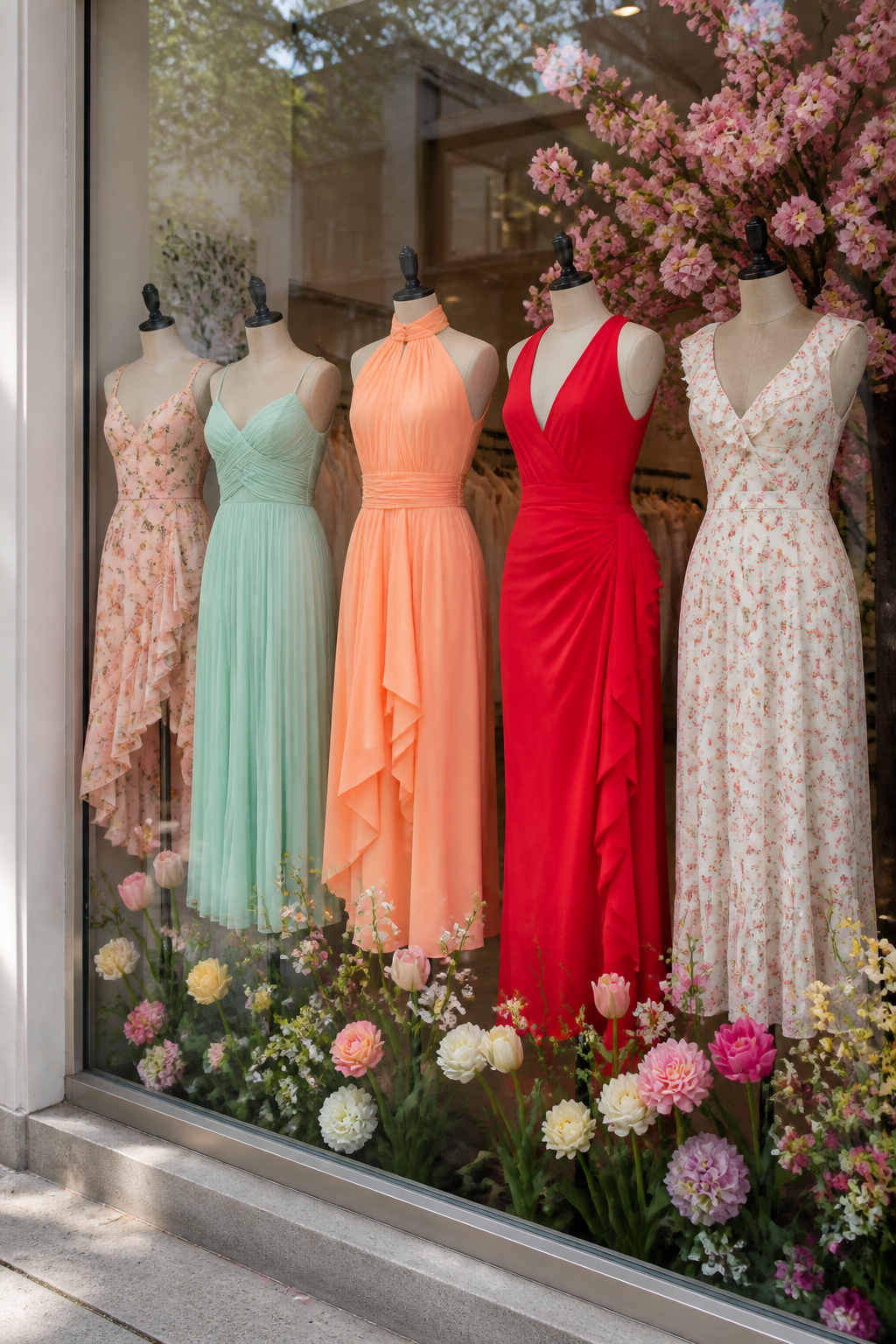
Pastels and brights split the season cleanly, and your undertone decides which side wins. Cool undertones carry icy mint and lavender without going flat; warm undertones need the peach and buttercream versions or the color turns sickly against the skin. If you tan gold, not pink, skip the cool pastels entirely and head straight to the warm side, or to brights like coral and marigold that read as energy rather than washout.
Brights work harder in a small wardrobe. One tomato-red dress carries a whole week if the rest of your closet is navy, cream, and denim. Pastels ask for more pastels, or they look like the odd piece out. If you already own mostly black and charcoal, a pastel dress becomes a problem you solve with shoes and a bag; a bright dress solves itself.
The seasonal change is simpler than the marketing makes it. Trees bloom in soft color first, then harden to full green. Pastels match that early uncertain light; brights match the later certainty. Neither is more spring than the other. Choose based on what you already own and what your skin does with the color, not the calendar.
Styling Tips
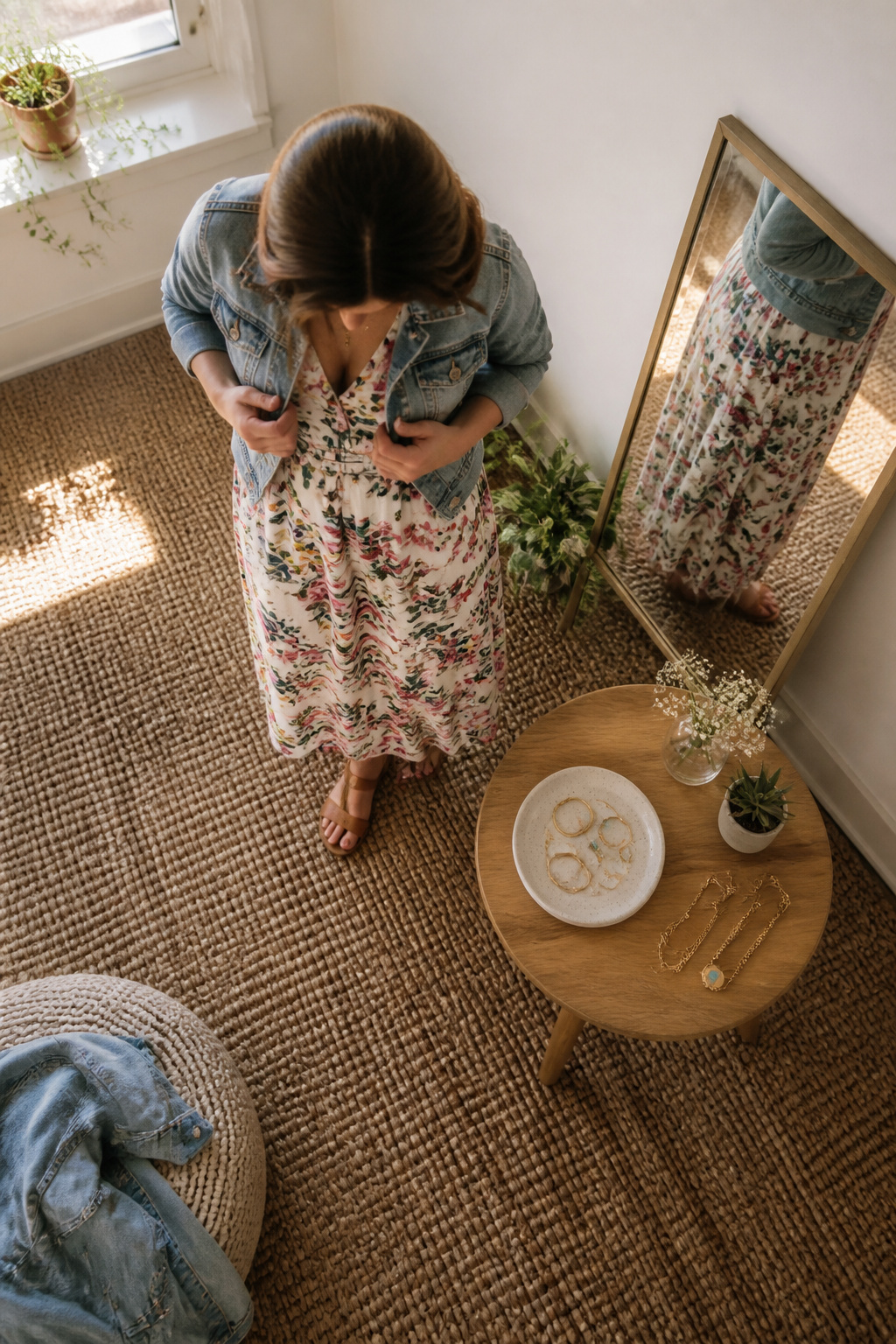
A denim jacket over a spring dress handles the temperature gap between your front door and mid-morning sun better than any other layer. The trick is stopping there.
- Sandals ground the look in a way pumps or boots never quite manage with lighter fabrics; a flat leather slide or strapped footbed draws the eye down and balances a busy print.
- Statement jewelry finishes the neckline, but one piece does the work: a pendant that hits just above the dress’s edge, or earrings that move when you turn your head. The common mistake is piling on a necklace, stacked rings, and bold earrings all at once; the dress disappears underneath.
- If the dress already carries strong color or pattern, wear the jacket open and skip the necklace entirely. Let the collar line do the framing.
The best outfits usually feel like one decision, not three competing ones.
Occasion Suitability
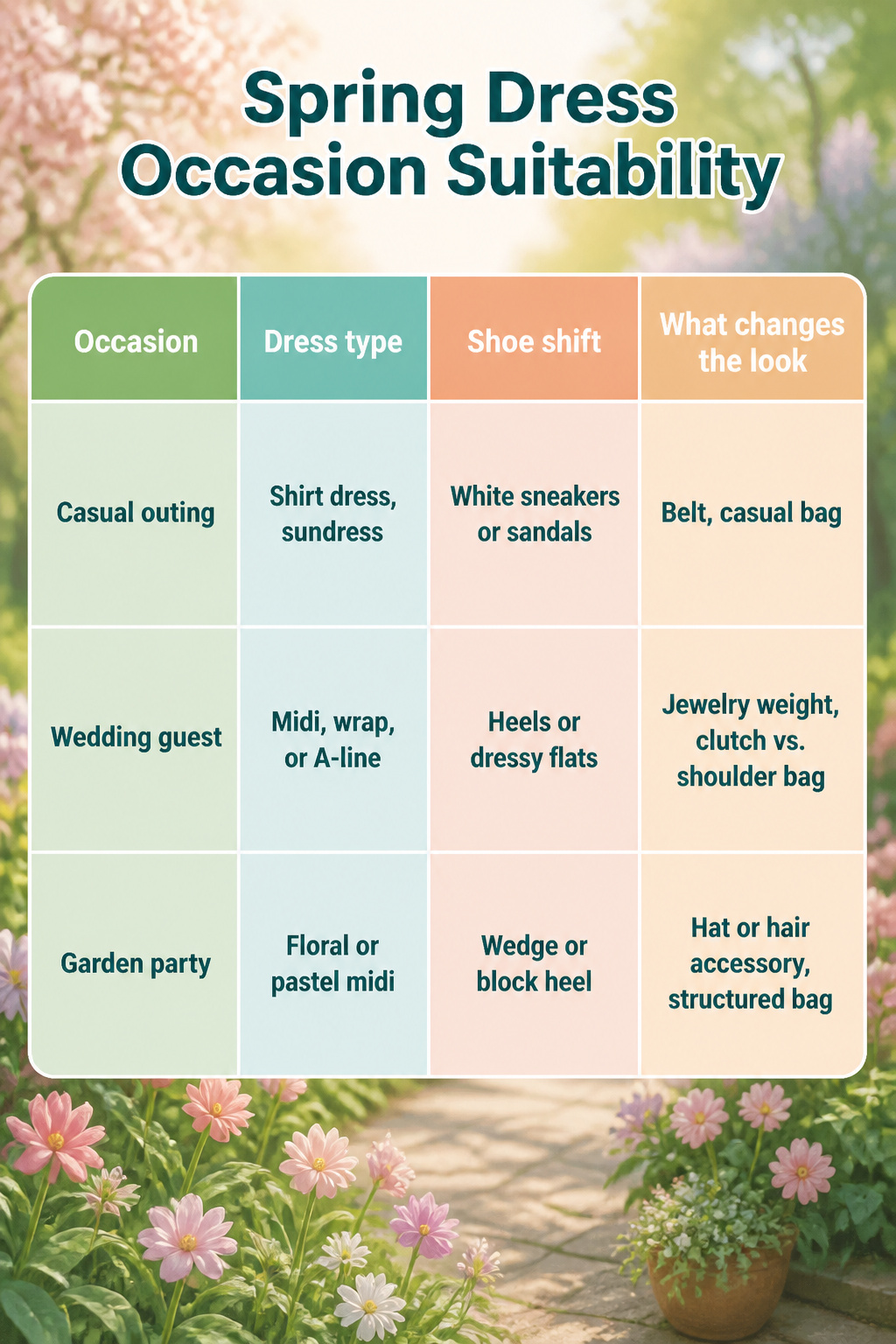
One midi-length spring dress in a solid color or small print handles most of your calendar with the right shoes. Pair it with flats and a crossbody for a Saturday market, then switch to heels and a structured clutch for a shower or rehearsal dinner. The fabric and fit do the heavy lifting; accessories only signal where you are headed.
That said, some spring events carry expectations worth knowing. Garden parties tend toward lighter fabrics and brighter colors, while weddings increasingly specify dress codes that rule out white and sometimes full black. Brunch or a casual office allows more room to experiment.
| Occasion | Dress type | Shoe shift | What changes the look |
|---|---|---|---|
| Casual outing | Shirt dress, sundress | White sneakers or sandals | Belt, casual bag |
| Wedding guest | Midi, wrap, or A-line | Heels or dressy flats | Jewelry weight, clutch vs. shoulder bag |
| Garden party | Floral or pastel midi | Wedge or block heel | Hat or hair accessory, structured bag |
The mistake is buying a dress for each event. You are better off with one that fits well in the shoulders and waist, then learning which two shoe-and-bag combinations flip the tone.
Size Inclusivity
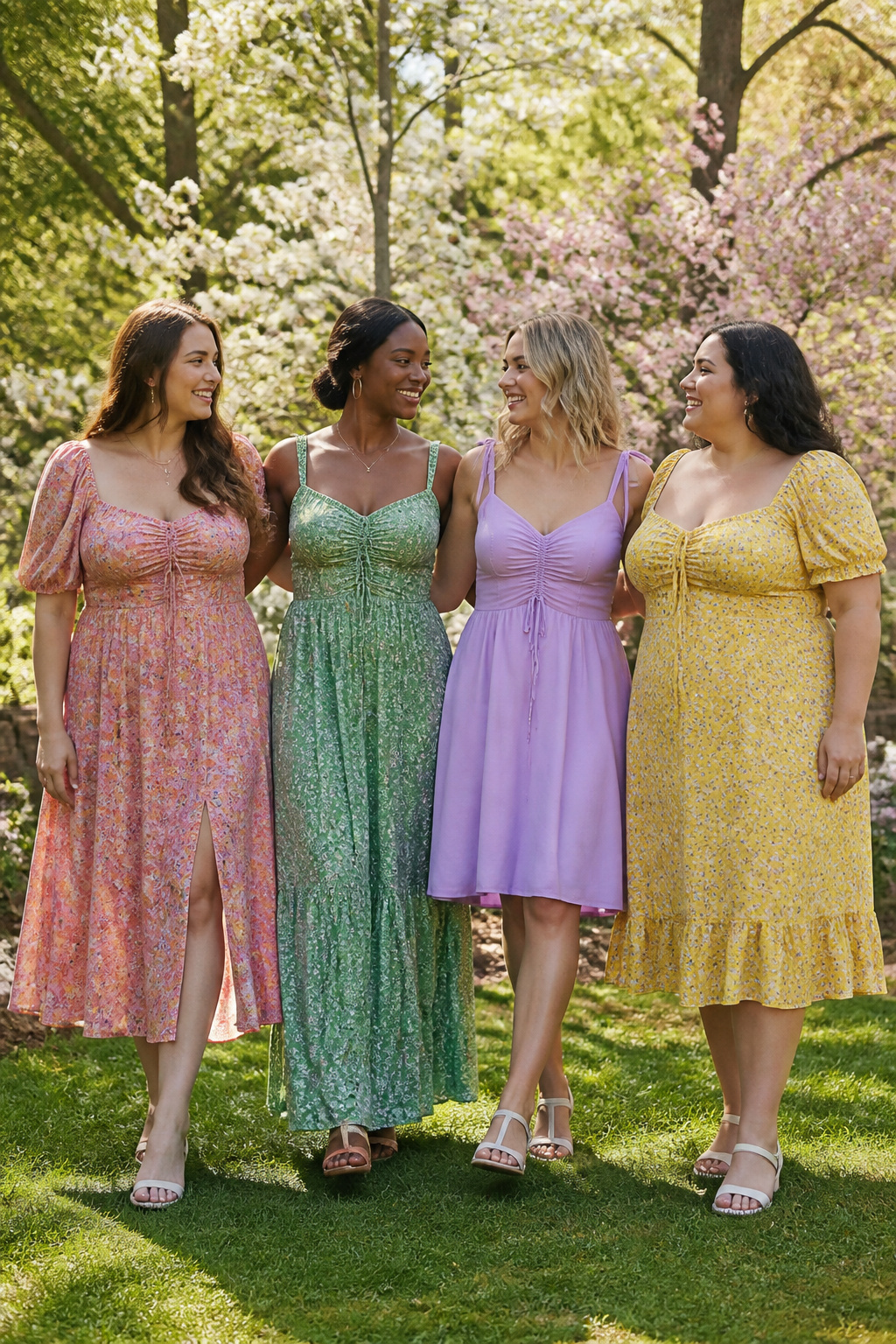
A size range that actually runs 16 to 26 instead of stopping at 14 is worth more than any trend. But the cut matters as much as the numbers on the tag. Adjustable ties at the waist, side panels with give, and ruching that you can loosen or tighten let one dress sit differently on different bodies without looking like an afterthought.
Construction between sizes is where cheap work shows. Proper grading adjusts the proportions at the bust, waist, and hip by different amounts, because bodies do not scale evenly. Brands that skip this step often size up a 6 into an 18 by adding the same inches everywhere, which leaves the armholes gaping and the shoulders wrong.
"One size fits all" almost never does. What works is a size range wide enough to cover real variation, with details that let you fine-tune the fit yourself.
Frequently Asked Questions
What are the best colors for spring dresses?
Brights and pastels both work, but your skin undertone picks the winner. Cool undertones suit icy mint and lavender; warm undertones need peach, buttercream, coral, or marigold to avoid looking washed out. Pastels pair best with other soft colors, while a single bright dress like tomato red can carry a whole week against a neutral wardrobe.
How do I style a spring dress?
Add a denim jacket for morning temperature shifts, flat leather sandals to ground the look, and one piece of statement jewelry at most. If the dress already has strong color or pattern, wear the jacket open and skip the necklace entirely so the dress stays visible.
What occasions are spring dresses suitable for?
A solid or small-print midi in the right fabric handles most spring events with only shoe and bag changes. Flats and a crossbody suit casual outings; heels and a structured clutch upgrade the same dress for weddings or rehearsal dinners. Garden parties call for lighter fabrics and brighter colors, while weddings may rule out white and sometimes full black.