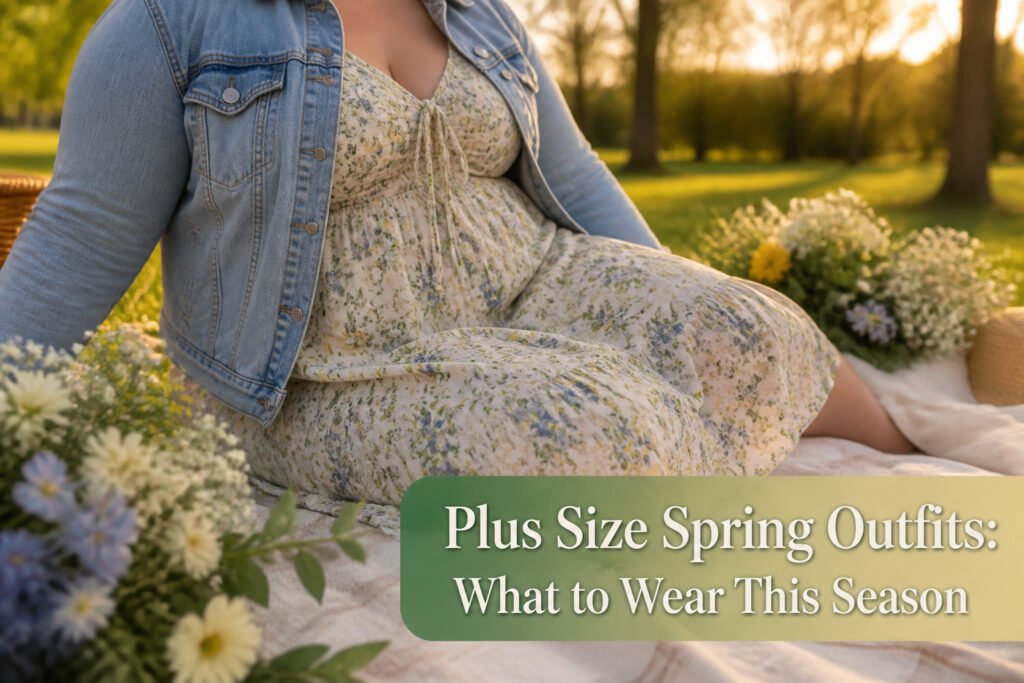
Plus size spring outfits are the seasonal pieces that keep you comfortable through temperature swings while actually fitting your frame. The difference between a good outfit and one you regret by noon usually comes down to fabric weight and where the waistband hits. A cotton-linen cardigan with a 12-gauge knit and two inches of ribbed hem will handle the 7 a.m. chill without collapsing into shapelessness by afternoon.
Floral Dresses
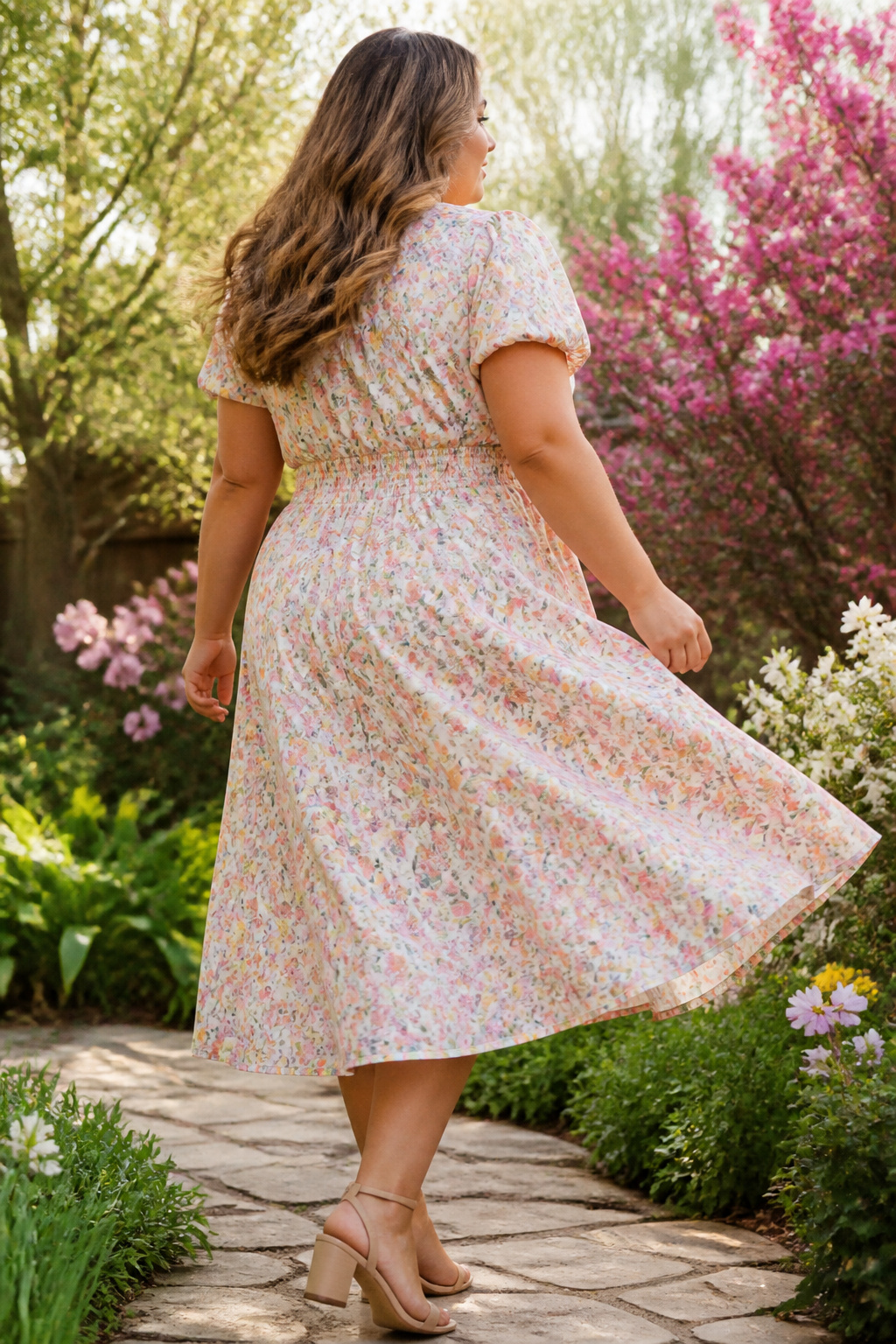
You reach for a floral dress in spring because the print does the styling work for you. A midi length with a defined waist flatters nearly every plus-size shape, since the hemline draws the eye vertically and the waist keeps the silhouette from reading as a block. Maxi lengths work well too, though you will want to check where the skirt hits your ankle; too long and the fabric pools, too short and the proportions feel off.
Lightweight cotton or viscose versions handle the temperature swings of April and May without trapping heat. If you carry weight in your midsection, look for a dress with a waistband that sits just above your natural waist rather than at the widest point. For hips and thighs, an A-line skirt from the waist gives room without adding volume.
The prints themselves range from scattered small blooms, which tend to read as more versatile, to larger painterly florals that make more of a statement. The practical difference is that smaller repeats hide wrinkles and folds in the fabric better, which matters if you are sitting for long stretches.
Lightweight Cardigans
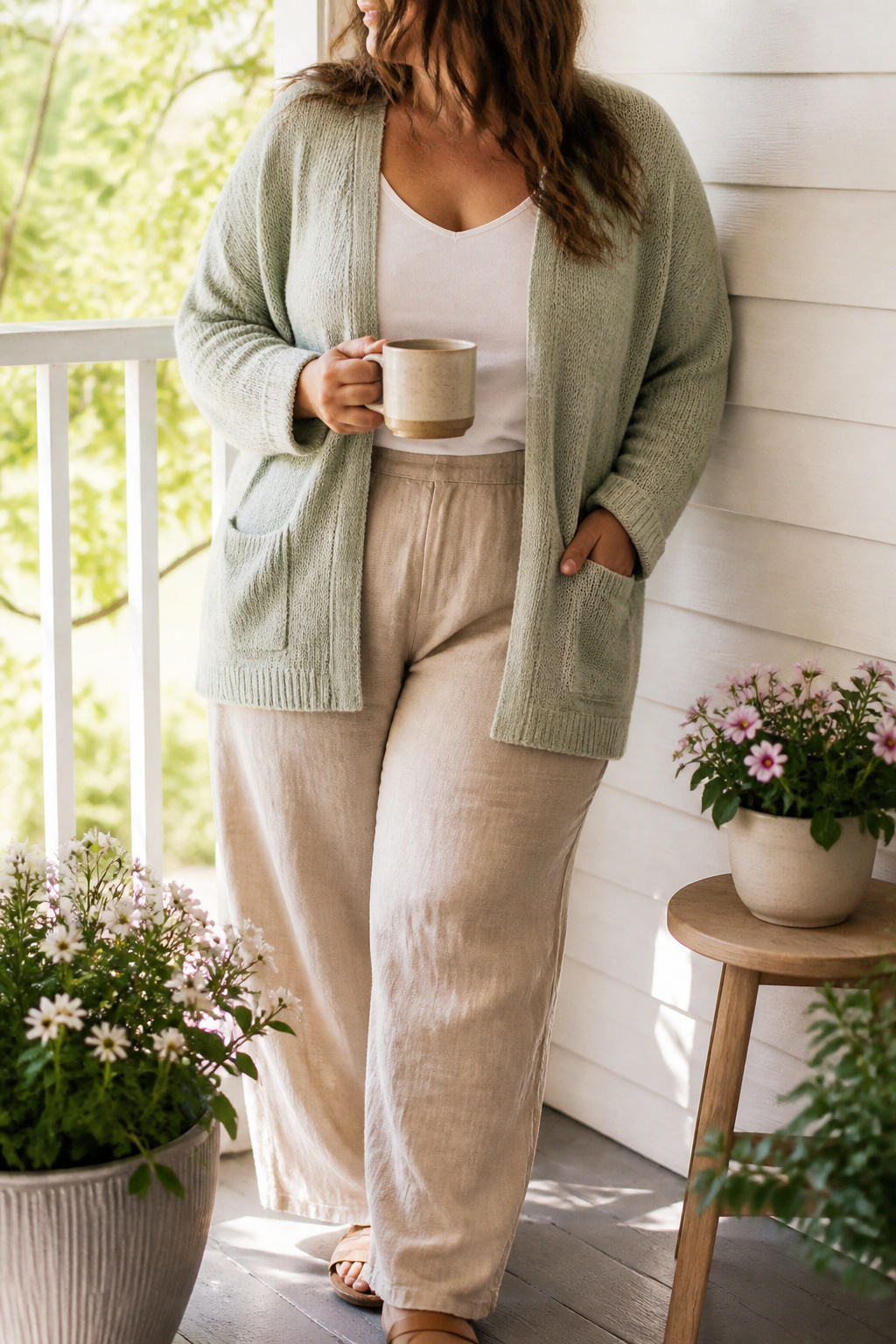
A cotton-linen cardigan left open over a camisole handles the 20-degree swing from 7 a.m. to 3 p.m. better than any jacket you own. The fabric breathes when you warm up, but the layer still traps enough heat against your arms and back that you are not shivering through coffee on the porch. Look for a gauge loose enough to let air through, tight enough that the shape does not collapse; a 12-gauge knit usually hits that balance. Ribbing at the hem matters more than most people notice. Without it, the front panels hang straight down and widen the silhouette; with two inches of rib, the cardigan tapers back in and reads as intentional structure rather than afterthought. Three-quarter sleeves solve the other spring problem, the one where full-length sleeves shove up awkwardly by noon and leave a bunched cuff at your elbow. You will reach for the shorter sleeve more often than you expect.
High-Waisted Pants
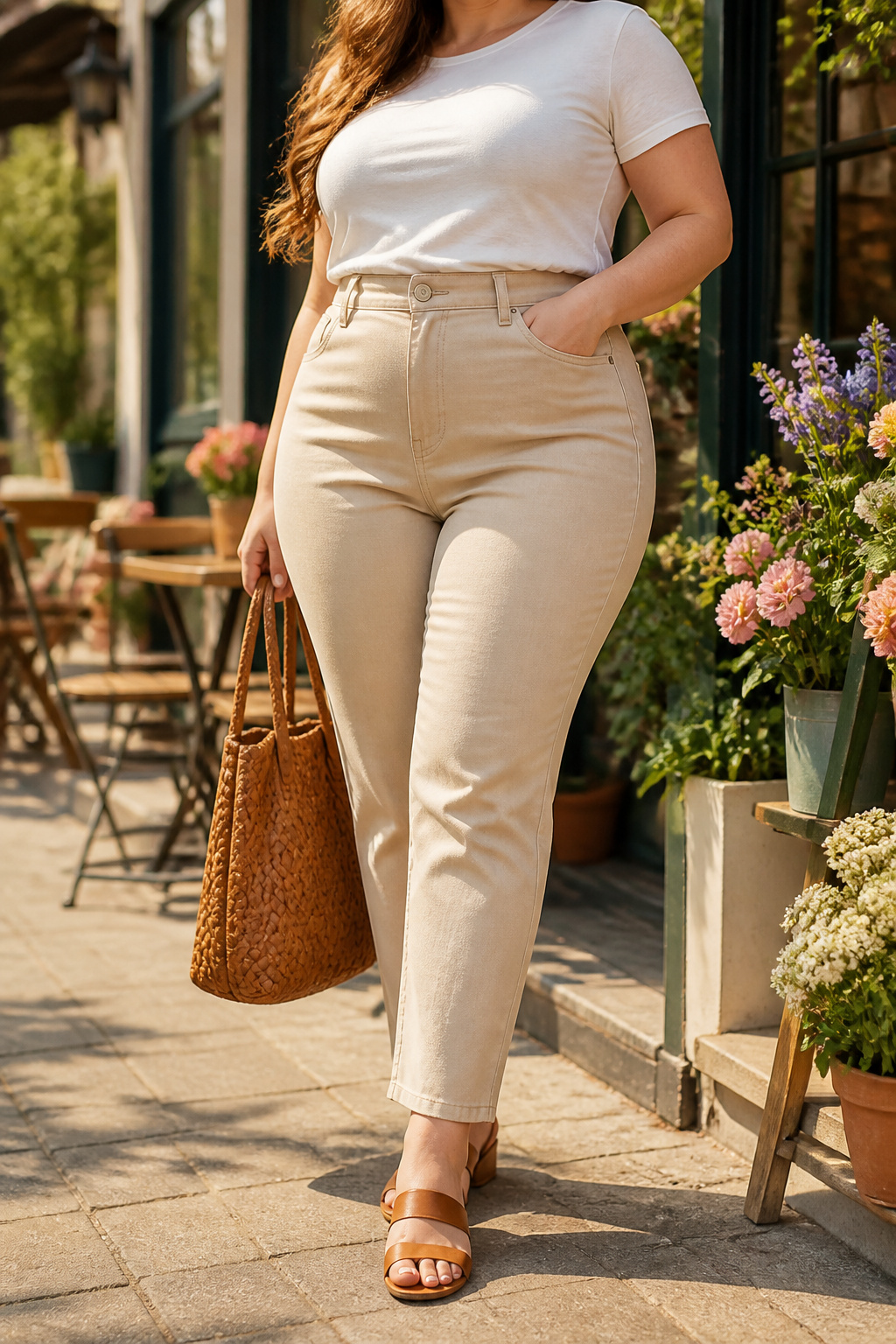
High-waisted pants pull the waistband up to the narrowest part of your torso, which gives a plus-size figure clear structure where the eye naturally wants to settle. The band should hit just below the ribcage, not at the true waist or lower belly, or the effect collapses.
Spring fabric weight matters more than you might expect. A cotton twill with two percent stretch recovers its shape through a full day of sitting and standing, while rigid denim will bag at the knees by noon and keep the crease. Linen blends work if the weave is tight enough not to billow with every breeze; a lined waistband also stops the fabric from itching on bare skin as temperatures climb.
For pairing, a tucked-in shell or a cropped cardigan that ends exactly at that high waist keeps the proportion clean. Untucked tunics defeat the point. If you prefer layers, a jacket cut to the same hemline as the waistband reads as intentional; anything longer splits you horizontally at the widest point.
The one place these fail is when the rise is too short for your torso length. If the crotch seam rides up, the waistband tilts forward and gaps in back. Try the sit test in the fitting room: bend to a chair, stand, and check whether the band stays level.
Jumpsuits
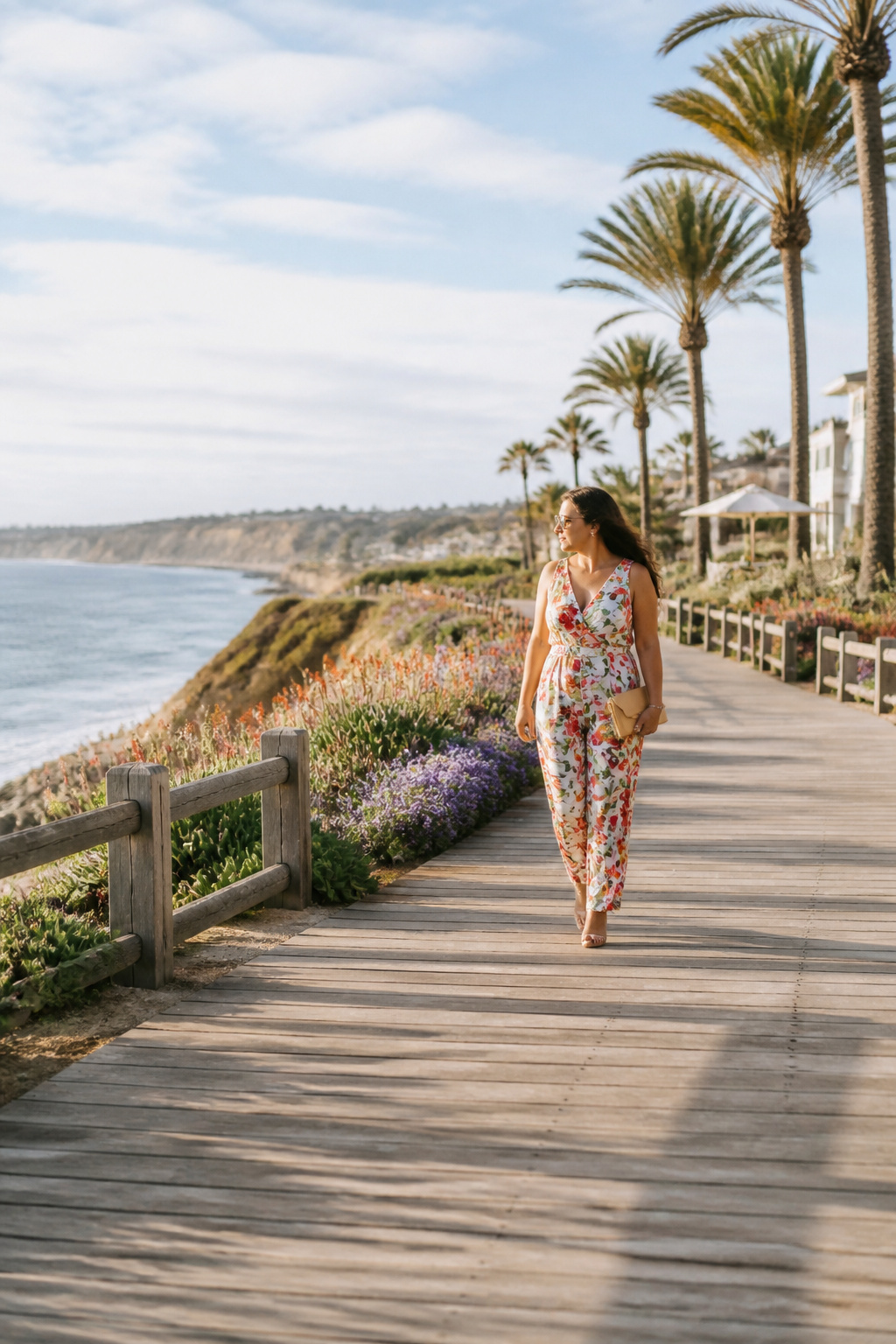
A jumpsuit is the one-piece answer to the question of what to wear when you do not want to think about what to wear. You step in, zip or button up, and the whole look is already coordinated.
For spring, you will find them in colors and prints that feel right for the season: soft florals, wide stripes, saturated solids like coral or sage. A sleeveless linen version works for a warm Saturday with flat sandals. The same piece, belted and paired with heeled sandals and a structured clutch, carries you into an evening out.
The fit is where it gets specific. Look for a defined waist, either built in or added with a tie belt. A relaxed leg that tapers slightly at the ankle balances the volume. What you want to avoid is excess fabric pooling at the crotch or pulling tight across the seat. A center back zip or a wrap-front closure usually gives you the cleanest line through the torso, since side zippers can create tension points at the hip. Stretch cotton or a rayon blend moves with you without sagging by noon. If the shoulders are cut slightly dropped, you gain ease across the upper back without looking oversized.
Off-the-Shoulder Tops
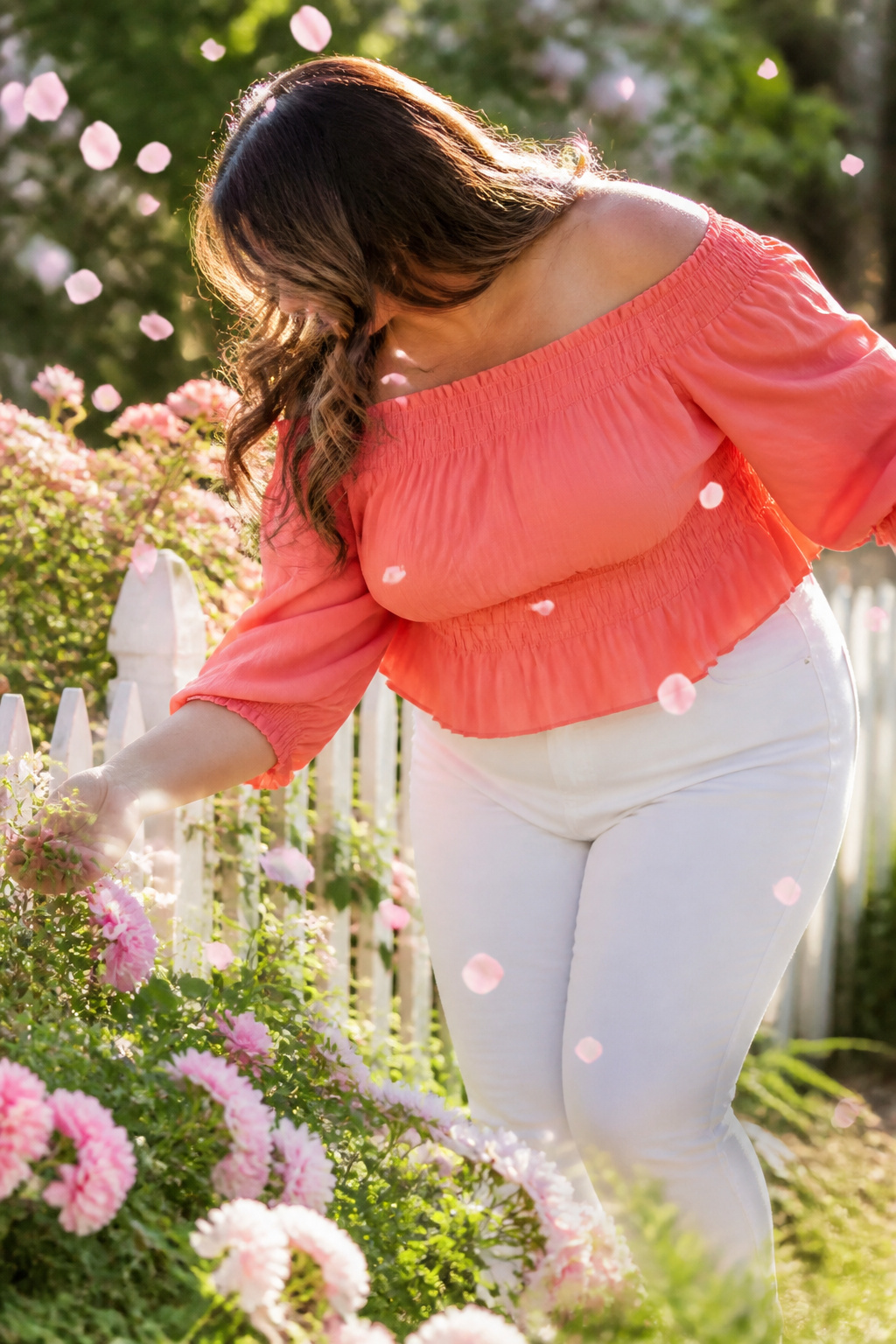
Off-the-shoulder tops carry more risk than reward for most plus-size frames, but the neckline can work if you solve the structure first. The whole look falls apart when the band rides up or the elastic digs, so fit through the upper arms and across the back matters more than the size on the tag. A lined yoke or ruched elastic that sits flat against the body keeps everything in place without constant adjustment.
For casual spring days, pair them with high-waisted shorts that hit at the natural waist, or with an A-line skirt that balances the exposed shoulder line. Denim cutoffs tend to fight the proportions; a structured cotton skirt with pockets holds the look together better.
The real challenge is underneath. A convertible strapless bra with a wide, non-slip band works better than a standard strapless that relies on tightness alone. Some people skip the bra entirely and use silicone nipple covers with fashion tape along the inner edge of the top. That second option only functions on styles with enough weight and structure to stay put without elastic pressure. Test the top by raising your arms at full stretch before you leave the house. If the neckline heads north, the elastic is too loose or the cut is wrong for your shoulder slope.
Maxi Skirts
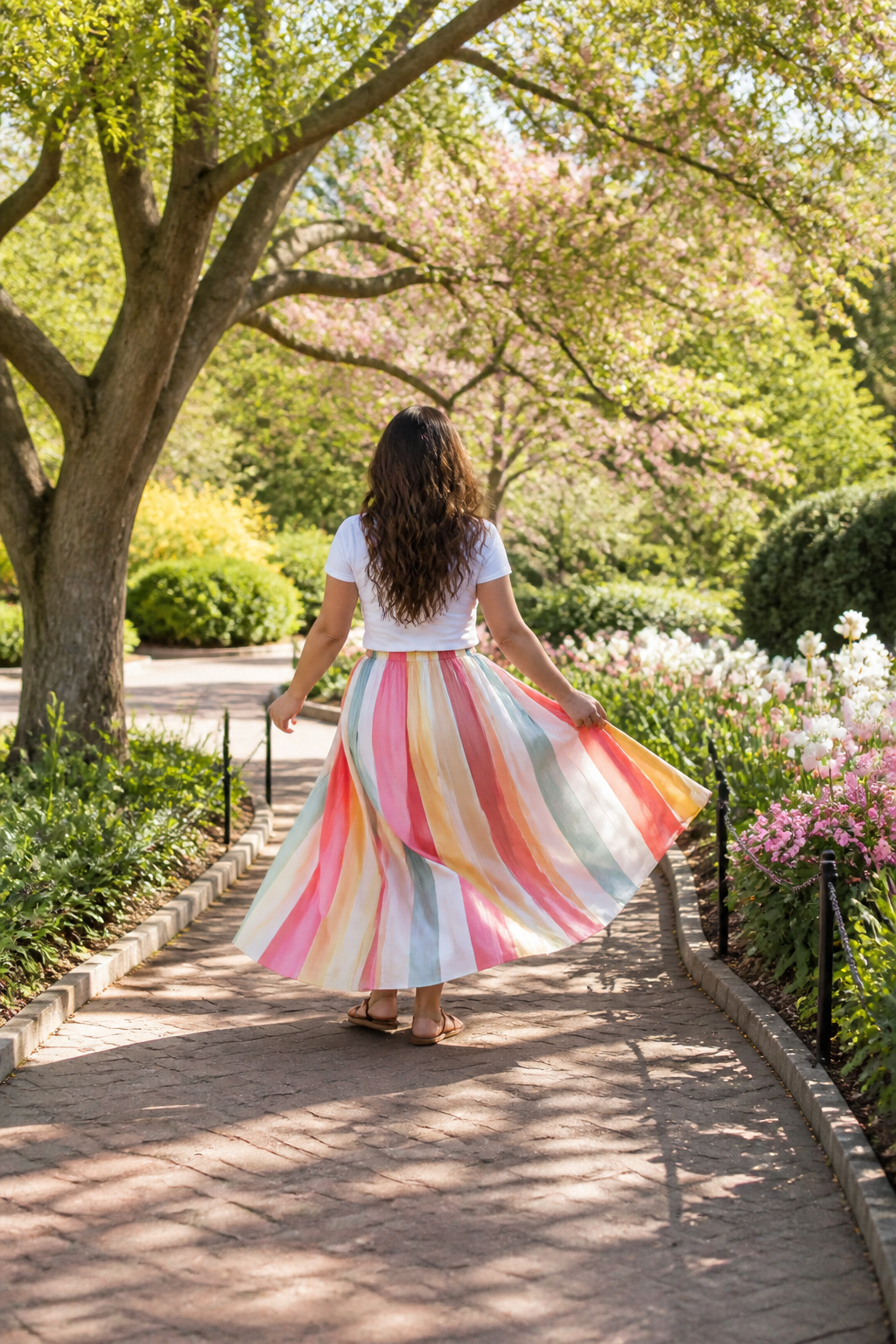
A maxi skirt hits at the ankle or just above, and that length does more for spring than you might expect. It blocks a sudden breeze without trapping heat the way a midi or pant leg does, so you stay comfortable through those weeks when the weather cannot decide what season it is.
The fabric matters more than the cut. A lightweight cotton voile or a lined rayon will move and flow without the weight of a winter-weight jersey. You want to feel the air when you walk, not fight the skirt. A heavier knit maxi works better in early March and gets stifling by May.
You can pair one with a fitted tee and flat sandals for errands, or tuck in a silk blouse and add a low block heel for dinner. The contrast between the loose skirt and a closer top gives you shape without tightness anywhere. A cropped jacket that ends right at the waistband keeps the line clean; anything longer competes with the hem and shortens your leg.
For pattern, a vertical stripe or a small scattered print keeps the volume from reading as too much fabric. Solid dark colors work too, but they need texture, a subtle weave or a soft sheen, so the skirt does not disappear into a shapeless block.
Denim Jackets
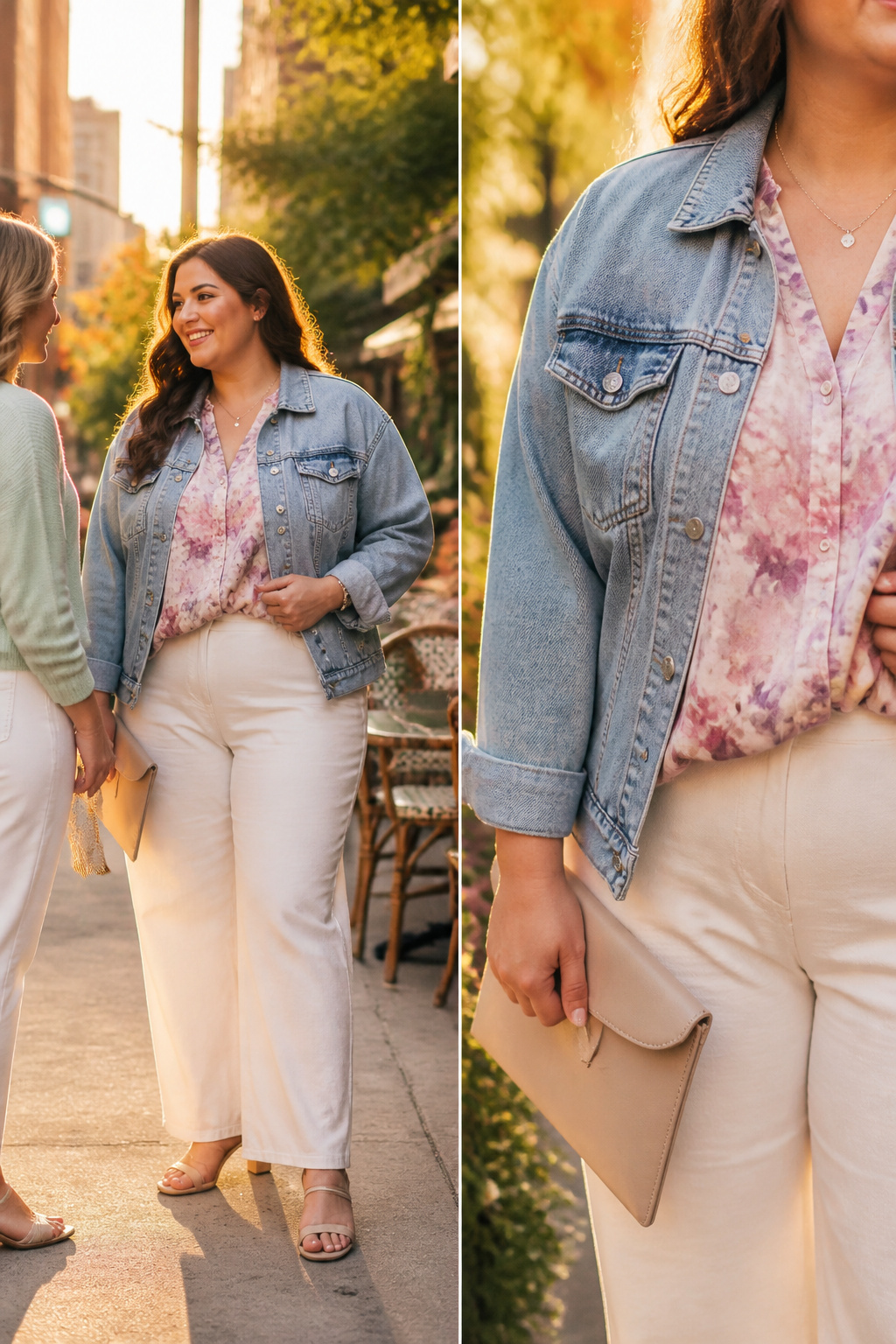
A denim jacket is the piece you reach for when the morning reads 52 degrees and the afternoon promises 72. It adds the structure a spring outfit needs without the weight of a wool coat, and the right cut lets you tie it at the waist or wear it open without pulling across the back.
For plus-size spring outfits, the fit through the shoulder matters more than the size on the tag. A shoulder seam that sits half an inch past where your arm actually starts will make the whole jacket look borrowed, and a back panel that gaps when you reach forward means the cut is too narrow across the upper back. Try the motion you actually make: reaching for a coffee cup, hugging a friend. The jacket should stay put.
A medium wash with slight fading through the thigh and elbow pairs with the soft colors spring brings: sage, blush, butter. Dark indigo reads heavier and fights the season’s light. Avoid anything with heavy sanding or whiskering across the front hip; it draws the eye horizontally and competes with the rest of your outfit rather than framing it.
Spring Colors and Patterns
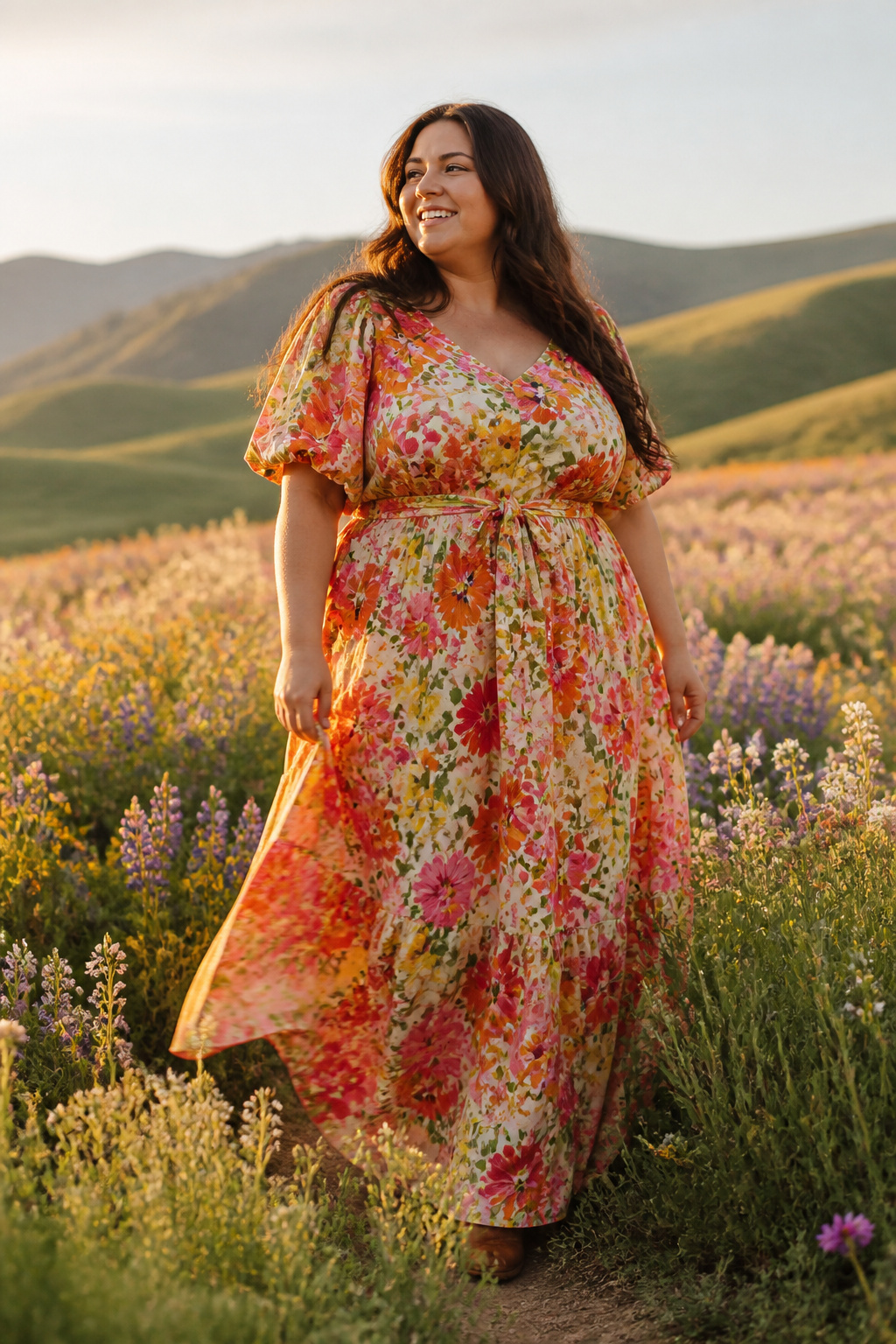
Bright colors and florals are not optional for plus size spring outfits this year; they are the whole point of the season. You will see saturated pinks, sharp greens, and warm yellows across every category, from the lightweight cardigans layered over dresses to the high-waisted pants paired with tucked-in tops. The mistake is treating them as accents instead of the main event. A single bold piece, worn head-to-toe or balanced against a neutral you already own, reads as intentional rather than apologetic.
Florals have shifted from the scattered, small-scale prints that read as busy on larger frames to bigger, more open blooms with breathing room between them. You notice the difference immediately in a mirror: the larger pattern does not compete with your shape, it moves with it. Off-the-shoulder tops and maxi skirts both carry this scaled-up version, and the same rule holds for jumpsuits, where a dense print can turn the whole garment into a single shapeless block.
The spirit of the season is optimism worn visibly. Denim jackets in washed indigo or bleached sky blue function as the bridge piece, toning down a loud dress or pulling together a separates outfit without killing the mood. Breathable fabrics in these colorways, cottons and linens that hold their structure, keep the look from collapsing into the creased, wilted version of itself by noon. You want to look like you chose the color, not like the color is wearing you down.
Breathable Fabrics That Hold Their Shape
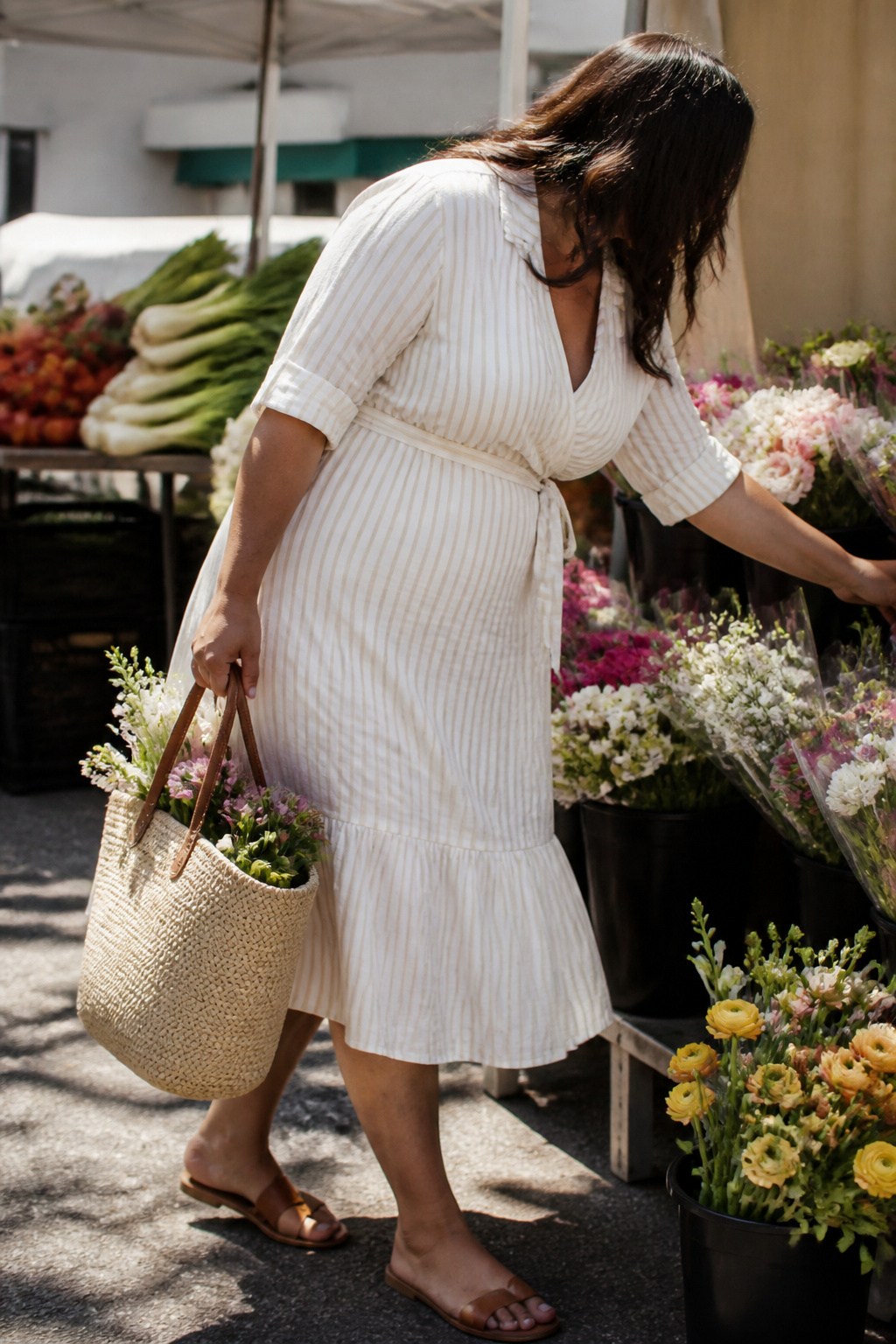
Cotton and linen let air move through the cloth instead of trapping it against your skin, which is exactly what you want once temperatures climb past sixty degrees. The problem is that pure linen bags out at the knees and seat within a few hours of sitting, and a cotton without any give can pull across the hips until the seams strain. Look for a cotton with two to four percent elastane, or a linen blend that includes a touch of stretch fiber, and the garment keeps its shape through a full day of wear.
Winter wool and heavy jersey hold their structure through sheer density, but that same weight becomes exhausting by April. You will wash spring pieces more often, since sweat and sunscreen settle into lighter weaves faster, and cotton-linen recovers from a gentle wash far better than a coated denim or bonded knit ever would. Skip the dryer for linen; the fibers tighten and shorten in heat, so a line dry or a flat dry preserves the length you bought.
How to Layer Without Bulk
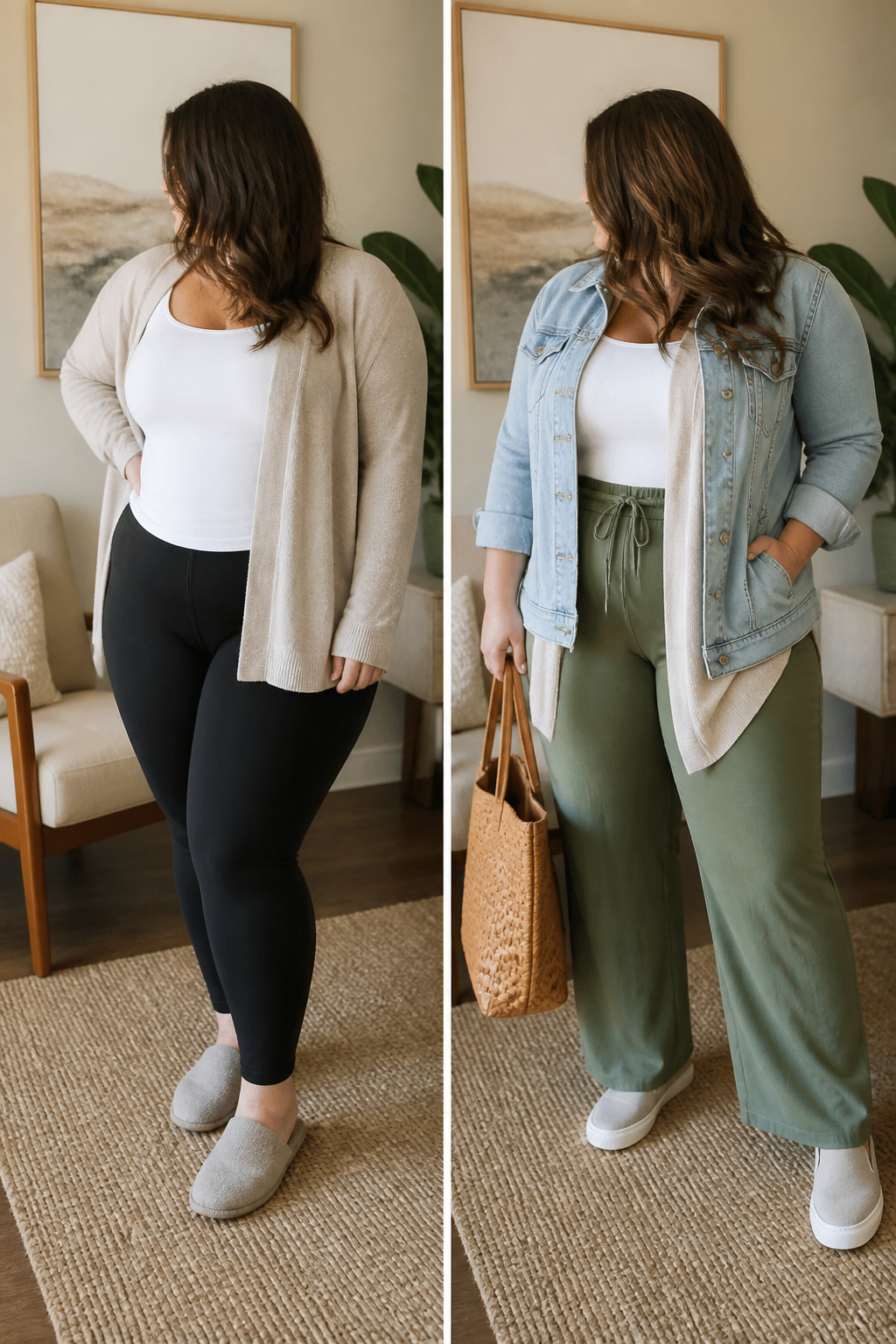
Spring mornings start cold and end up warm, which makes layering the hardest part of dressing this time of year. The mistake you see everywhere is building thickness outward, stacking a tee, then a button-down, then a hoodie until you look like you’re wearing a snowsuit by noon. What works better is building inward: start with the thinnest, most fitted piece against your skin and let each outer layer be looser and easier to shed.
A long-line camisole or thin jersey tank does more than you would think. It catches sweat, keeps a blouse from sticking, and adds almost no visual weight. Over that, an open-weave knit or a shirt in a fabric with real drape, something that falls in a line rather than holding its own shape. The outermost layer should be the easiest to remove and carry: a denim jacket left unbuttoned, a soft trench, a cardigan with some swing to it.
The test is the mirror check at 10 a.m. and again at 2 p.m. If removing one piece doesn’t change the whole look, you built right. Belts over layers almost always read as bulk; if you want shape, get it from a cropped jacket hitting at the natural waist or from a side-tuck that breaks the vertical line. Scarves work the same way a third layer does, adding interest without the commitment of another garment.
Frequently Asked Questions
What are the best plus-size spring outfits?
The best plus-size spring outfits center on a few key pieces: a midi floral dress with a defined waist flatters nearly every shape, a cotton-linen cardigan left open over a camisole handles temperature swings, and high-waisted pants that hit just below the ribcage give clear structure to your silhouette. Each piece works because it creates vertical lines and defines your waist rather than adding volume.
How can I style plus-size outfits for spring?
Style spring outfits by building layers inward rather than outward: start with a thin fitted camisole, add a draped open-weave knit or shirt, and finish with an easy-to-remove outer layer like an unbuttoned denim jacket or a cardigan with swing. For shape, rely on a cropped jacket at the natural waist or a side-tuck instead of belts over layers, which read as bulk.
What fabrics are best for plus-size spring outfits?
Cotton and linen are the best choices for spring because they let air move through instead of trapping it against your skin. Look for cotton with two to four percent elastane or a linen blend with a touch of stretch fiber so the garment keeps its shape through a full day of wear. Pure linen bags out at the knees and seat within hours, and cotton without any give can strain across the hips.