
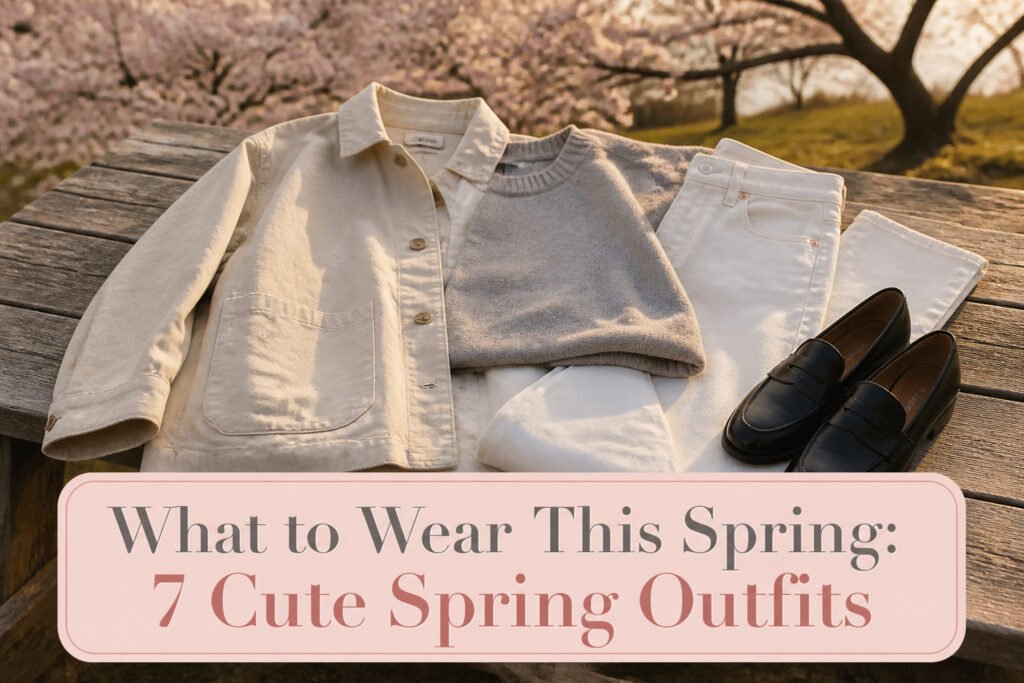
Seven cute spring outfits for 2026 rely almost entirely on what you already own, with the catch that one wrong layer weight ruins the whole thing. A winter wool blazer traps heat by noon; an unlined hopsack or cotton version moves with the temperature. White jeans, a gray sweater, and black loafers repeat across half the combinations, but the barn jacket is where substitution breaks.
White Button-Down with Black Pants and Flats
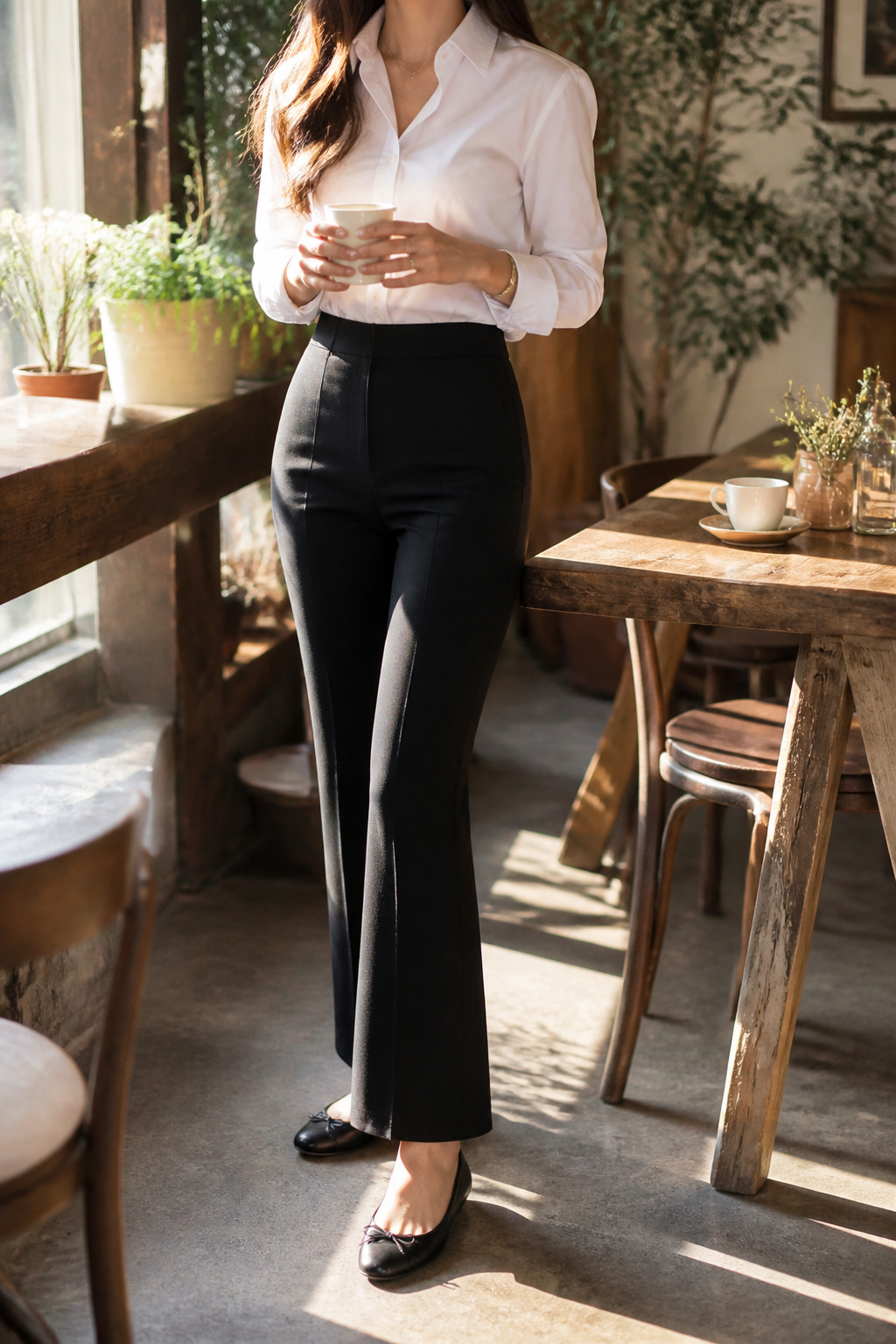
A crisp white button-down with black pants and black flats lands in that narrow spring window when mornings still bite but afternoons open up. The white top reads lighter than it is, catching the sun you finally get back; the black ground anchors it so you don’t look like you’re trying to force summer.
You probably own all three pieces already. That is the point. The shirt might be the one you bought for work, the pants from a winter uniform, the flats from some season before. Together they read intentional, not leftover.
Keep the shirt actually crisp, not the soft-washed weekend version. Tuck it, half-tuck it, leave it out if the cut is short and squared, but let the contrast between top and bottom do the work. The flats should be flat flat, not ballet slipper thin-soled. A slight structure keeps the black line from going too casual against the severity of the pant.
Early spring days run short and cool. This outfit handles a coffee shop that still has the heat on and a sidewalk in direct sun without asking you to carry a layer you won’t need by noon.
Barn Jacket over Gray Sweater and Jeans
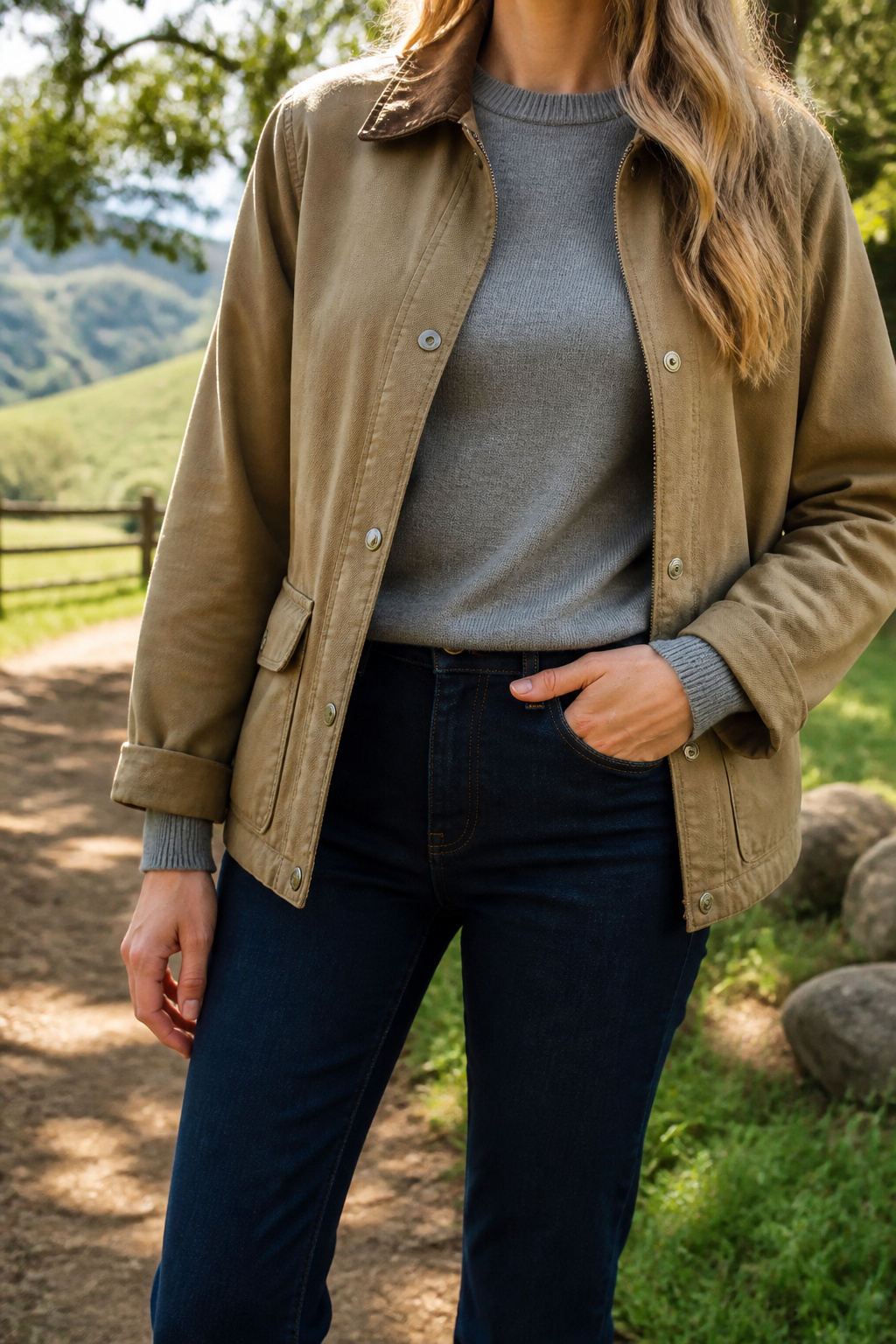
The barn jacket revival stuck around for another season, and it earns its place in your lineup by solving a problem heavier coats ignore. Spring mornings start cold, afternoons warm up, and a winter parka leaves you sweating by noon. A barn jacket hits the middle weight: enough structure to block wind, light enough to drape open or stuff in the car.
Layer it over a gray sweater and jeans and you get the countryside reference without looking like you are headed to actual farm work. The neutral palette does that work. Gray and denim read as city basics; the jacket adds texture and a little heritage, not a costume. You could wear this to weekend coffee runs or errands without the outfit announcing a theme.
Keep the sweater fitted and the jeans slim, not baggy. The jacket has a relaxed cut already, and piling loose layers underneath turns the silhouette sloppy. One refined piece underneath keeps the balance.
Blue Button-Up with Jeans and Black Loafers
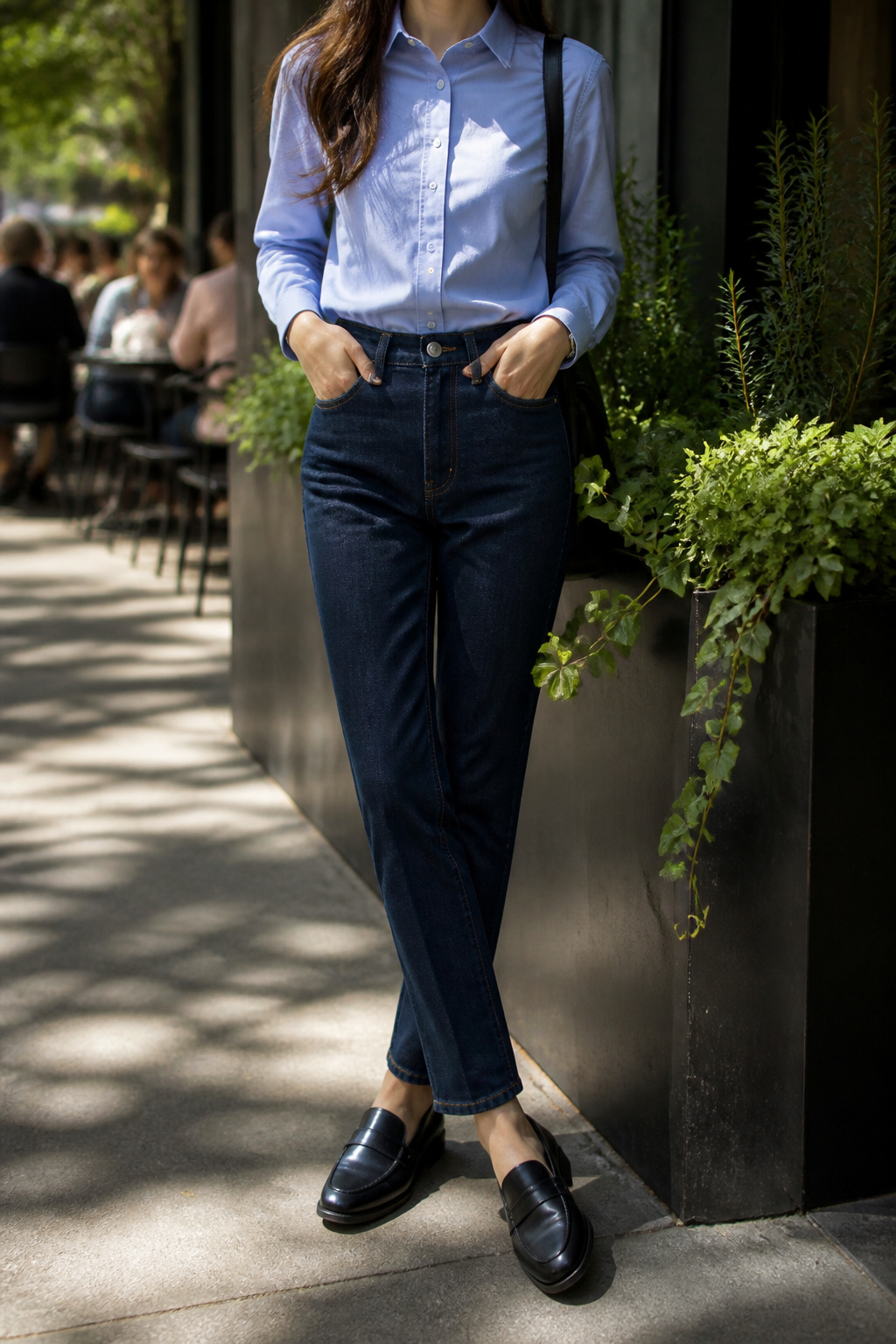
A blue button-up with jeans and black loafers hits the sweet spot between dressed-up and easy. The shirt gives you structure without trying hard, and the loafers add a tailored edge that sneakers just don’t bring on days when the temperature jumps and you still need to look pulled-together.
The shade of blue matters more than you’d think. A mid-tone blue, something like a true royal or a slightly faded indigo, plays against most denim washes without clashing. Go too navy and you disappear into your jeans; go too pale and the whole thing reads like a uniform you didn’t mean to wear. The slight color contrast between shirt and denim is what keeps this from looking like you grabbed whatever was clean.
Black loafers ground the outfit in a way brown or tan versions don’t. They sharpen the line from ankle to hem, and they carry you straight from a casual office into dinner without the shoe change that sneakers would demand. The result reads intentional, not assembled by accident, which is exactly what you want from a spring outfit that has to handle twenty-degree swings before noon.
Denim Button-Up with White Jeans and Tan Loafers
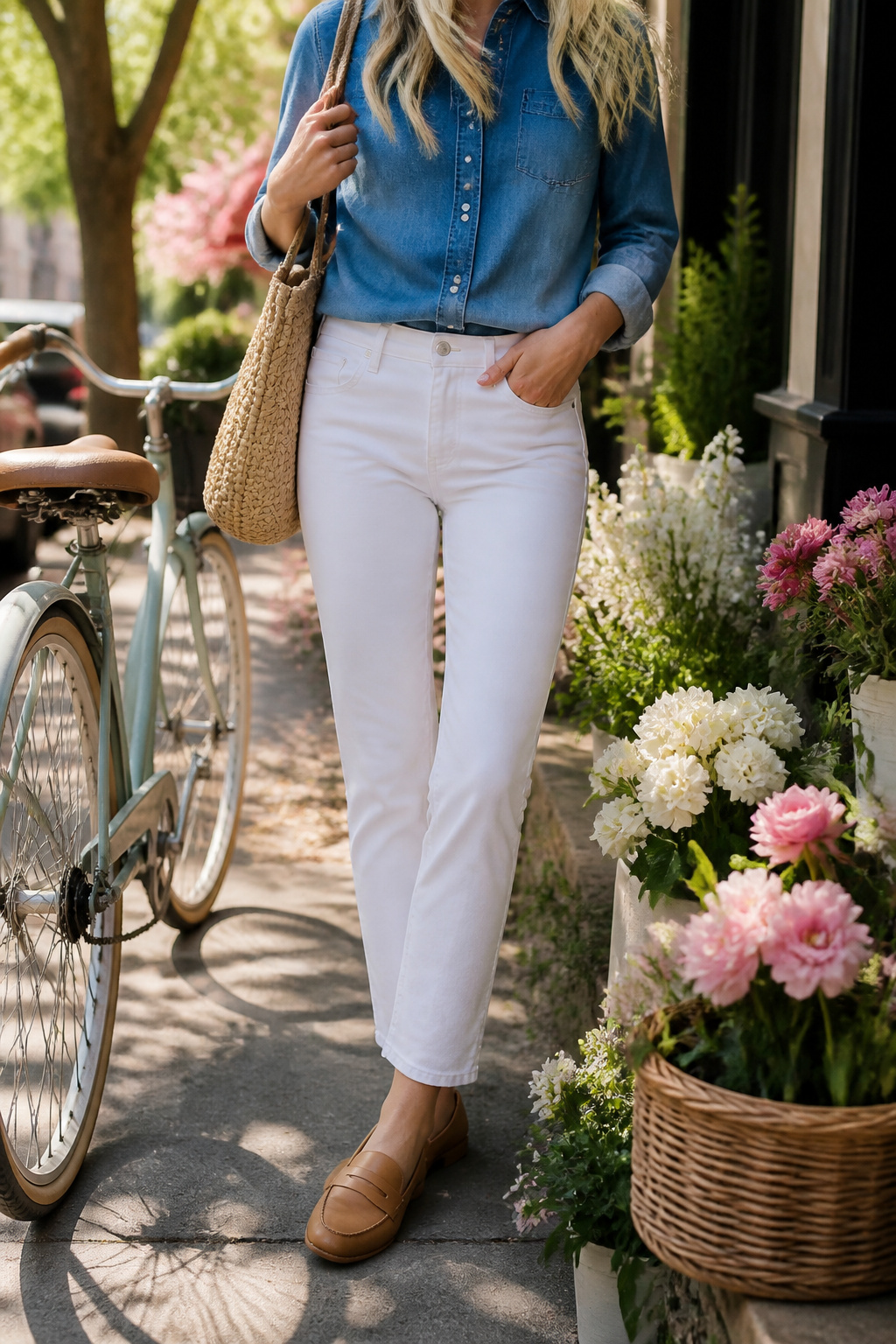
A denim button-up with white jeans walks the line between casual and put-together better than almost anything in your closet. The trick is the wash: pick a shirt in a medium-to-dark indigo and let it sit cleanly against optic white denim. The contrast keeps double-denim from looking like a uniform and signals you thought about it for ten seconds, which is all it takes.
White jeans read spring because they catch light, but they also collect mud and subway grime faster than you’d like. The move is to treat them as regular denim, not precious occasionwear. Wear them on Tuesday errands, not just Sunday brunch. They look more natural that way, and you’ll get your cost-per-wear down to something rational.
Tan loafers finish this better than black would. Black pulls the eye down hard and turns the outfit into blocks of color; tan softens the transition from white denim to shoe and warms the whole palette. Suede reads more relaxed, leather more polished. Either works, but skip patent or anything that catches shine. You want this to look like you grabbed three things and left the house, which, after the first time you wear it, is exactly what you’ll do.
Black Blazer with Jeans and Loafers
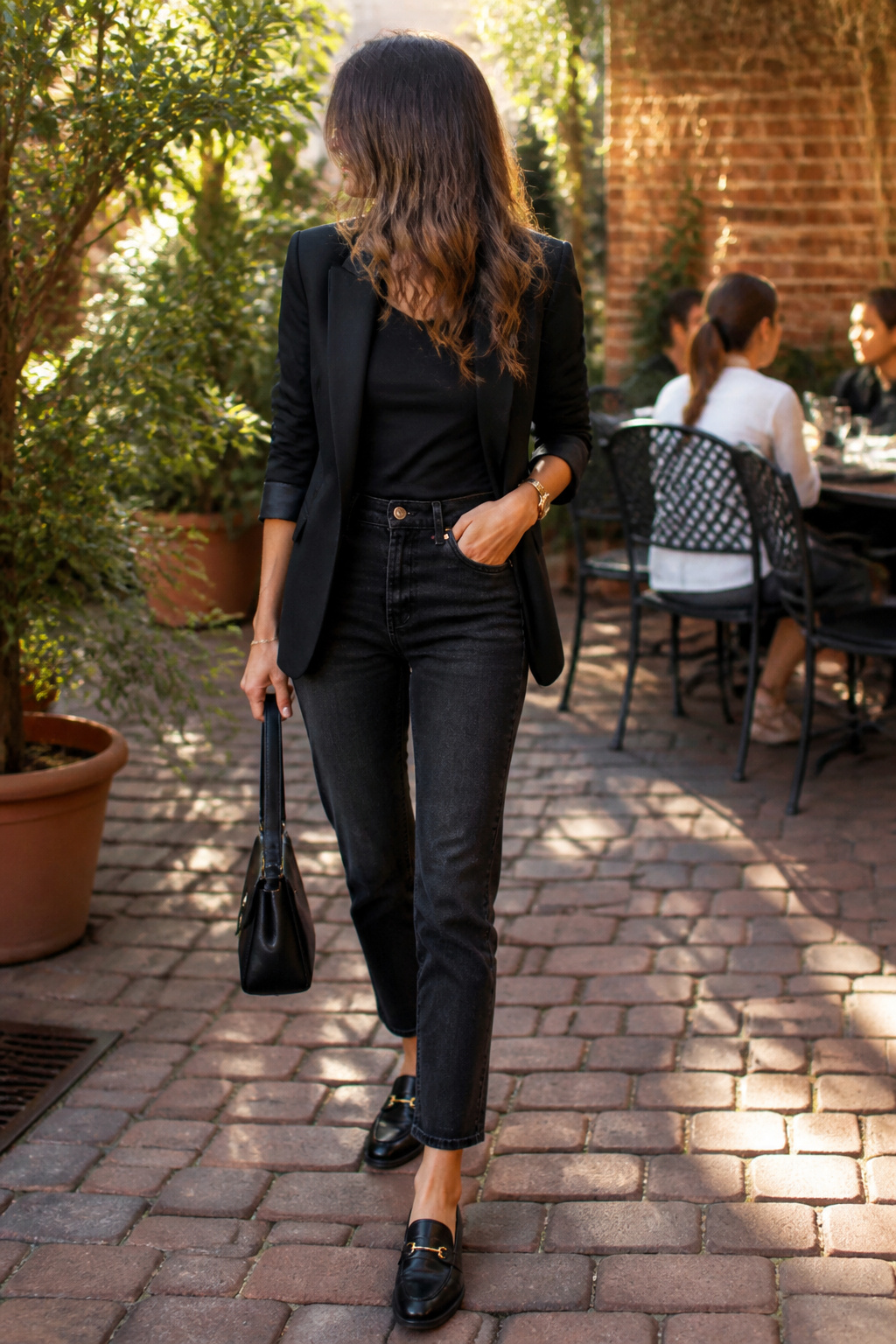
A black blazer over jeans with loafers is the combination you reach for when the day could end at a desk or a patio table. The trick is the blazer’s weight. Spring demands something lighter than winter wool, a cotton or unlined hopsack that moves with you and does not hold heat once the afternoon warms. That lighter construction keeps the look from feeling like you escaped the office early.
Where this pairing fails is in the extremes. Jeans with heavy distressing, blown-out knees, or excessive fading fight the blazer’s structure and you end up looking dressed for two different events at once. The same collapse happens when the blazer itself is too formal, peak-lapelled and sharp-shouldered, demanding a trouser that jeans simply are not. You want a soft-shouldered or only lightly constructed jacket, something that can read as smart without insisting on it, and denim in a dark, clean wash or a very subtle fade. Loafers complete the bridge: a penny loafer in dark leather or suede keeps the foot refined but relaxed, avoiding the formality of an oxford or the sloppiness of a running shoe. The result reads as intentional, not as a compromise you settled for.
White Tee with Jeans and a Colorful Bag
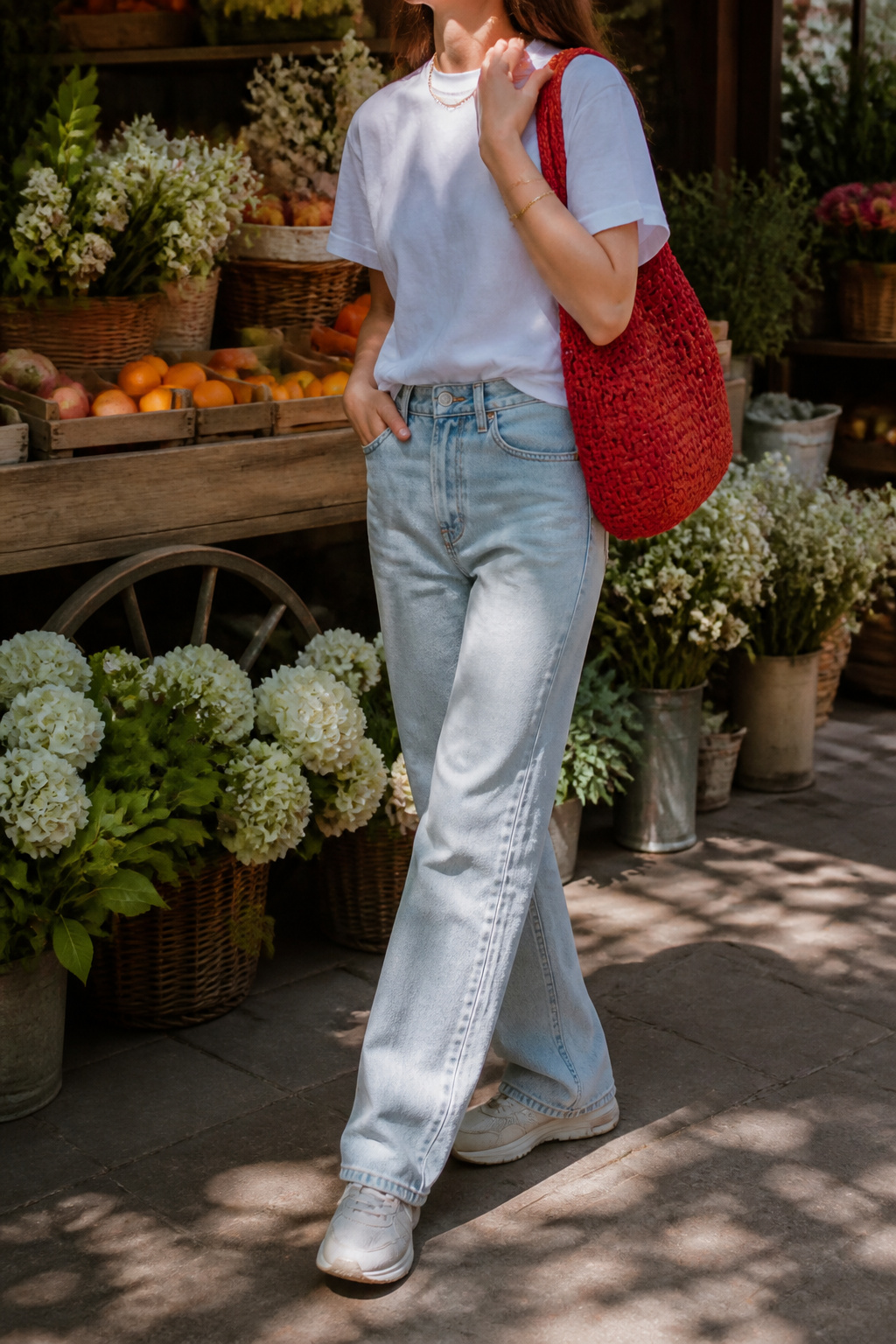
A white tee and jeans is the foundation you already own. Add one colorful bag and the whole look shifts from leftover laundry to something you meant to wear.
The mistake is piling on more. A bright shoe and a printed scarf and statement earrings fight each other until nothing registers. One strong color in one place does the work. The eye goes straight to the bag, reads it as intention, and moves on.
Bag color is where you choose based on what you actually see in the mirror. Olive and mustard bags warm up cooler skin tones without the jolt of orange. Cobalt and cherry red do the opposite, giving warmth to complexions that read flat in beige. If you have never tested this, hold the bag under your chin in daylight before you buy.
This is the lowest-effort spring outfit that still looks considered because the structure is already there. The white tee and jeans are neutral territory. The bag is the only decision you had to make, and making one decision well beats making three halfway.
Gray Sweater with White Jeans and Black Loafers
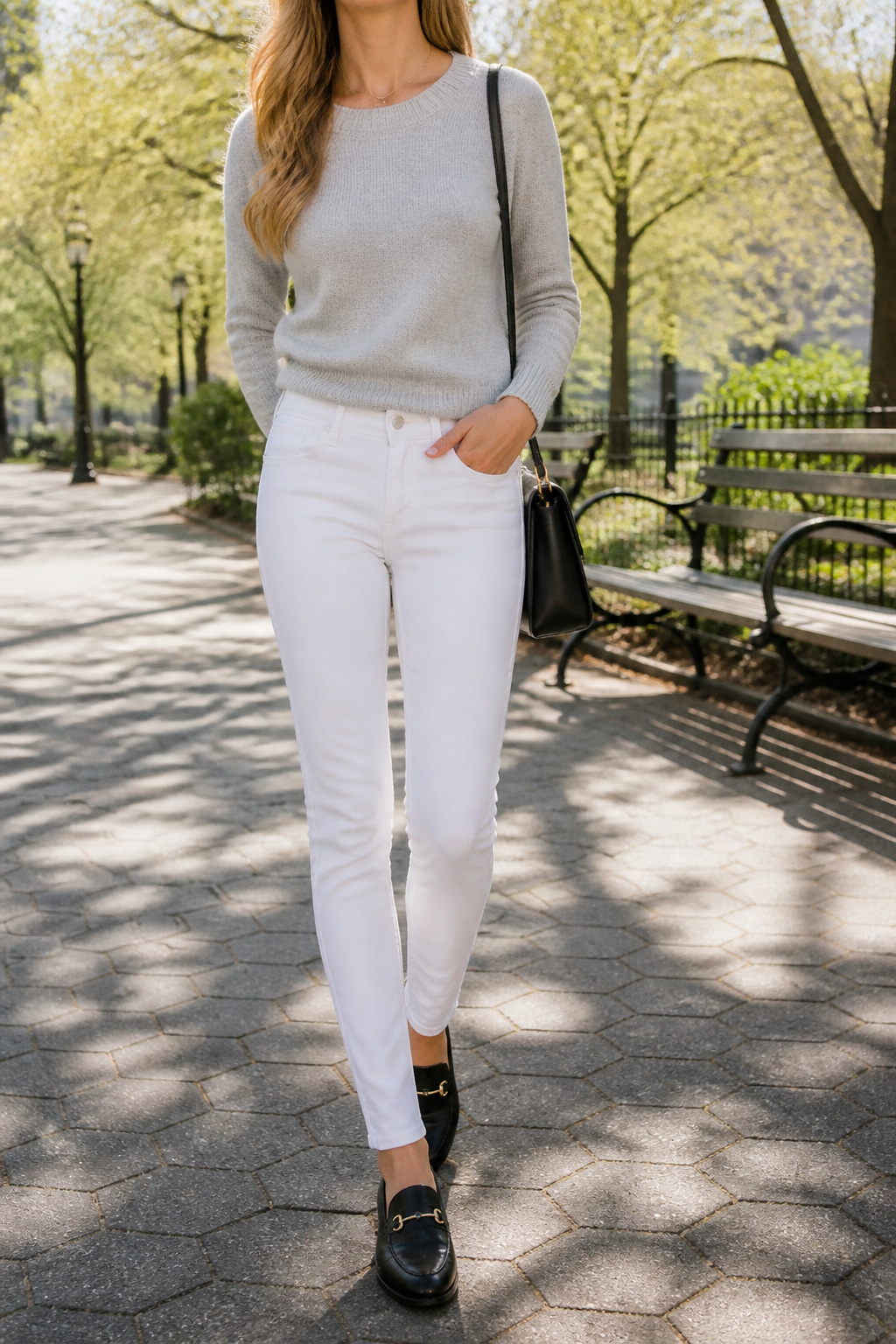
A gray sweater with white jeans and black loafers reads fresher than you might expect for spring. The gray replaces the black top you would normally reach for, and that single swap keeps the whole outfit from feeling like winter dragged into April. White denim against a soft neutral knit stays light without floating away; the gray anchors it just enough.
The black loafers matter here. Without them, you are in sweater-and-jeans territory, which can land anywhere. With them, the look gains intention. The loafers signal that you dressed for the season on purpose, not that you grabbed the first warm layer you found when the morning was still cold.
Keep the gray light to medium; charcoal fights the white instead of complementing it. A crewneck or a thin turtleneck both work, but the neck should sit close. Anything slouchy tips the balance toward loungewear. Roll the sleeves once if the sweater allows it, or leave them pushed to the forearm. Either way, show some wrist so the outfit breathes.
Building from What You Already Own
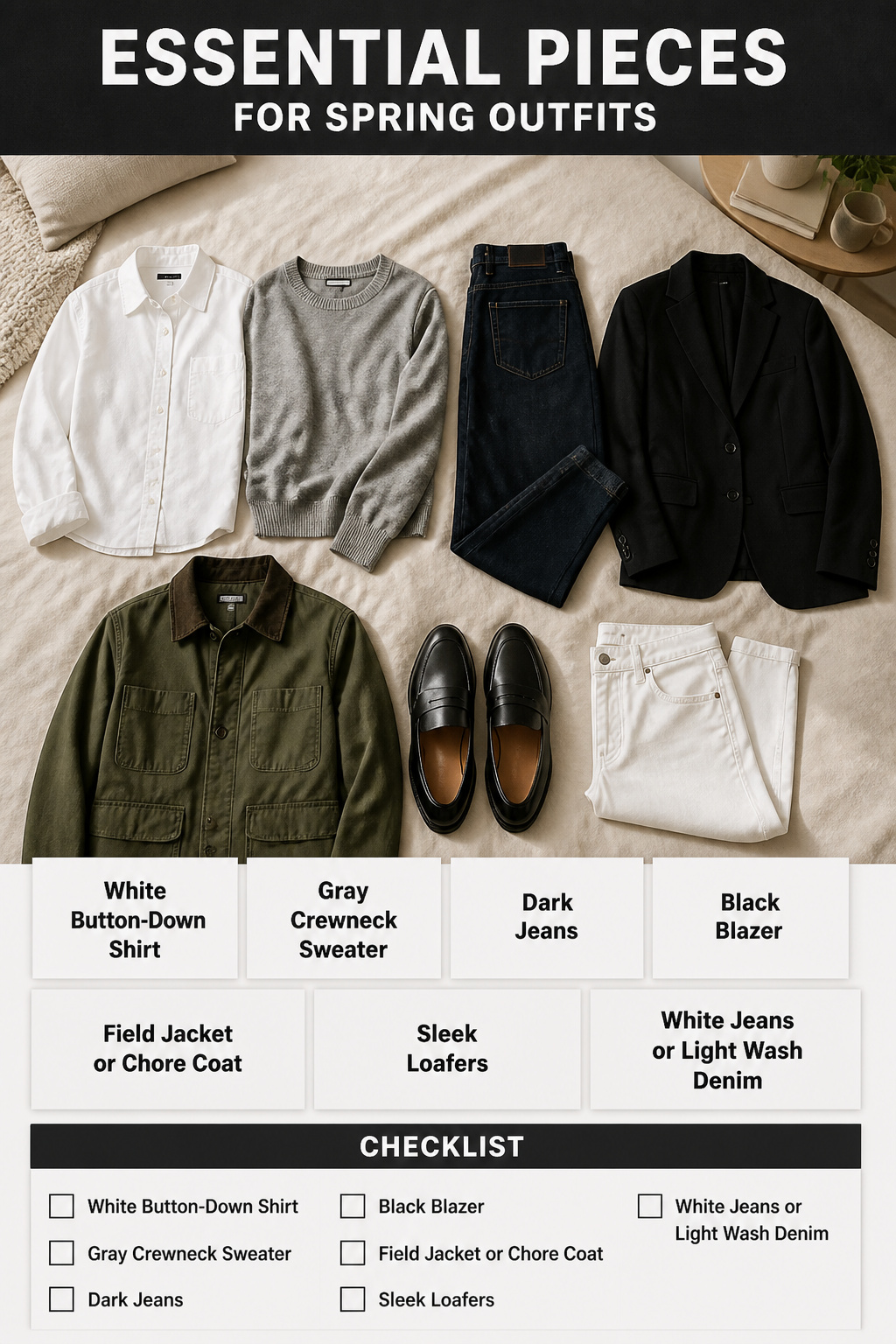
Pull everything out and lay it on the bed. You are looking for pieces that work across multiple outfits, not one-hit wonders. A white button-down, a gray crewneck sweater, dark jeans, and a black blazer probably cover half the combinations already. If you own those four, you are closer than you think.
The barn jacket is where substitution breaks down. A standard field jacket or chore coat works if the color is right, but a puffer or a short denim jacket throws off the proportions and the spring feel. Same with loafers: a sleek black or tan pair carries most of these looks, but chunky sneakers or worn boots shift the tone entirely.
White jeans are the other sticking point. Light-wash denim can substitute in a pinch, though it reads more casual and limits your top options. If you do not own white jeans and do not want to buy them, skip the outfits that center them rather than forcing an alternative that looks off.
Color is easier to fake than structure. A pale blue button-up stands in for a blue button-up; cream reads close enough to white. Fit is harder to compromise. A blazer that is too long or jeans that are too tight break the outfit in ways no color swap fixes.
Layering for Unpredictable Spring Weather
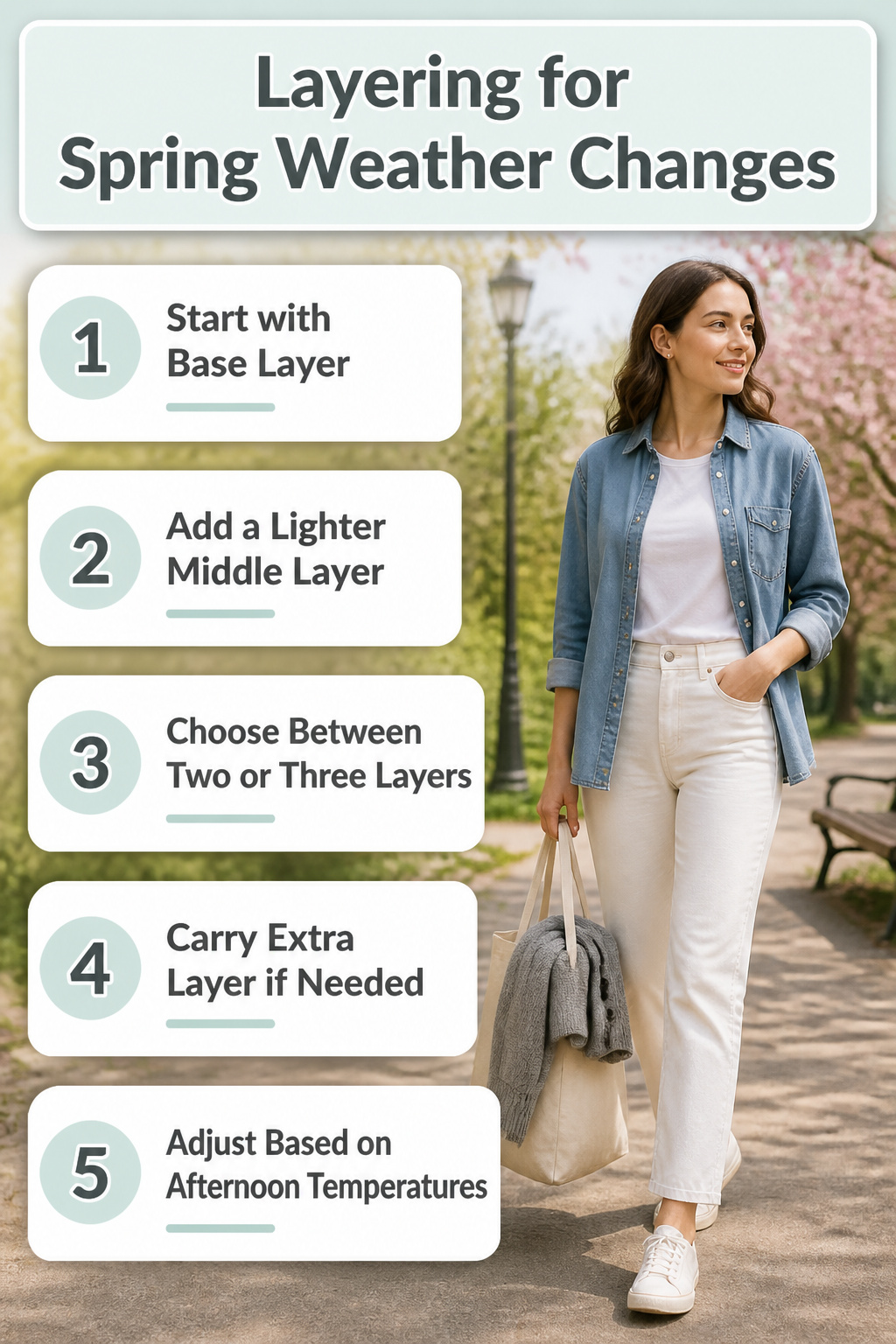
Spring mornings often start in the low forties and land you in the mid-sixties by lunch, so the two-layer versus three-layer call depends on where that swing sits. Carry the third layer when the gap is fifteen degrees or more, because a barn jacket over a gray sweater looks intentional at eight a.m. and stuffed into your tote by noon. The seven outfits that layer cleanly without bulk share one trait: the outer piece is lighter than it looks. A black blazer over a white tee adds no width through the shoulders. A denim button-up left open over a white tee reads as one slim line, not two competing shapes. The gray sweater and white jeans pairing works the same way; the knit is fine enough to tuck or half-tuck without a ridge at the waist. When you are choosing between wearing the barn jacket or carrying it, look at the afternoon low, not the morning high. If the day is headed upward and staying there, carry. If the temperature drops back after three, wear it out and keep the sweater light underneath.
Light and Neutral Color Pairings
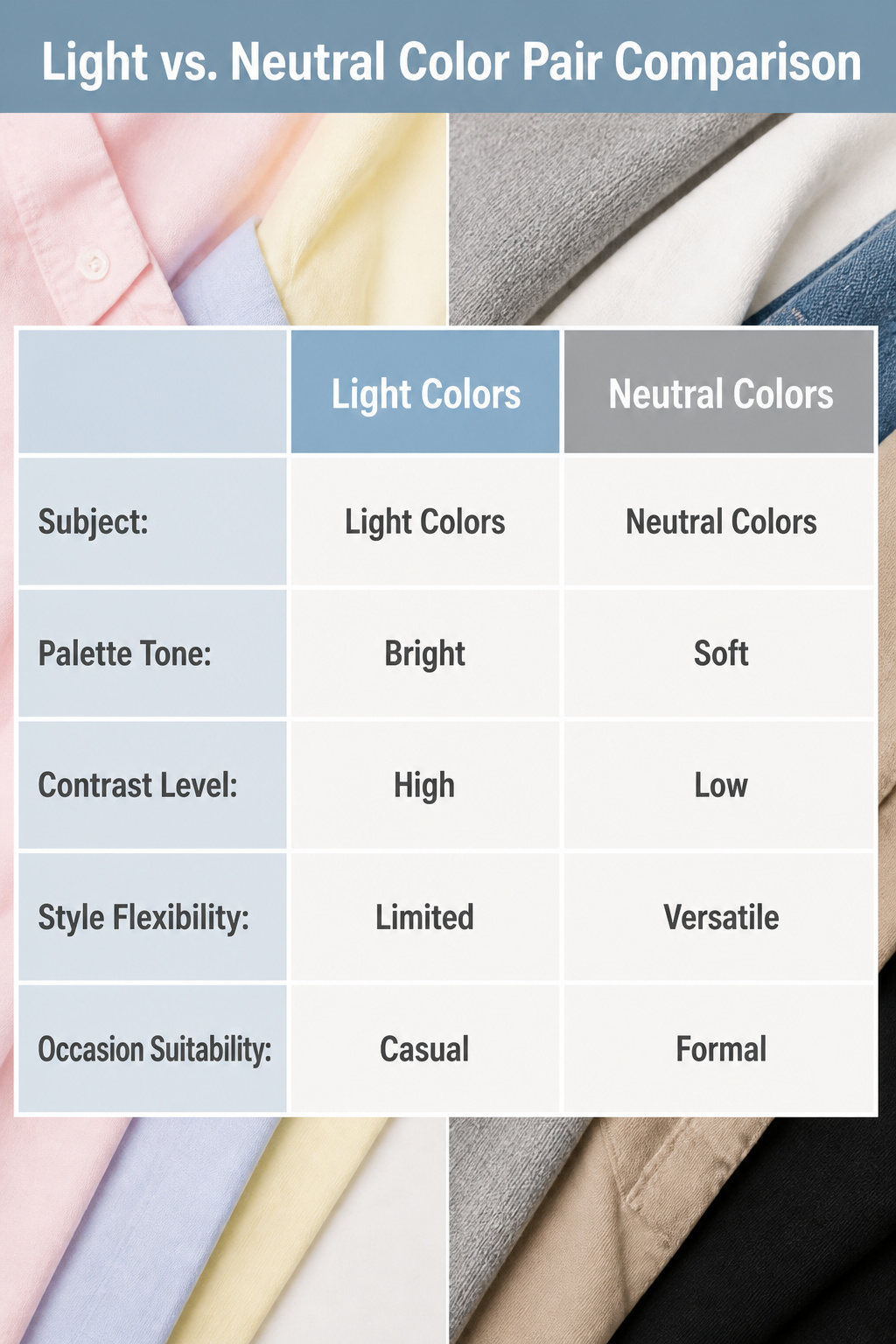
The palettes that read as spring without shouting rely on white, gray, blue, tan and black rather than pastels or brights. A single accent color belongs in your bag, your scarf, or one small layer, never spread across the outfit where it competes with itself.
Gray and white carry the season quietly. A soft gray knit against crisp white denim feels fresh because the contrast is clean, not because either color tries hard. Blue functions the same way, especially in a button-up paired with jeans: the slight tonal shift reads as interest without registering as color at all.
Denim earns its place as a neutral here. It anchors the lighter pieces, grounds the black shoes, and lets you repeat the same shade head to toe without looking like you planned a monochrome moment. Black loafers do similar work, adding just enough structure to keep the outfit from floating away.
Where pastels would make the whole look feel costumed, and brights would split your attention, this approach moves between occasions without changing. The same gray sweater and white jeans works for a casual office morning or a late dinner because nothing in it demands a specific setting.
Frequently Asked Questions
What are some cute spring outfit ideas?
Seven outfits work well for spring 2026: a crisp white button-down with black pants and flats, a barn jacket over a gray sweater and jeans, a blue button-up with jeans and black loafers, a denim button-up with white jeans and tan loafers, a black blazer with jeans and loafers, a white tee with jeans and a colorful bag, and a gray sweater with white jeans and black loafers. Each balances light and structured pieces for weather that swings between morning chill and afternoon warmth.
How can I recreate spring outfits from my closet?
Start by pulling out four core pieces you likely already own: a white button-down, a gray crewneck sweater, dark jeans, and a black blazer. These alone cover half the combinations in this guide. Focus on fit rather than buying new; a pale blue shirt can stand in for mid-tone blue, and cream reads close enough to white. Where substitution breaks down is structure, a puffer or short denim jacket throws off the barn jacket proportions, and chunky sneakers shift the tone away from loafers.
What are the best layering techniques for spring?
Carry your third layer when the temperature gap hits fifteen degrees or more, because a barn jacket stuffed in your tote by noon beats sweating through a winter parka. The outfits that layer cleanly without bulk share one trait: the outer piece is lighter than it looks. A black blazer over a white tee adds no shoulder width, and a fine enough gray sweater tucks without a waist ridge. When deciding whether to wear or carry, check the afternoon low, not the morning high.