The range runs from a two-minute messy bun to an eight-hour box braid installation, and what picks your style is how much morning time you actually have once the light starts leaving by six. The catch is that most of these only hold if you match them to your texture: gel gives straight hair that glassy wet look, but the same amount on natural curl turns to helmet frizz by noon. That texture-matching table sits near the end, after the velvet scrunchies and the burgundy thread woven through a high braid.
1. Sleek Ponytail
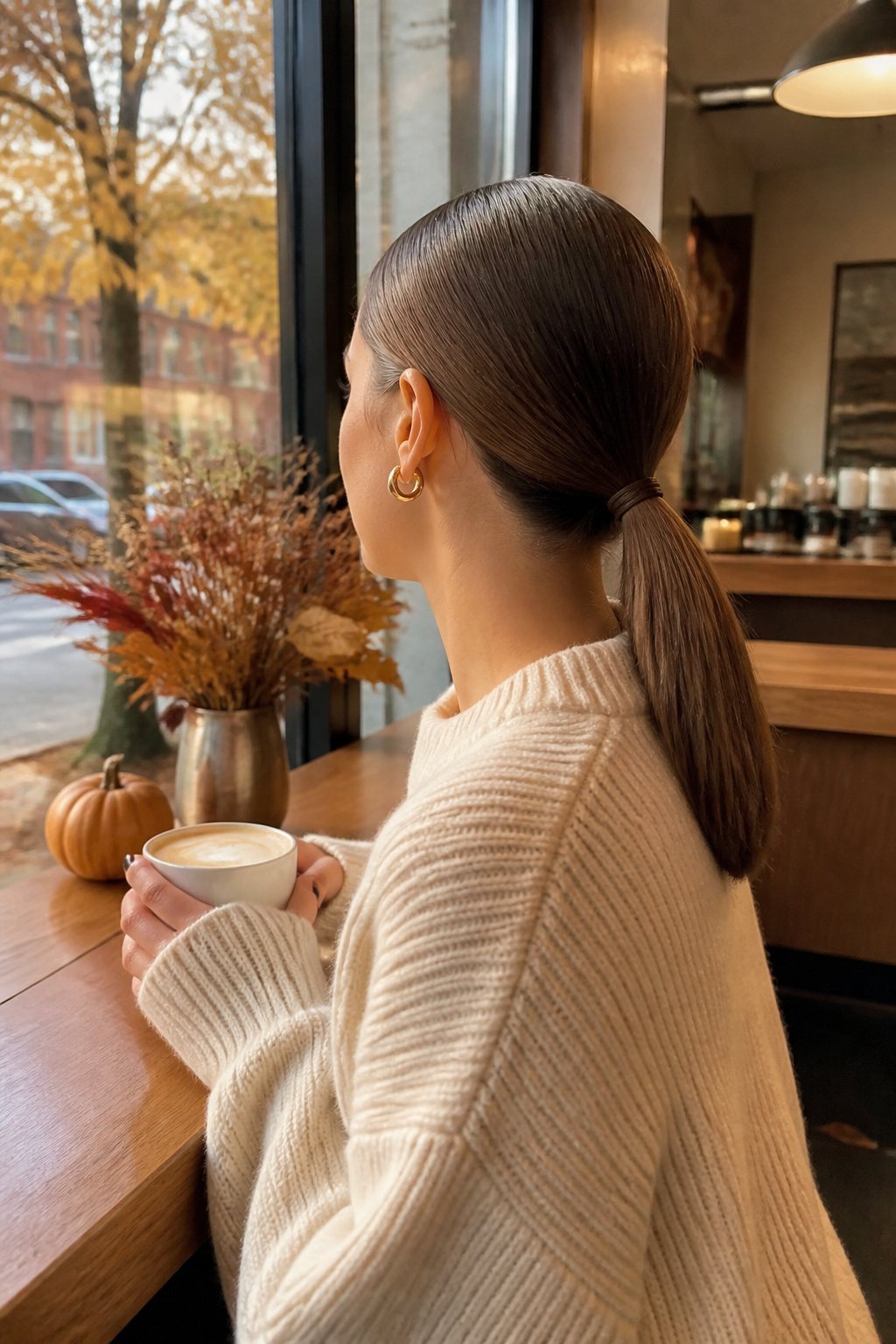
A sleek ponytail is one of the cute fall hairstyles that actually gets easier as the air dries out. Static is the enemy here, and fall mornings hand it to you free of charge. You fight it with two tools: a boar bristle brush and a strong-hold gel. The boar bristle brush pulls the natural oils down from root to tip, which smooths the cuticle far better than a plastic paddle brush ever will. Work the gel through damp or dry hair before you gather it, not after, or you end up with a crusty top layer and flyaways escaping underneath.
This works on straight to wavy hair in medium to long lengths. Curls need more tension than a brush-and-gel combo can provide without heat, so this method is not the move for coilier textures. Position the pony low or at mid-height; high placements read more summer gym than autumn polished. Once it is smooth and secured, a quick pass of hair spray or wax on a bristle brush finishes the surface. The whole thing takes under five minutes, which matters on mornings when the light is gone by six and you still need to look like you planned it.
2. Claw Clip Updo
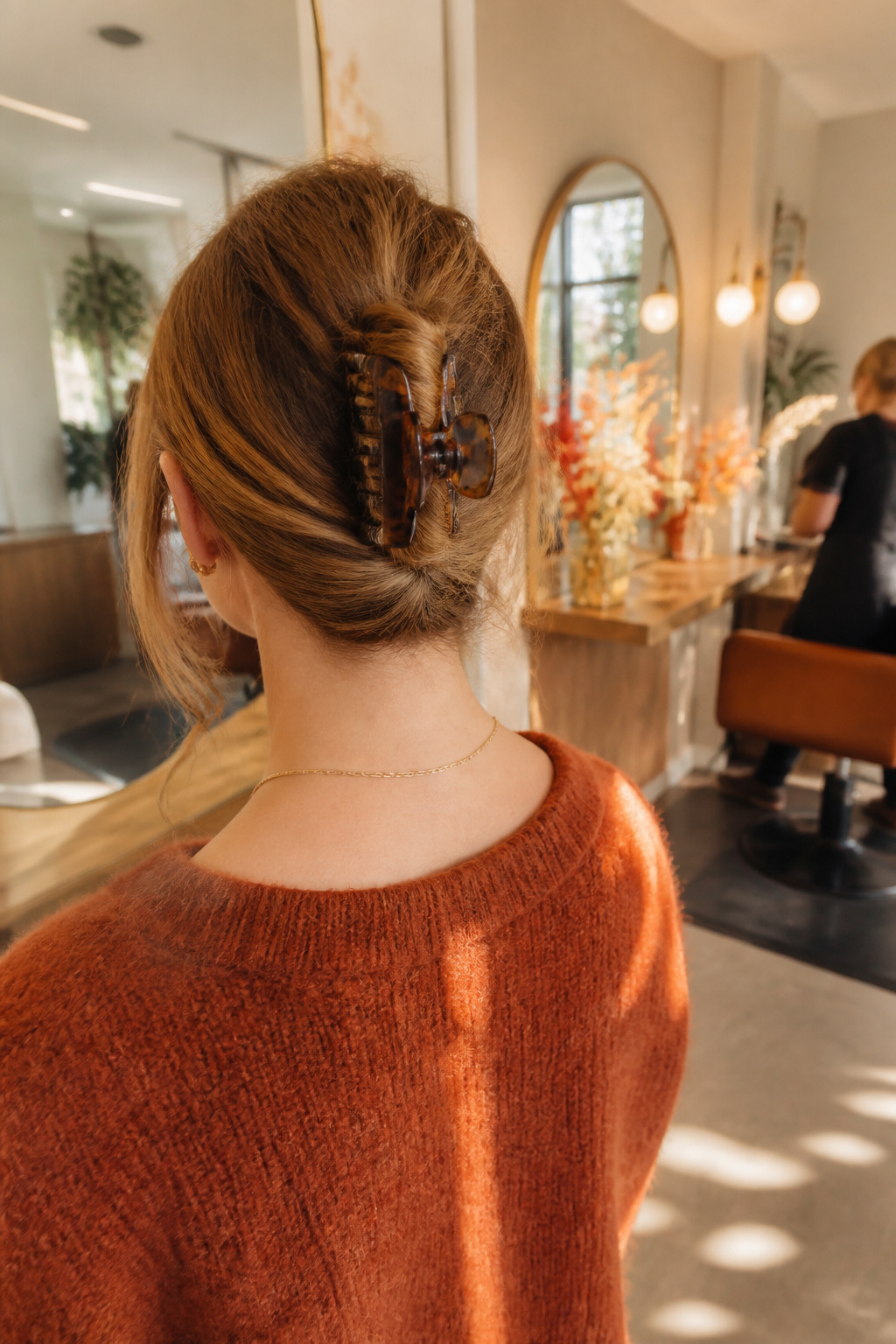
The claw clip updo you are seeing everywhere right now is a direct lift from the mid-90s, and the revival works because it actually solves a problem. Twist your hair at the nape, clip it, and you are out the door with something that reads as intentional rather than last-resort.
For all-day hold, position the clip horizontally with the hinge at the bottom, teeth gripping the twist against your scalp. A vertical clip looks dramatic for about twenty minutes before gravity wins. The flat-backed styles that have emerged recently let you lean against a headrest without the old single-point pressure.
Size matters more than most people expect. Medium clips handle average density; if your hair is thick or long enough to tangle in scarves and coat collars, you need the large flat clip or the weight pulls loose by noon. Half-up styles are the compromise when a full twist is too heavy clipped high.
For fall, tortoiseshell and matte black are the finishes that do not fight your autumn wardrobe. The checkerboard patterns that surfaced this year read playful, but the solid tones blend with wool and cashmere without competing for attention.
3. Half-Up Half-Down Styles
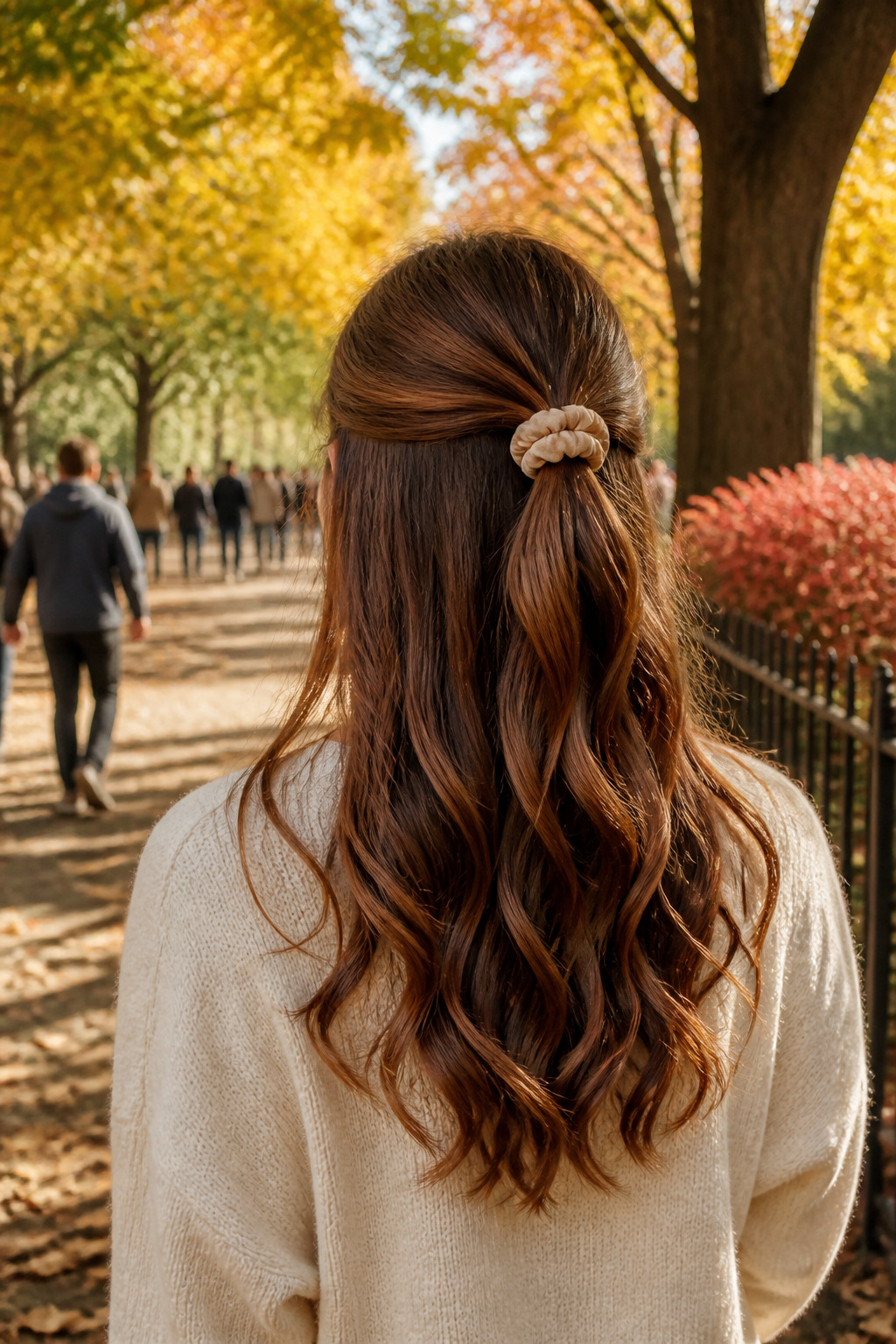
A basic half-up pull-back works on most hair textures and lengths, which is why it keeps showing up every fall. You gather the top section from temple to temple, secure it at the crown, and leave the rest down. The style clears your neck for chunky knits and still shows the length you grew out all summer.
Two ways to play this: keep the top smooth for something clean, or add a small braid or twist through the gathered section for texture that reads as effort without actually taking much. A mini braid along the part line before you pull back, or a simple rope twist of the top layer, gives the same silhouette with more going on.
For the hold, match the accessory to the amount of hair. Snap clips work if you are only clipping back the front strands; they grip without sliding on day-two hair or a dry-shampoo refresh. A small scrunchie is the better choice if you are tying the section, since a larger one can look awkward with only half the hair in and tends to let the weight slip.
Volume at the crown and ends curled outward push the look toward that ’90s revival shape that keeps cycling back. If you are working with longer or thicker hair, keep the secured section lower rather than high; a high clip pulls heavy and can give you a headache by midday.
4. Braided Hairstyles
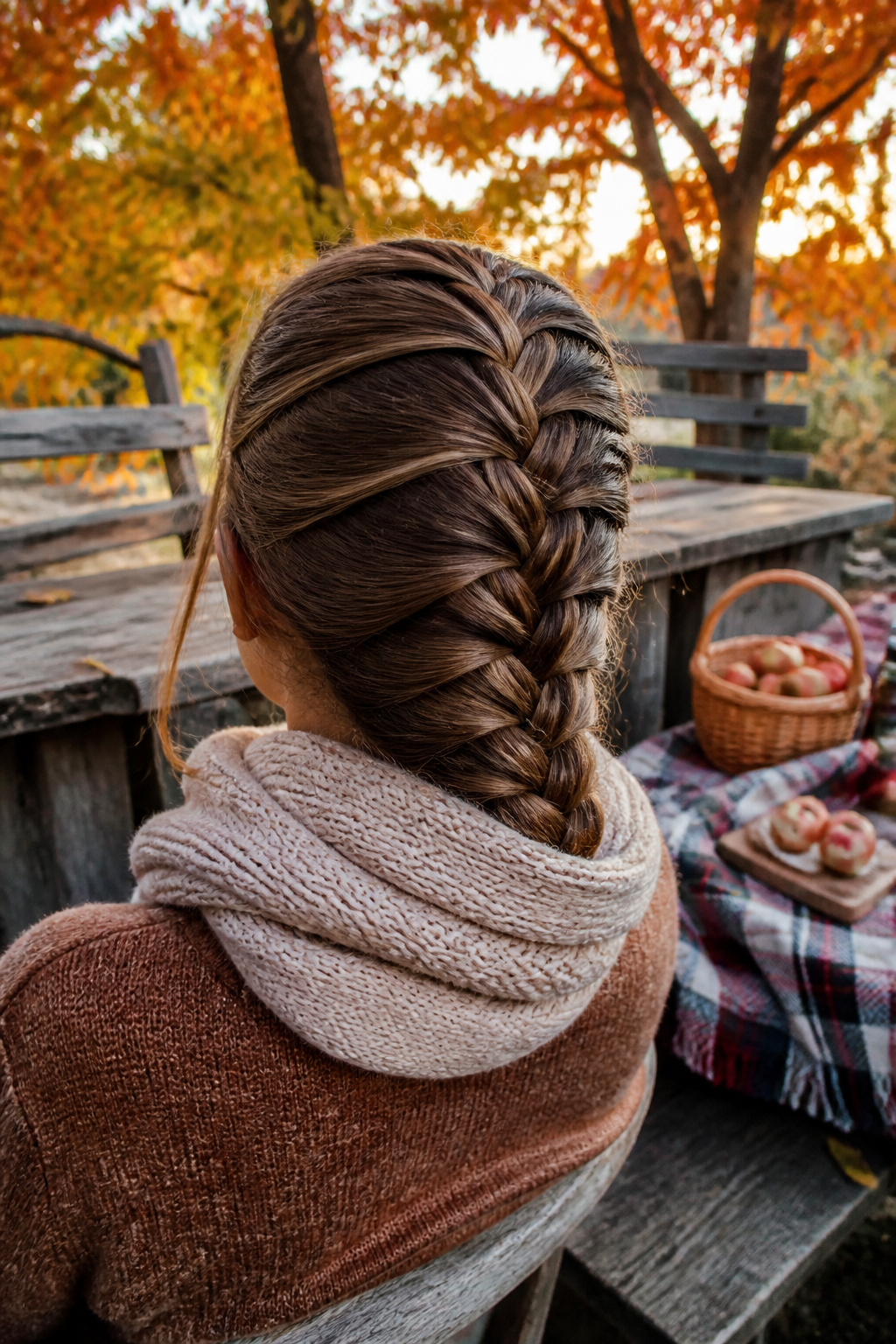
Braids earn their spot in fall because they survive what ruins most styles: the hat you pull on at the bus stop and the hood you raise when the rain starts. French and Dutch braids both lie flat against the scalp, so neither bulges awkwardly under a beanie, and neither leaves you with a dent when you take it off. The difference is direction. You cross sections over for French, under for Dutch, which pushes Dutch braids outward so they read as raised rope against your head. Both start the same, at the crown, and both hold from morning through the commute.
Fishtail braids loosen up the look. They work sleek against a sharp collar or turtleneck, and they shift easily from day to evening if you keep the tension even. Extensions get you the length for a braid that hits mid-back if your own hair falls short. Side braids, meanwhile, sweep everything to one shoulder and pair well with bangs swept the opposite direction. The common mistake is braiding too tight against the temple; you want enough slack that the braid moves when you turn your head.
Prep matters more than hair type. Smooth air-dry cream before you start, then a dry anti-frizz spray after, keeps flyaways from escaping the weave. Tiny elastics matter too; standard ties look clunky at the end of a narrow braid and can slide out by noon.
5. Messy Bun
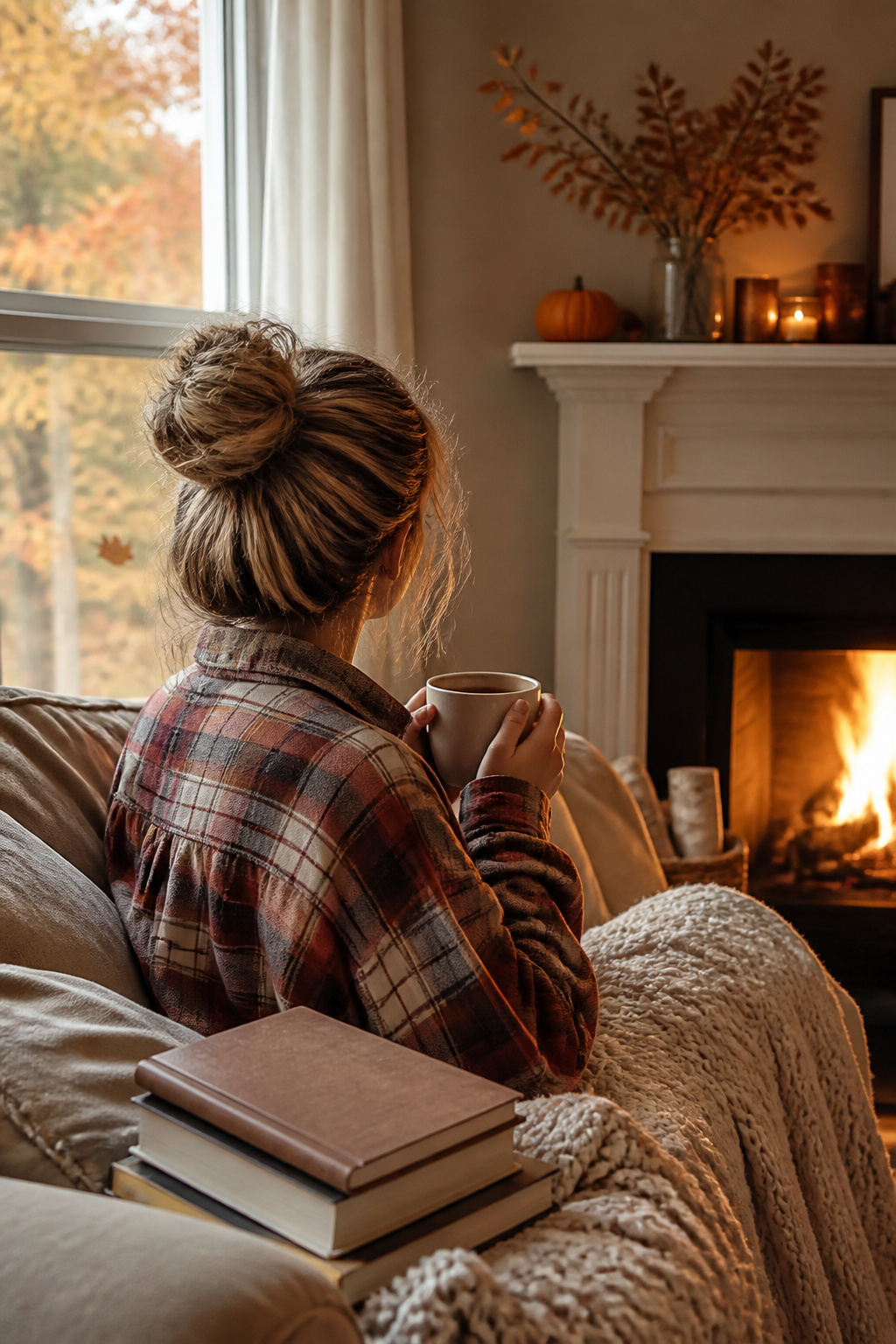
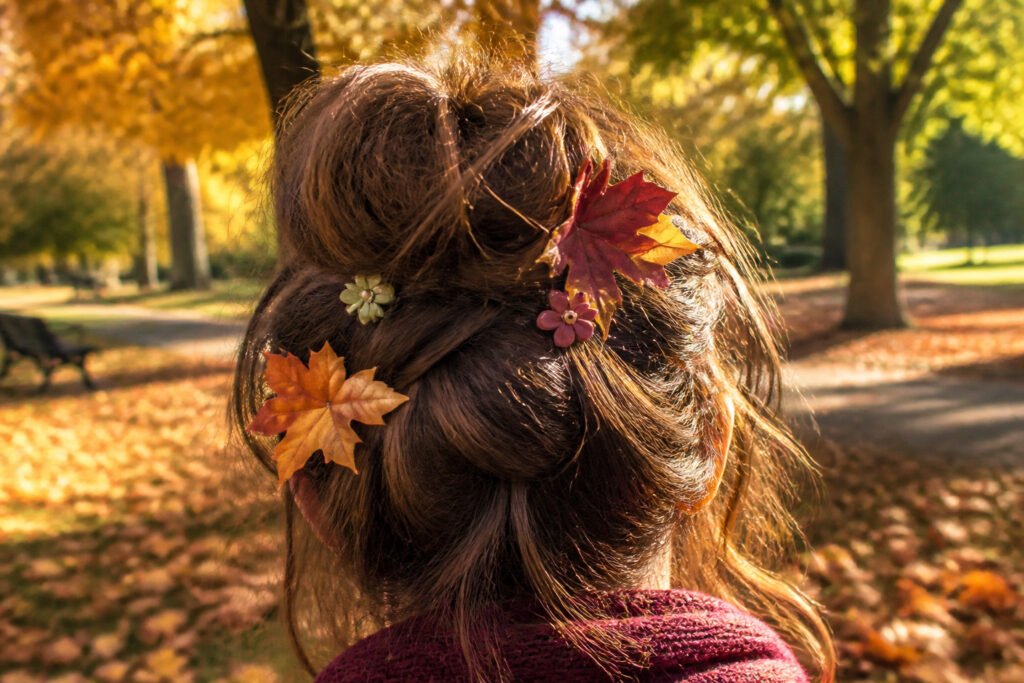
Gather your hair at the crown like you are aiming for a ponytail, but stop before you pull it tight. Leave it loose, twist once or twice without tension, then wrap it around itself and secure with a hair tie or a claw clip. Pull out three or four strands around the face and at the nape so the shape looks accidental rather than styled. The whole thing takes under two minutes once your hands know the motion.
The mistake is treating the messiness as a failure of technique rather than the point. Fall dressing leans relaxed anyway, and a bun that looks like you did it in a car mirror on the way to meet someone matches that mood better than something polished enough for a summer wedding. If it feels too neat, shake your head before the clip goes in.
A claw clip gives you more control over how much hair escapes, which matters if you are between washes and need volume at the root. A hair tie is faster and holds better on fine hair that slips. Either way, the bun sits lower and softer by November than it did in August, and that is exactly how it should look.
6. Face-Framing Bangs
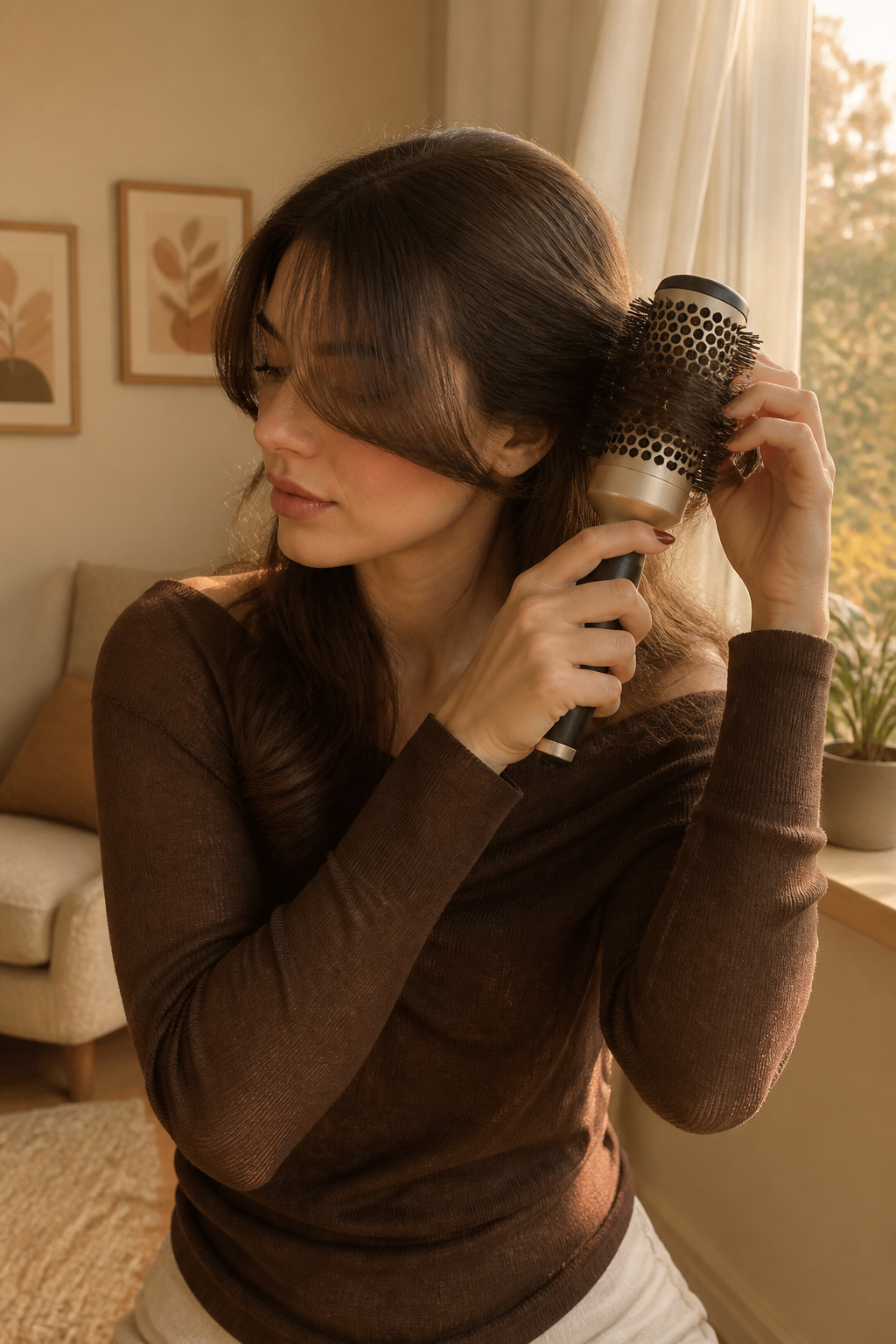
Curtain bangs and wispy bangs both soften your face as the air turns dry, but they ask different things of your morning routine. Curtain bangs split down the middle and sweep outward, adding that touch of intrigue whether you wear your hair up or down. Start styling them wet, working a comb side to side to break up cowlicks before you smooth them under with a round brush. Clip them in place while they cool and the shape holds longer.
Wispy bangs fall lighter, grazing the eyebrows with deliberate unevenness. The wispier, the better this season. A lightweight texturizing foam keeps them piecey without the greasy weight.
Here is the catch with either cut once October hits: dry fall air splits bangs faster than the rest of your hair, so you will need trims more often to keep the ends clean. A large round brush and a blow dryer are not optional tools here. They are what turn a floppy fringe into something that frames your face with actual volume. Skip the brush and you are left with bangs that cling to your forehead by noon.
7. Beach Waves
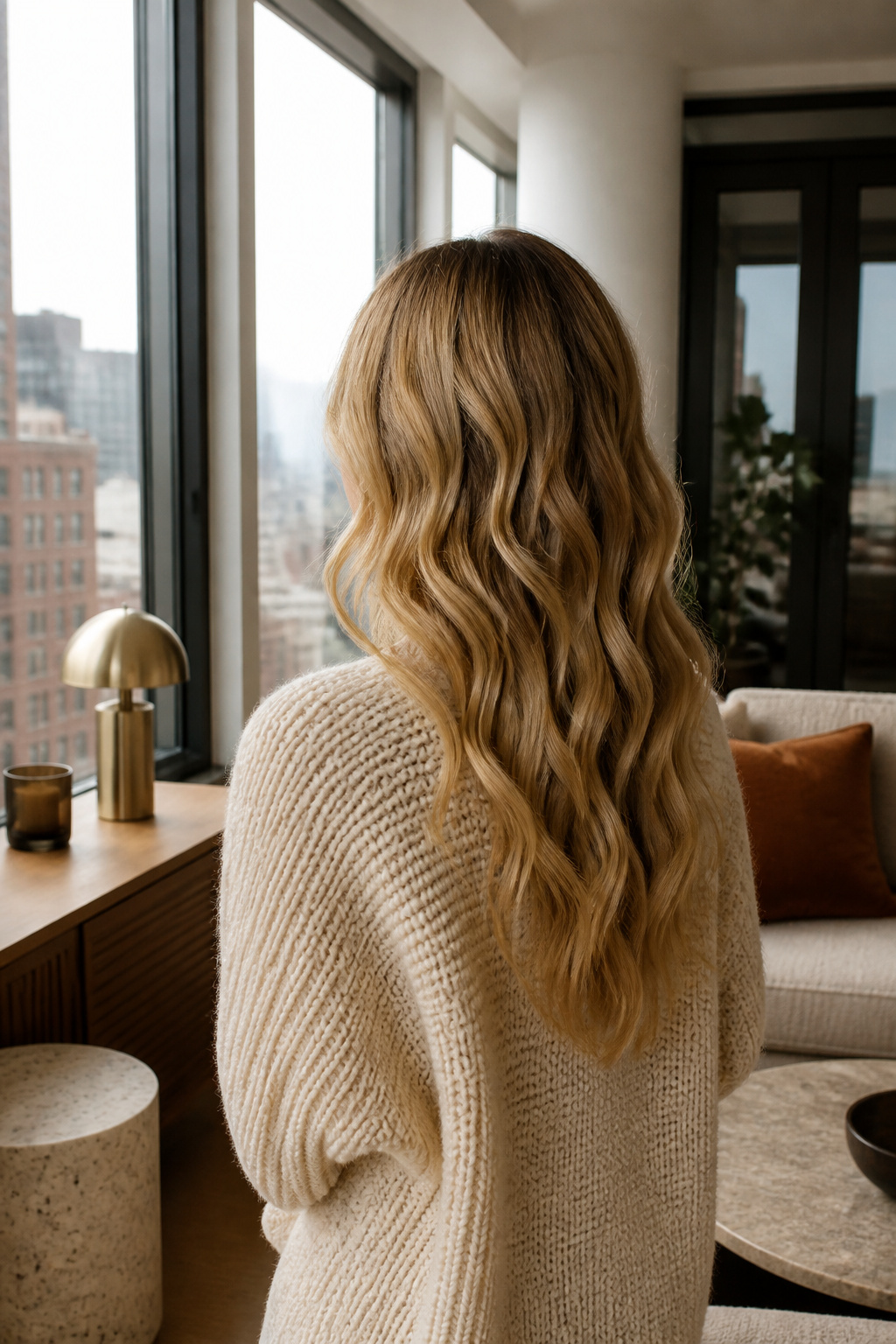
The easiest way to carry summer’s beach wave texture into fall is to loosen the curl by one full size. Swap your summer iron for a barrel that is an inch and a half or wider, or switch to overnight braids on damp hair and brush them out thoroughly in the morning. The result is a wave that sits closer to the head with less spring, which reads as relaxed rather than sun-bleached.
This texture pairs naturally with fall layering. A bulkier sweater or a coat collar will compress tighter curls into a shape you did not plan; the looser wave falls back into place when the jacket comes off. The style needs at least shoulder length to have enough weight to hold the brushed-out shape. Shorter cuts tend to spring back toward the original curl pattern by midday.
Brushing is the step most people skip, and it shows. A wide-tooth comb or a soft bristle brush breaks the set just enough; run it through once the hair is fully cool. The wave flattens slightly, the ends separate, and the whole thing looks like it happened on its own rather than by appointment.
8. Textured Bobs
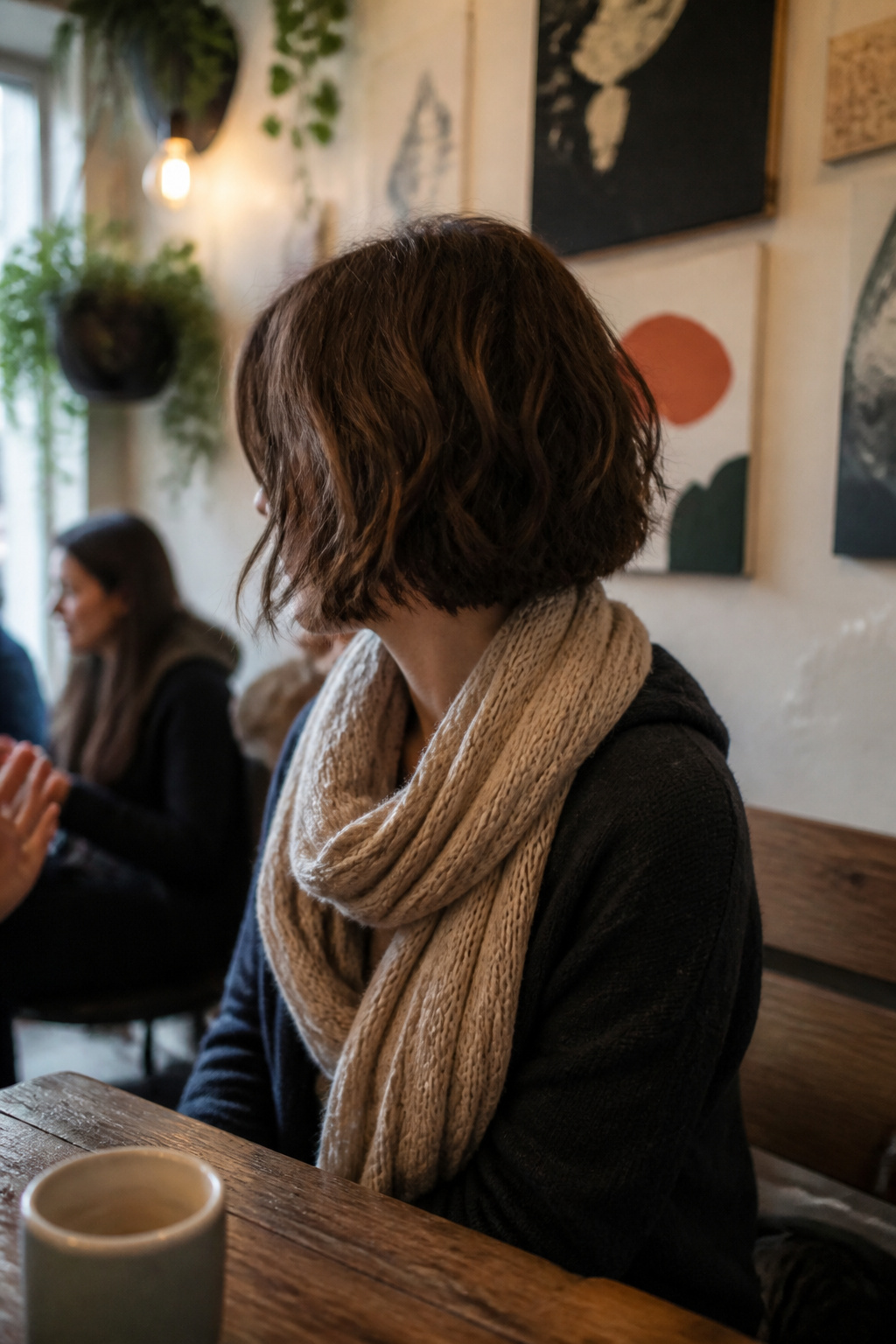
A textured bob lands right at the chin or skims just past it, with the ends cut by point-cutting or a razor so the line breaks up instead of hanging blunt. That interior texture is what lets natural wave and curl do its own work; you can rough-dry with your fingers and a little cream, and the shape still holds. The same broken ends mean less bulk at the neckline, so when you pull a scarf on, the hair sits flat and slides instead of snarling into a solid block at your throat. Ask for the texture high enough to remove weight, not just at the very tips, or the cut will mushroom out by week three. Razor work gives a softer, more feathered edge; point-cutting leaves slightly more structure. Either way, the grow-out is forgiving, which matters when you are stretching salon visits into the colder months.
9. Curtain Bangs

Curtain bangs part in the middle and sweep to each side, which sets them apart from general face-framing pieces that usually layer back into the rest of the hair. They grow out more gracefully than blunt bangs, so you are not locked into biweekly trims to keep the shape alive. That lower commitment makes them a practical choice for fall, when schedules tighten and salon visits slip.
The split in the center draws the eye outward, which flatters oval and heart-shaped faces especially. If your forehead is wider or your chin tapers, the diagonal lines balance the proportions without hard edges. Ask your stylist to cut them dry and slightly longer than you think; wet hair springs up and can leave you with a gap that is too short to part properly.
10. Long Ponytail
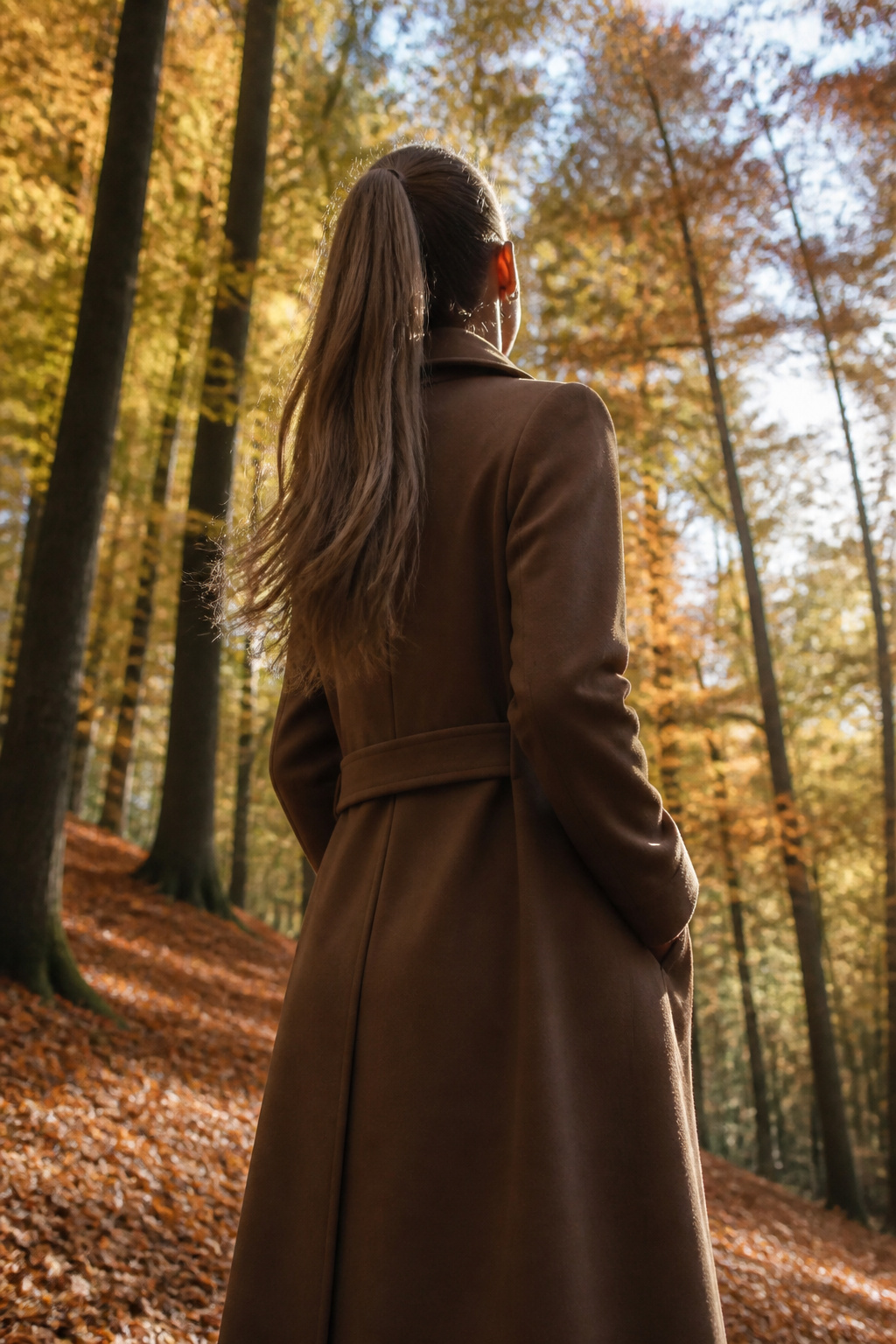
A high ponytail secured at the crown gives you instant polish against fall’s heavy knits and scarves, and the swing of it matters. You want the band sitting high enough that the tail clears your collar, which means backcombing the crown slightly before you gather it. Tease just at the roots with a fine-tooth comb, smooth the surface layer over with a boar-bristle brush, then pull everything up. Wrap a small section of hair around the tie to hide it; secure the end underneath with a bobby pin.
This style needs real length to work. On hair past the shoulder blades, the weight pulls the ponytail straight and gives it that movement. Shorter layers or a blunt cut above the shoulders will leave you with a stubby tail that kicks out instead of hanging clean. If your natural length isn’t there, extensions are an option, but the blend at the crown has to be flawless or the whole thing reads costume.
For hold that lasts through dry indoor heat, a volumizing spray at the roots before you blow-dry buys you structure without stiffness. Finish with an anti-humidity hairspray to keep flyaways down once the wrap is in place.
11. Box Braids
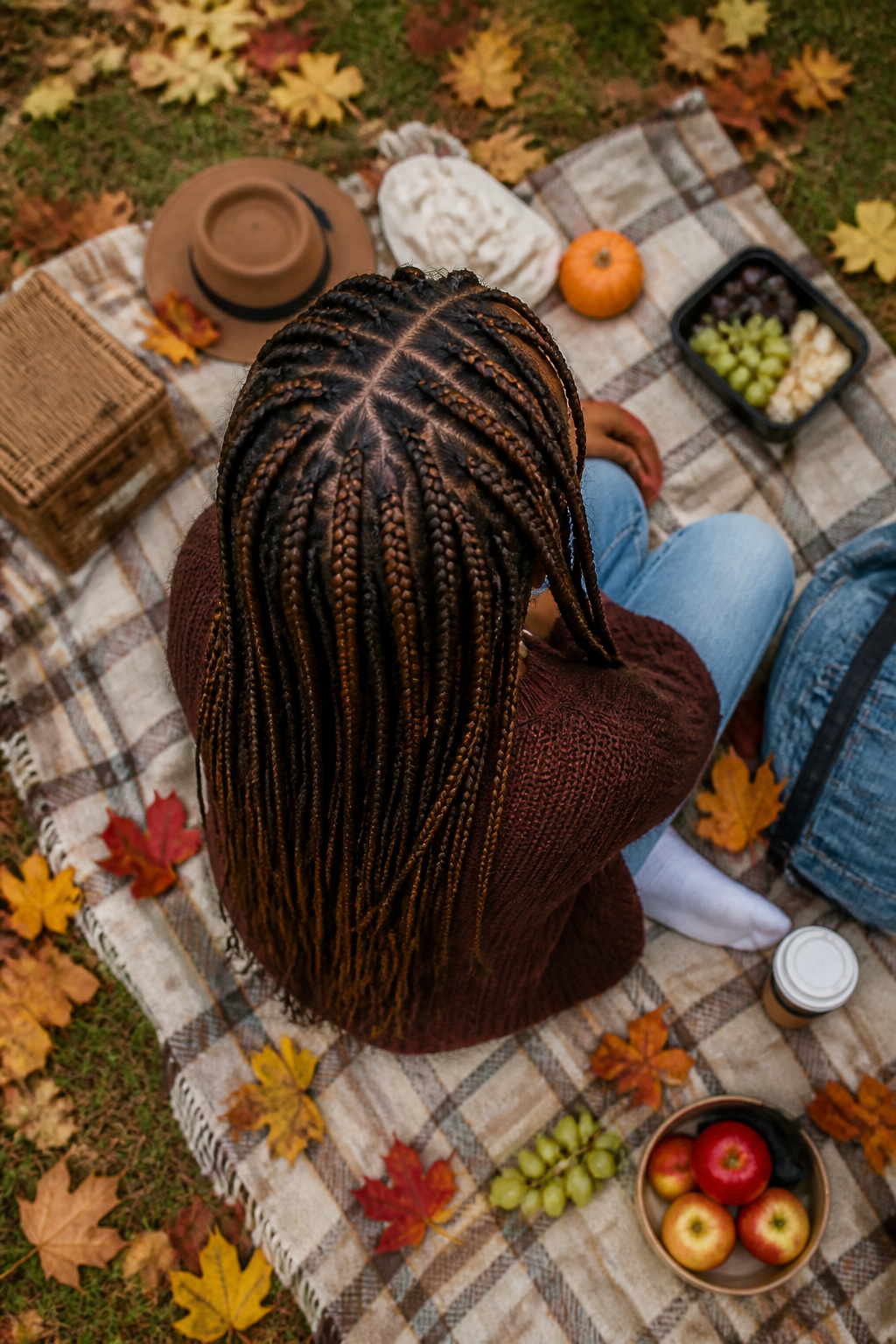
Your hair gets parted into neat squares from front to nape, each section braided with extensions that add the length and thickness most natural hair won’t carry on its own. The grid pattern is what gives box braids their name, and that same structure is why they sit so comfortably under a beanie or felt hat without flattening or shifting the way looser styles do. Plan on four to eight hours in the chair for installation, depending on how small you go with the parts and how long you want the finished braid.
Once they are in, you get six to eight weeks of wear. The real maintenance is keeping your scalp oiled as the fall air dries out. A light oil at the roots every few days keeps the itch and the flakes from setting in, and it prevents the breakage that happens when you scratch against tight braids. Skip this step and you will feel it by week three.
12. Shaglet Haircut
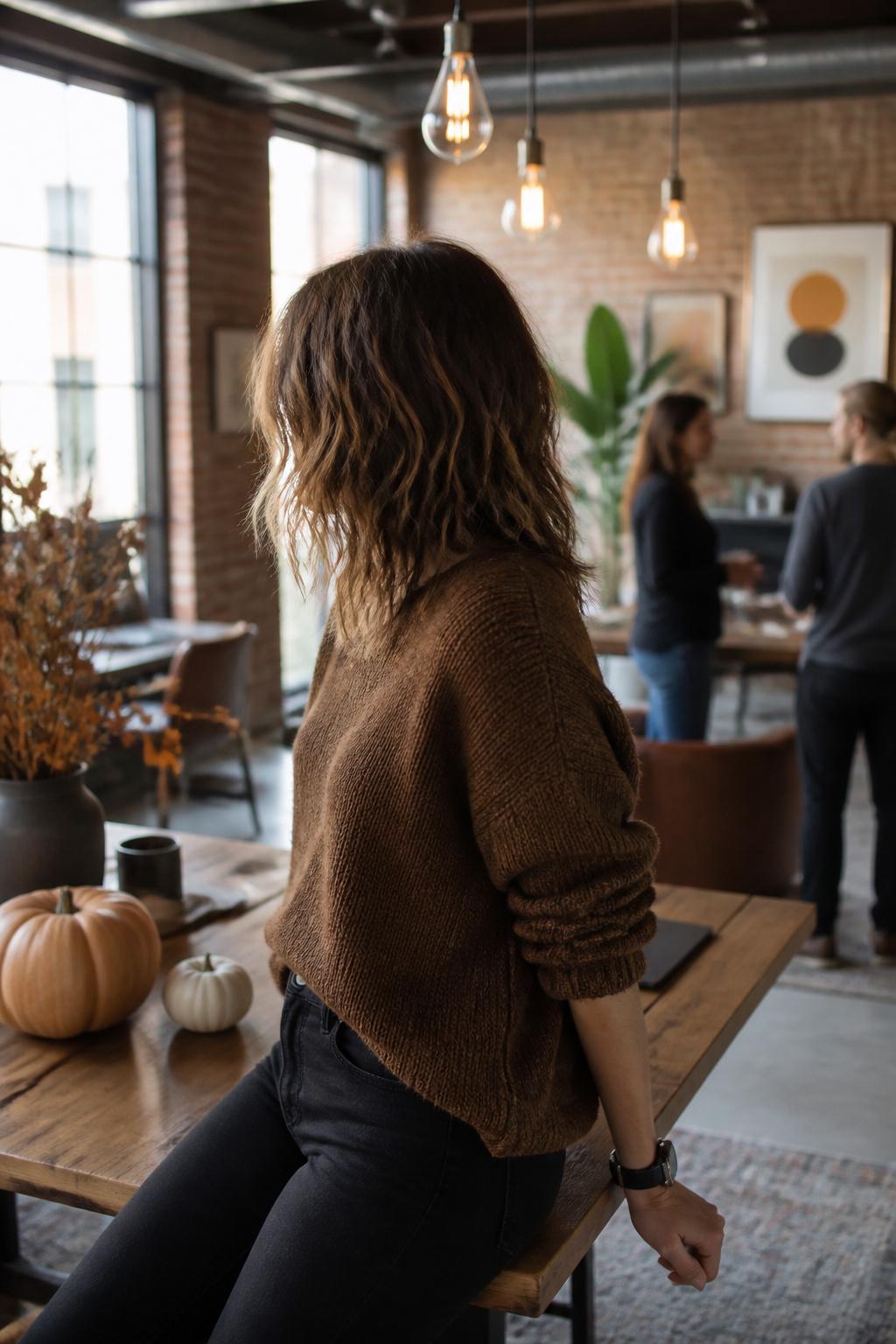
The shaglet lands right between a classic shag and a lob, with the ends brushing the collarbone and choppy layers cut in around the face. That face-framing section does the heavy lifting: it breaks up the length so the cut reads as intentional rather than grown-out, and the texture keeps it from falling flat against your jaw.
You get the most out of this style if your hair sits somewhere on the straight-to-wavy spectrum. The layers are designed to air-dry into shape, which means fall mornings with less time and lower light do not have to mean reaching for a blow dryer. Scrunch in a lightweight texturizer while it is still damp, then leave it. The cut builds in the movement so you are not fighting for it.
Where it can go wrong is in the layering density. Too many layers through the back and you lose the collarbone anchor that makes this hybrid work; too few and it reads as a blunt bob with stray ends. Ask for the choppiest pieces to concentrate around the face and crown, with longer, quieter layers falling toward the base. That keeps the shape controlled without looking uniform.
13. Funky High Braid
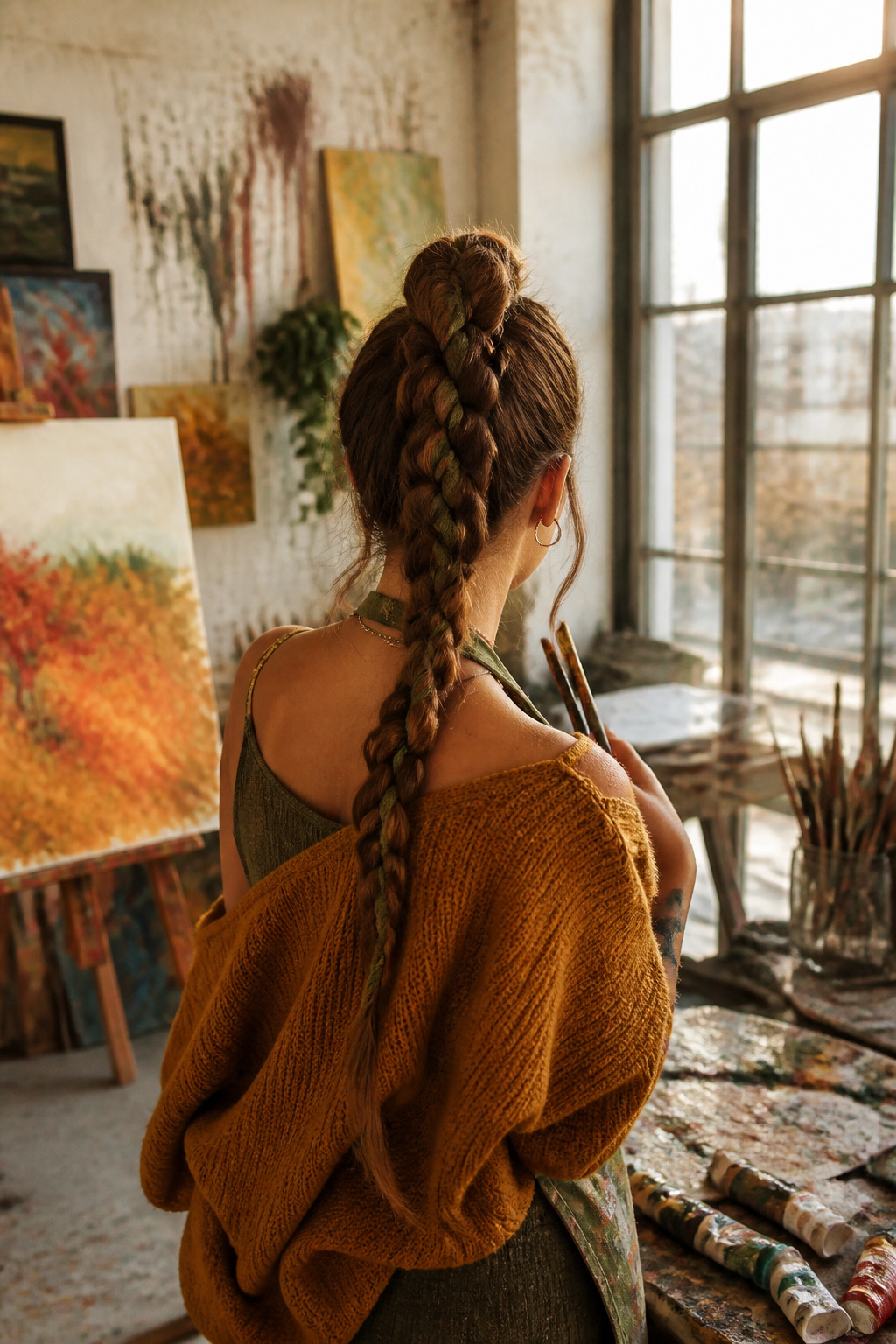
A single bold braid pulled high on the head solves the problem of fine hair falling flat by midday. Start it right at the hairline if you are doing a French braid, or gather a ponytail at the crown and braid from there if you want the height without the tension against your scalp. Either way, the placement draws the eye up and keeps the style visible from the front, not just the back.
Weave a narrow ribbon or colored thread through on the last pass for fall personality. Burgundy, mustard, or a dark olive thread picks up the season without looking like costume. Tuck the ends under the elastic and pin; the braid stays secure through wind and a full day of wear, which is why this works for actual schedules rather than just photos.
14. Wet-Look Ponytail
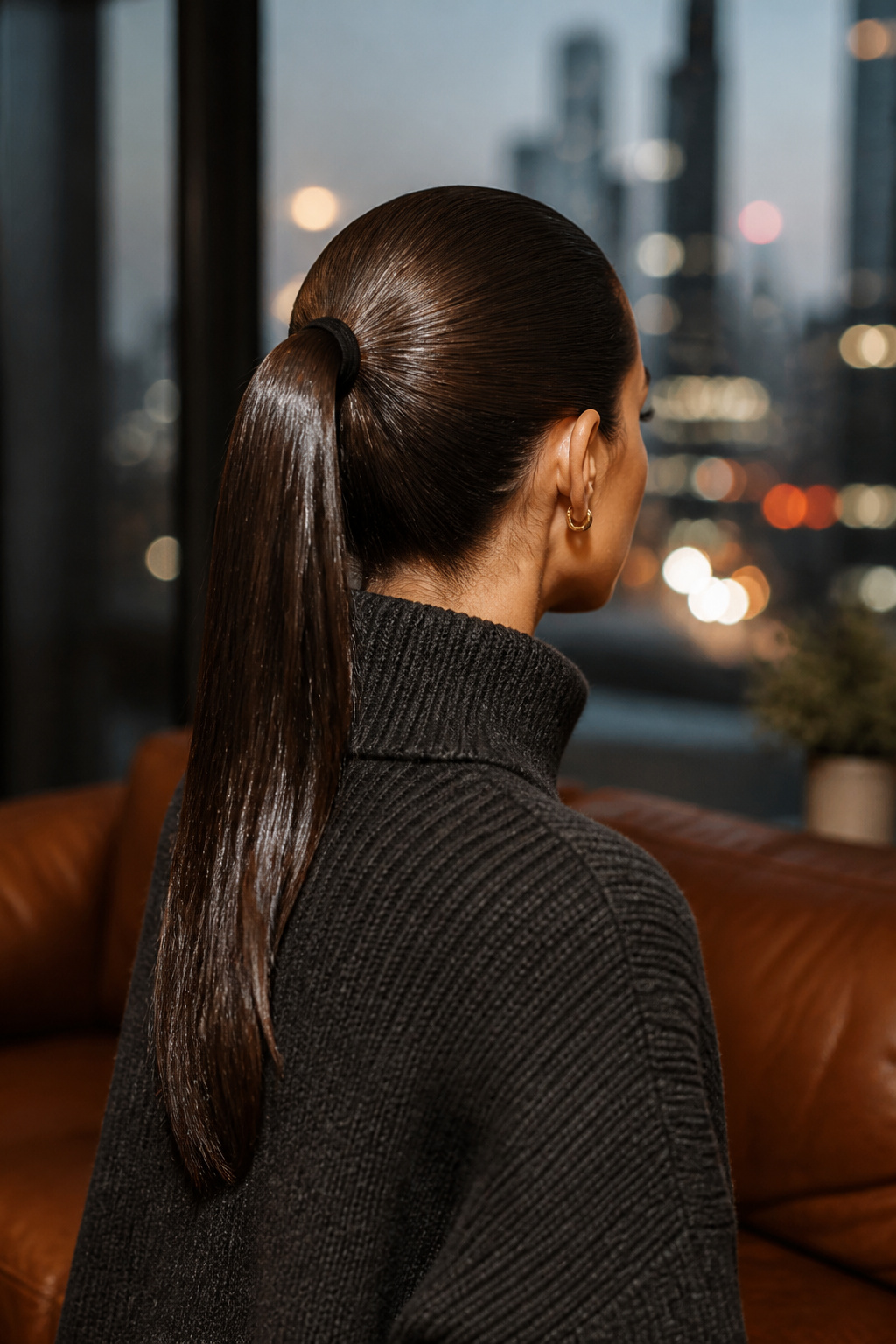
The wet-look ponytail lives or dies on how much gel you are willing to use. Start with damp or dry hair and work a generous amount through from roots to ends until the surface catches light like polished stone. Pull it back tight, smoothing as you go, and the result is a high-shine finish that reflects dramatically against fall’s darker colors, burgundy, forest green, charcoal. The contrast is the point.
This style works on straight or relaxed hair and will not hold on natural curl. The gel needs a surface it can seal flat; any spring or coil fights the slickness and you end up with frizz at the crown instead of glass. If your hair is coily, you are better off with one of the textured styles elsewhere in this list.
15. Voluminous Half-Updo
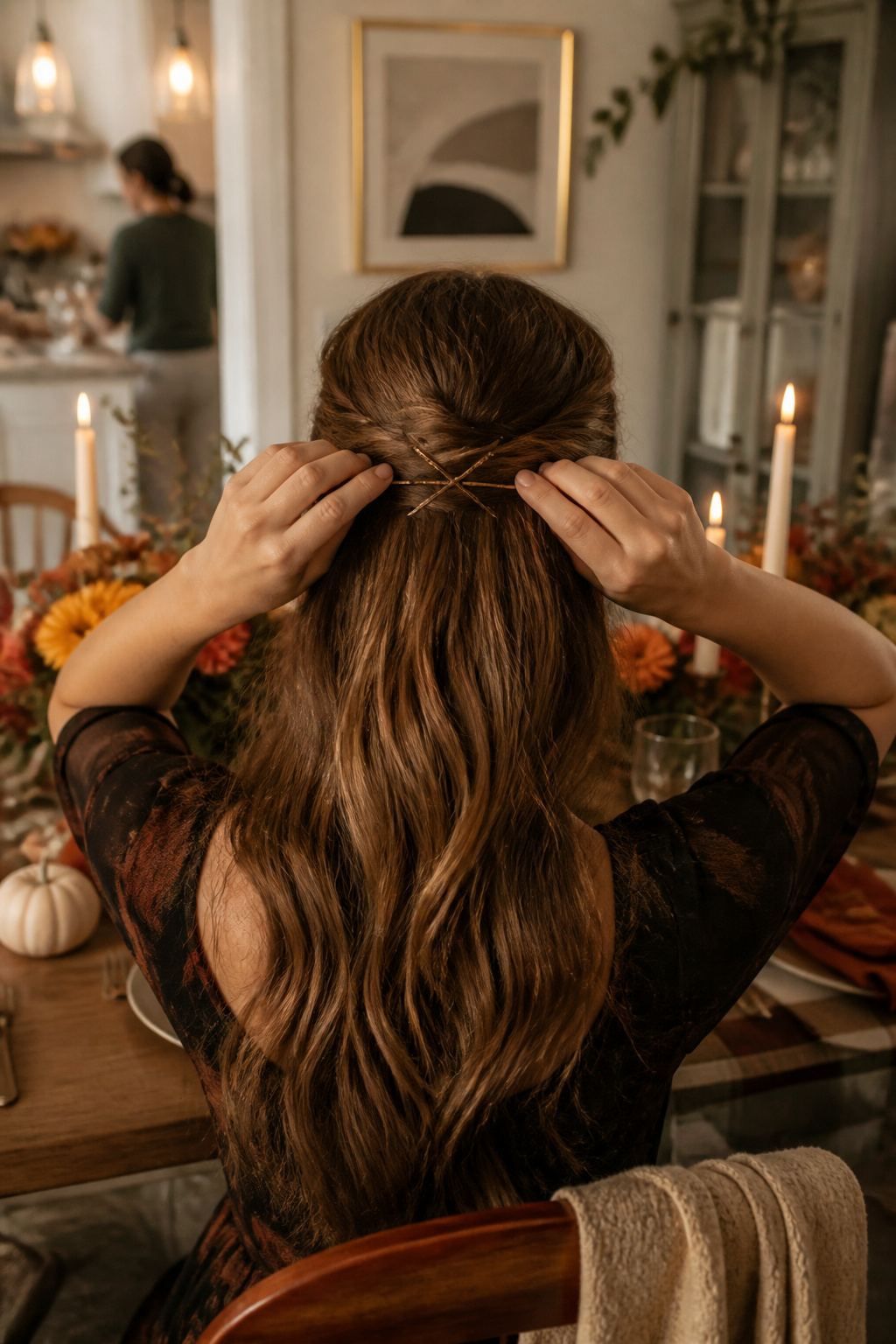
Tease the crown in thin, even lifts with a fine-tooth comb, working from the front hairline straight back. Cross two bobby pins in an X over the gathered section, not parallel, and they will grip through a long evening without sliding. Secure first with a small clear elastic, then pin; the elastic takes the tension so the pins only hold position.
Leave the bottom full and loose, either waved or straight depending on what your hair does naturally. The shape reads as an updo from the front and in profile, but you keep the ease of hair down against your neck. For fall events, this matters: the volume at the crown balances heavy scarves and coats, and the style does not collapse when you pull a turtleneck over your head between the ceremony and the dinner.
Hair Accessories That Complete the Look
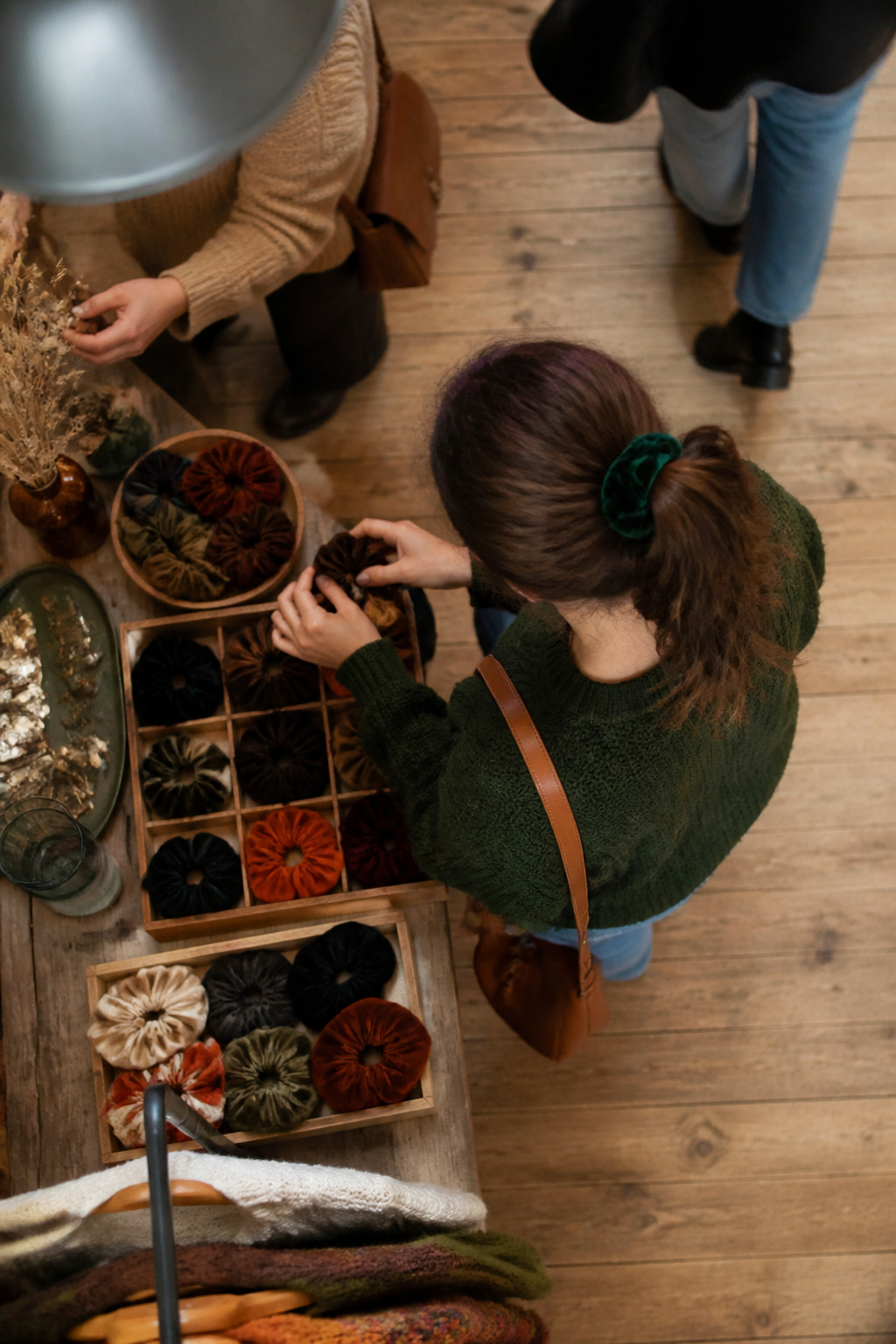
Velvet and corduroy scrunchies turn a basic ponytail or low bun into something that reads intentional for fall. The fabric catches light differently than standard elastic, and the extra bulk helps fill out a style on thinner hair so the shape looks deliberate, not accidental. A corduroy scrunchie in rust or olive adds enough visual weight that you can skip other jewelry.
Large claw clips in tortoiseshell or matte black finish the same job with less softness. They work best when the hair has some grip, so second-day texture or a light mist of dry shampoo keeps them from sliding. On thick hair, you need the larger size, the five-inch ones, or the clip pops open by noon. Thin hair does better with the smaller three-inch versions; the big ones dwarf the silhouette and can pull out strands when you remove them.
Decorative pins with pearls or metal leaves serve a different purpose. They do not hold much on their own, so you anchor the style with a clear elastic or small pins first, then place these where you want the eye to land. One or two at the temple of a half-up style, or clustered at the base of a twist, gives the look a focal point without the commitment of a full updo. Metal leaves read more daytime; pearls shift the same style toward evening. The mistake is using too many, three pins maximum, or it starts to look like costume rather than accent.
What Fall Hair Colors Add
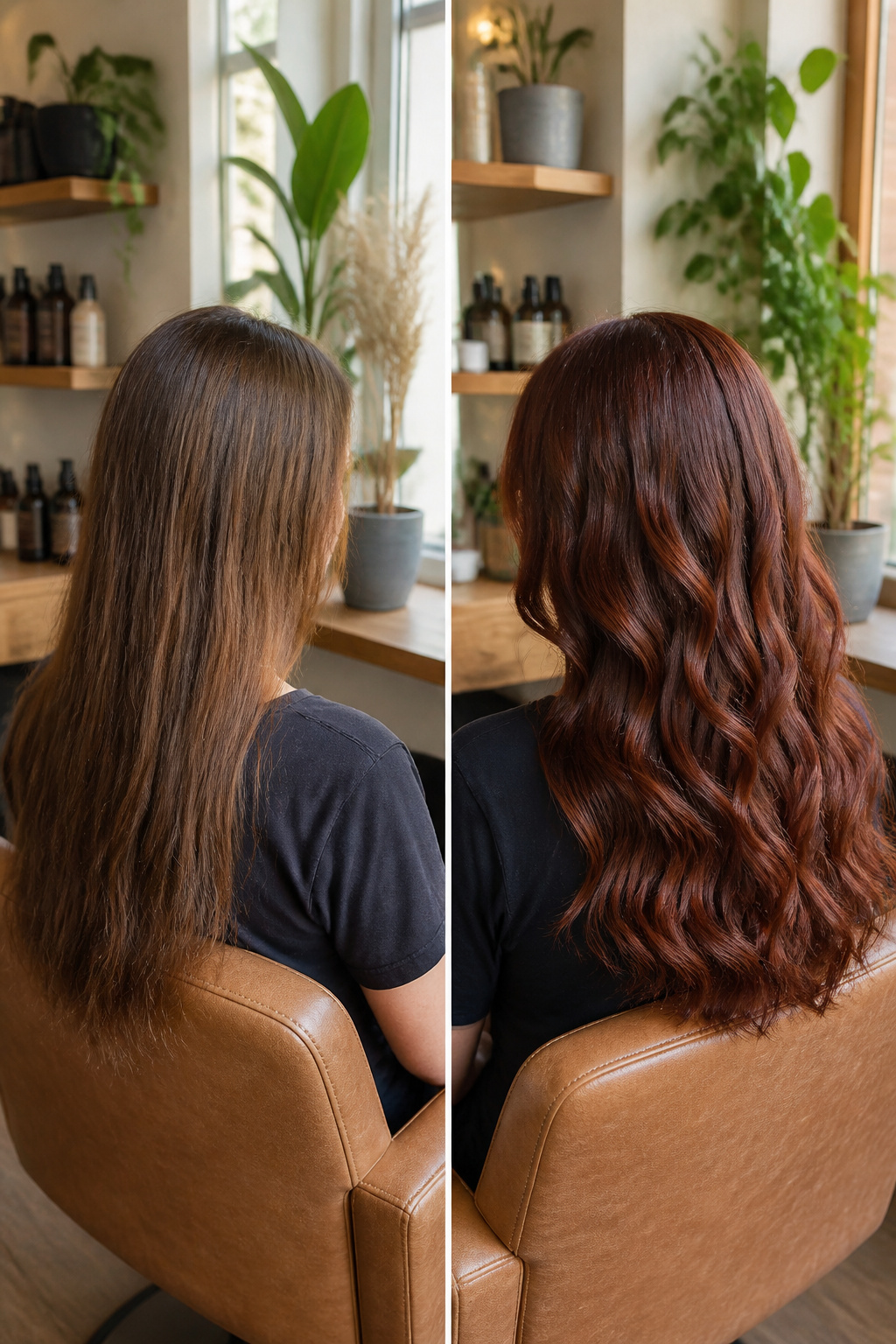
Warm tones catch autumn light in a way that cool shades never quite manage. Burgundy and rust read richest when the sun sits low, the same angle that makes October afternoons look golden. Caramel and honey blonde do something softer, picking up the amber in falling leaves without trying to match it exactly.
You do not need a full dye job to shift toward these tones. A gloss treatment will nudge your color a half-step warmer, enough to register against a cream sweater or a camel coat. The change is subtle, but it shows in photographs and in person.
Darker bases have their own advantage. Deep chocolate or espresso makes texture pop, whether that is the ridge of a braid or the shadow in a tousled wave. You see the architecture of the style instead of just the shape. If you are weighing whether to go lighter or deeper for fall, consider what you plan to do with your hair. Braids and updos favor the dark. Loose, unstructured styles often want that warmth to catch the light.
Matching Styles to Your Hair Texture
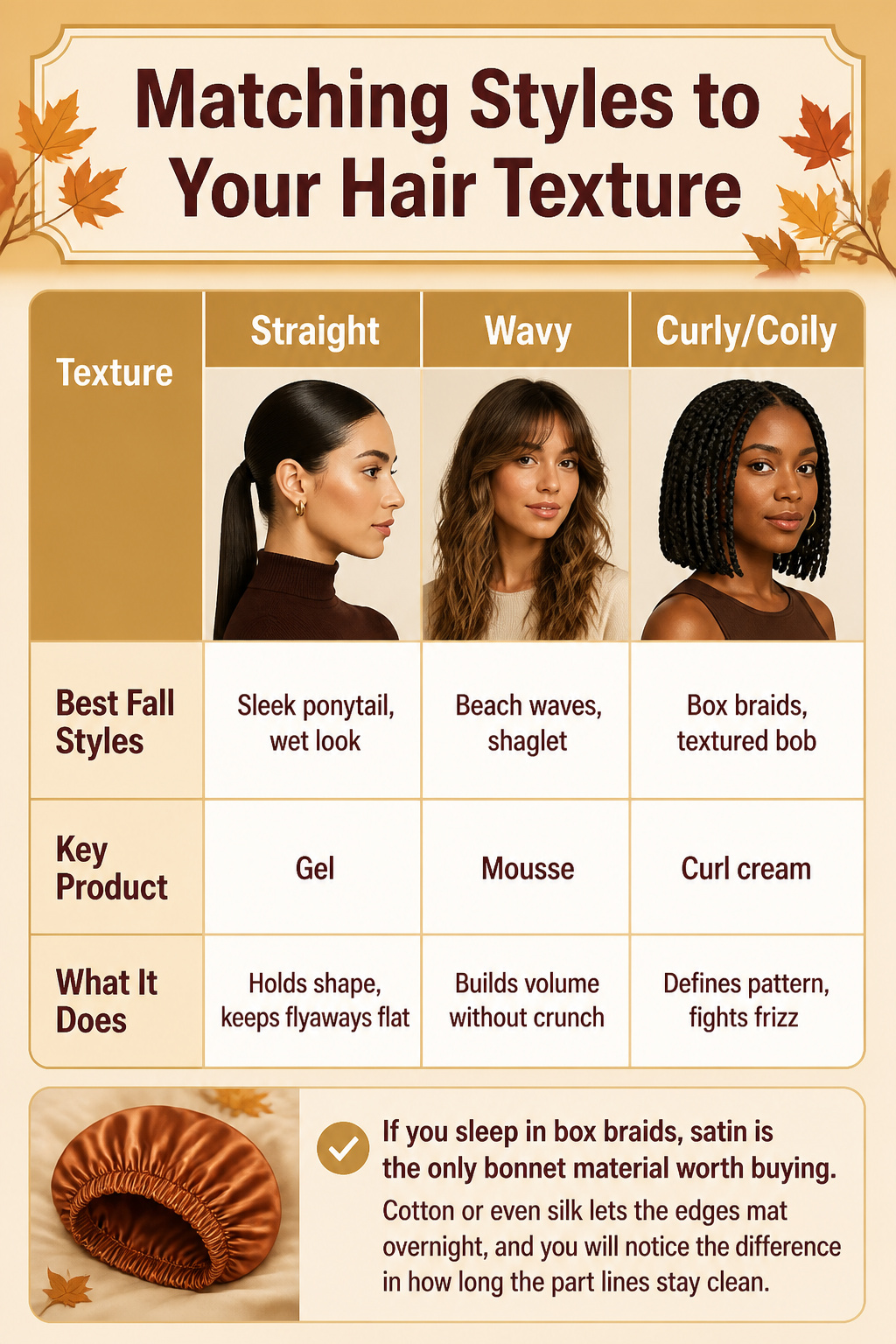
Straight hair holds a sleek ponytail or a wet look with almost no fight, which is why you see that glassy finish everywhere once the humidity drops. Wavy hair does better when you stop fighting it: a palmful of mousse, scrunch while damp, and you get the beach waves or a shaglet that actually moves. Curly and coily hair turns to protective styles like box braids, which Gabrielle Union and Simone Biles have been wearing straight through pre-fall, or to a textured bob cut to work with the pattern rather than against it. Curl cream matters here more than mousse, because definition separates the styles that last all day from the ones that fuzz out by noon. For the slicked-back looks, gel is what gives you that hold without the helmet effect.
| Texture | Best Fall Styles | Key Product | What It Does |
|---|---|---|---|
| Straight | Sleek ponytail, wet look | Gel | Holds the shape, keeps flyaways flat |
| Wavy | Beach waves, shaglet | Mousse | Builds volume without crunch |
| Curly/Coily | Box braids, textured bob | Curl cream | Defines pattern, fights frizz |
If you sleep in box braids, satin is the only bonnet material worth buying. Cotton or even silk lets the edges mat overnight, and you will notice the difference in how long the part lines stay clean.
Frequently Asked Questions
What are the best hairstyles for fall?
The best cute fall hairstyles include sleek ponytails, claw clip updos, half-up half-down styles, and various braided looks. Each solves a specific autumn problem, like keeping hair smooth in dry air or lying flat under hats and scarves. The article covers fifteen options total, from quick two-minute messy buns to protective box braids that last six to eight weeks.
How do I style a messy bun?
Gather your hair at the crown like you are starting a ponytail, but keep it loose. Twist once or twice without pulling tight, wrap it around itself, and secure with a hair tie or claw clip. Pull out three or four face-framing strands so the shape looks accidental rather than styled, and shake your head before clipping if it feels too neat.
What hair accessories are trending this fall?
Velvet and corduroy scrunchies, large flat-backed claw clips in tortoiseshell or matte black, and decorative pins with pearls or metal leaves are the standout accessories. Corduroy scrunchies in rust or olive add enough visual weight that you can skip other jewelry, while flat hair clips let you lean back comfortably without the old single-point pressure against your head.