

Looking pretty without makeup means building your appearance from habits rather than products, but only if you treat those habits as daily obligations, not occasional experiments. The real mistake is treating skincare like a buffet instead of a fixed menu: cleanser, moisturizer, sunscreen. Twice daily, every day, with no decision each morning about whether you feel like it.
Skincare Routine
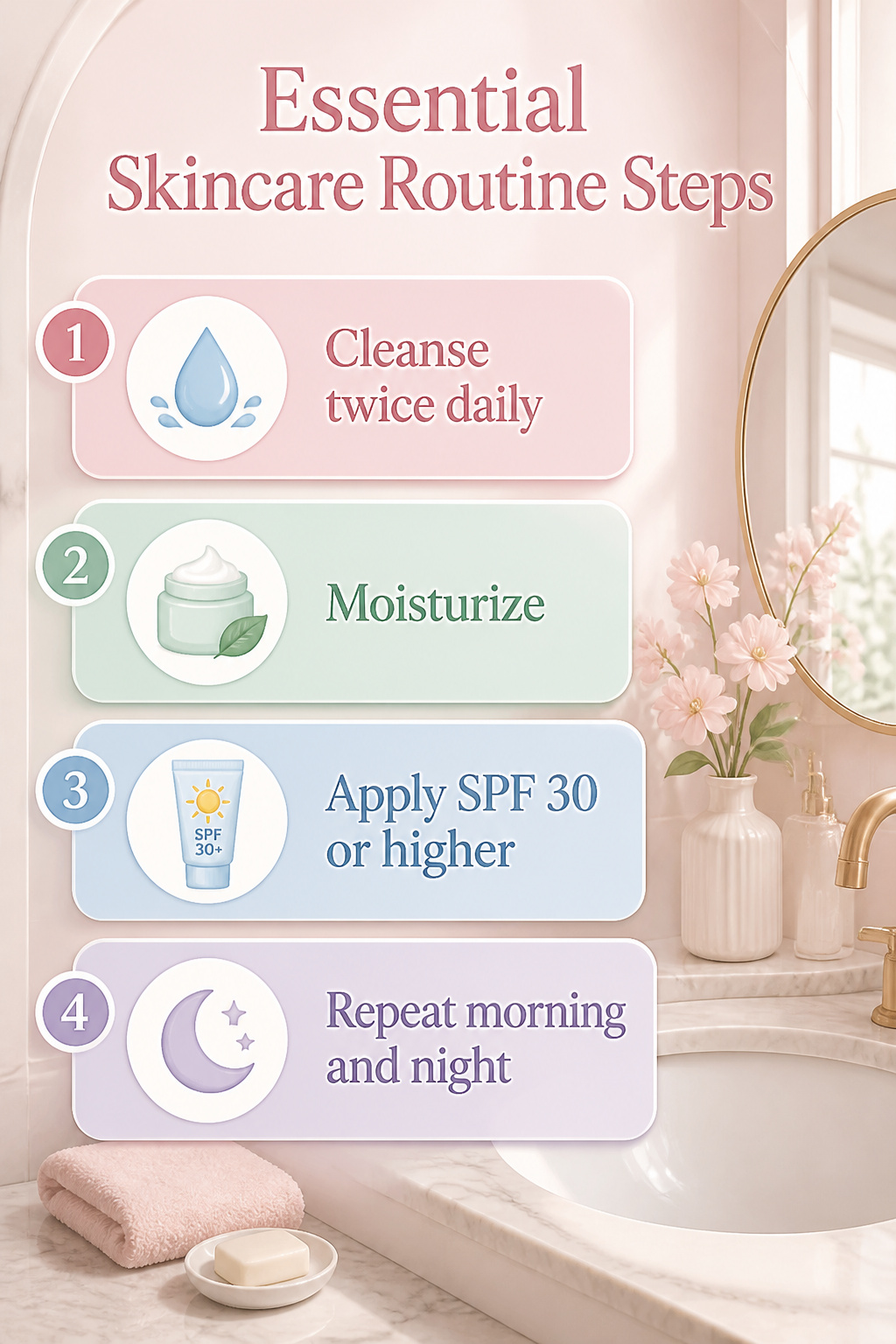
You probably already know you should wash your face twice a day, but the real mistake is treating skincare like a buffet instead of a fixed menu. Cleanser, moisturizer, sunscreen. That three-step foundation matters more than any single product you buy, and skipping one is where most people drift off course.
Dermatologists recommend applying sunscreen every morning, even on cloudy days or when you are indoors near windows. Aim for SPF 30 or higher, and if you can find a formula that doubles as moisturizer, you are more likely to actually use it. Over-washing strips skin and leaves it worse, not better; twice daily is the limit. Match your moisturizer to your type: light and non-oily if you are prone to breakouts, heavier with shea butter or aloe if you run dry. The regimen only works if you repeat it morning and night without deciding day-to-day whether you feel like it.
Hydration

Your skin is the last organ your body sends water to, so it shows dehydration before almost anything else. Men need about 15.5 cups (3.7 liters) of fluid daily, women about 11.5 cups (2.7 liters), and that counts everything: coffee, tea, soup, even the water in an apple. Plain water is the easiest route, but it is not the only one. What matters is hitting the number, because when you fall short, your face tightens and dulls while your kidneys and heart still get served first. Start the day with a full glass before the coffee goes in; that is the gap most people miss.
Healthy Diet

Vitamins A, C, and E reach your skin through the bloodstream after you digest them, and each does a distinct job. Vitamin A regulates cell turnover, which smooths rough texture and fades dull patches over four to six weeks. Vitamin C builds collagen support, the same structure oranges and seaweed feed, and it brightens tone where sun has darkened it. Vitamin E, carried in avocados and nuts, protects the fat layers in skin that keep it plump.
Antioxidants from berries, spinach, tomatoes, and leafy greens neutralize the oxidative stress that breaks collagen down in the first place. You will not see this repair overnight. Sources describe a gradual shift: around week three the skin looks less tired, by week six the tone evens, and the change holds only if the intake stays consistent. Skip the berries for a week and the benefit slips back.
The mistake is treating this as a short cleanse rather than a steady habit. Skin repairs itself continuously, and the nutrients need to arrive continuously to keep pace.
Regular Exfoliation

Dead skin cells do not simply fall away on their own. They accumulate in a layer thick enough to scatter light unevenly across your face, which reads as dullness and uneven texture even when the skin beneath is healthy. Exfoliating once or twice a week removes that buildup and returns the smoother surface that reflects light cleanly.
You have two ways to do it. Physical exfoliation uses a mild scrub with fine particles to lift cells off manually; chemical exfoliation uses acids or enzymes that dissolve the bonds holding dead cells to the surface. Neither is inherently gentler. A harsh scrub with jagged particles tears living skin, and an acid used too often strips the barrier your face needs to hold moisture. Over-exfoliation backfires exactly this way: the skin turns raw, tight, and paradoxically more prone to the dullness you were trying to fix. Start with the lowest intensity in either category, watch how your skin responds over two weeks, and adjust from there rather than pushing for more.
Facial Massage

A short facial massage improves circulation and creates a natural flush. After applying moisturizer or face oil, glide your fingertips upward from chin to cheekbones and outward across the forehead. This technique temporarily lifts and refreshes the complexion. The effect is real but modest: better blood flow and a temporary glow, not any structural change to the face.
You can use your fingers alone or reach for a simple tool, though the sources do not name specific ones. The motion matters more than the implement. Work against gravity, keep the pressure gentle, and stop at about thirty seconds if your skin starts to feel irritated rather than stimulated. Those with active breakouts or rosacea should skip this entirely; the friction can worsen what it is meant to help.
The massage is the least-covered item in most no-makeup guides, and that scarcity of attention matches its limited scope. It will not reshape cheekbones or erase lines. What it offers is a brief, visible wake-up for skin that looks dull, best used in the morning or before an event where you want to arrive with some color already in your face.
Grooming
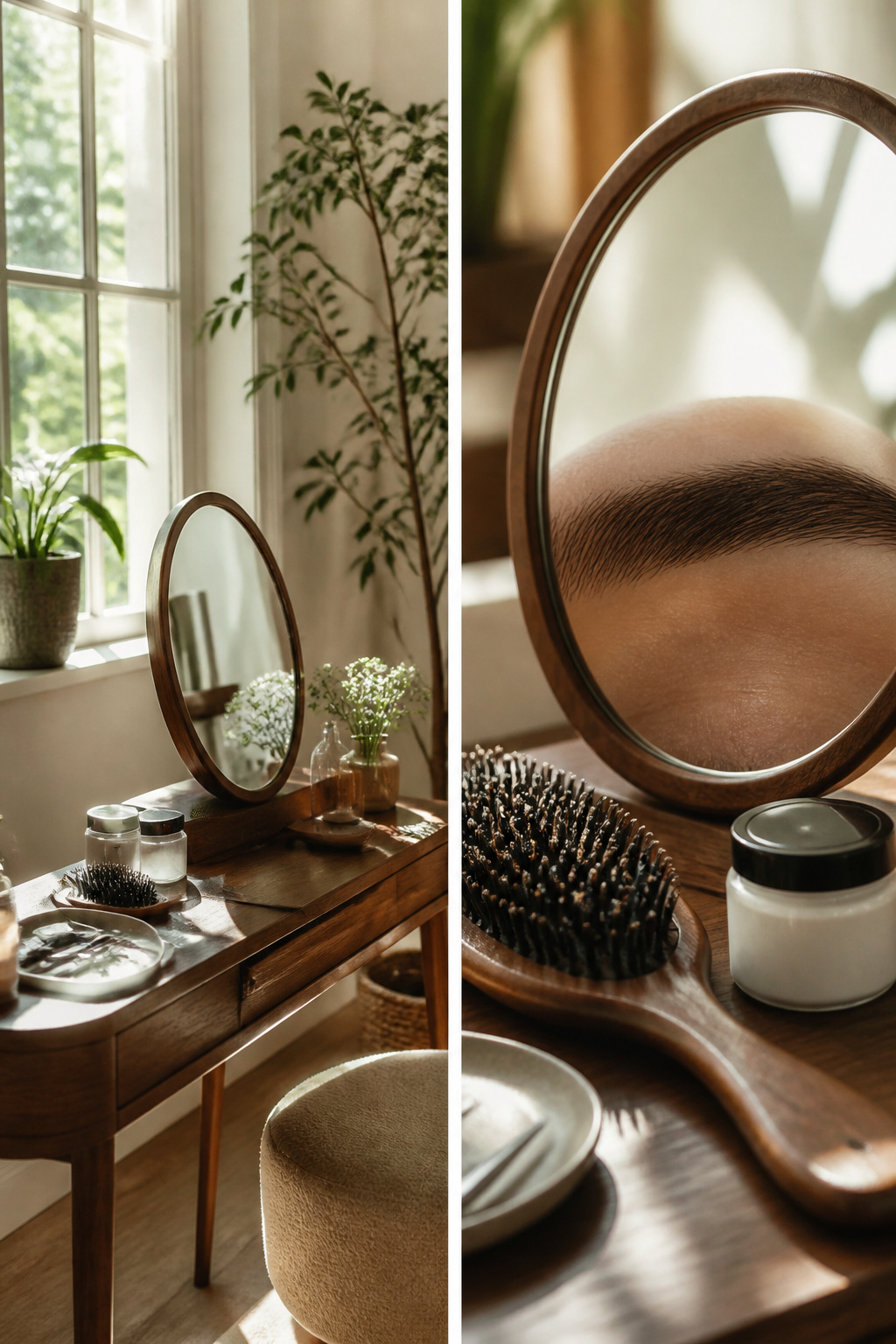
Clean, shaped brows frame your face with no product needed. Pluck or thread to a gentle arch that follows your natural bone structure, then brush them upward each morning so the hairs lie flat and even. Stray hairs above the bridge of the nose are what read as unkempt first, so keep that center strip tidy.
Your hair condition signals overall health faster than almost anything else you wear. Wash with a shampoo matched to your type, oily or dry, and follow with conditioner on the lengths only, not the scalp. Well-maintained hair ranks as the most frequently cited non-skin factor in how people read your overall appearance, so the effort pays back directly.
Cold compresses on the eyes reduce puffiness on mornings after short sleep, and a light eye cream keeps the surrounding skin from looking creased or shadowed. These three habits, brows, hair, and eye area, do more to present a polished face than any single skin product you could add.
Sleep

Your skin does its real work while you sleep. Seven to nine hours is the window where repair happens: collagen production ramps up, cortisol drops, and the barrier that keeps moisture in rebuilds itself. Miss that window and you will see it. The mirror shows puffiness first, then the dull tone that no highlighter can fake, and the dark circles that sit lower than any concealer can reach.
The cost is visible and immediate. One short night and your face looks drawn; a string of them and the skin looks older than the calendar says. Seven to nine hours is the only product that fixes this. Not a cream, not a mask. You can spot the difference in someone who sleeps well: the skin has a plumpness that reads as healthy before you know why. The ones who skip it look like they skipped it, and there is no trick around that fact.
Stress Management

Stress shows on your face faster than most people notice. Cortisol, the hormone your body releases when you are tense, tells your skin to pump out more oil and slows down the healing that would normally clear a blemish in a few days. Over time, that same stress response breaks down collagen and deepens the lines that form between your brows and at the corners of your eyes.
Yoga and meditation are the two practices most often linked to calmer skin, and they work for good reason. Yoga improves circulation and posture, which brings more oxygen to the face, while meditation directly quiets the nervous system and lowers cortisol output. But they are not the only tools. A ten-minute walk without your phone, a few slow rounds of box breathing, or sitting with a warm hand on your chest while you listen to one song all the way through can drop your stress level enough to matter.
The practice to try: set a timer for seven minutes, close your eyes, and breathe in for four counts, hold for four, out for four, hold for four. Repeat until the timer sounds. Do this before you wash your face in the morning, so the lower cortisol meets your clean skin instead of your overnight oil.
Teeth Care

A bright smile pulls attention to the center of your face and signals health faster than almost any other feature. That is why teeth care belongs in any plan for how to look pretty without makeup.
Brush twice daily and floss once. The brushing clears surface film; the floss reaches the stained edges between teeth where brushes do not go. Skip either step and the contrast shows, especially when you smile in natural light.
Coffee, tea, red wine, and dark berries do not stain enamel instantly, but they layer pigment over weeks of regular use. Rinse with water after them and you slow the buildup without giving up the foods you like. The staining is cumulative, not a single-cup problem, so the rinse buys you room.
Fresh breath and healthy gums frame the smile. Gum inflammation reddens the gumline and dulls the overall effect even when teeth themselves are clean. The flossing matters as much for this as for the stains.
Regular dentist visits for checkups and cleanings catch what home care misses. A professional cleaning resets the surface once or twice a year, and the checkup spots problems before they become visible.
Confidence

Your posture, eye contact, and the speed of your movements are the first things people register before they notice whether you are wearing any product at all. Studies on perceived attractiveness consistently rate confident body language as highly significant, often placing it above facial features in how beauty is read at a glance. The shoulders back, a steady gaze, and unhurried gestures signal that you are comfortable occupying your own space, and that comfort becomes contagious to whoever is watching.
The small behavioral practice that builds this without requiring you to feel it first is called power posing. Stand with your feet planted, hands on hips or lifted overhead, for two minutes before you enter a room or start a video call. The physical position changes your hormonal profile enough that the feeling follows the form, not the other way around. Two minutes is enough to shift how you are seen, and that shift outlasts the pose itself.
Why Skin Type Changes the Plan
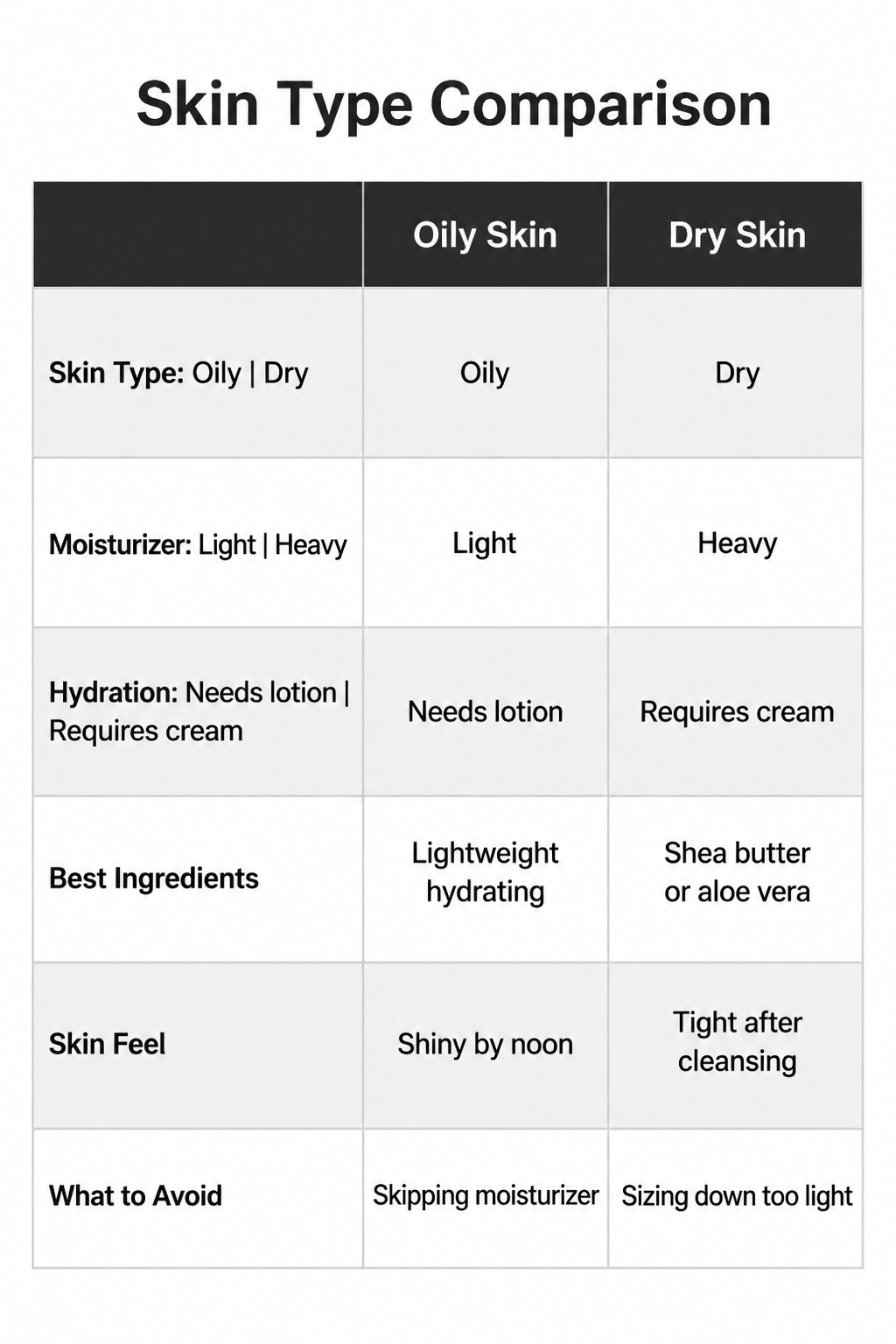
Oily skin fools plenty of people into skipping moisturizer entirely, and that backfires fast. Dehydration triggers more oil production, so you end up shinier than when you started. A pea-sized amount on slightly damp skin seals hydration without adding weight.
Dry skin needs the opposite instinct. Heavy moisturizers with shea butter or aloe vera do the work here, and you will feel the difference within days if you sized down to something lighter before.
Combination skin splits the difference, usually oilier through the T-zone and tighter on the cheeks. Watch whether your forehead gets slick by noon while your jawline still feels tight after cleansing. That mismatch means two textures, not one compromise product.
Sensitive skin narrows your options quickly. Fragrances sting, scrubs redden, and over-washing leaves you irritated rather than clean. A warm washcloth in slow circles removes dead cells without the acids that trigger reactions, though even that you should not do daily.
The real mistake is copying a routine that works for someone whose skin behaves nothing like yours. Check your forehead and cheeks at 2 p.m.; what you find there tells you which version of the same steps you actually need.
What to Avoid
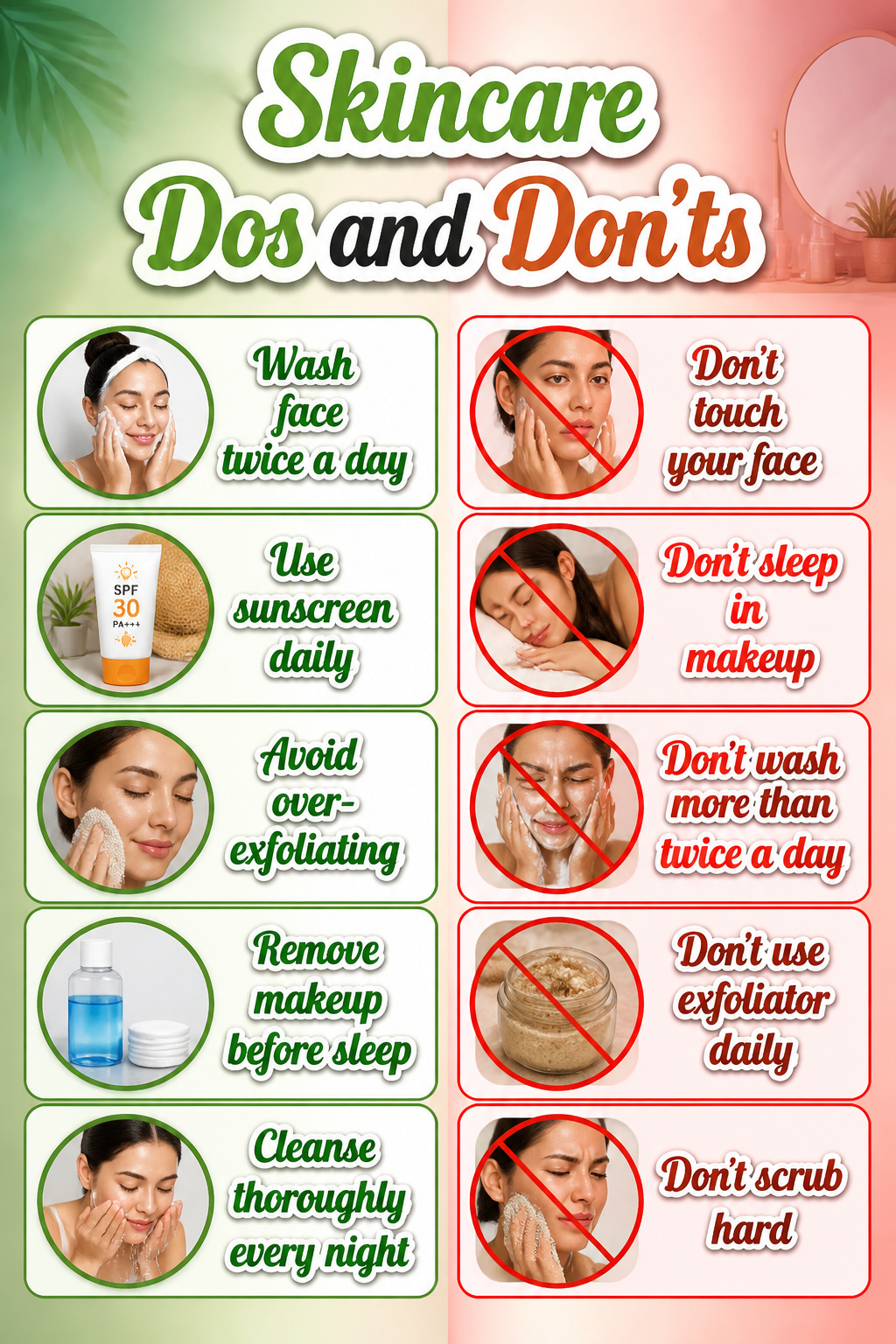
Washing your face more than twice a day strips oil faster than your skin can replace it, leaving it dry and irritated rather than clearer. That temptation to scrub again at noon is the first habit to break.
The second is touching your face when you do not mean to. Rubbing at skin loosens it over time and invites premature wrinkles you will not notice until they stay.
If you wear makeup occasionally, sleeping in it undoes everything. Regular face wash will not remove it properly; you need a dedicated makeup remover, then a separate eye makeup remover for mascara and liner, then your normal cleanse. Skipping steps leaves residue that clogs pores overnight.
Sunscreen is the one people skip on gray mornings, which is exactly when UV still reaches through clouds and windows. Use SPF 30 or higher, every morning, as the final step before you leave the house. Skipping it on cloudy days is how uneven tone and dark spots develop without you realizing.
Finally, never scrub hard with exfoliator or use it daily. Irritated skin looks worse than skin with some texture. Gentle circular motions with a warm washcloth handle sensitive types better than any product loaded with ingredients they react to.
How Long Until You See Change
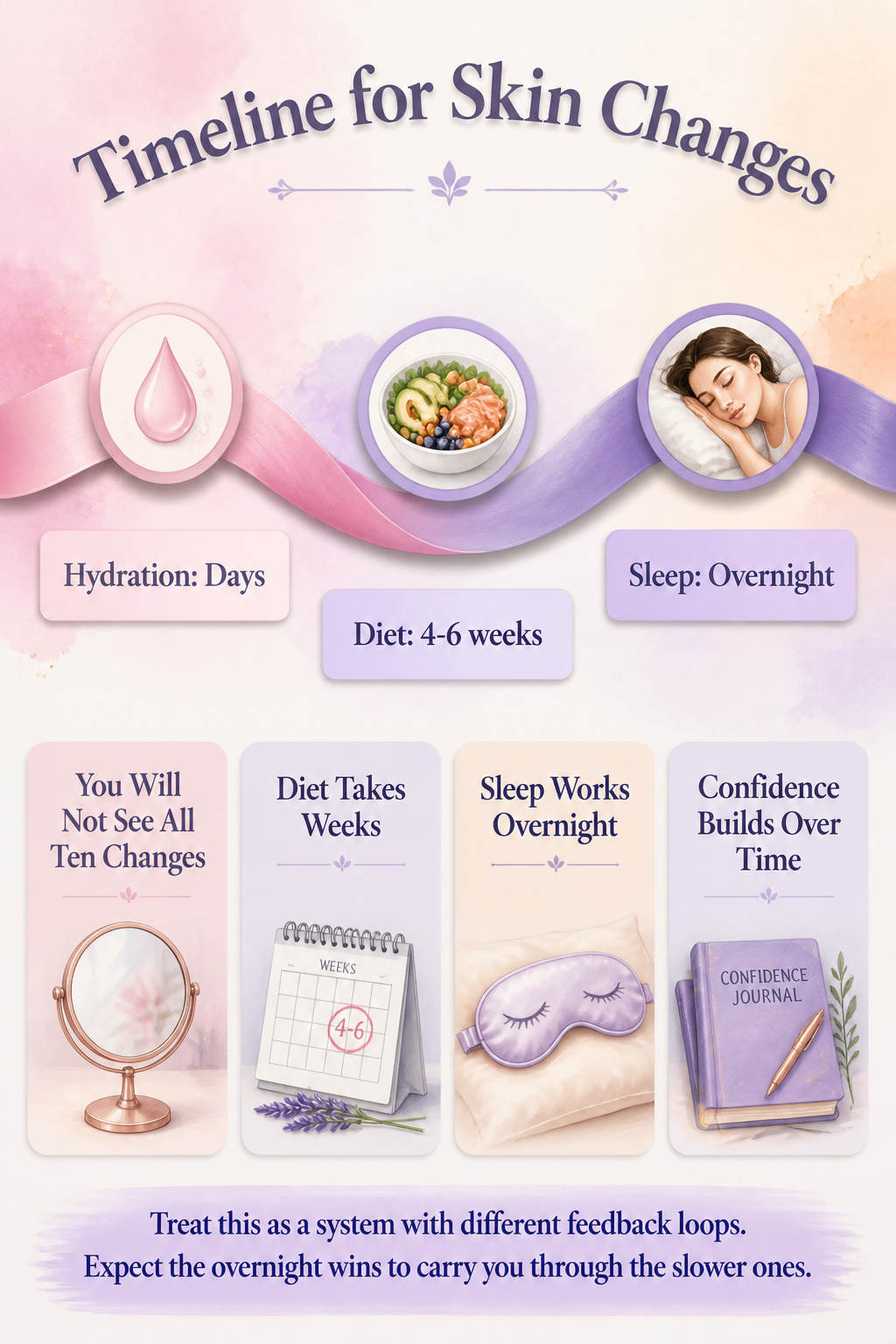
You will not see all ten changes at once, and that is where most people quit. Hydration shows in days: skin looks plumper and less dull by morning after you have actually kept water coming in. Diet takes weeks, sometimes four to six, before the shift in tone and texture registers enough that someone else notices. Sleep is the outlier; one night of seven to nine hours erases enough puffiness and dark-circle depth that the mirror rewards you immediately. Confidence works fastest and slowest: a single deep breath or squared shoulder changes how you enter a room in a moment, but the habit of believing it sticks only after you have practiced it through enough real situations. Treat this as a system with different feedback loops. Expect the overnight wins to carry you through the slower ones.
Mental Health and Skin

Anxiety and depression write themselves across your face before you notice. The jaw sets tight, the brow furrows in sleep, and the collagen repair that happens during rest gets cut short when you are awake at 3 a.m. Seven to nine hours is the range where skin barrier recovery and collagen production actually happen; below that, puffiness and dark circles arrive as physical evidence of the night you lost.
The bridge is small and practical. Taking time to breathe, deliberately, is not a cure for either condition, but it is a point where the two tracks touch. Five minutes of steady breathing lowers cortisol enough that sleep becomes more reachable, and reachable sleep means the repair cycle starts again. You are not treating your skin. You are treating your evening, and the skin follows.
Natural beauty without makeup is partly this: the rested version of you, visible because the night went well enough. The glow is not confidence itself, but it is what confidence looks like on skin that got its hours.
Putting It Together

Sleep sets the foundation. When you get seven to nine hours, your skin barrier repairs and collagen production ticks up, which means less puffiness and more even tone in the morning. That rested surface needs less intervention, so you skip coverage and still look pulled-together.
The payoff runs deeper. Better sleep makes stress easier to regulate, and lower stress means fewer cortisol spikes that inflame skin and trigger breakouts. Yoga and meditation work the same circuit from the other end, calming the nervous system and improving circulation so the face you see in the mirror looks less dull even before you touch it.
Each habit buys you margin for the others. Miss sleep and your stress management has to work harder; let stress run high and no skincare routine fully covers the damage. The ten pieces are not a checklist to race through. They are a single system where the strength of one link protects the whole chain, and that is why there is no single best tip to cherry-pick.
Frequently Asked Questions
How can I get flawless skin naturally?
Build a consistent three-step routine: cleanser, moisturizer, and SPF 30 or higher sunscreen every morning. Add hydration at 11.5 cups of fluid daily for women or 15.5 for men, and eat foods rich in vitamins A, C, and E along with antioxidants from berries and leafy greens. Results show in days for hydration, four to six weeks for diet.
What are some tips for looking good without makeup?
Wash and moisturize twice daily, exfoliate once or twice a week, groom brows and hair, use cold compresses for eye puffiness, sleep seven to nine hours, and practice stress management like box breathing. Stand with shoulders back and steady eye contact; confident body language ranks above facial features in how people read attractiveness at a glance.
How can I improve my skin health?
Cleanse, moisturize, and apply sunscreen every morning without skipping steps based on how you feel. Match moisturizer to your skin type: light formulas for oily skin, shea butter or aloe for dry skin. Exfoliate weekly to remove dead cell buildup that causes dullness, but stop if skin turns raw or tight.