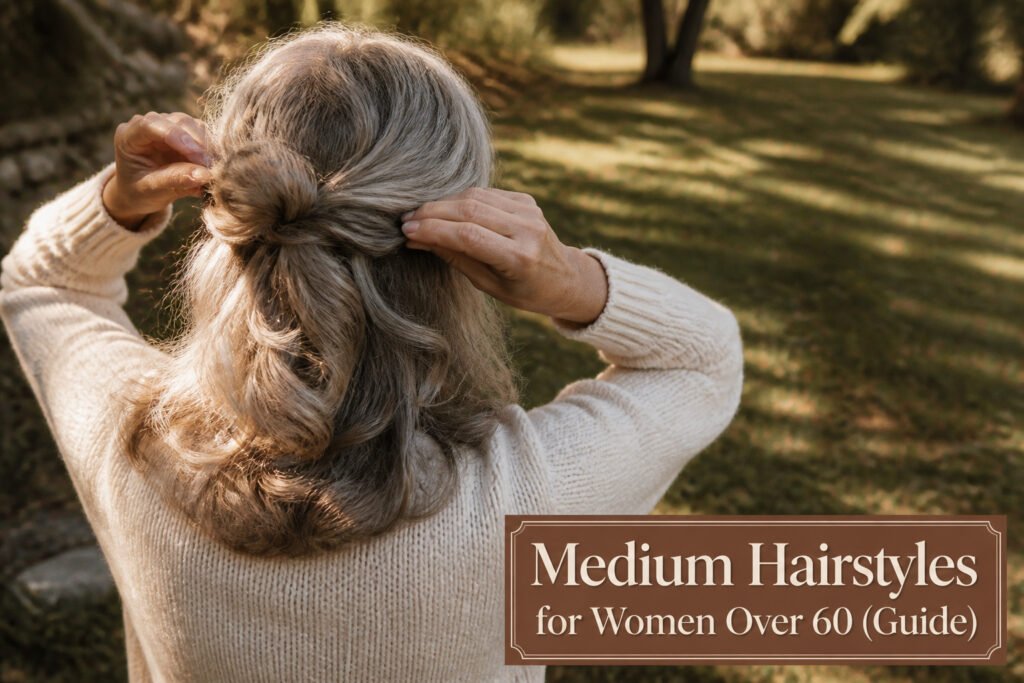
Medium hairstyles for women over 60 span from pinned-back curls to lightly tousled textures that move like natural beach waves. The difference between looking refreshed and looking like you tried too hard is not the cut itself, but how you handle the styling. The article below will walk you through 20 specific styles, each matched to the real condition of aging hair, thinning, and the effort you are actually willing to put in every morning. Ignore one detail, the flip at the jawline or the placement of a pin above the temple rather than below, and even the right cut collapses into something that ages you instead.
Ciara and Andie MacDowell both make their medium length work, not because of the hair they have, but because of where they let volume sit. You can do the same.
1. Low Ponytail

A low ponytail sits at the nape, not higher, and that placement matters more than most people expect. Pull it lower and you avoid the downward drag that longer styles can create around the jaw and neck. You get the lift of gathered hair without the weight pulling your features with it.
For face shape, this is where you make the call. A low, soft ponytail widens the eye toward the cheekbones. Keep the top slightly loose for body, the way you see on women who have been doing their own hair for decades and know where the volume needs to sit.
Thinning hair gathers here better than at the crown. The back of the head holds more natural density for most women, so collecting volume there rather than fighting for height on top gives you a fuller look with less work. You are using what you have, not working against it.
2. Bouncy Layers

Layered cuts build movement by letting the hair lift and separate instead of falling in a single heavy line. For women over 60 dealing with thinning, the layers create gaps where light passes through, and your eye reads that space as volume you do not actually have to grow. The trick is placement. Soft layers around the face, like Goldie Hawn’s cut, draw the eye upward and frame the features. Stack those same layers at the ends and you get a bell shape that widens where you least want it.
Hair type matters. Fine hair responds well because it needs the lift. Thick hair needs a different approach: keep the layers lower, releasing weight from the bottom rather than building bulk around the face. Otherwise you end up with the blanket effect, heavy and motionless.
Maintenance sits in the middle. The cut itself is straightforward, but the shape grows out visibly. Plan on a trim every six to eight weeks to keep the layers from sliding down and turning into accidental bulk at the ends. Skip that schedule and the whole architecture collapses into a shapeless mid-length.
3. Long Curtain Bangs

Curtain bangs parted in the center or slightly off-center do the same softening work for forehead lines that a very long side-swept bang does, but they keep both eyes visible instead of hiding one behind hair. The part draws the eye up and out, which is exactly where you want attention at this age.
For a high forehead, this is the bang to try. If your forehead is shorter, keep the bangs longer and more wispy so they do not crowd your features. The sweet spot sits at cheekbone level, long enough to tuck behind the ear or sweep back with a clip when you want them gone. Round faces need the part slightly off-center to add length; longer faces can handle a true center part without stretching the silhouette further.
The maintenance is trimming every three to four weeks. Let them grow past the cheekbone and they stop framing and start hanging. Wash them more often than the rest of your hair, since bangs sit against the forehead and pick up oil faster. A small round brush and a quick pass with the dryer keeps the curve soft; over-dry them and the ends flick out like wings.
4. Undone Updo

The undone updo only works if you stop before it looks finished. Pull the hair back loosely enough that a few strands slip free on their own, then leave them there. That deliberately unpinned quality is what keeps the style from reading as formal or dated. Medium length is ideal here: shorter hair falls out of pins too easily, longer hair gets heavy and pulls the looseness back into a tight stretch. At shoulder length or just past, you get enough weight to anchor the shape while the ends still look soft against the neck. Drawing a few pieces forward to frame the face adds the softness that flatters, not hides. Think of Sandra Bullock’s version: the neck stays visible, the front pieces do the work, and the whole thing looks like it took two minutes rather than twenty. The real mistake is overworking it. Once you start tucking and re-tucking, the undone becomes done, and done is older.
5. Bold Center Part

A sharp center part draws the eye straight down the middle of the face, which balances width in the cheeks and jaw and creates a clean vertical line that elongates round or heart-shaped faces. Oval faces carry it easily too, though very long faces may find the symmetry emphasizes length more than they want.
The part itself is the tool. By splitting the hair evenly and letting it fall straight or with a light wave, you shift volume toward the sides and away from the crown, where thinning often shows first. Tuck the front sections behind the ears and let the ends brush the shoulders: this frames the face without pulling hair back from the hairline, which would expose any recession. The blunt line of the part also catches light differently than a softer, broken part would, making sparse areas less noticeable simply because the eye reads the strong center line instead.
Michelle Yeoh has worn this move well: center-parted, tucked back, nothing fighting the shape of the cut. The style reads as intentional rather than as cover-up, which matters when you want to look polished, not camouflaged.
6. Effortless Barrel Waves

A large-barrel curling iron, roughly one and a quarter to one and a half inches, changes everything about how this style behaves. The wider diameter wraps hair loosely enough that it bends rather than coils, which is exactly the point. You are after waves that look like they formed on their own, not ringlets that announce themselves.
The real payoff happens through the mid-lengths, where hair tends to flatten with age. Wrapping two-inch sections away from the face, holding for five to eight seconds, then releasing without clamping tight creates lift at the roots and that curved body through the sides. Leave the ends out of the iron entirely; straight tips keep the whole thing from looking like you tried too hard.
Perfection works against you here. Alternate the direction of each wave, some toward the face and some away, so they do not line up into a pattern. Run your fingers through them once they cool, maybe add a light texturizing spray, and stop. The best version of this style looks like you slept on it and woke up with volume that happened to land right.
7. Face-Framing Layers
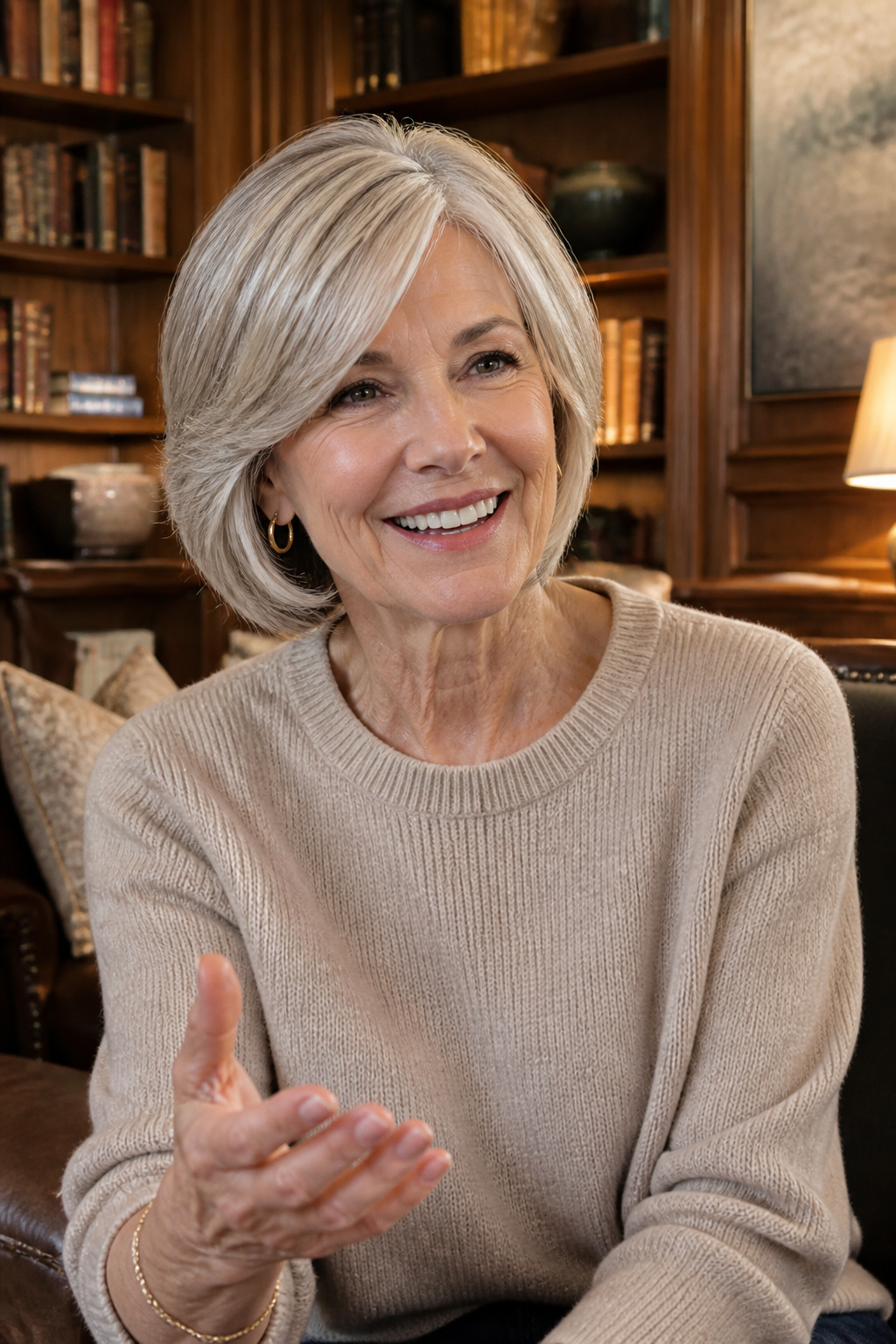
Layers cut to hit right at the jawline and cheekbone do something all-over layers cannot: they pull the eye inward, toward the center of the face, rather than letting it drift to the perimeter. Round and oval face shapes benefit most from this framing, because the vertical lines break width and add structure where softer bone definition might otherwise fade into the hair. A long face, by contrast, can look stretched when layers stop at the cheekbone rather than falling lower to build width.
The difference matters in the cut itself. All-over layers remove weight throughout, creating movement and lift from crown to ends. Face-framing layers leave the back and interior denser, carving only the front panels to create that portrait-like border. You will notice the effect most when hair is tucked behind one ear or swept to a side part: the layers act like soft parentheses, holding attention on eyes and smile.
Ask your stylist to keep the shortest layer no higher than the cheekbone peak, and to cut them dry so you see exactly where they land against your own bone structure. Wet hair lies longer and straighter; the surprise of layers shrinking up toward the eye is a common reason this cut goes wrong at home.
8. Loose Push-Back

Volume at the crown makes this style read as intentional rather than lazy. You sweep the hair back with your fingers while it is still warm from the dryer, letting it fall where it wants rather than forcing every strand into place. The result opens your face without exposing it; the softness at the edges keeps the look from feeling severe or dated.
A lightweight mousse worked through damp roots gives you that lift without the helmet-head stiffness that heavier products leave behind. You want the hair to move when you turn your head. If the front starts to fall forward after an hour, you have used too much hold or not enough heat at the root. A round brush drying upward at the crown builds the shape that lets you use less product later.
The real test comes three hours in. If the push-back still sits where you left it but does not look lacquered, you have the balance right. For finer hair, a dry texturizing spray at the roots replaces the mousse and keeps the crown from collapsing by lunch.
9. Mermaid Waves

Mermaid waves sit between barrel curls and crimped texture, with a longer, more uniform S-pattern that runs the length of the hair. On medium hair that brushes the collarbone or grazes the shoulders, this style reads as intentional rather than slept-in, which matters when you want polish without looking like you tried too hard.
The wave shape comes from a larger-barrel waver or a 1.25-inch curling iron held flat against the head, wrapped in alternating directions so the bends line up rather than fighting each other. You clamp, roll back half a turn, release, and move down the section, overlapping slightly so there are no straight gaps. A flat iron works too if you feed the hair through in a ribbon motion, but the learning curve is steeper and the first few attempts will look more like crimps until your wrist finds the rhythm.
This pattern holds best on hair that has some length to anchor it, so if your cut is on the shorter side of medium, barrel waves or loose curls will behave better. On longer medium hair, mermaid waves give you the movement of extensions without the weight or the maintenance.
10. Tousled Layers

Irregular, piecey layers are the whole point of this cut, not a mistake to smooth away. Ask your stylist to keep the ends deliberately uneven, varying the layer length by a couple of inches rather than blending them to a uniform stair-step. That variation catches light differently and gives the eye more to follow, which reads as fullness on hair that has settled into a finer texture over time.
The styling approach works with that irregularity rather than against it. Skip the round brush and blow-dryer chase for mirror-smooth ends. A light texturizing spray or a small amount of styling cream worked through damp hair, then left to air-dry or scrunched while drying, lets the layers fall into their own slight disarray. The lived-in quality is the goal, not the enemy.
This cut suits hair that has lost density because the broken-up perimeter creates shadow and lift where a blunt line would lie flat and expose thinning. The movement draws attention away from the scalp and toward the shape around your face, which is what people notice first anyway.
11. Shoulder-Length Shag

The modern shag lands right at the shoulder with choppy ends and graduated layers that run shorter around the crown, longer toward the bottom. That stacking is what builds volume exactly where thinning tends to show first, lifting the hair at the top instead of letting it fall flat. Ciara wore hers with piecey bangs, but the cut works on nearly every texture without them. It reads chic and deliberately mussed rather than messy, which is a fine line. The catch is upkeep: those layers need regular trimming to keep their shape, and the textured finish means you are styling more mornings than not. If you want something you can wash and forget, this is not it. For women over 60 with medium-length hair, the trade is volume and movement against time in front of the mirror.
12. Flipped-Out Lob

A long bob that turns outward at the ends rather than curling under gives you structure where it counts. The flip happens at the jawline, and that outward kick widens the silhouette right at a spot where skin often loses its natural firmness. You get the visual effect of a sharper angle without any cutting required.
Rosamund Pike has worn this with the top kept slick and the ends flipped blunt, a mix of 1960s and 1990s references that reads modern rather than costume. A two-inch round brush and a blow-dryer with the airflow directed downward at the roots will set the shape; work the ends over the brush barrel and roll outward as you dry, or skip the brush entirely and bend the last two inches away from your face with a straightener. The straightener gives more control if your hair resists holding a curve, but the brush method keeps more movement through the mid-lengths. You will need some length to get leverage, so ask your stylist to keep the perimeter at or just below the collarbone. Too short and the flip turns up rather than out, which points to the neck rather than the jaw.
13. Pinned-Back Curls

Curling first and pinning after gives you texture that stays where you put it. The trick is placement: a pin set too low drags the face down, while one sitting at or just above the temple pulls the eye upward and opens the cheekbone. For medium hairstyles for women over 60, that lift matters more than the curl itself.
A one-inch iron or roller works best here. Anything tighter fights the softness this style is after; anything looser falls out before the pin goes in. Wrap hair away from the face, let it cool fully, then rake through with your fingers so the curl relaxes into a wave before you anchor it.
Pin both sides if you want symmetry and a clean neckline, or just one if you prefer asymmetry that reads casual rather than set. The exposed side should keep enough volume at the root to balance the pinned side; flatten it and the whole shape skews. Bobby pins crossed in an X grip better than single pins, especially if your hair is fine or has any slip to it.
This fails when the curl is too fresh and springy. It bounces the pin loose within the hour. Let it cool, let it settle, then commit.
14. Straight, Shiny Locks
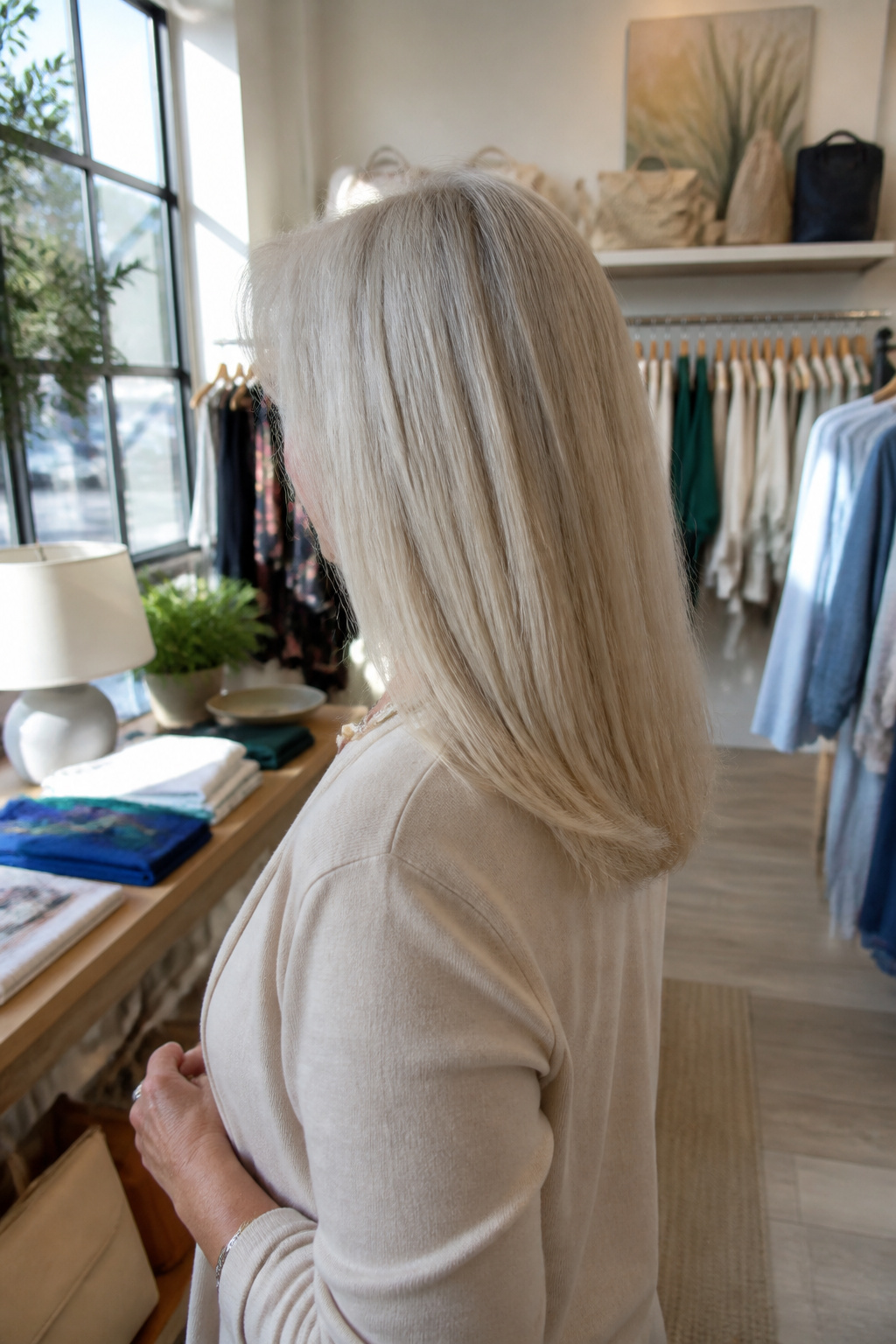
Straight, shiny medium hair lives or dies on condition, not the cut itself. You can wear it parted down the middle or swept slightly off-center, but the real work happens before you pick up a heat tool. A weekly mask keeps the strand surface smooth enough to reflect light; without that base, flatiron heat just fries what is already dry. Keep the iron temperature moderate and get a trim every eight weeks to stop splits from traveling up the shaft.
This style asks for some natural density. Fine hair pressed flat tends to disappear against the scalp, while thicker hair holds the line and gives that polished, expensive finish. If your texture is naturally coarse or wavy, a keratin treatment buys you the smoothness without daily wrestling. The mistake is cranking the heat to high and skipping the mask — you get one glossy day, then three weeks of straw. Face-framing layers cut in a straight line can soften the look without breaking the sleek silhouette, but keep them minimal; too many and you lose the whole point.
15. Crimped Waves

Crimping came back, but not the way you remember it. The full-head zigzag of the eighties reads costume now; what works is crimping used as a texture tool, concentrated at the roots for lift or worked through the mid-lengths to keep a wave from falling flat.
Modern crimping irons run narrower than the old clamp-style plates, some no wider than a finger. You press a section at the crown, backcomb with the tool’s teeth, and release. The crimp sits hidden under smoother top layers, doing the structural work of backcombing without the damage. Through the lengths, a single pass breaks up a uniform curl so it catches light differently and moves less predictably, which is exactly what keeps it from looking set and stiff.
The mistake is treating crimp as the main event. Two or three panels, no more. If you can see a pattern from across the room, you have gone too far. For medium hair, crimp from the ear down where the weight drags, or at the roots alone if your main fight is height. It pairs well with the undone textures in other sections here, but it dies next to anything too polished; the contrast makes the crimp look accidental rather than intentional.
16. Messy High Bun

A bun pinned at the crown rather than the nape pulls the eye upward, which lengthens the neck and softens the heaviness that can settle along the jawline after sixty. The placement matters more than the twist itself; too low and you lose the lift, too tight and the style reads harsh against skin that has relaxed.
The looseness here is deliberate, not lazy. You want strands that slip free around the hairline and a twist that looks like it was secured in one motion rather than wrestled into place. That softness keeps the style from aging you; severity is what makes an updo feel like a librarian stereotype.
Medium length is the sticking point. You do not have the extra inches to wrap and tuck twice, so the pinning has to be strategic. Work with two sections, not one: twist the top half first and pin it flat, then wrap the bottom half around the base and anchor with crisscrossed pins. Without that two-step, the bun collapses by noon or bulges at the wrong angle. A few well-placed bobby pins beat a dozen hasty ones; you are building structure, not armoring it.
17. Voluminous Curls
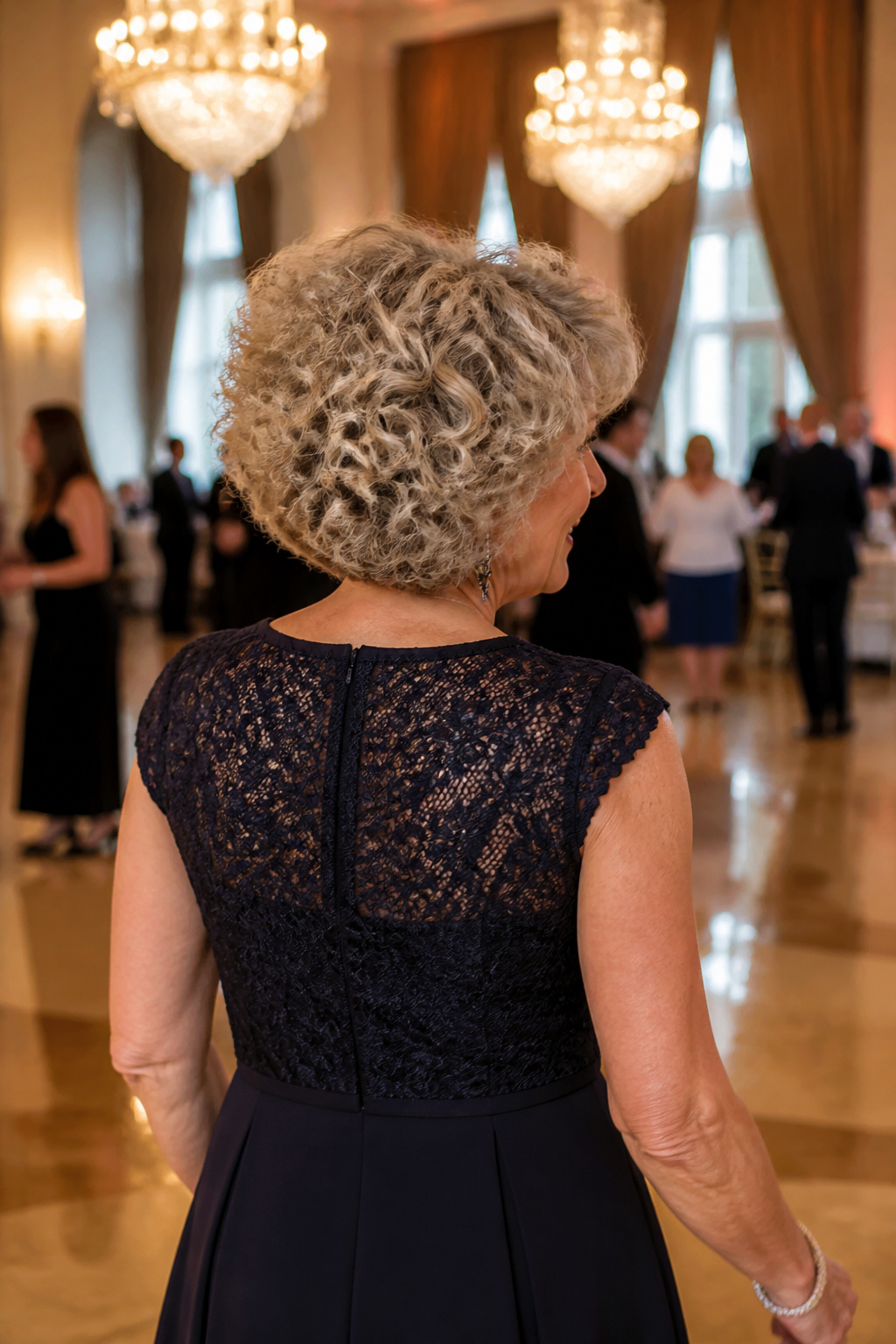
Larger, well-defined curls built with rollers or a curling iron do what flat styles cannot: they create fullness and presence around the face without adding width at the jaw. The technique matters. Rollers set on dry hair and cooled completely before removal give a softer, more structured wave than an iron alone. A curling iron with a one-and-a-quarter-inch barrel works for the mid-lengths, but the key is wrapping hair away from the face on both sides so the volume opens up rather than collapsing inward.
For women whose natural curl has loosened with age, this style replaces what gravity and time have taken. The curl pattern that once held itself now needs support. A lightweight mousse applied to damp roots before drying gives the structure; a small amount of serum, no larger than a dime, smoothed over finished curls keeps the definition without the crunch that older hair tends to grab onto. Skip hairspray entirely if the hold feels stiff — the goal is movement, not a helmet.
Andie MacDowell has worn this approach with her natural gray for years, keeping the length but letting the volume carry the style. The texture keeps the hair from weighing down around the face, which is where medium length becomes a problem rather than an asset.
18. Lightly Tousled Tresses

A barely-there wave or bend reads as texture you woke up with rather than something you worked for. The difference between this and full-on barrel curls is the difference between looking like you live at the beach and looking like you spent an hour there.
You get there with a sea salt spray on damp hair, scrunched in while it air-dries, or with a texturizing mousse raked through the mid-lengths and left alone. No diffuser, no round brush, no sectioning. If you do reach for heat, a quick pass with a beachwaver on random sections, not all of them, keeps it from looking too done.
Michelle Pfeiffer has worn this at shoulder length, and the effect depends on the irregularity. Uniform waves look styled; uneven ones look like natural texture that happens to photograph well.
This is the lowest-maintenance option on the list because it is designed to look better slightly slept-on. Second-day hair has more grit, which gives the spray something to grip. You refresh with water and a quarter-sized amount of mousse, not a full re-wash. The tradeoff is that it goes flat in humidity faster than a set curl, and it needs the cut to sit right at the collarbone or just above. Too long and the wave pulls out; too short and you lose the movement that sells the effortlessness.
19. Bouncy Waves

Bouncy waves carry a tighter, more deliberate curl than the looser barrel or mermaid styles you might see elsewhere. Where barrel waves fall in soft, wide loops and mermaid waves stretch out into long, flattened ribbons, bouncy waves snap back into shape when you tug them. The pattern sits closer to the head and builds real spring, so the hair moves when you turn your neck rather than swaying behind you in sheets.
This shape asks more from your hair than looser waves do. Fine hair that collapses by noon will struggle to hold the set without help. Coarse or naturally curly hair, on the other hand, takes to bouncy waves with less coaxing; the existing body gives the iron something to work with instead of fighting against straight roots. If your hair sits in the middle, neither fine nor thick, you will need to judge by behavior: does a blow-dry hold volume past lunch, or does it fall flat before you have finished your coffee? The answer tells you whether bouncy waves are worth the effort or whether you should slide toward something more forgiving.
20. Old-Hollywood Curls

Set the waves while your hair is still damp, working a setting lotion through with a fine-tooth comb to create deep, continuous curves that hug the scalp rather than springing away from it. Pin each section flat against the head as it dries, or use large self-gripping rollers placed vertically from crown to nape. The brush-out is where the style lives or dies: you want to loosen the set with a soft bristle brush, not a comb, so the waves merge into one smooth, uninterrupted line rather than breaking into frizz.
For modern wear, skip the lacquered finish that reads costume. Brush until the surface holds a soft sheen, then let the ends relax slightly so the shape feels intentional, not preserved. This is evening hair: a charity dinner, a grandchild’s wedding, the kind of event where you want to look considered rather than effortless. The structure flatters faces that have lost some natural fullness, giving back architecture without hiding behind volume.
What Your Face Shape Changes

Your face shape still matters at sixty, but the rules have shifted because the shape itself has changed. Bone loss along the jaw and temples often turns an oval face rounder, or a round face longer, so the cut that flattered you at forty may fight you now.
Oval faces carry most medium styles well, though heavy layering at the cheekbones can drag the face down as skin softens. Round faces need height at the crown more than ever; a style with lift at the roots, like a tousled layer cut or a pushed-back blowout, lengthens where time has flattened. Square faces soften with movement around the jaw, so a shoulder-length shag with broken ends works better than a blunt lob that mirrors the jawline. Heart faces, already narrower at the chin, can handle more width through the ears; flipped-out ends or a lob that kicks out balance a forehead that may have grown more prominent. Long faces should skip the center part and the flat-ironed straight fall, both of which pull the eye downward; instead, a side part with waves that start at cheek level adds the horizontal width that aging tends to erase.
The mistake is clinging to the shape you had rather than the one you see now. Check in natural light, hair pulled back, and match the cut to what the mirror shows today.
How Much Maintenance Each Style Takes
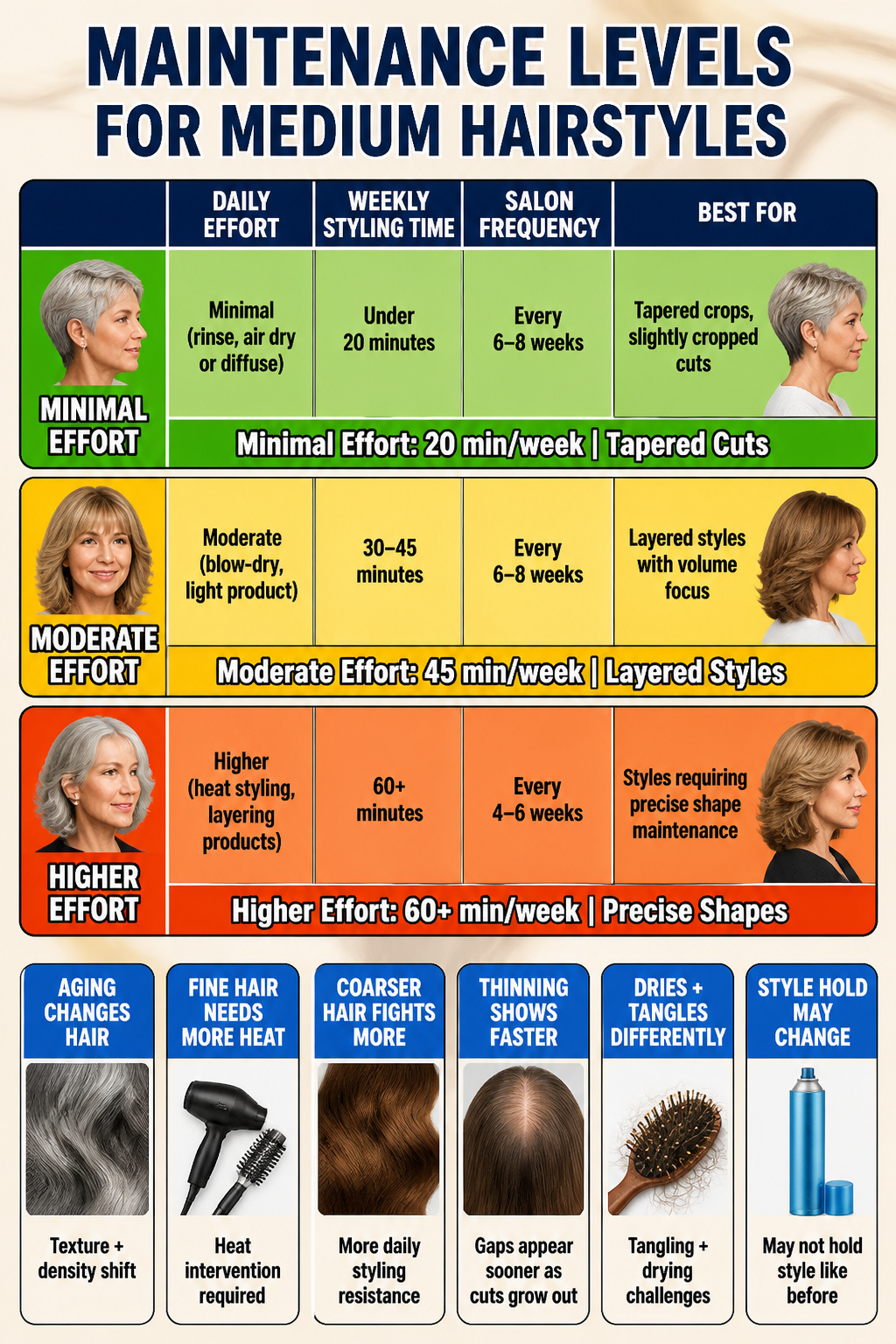
Medium hairstyles for women over 60 fall into three real-world maintenance tiers once you factor in how aging changes hair texture and density. Fine hair that once held a curl now needs more heat intervention, while coarser strands may fight daily styling more than they did a decade ago.
| Daily effort | Weekly styling time | Salon frequency | Best for |
|---|---|---|---|
| Minimal (rinse, air dry or diffuse) | Under 20 minutes | Every 6–8 weeks | Tapered crops, slightly cropped cuts |
| Moderate (blow-dry, light product) | 30–45 minutes | Every 6–8 weeks | Layered styles with volume focus |
| Higher (heat styling, layering products) | 60+ minutes | Every 4–6 weeks | Styles requiring precise shape maintenance |
The cropped cuts need the least: the tapered design does the structural work of making thinning hair look fuller, so you are not rebuilding shape each morning. Layered medium cuts trade some daily ease for versatility, but thinning hair will show gaps faster as the cut grows out, shortening that 8-week window. The real cost is not the salon visit frequency; it is whether your morning routine accounts for hair that now dries differently, tangles more, or refuses to hold the style it once did.
Adding Volume Where Hair Thins
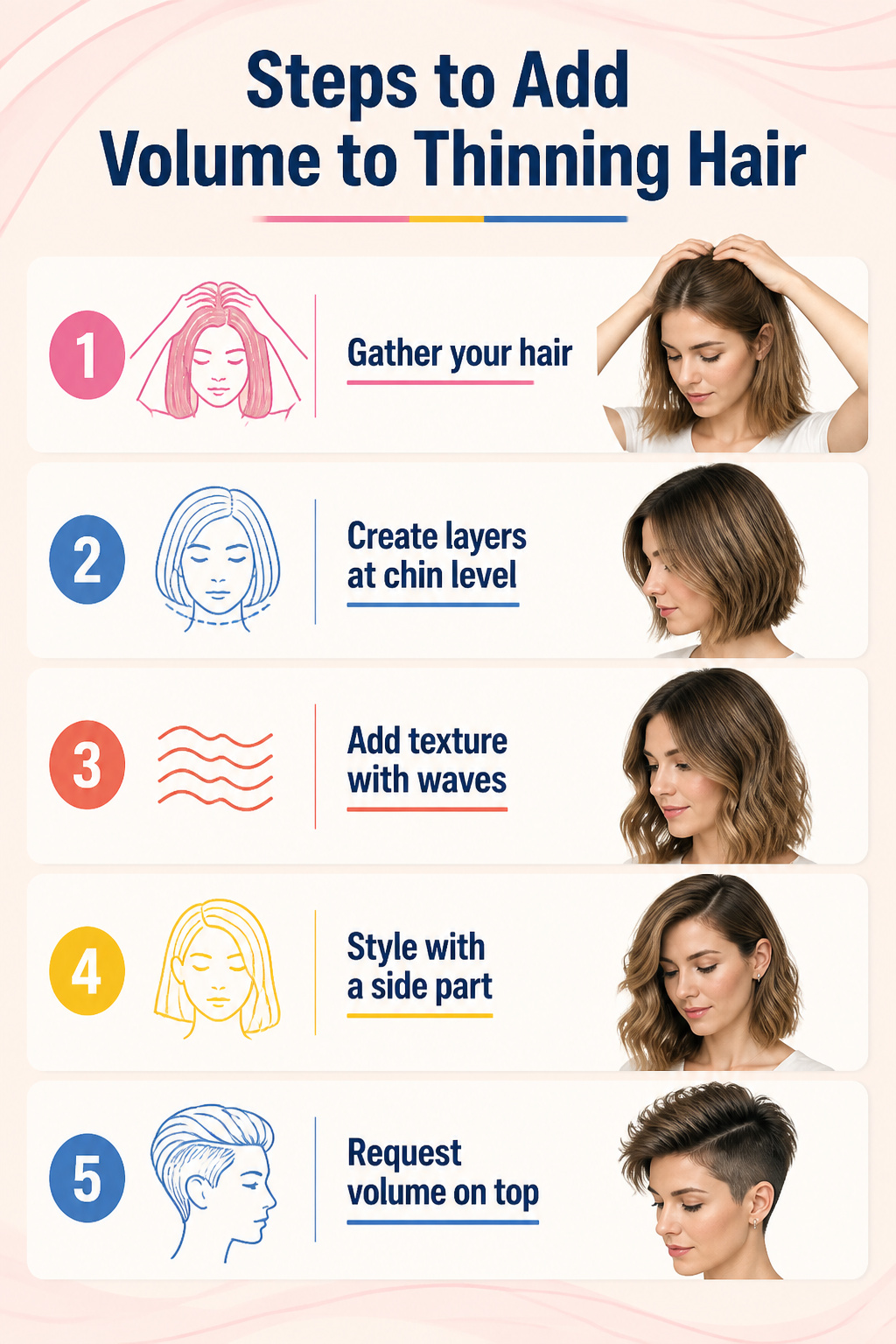
Thinning hair rarely thins evenly, so where you build volume matters as much as how much you build. A layered lob adds depth through the lengths rather than piling everything at the crown, which works when your part area still holds density but the ends go wispy. Ask for the layers to start at chin level or lower; higher placement can leave you with gaps near the scalp that styling won’t close.
Shoulder-length waves take a different approach, using movement through the mid-lengths to make the overall mass look fuller. The wave itself creates texture that breaks up light and hides patchiness, though this only holds if you keep the length above where your hair starts to string out. Side-parted barrel waves push more hair to one side, which gives you instant lift at the root on the heavier half. That asymmetry is doing the work a symmetrical style can’t.
For crown-specific loss, the sharper bobs and undercut styles flip the logic: tight, controlled sides with deliberate volume on top. The contrast makes the top look intentionally architectural rather than merely thin. Have your stylist cut into the ends rather than blunting them; a blunt edge sits heavy and flat, while a slightly broken perimeter catches light and air and reads as more hair than the same length weighed down.
Frequently Asked Questions
What are the best hairstyles for women over 60?
Medium-length styles that lift the face and work with thinning hair are the most flattering. The article covers twenty options, from low ponytails that gather volume at the nape to bouncy layers that create the illusion of thickness through light and shadow. Face-framing layers, undone updos, and tousled cuts all draw attention toward the eyes and cheekbones rather than letting it settle on the jawline or neck.
How can I add volume to thinning hair?
Layered cuts build gaps where light passes through, and your eye reads that space as volume you do not have to grow. For medium hairstyles for women over 60, a shoulder-length shag stacks shorter layers at the crown where thinning shows first, while tousled layers use irregular, piecey ends to catch light differently and create shadow. A dry texturizing spray at the roots or a lightweight mousse worked through damp hair before drying also keeps the crown from collapsing.
What hairstyles are easy to maintain for older women?
The low ponytail, loose push-back, and lightly tousled tresses need the least daily effort. A low ponytail gathers at the nape in minutes; the loose push-back only asks for a round brush at the crown and fingers to sweep it back; lightly tousled tresses air-dry with sea salt spray and look better slightly slept-on. The shoulder-length shag and bouncy layers, by contrast, need trims every six to eight weeks and more styling mornings than not.