

Six smart Disney winter outfits keep you warm at rope drop and comfortable by afternoon, but only if you build every look around the same 40-degree swing Orlando throws at you. The mistake is packing for one temperature; the parks demand merino base layers you forget you are wearing, fleece-lined tights that do not bulk in photos, and a puffer that compresses to fist size. That is the difference between managing your clothes and managing your day.
What to Wear to Disney in Winter
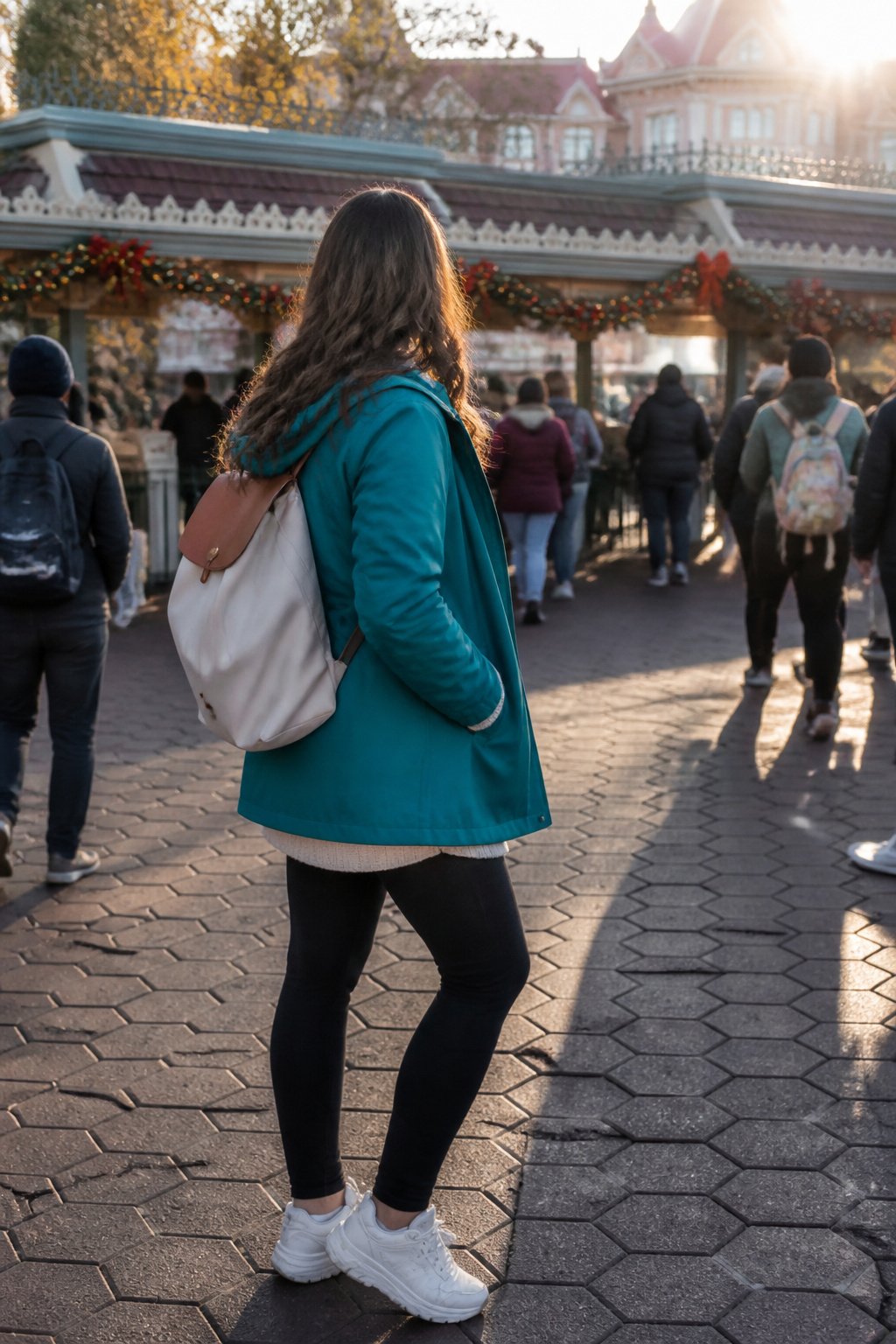
Winter at Disney means layers, because Orlando temperatures swing from the 40s°F at dawn to the 70s°F by afternoon. You will need a packable coat, comfortable walking shoes, and the ability to add or remove pieces as the day shifts. The parks demand roughly 20,000 steps per day, so your shoe choice matters more than your jacket choice. Closed-toe sneakers broken in before the trip are the safe play, though some visitors pack waterproof boots or slip-ons for rainy days and keep sandals in reserve for the warm midday stretch. Anaheim runs similar, with December through February highs around 65–70°F and lows in the upper 40s to low 50s°F, plus about five days of rain in December alone. The same layer logic applies: start cold, strip down, bundle back up.
1. Layering Essentials
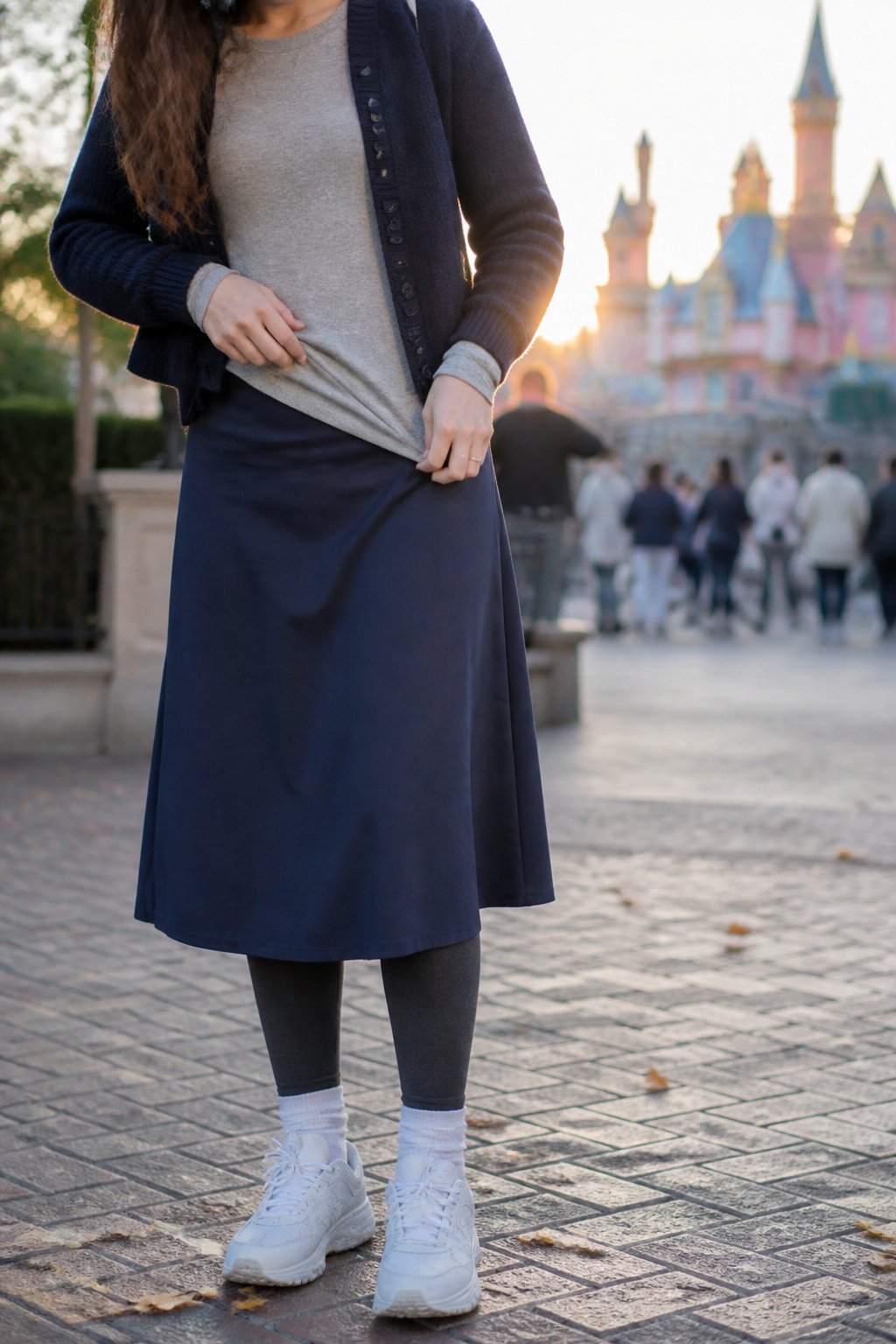
You will feel the temperature swing the moment you step through the gates. Mornings in Orlando can sit in the low 50s°F, afternoons climb toward 75°F, and the drop back down catches you during fireworks if you stripped off too much too early. The fix is a thermal base layer you forget you are wearing. Merino or heat-tech long-sleeves sit under a cardigan or light jacket without the bulk that ruins photos, and they breathe well enough that you are not stripping in the middle of Fantasyland when the sun peaks.
Fleece-lined tights or leggings do the same job on your lower half. They add real warmth under a midi skirt or jeans, but the lining is thin enough that you are not waddling through queues. Pair them with moisture-wicking socks, not cotton, because even winter days involve miles of walking and damp feet turn cold fast. The best socks pull sweat away and dry between rides, so your feet stay comfortable from rope drop to close.
The real trick is what you carry. A packable puffer or lightweight jacket that fits in a crossbody bag or mini backpack saves you from clutching layers on rides or stuffing them in a locker you have to backtrack for. You want to add and subtract without breaking stride.
2. Stylish Outerwear
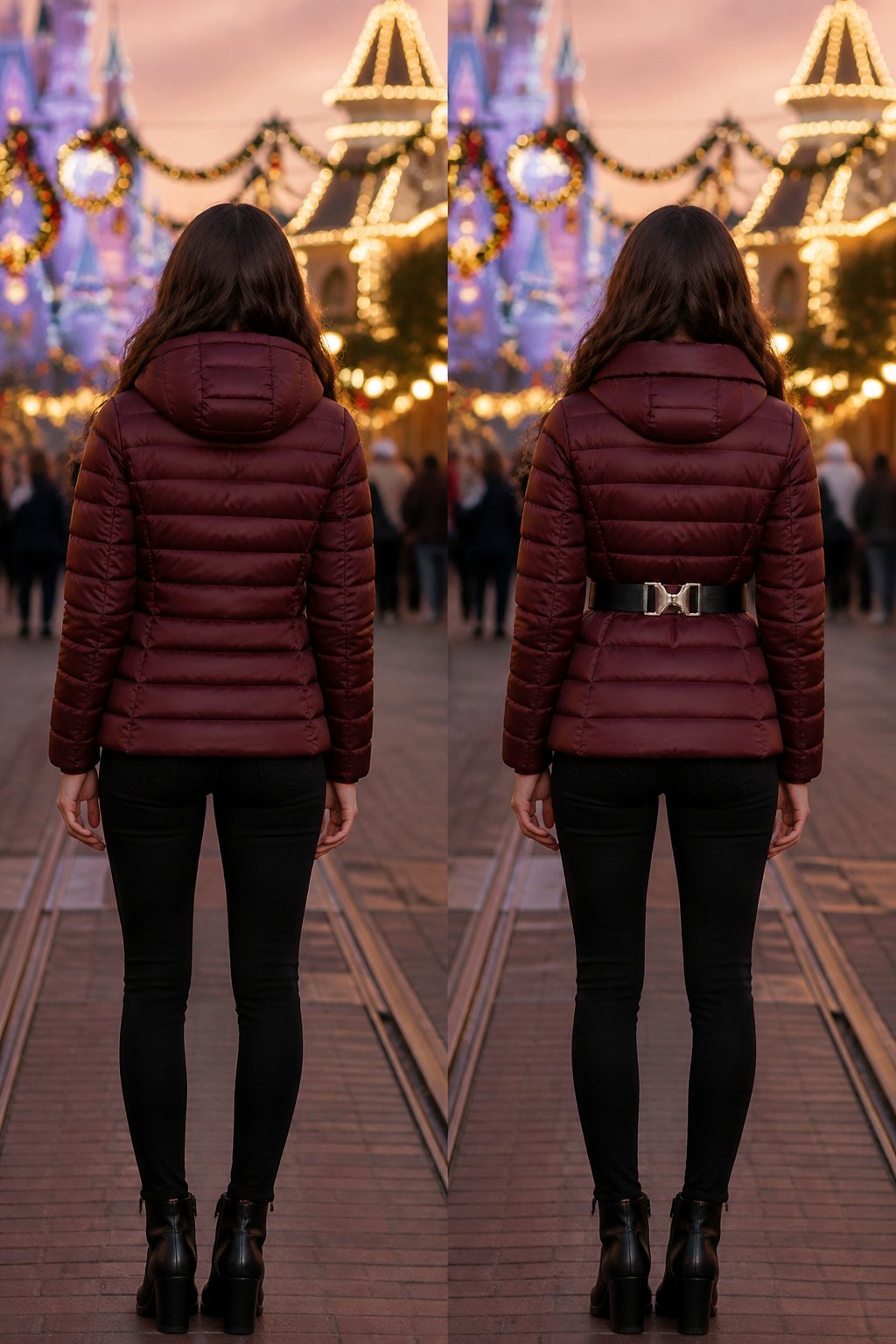
Puffer jackets, trench coats, and rain shells each earn their place in a Disney winter lineup. The puffer keeps you warm during those evening drops to 50°F, while a trench or rain shell handles the sudden Florida drizzle without making you look like you hiked in from the backcountry. Capelets and short coats work if you still want your ears or bow fully visible in frame.
The specific move that saves your day is a packable coat. A lightweight, foldable puffer stashes into your crossbody bag or mini backpack once the sun pushes the afternoon toward 75°F. You are not carrying bulk through seven hours of queue lines and parades, and you are not paying locker rental to store a heavy layer you might need again by 8 p.m.
Water-resistant fabric matters more than you might expect for Orlando winter. A hood adds coverage on chilly mornings or when a shower hits mid-afternoon. For photos, a hip-length or mid-thigh puffer in a clean color reads intentional, not utilitarian. Pair it with one statement piece, a metallic accent or a velvet bow, and the coat becomes part of the shot rather than what you peel off before one.
3. Comfortable Footwear
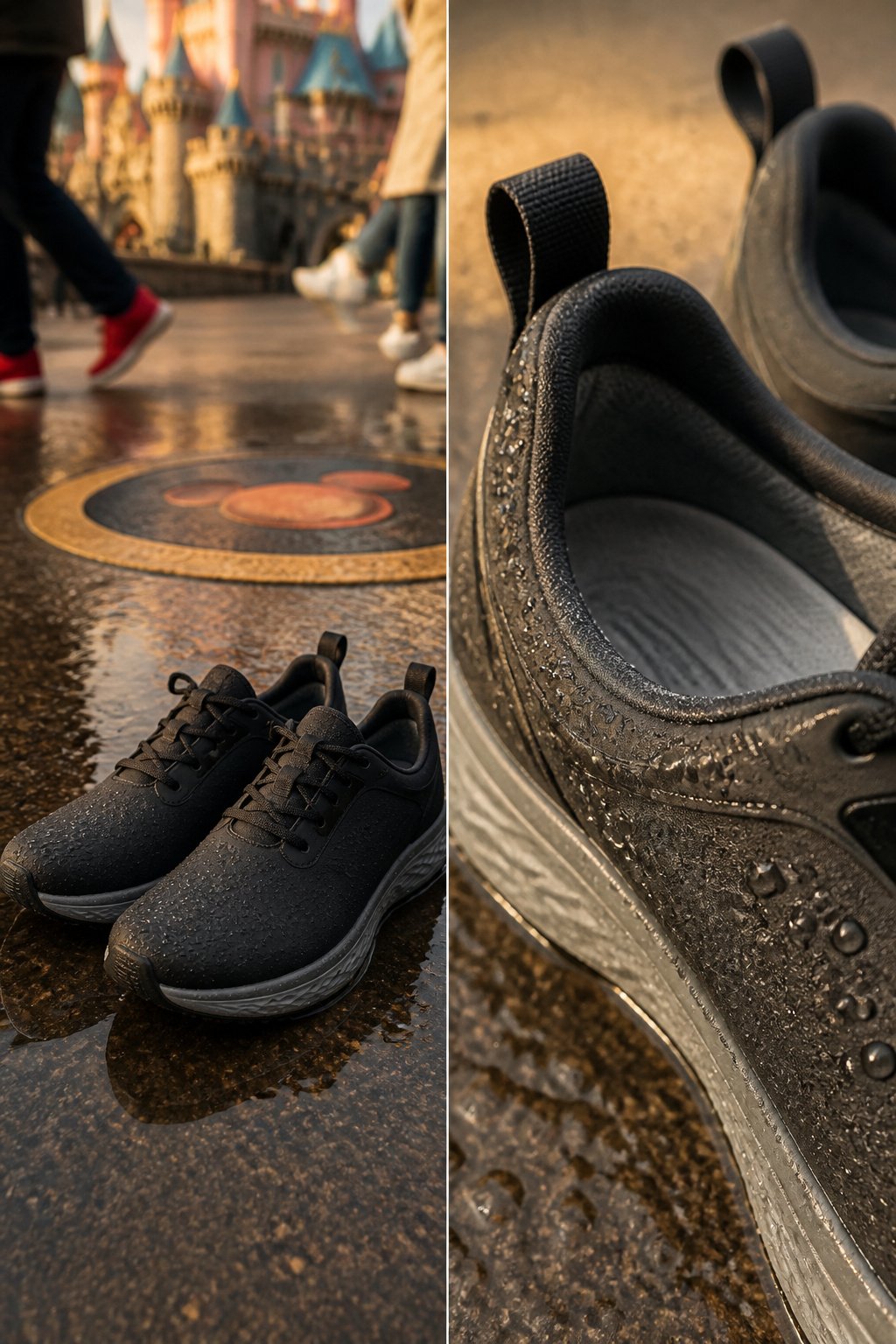
You will walk about 20,000 steps per day at Disney World. That is the number to plan around, and the wrong shoe turns it from a good day into a long one.
Water-resistant sneakers are your first line of defense. Morning dew and afternoon spills on pavement add up, and wet socks at step 8,000 are a mistake you do not need to make twice. Look for a shoe with a supportive insole that holds its shape past noon. On Clouds, New Balance, and Hoka are the names that come up for this kind of mileage, and the difference between them is mostly fit. On Clouds feel light and keep the bottom of the foot cushioned, though the ankle collar can rub if your sock is too thin. Hoka runs wider in the toe box and carries more stack height, which some knees prefer by evening. New Balance splits the difference and tends to run true to size.
If the forecast calls for rain or temperatures below fifty, swap to a boot with the same support profile. The boot adds weight but spares you the puddle decision every hour.
4. Accessories
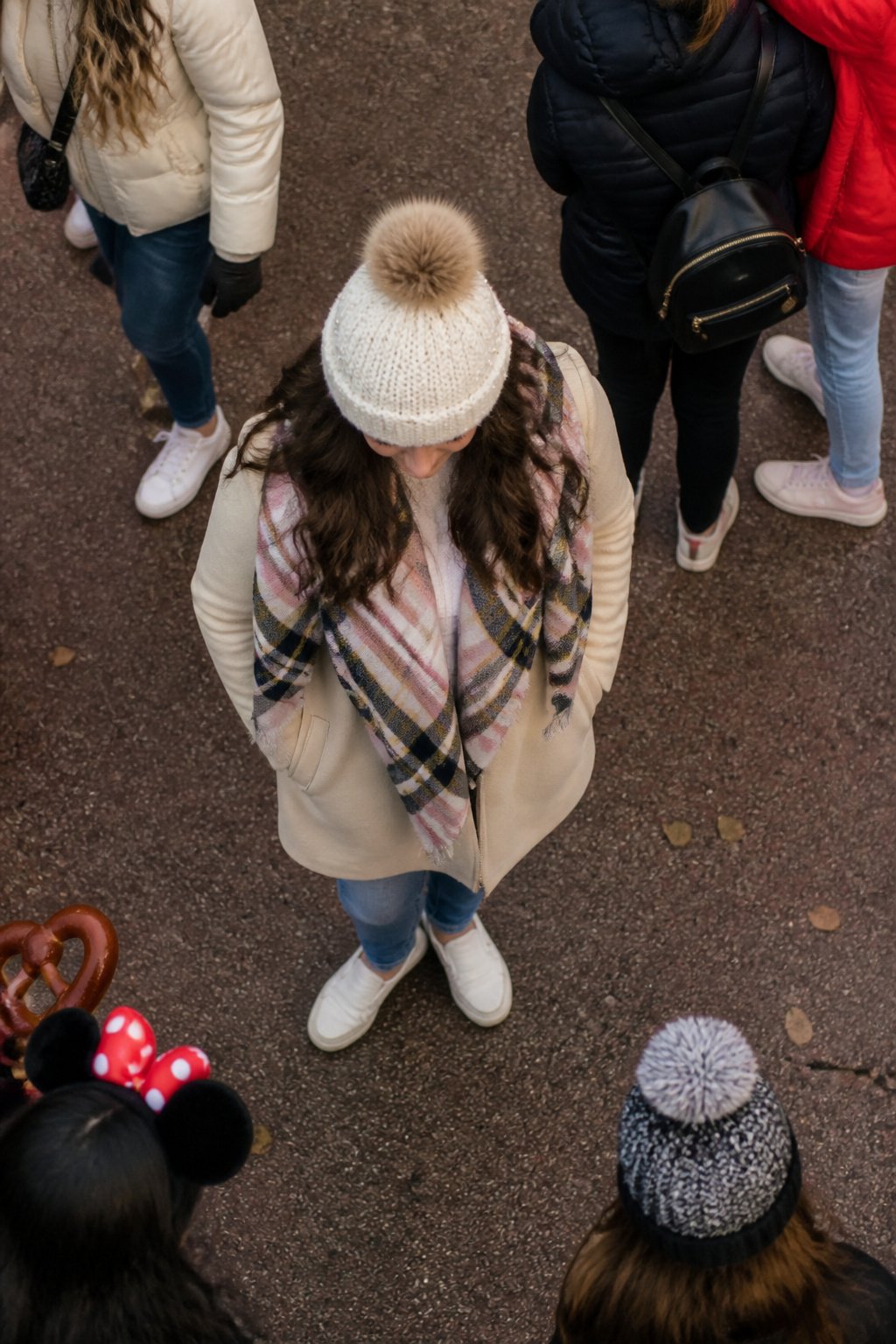
A knitted beanie or fleece-lined hat handles the morning cold without eating space in your bag once the sun climbs. The same goes for a lightweight scarf: loop it over a sweater at rope drop, then stuff it into a pocket by noon when the temperature swings. Hand warmers or thin gloves fit the same strategy. They keep your fingers workable during that first FastPass rush or an outdoor breakfast, and they weigh next to nothing when you shed them. Mickey ear muffs or character gloves add the Disney note, but the practical win is how small the whole set packs. You are not hauling a winter wardrobe; you are carrying insurance against a forty-degree morning that will turn into a seventy-degree afternoon. Skip anything bulky that does not compress to fist size. The parks reward travelers who plan for two seasons in one day, and the right accessories let you dress for both without a locker run.
5. Event-Specific Outfits
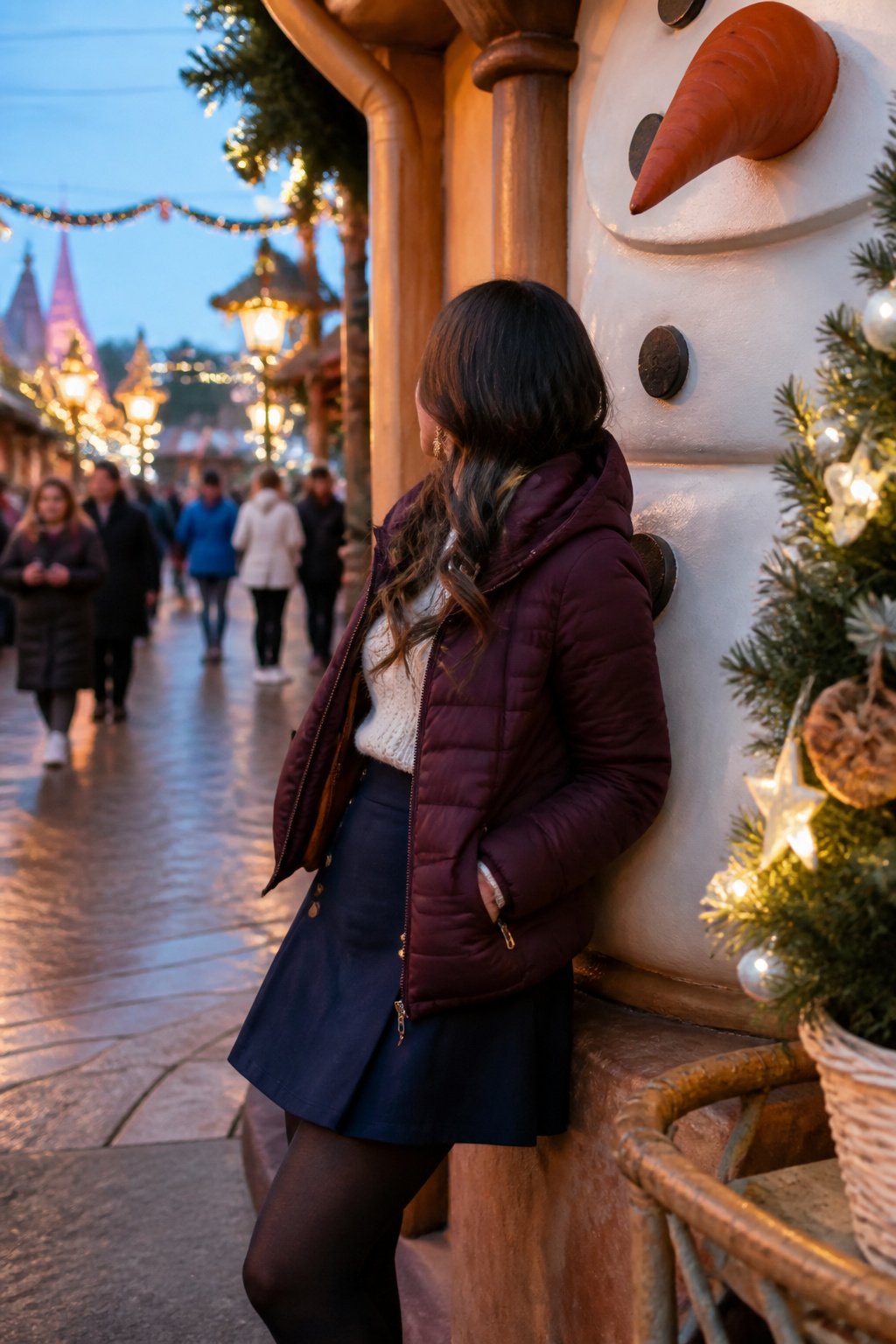
December at Disney parks practically demands a little holiday red and green in your layering, though you stop well short of the full Santa suit. A deep burgundy puffer over a cream sweater nods to the season without trapping you in costume territory when the afternoon sun hits sixty degrees. January and February shift the palette entirely: EPCOT’s International Festival of the Arts calls for brighter colors, maybe a cobalt scarf or a graphic tee that reads art-inspired rather than theme park tourist.
Disneybounding works especially well in winter because the extra layers give you more pieces to pull from a character’s palette without going literal. A mustard cardigan and navy skirt can read Belle in her blue provincial dress; no yellow ballgown required, and you stay warm through the fireworks wait. Lunar New Year and Valentine’s events run the same play: lucky reds and gold accents, or pinks and hearts kept to socks and a headband rather than head-to-toe theme. The trick is picking one or two coded pieces and letting the rest of your outfit handle the Florida chill.
6. What Not to Wear
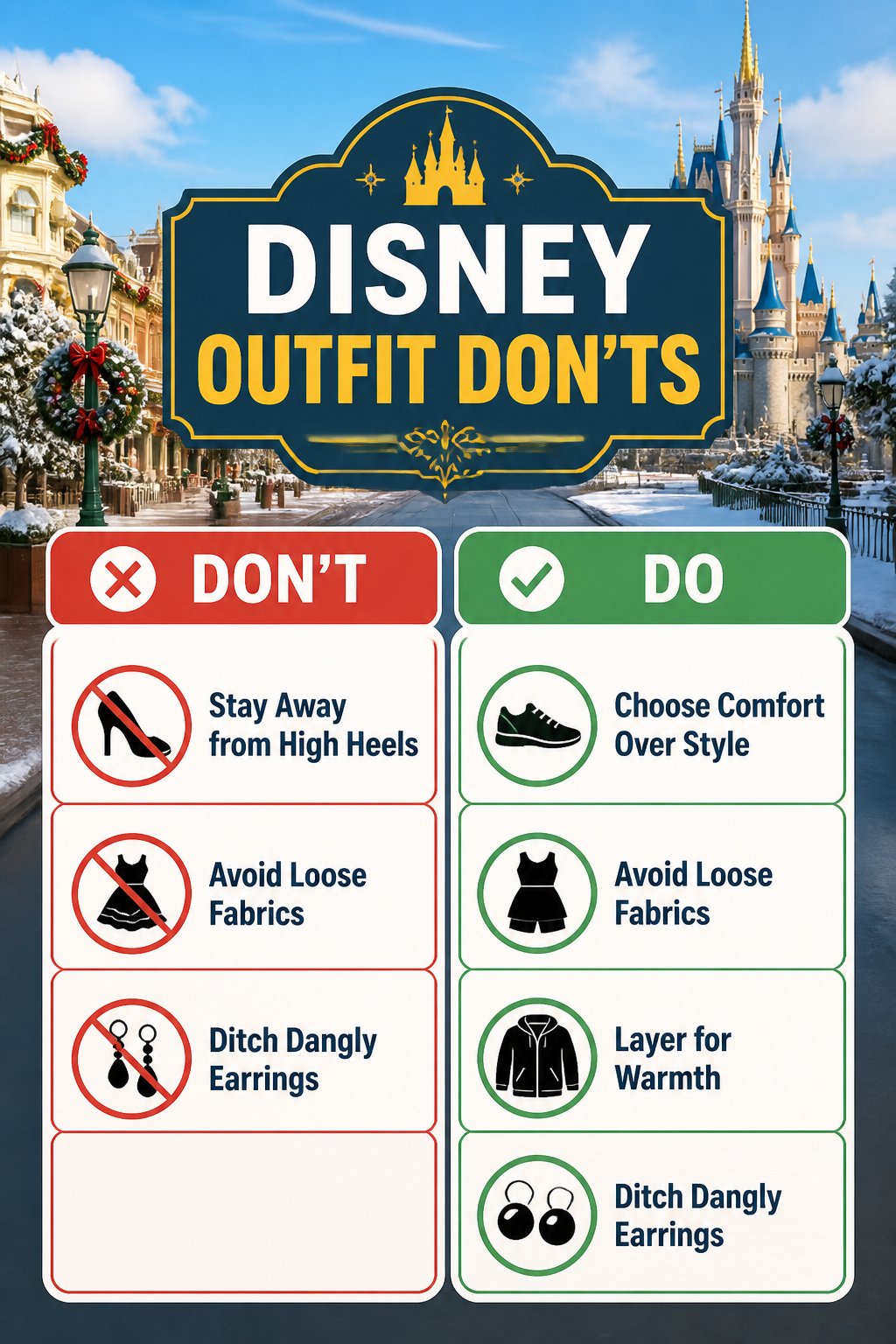
High heels at Disney are a decision you will feel with every step. The parks are built for walking, and even a low heel turns concrete into an endurance test by midday. Do not wear high heels to Disney, no matter how much the castle photo matters.
Flowy dresses carry a different risk. The rides have machinery, and loose fabric gets caught. Dangly earrings whip into your face on anything that spins. If you do wear a shorter dress on a warm winter day, spandex shorts underneath prevent an accident on the ride exit.
Temperature swings punish the wrong fabric too. A dress that works at noon fails at 7 p.m. when the sun drops. The same outfit that felt easy in the parking lot becomes a problem twelve hours later. Choose pieces that handle both the walking and the weather, or you will spend the day managing your clothes instead of the park.
How Orlando Winter Weather Actually Behaves
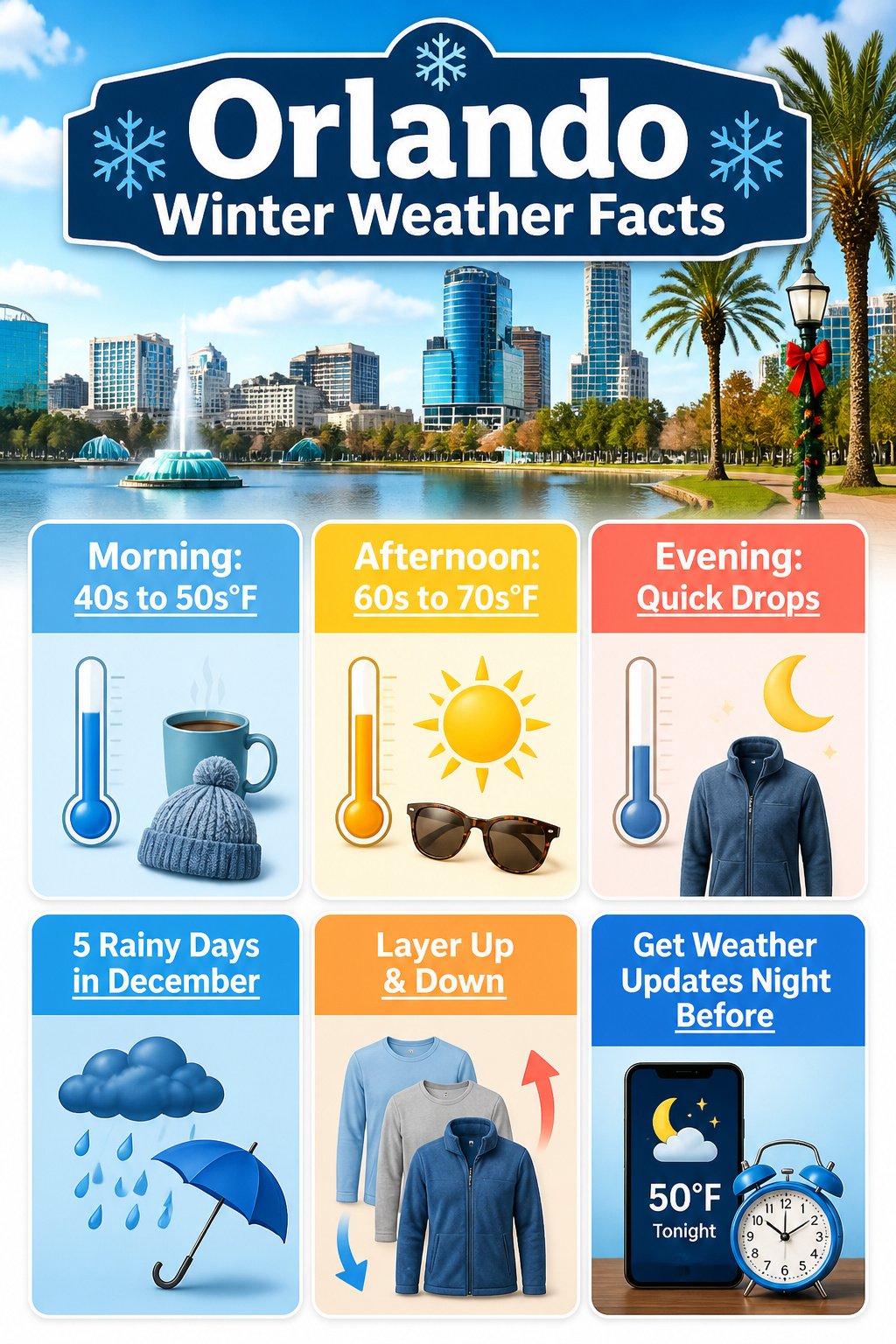
Orlando winter mornings can start in the upper 40s to low 50s°F, which feels sharp when you are standing in line for rope drop. By midday the temperature often climbs into the mid-60s to low 70s°F, warm enough that a heavy sweater becomes its own problem. Then evening drops back to where you started, sometimes faster than you expect.
This swing means you will add and remove layers two or three times before dinner. A long-sleeve shirt under a light jacket handles the 7 AM chill; peel to the shirt alone by noon; add the jacket back for the 6 PM walk to the bus.
Rain complicates it further. December averages about five days of precipitation, and a wet 50°F morning cuts through clothing faster than a dry one.
Check the forecast the night before you pack, not a week out. Florida winter weather shifts inside a single day, and a jacket left at the hotel does not help you at 8 PM when the temperature has fallen twenty degrees from the afternoon high.
Packing for Changing Conditions
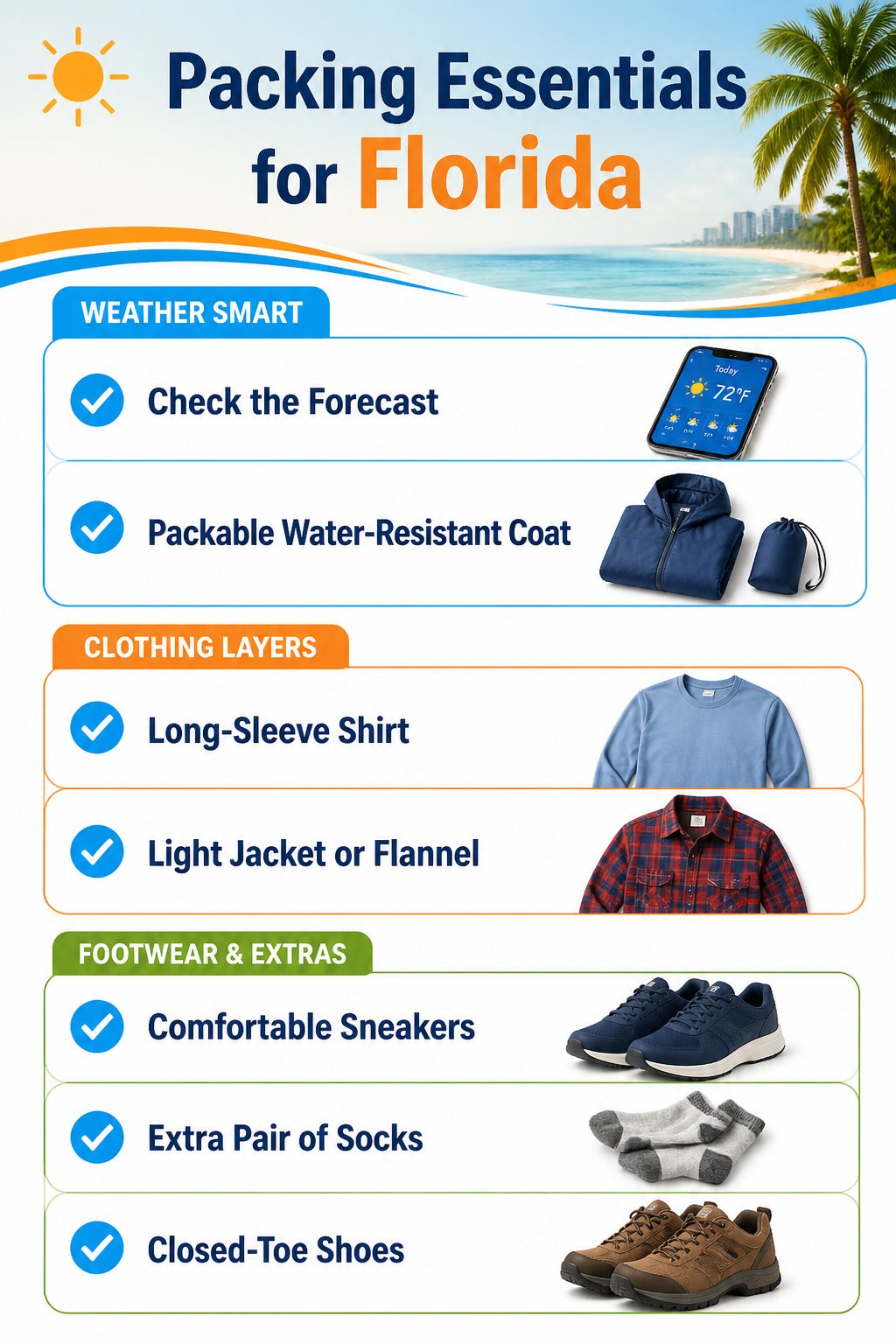
Florida mornings in the 40s and 50s can fool you into overpacking, and by noon you are sweating through a coat you did not need. Check the forecast before you decide on a coat, not after you have packed. If the day is predicted to hit 50 degrees or below with wind, bring one with a hood to keep your ears warm. Otherwise, leave the bulk at home.
Start each day in a long-sleeve shirt or thermal base layer under a sweatshirt or jacket. Peel down to a breathable t-shirt or light sweater by midday, then add a flannel or light jacket back for evening. A packable coat folds small enough to stash in your bag when the sun warms up, and water-resistant fabric handles the rain showers that roll through without warning.
For shoes, broken-in sneakers are your reliable base. Closed-toe handles the cold mornings and nights; waterproof boots or slip-on sneakers work for wet days, and an extra pair of socks fits easily into a pocket. Sandals still have a place on the warm afternoons the forecast promises. The mistake is bringing every option and carrying what you never wear.
Balancing Comfort and Style
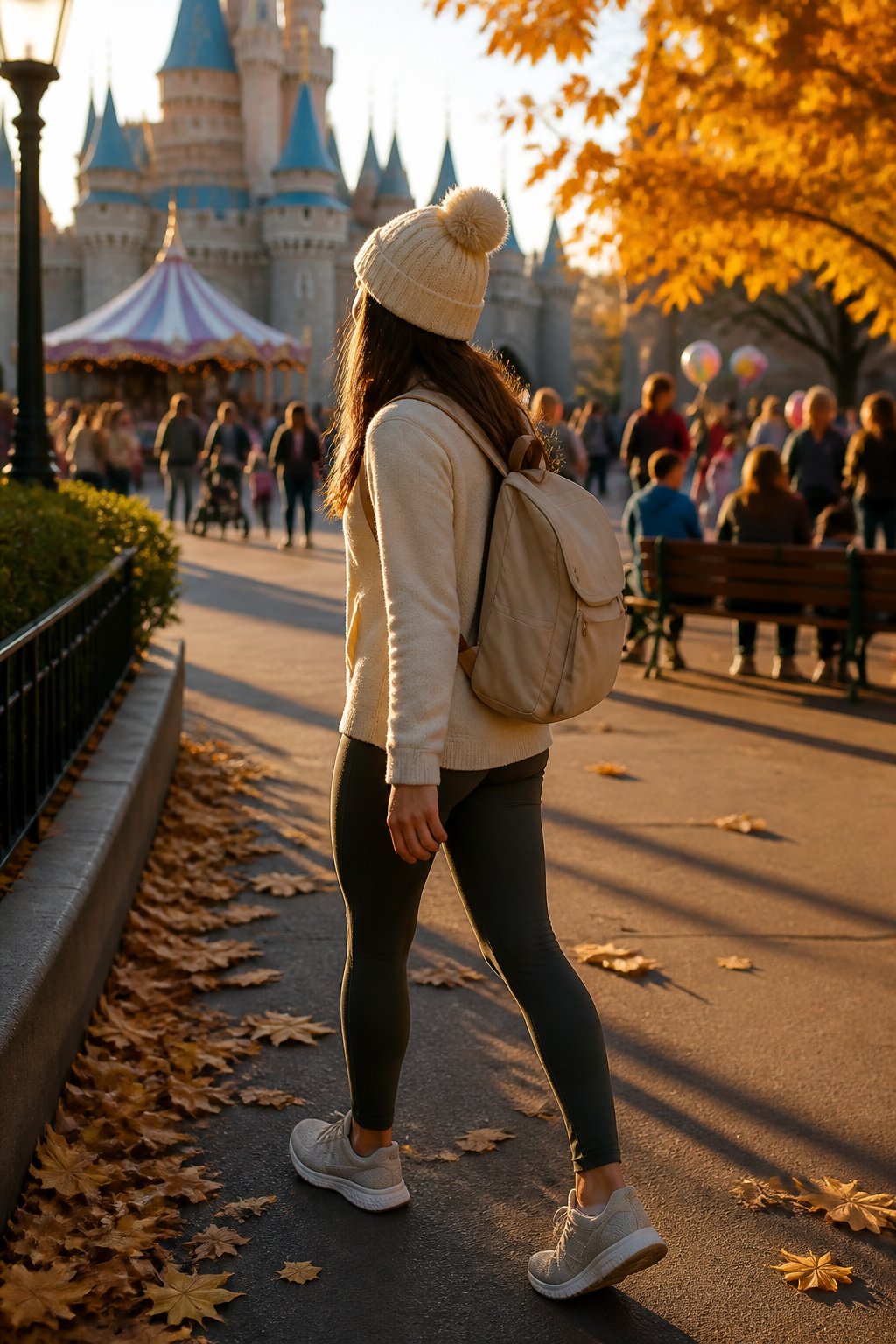
You want the photo, but your feet want to survive 20,000 steps. That tension defines every good Disney winter outfit.
The fix starts with fabric. A thermal base layer under a lightweight sweater gives you warmth without the bulky silhouette that ruins a castle shot. Fleece-lined tights do the same job under a skirt or shorts if that is your look, though jeans, joggers, or leggings are the safer bet for a full day. Democracy jeans get mentioned often for this exact reason: they stretch, keep their shape, and carry a hidden elastic waistband that does not dig in after hour eight.
Fit matters as much as material. Anything too loose catches wind and looks sloppy in photos; too tight restricts movement and traps sweat against your skin when afternoon temperatures climb to 65–70°F. The sweet spot is close enough to layer under, relaxed enough to walk in.
Your shoes decide the day. Broken-in sneakers are non-negotiable. Waterproof boots earn their keep on the five days of rain December averages, but they need to be ones you have already walked in. Never bring new shoes to Disney. That is the mistake that turns 20,000 steps into blisters, and no filter fixes a limp.
Frequently Asked Questions
What do people wear to Disneyland in the winter?
Smart layers that stay comfortable from morning to night: a thermal base layer, fleece-lined tights, water-resistant sneakers, and a packable coat you can stash in your bag when the afternoon warms up. The goal is adding and removing pieces without carrying bulk all day.
Is it cold at Disneyland in December?
Mornings and evenings drop into the upper 40s to low 50s°F, though daytime highs climb to 65–70°F. December also brings about five days of rain on average, which makes the cold feel sharper. Layers handle the swing without trapping you in heavy clothing when the sun hits.
Do I need a coat at Disneyland in January?
Yes, for rope drop, evening parades, and fireworks when temperatures fall back to the 40s and 50s°F. A packable puffer or lightweight jacket you can fold into your bag works best; you will likely shed it by midday when highs reach the mid-60s to low 70s°F, then pull it back on after sunset.