
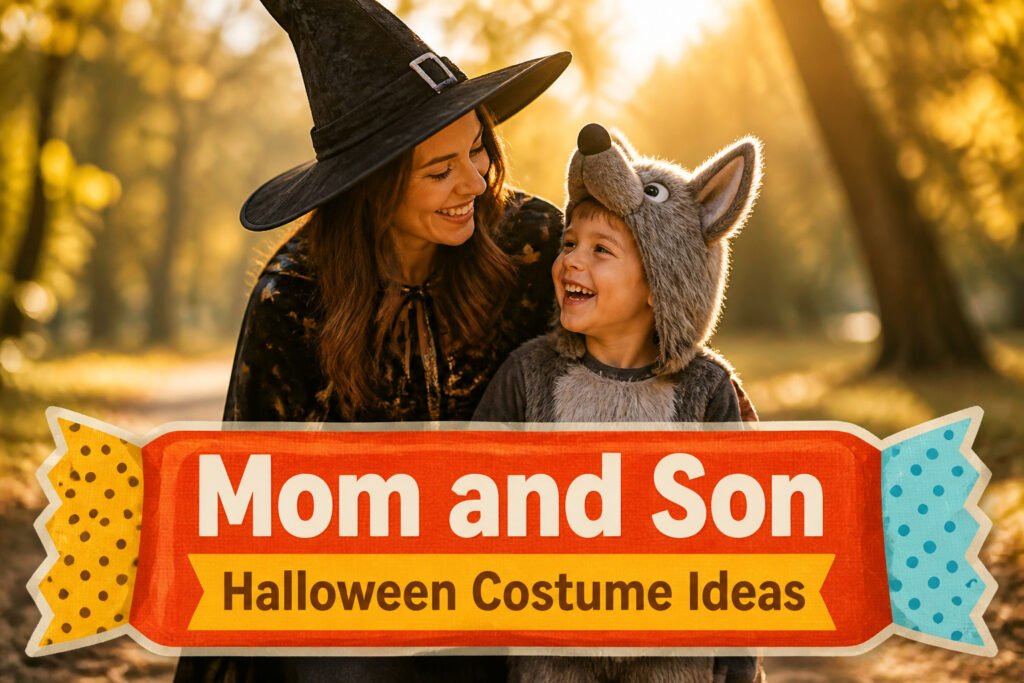
Mom and son Halloween costumes range from thrift-store simple to full-build projects, and the deciding factor is usually how much your child will still want to wear the thing after the first hour of trick-or-treating. The best pairings in this list use one strong anchor piece, like a $5 wolf nose or a proper wizard robe, rather than matching every detail. A toddler Frankenstein needs only green face paint and a blazer two sizes too large; the neck bolts can stay at the store, because they snag on car seats and buy you nothing in photos.
1. Superheroes
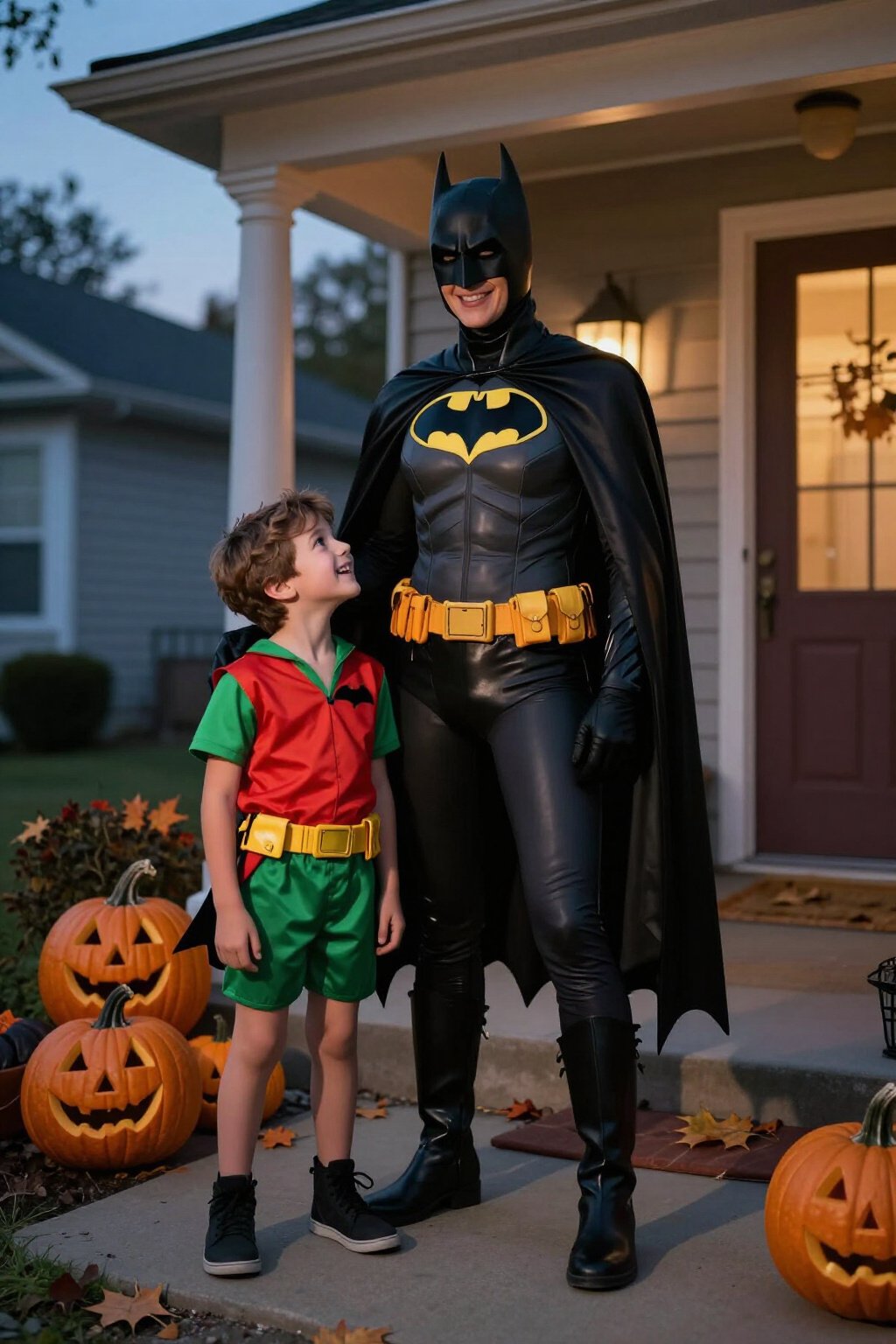
Batman and Robin gives you a clean split on effort: you go full Dark Knight in a cape and cowl while your son handles the bright red, green, and yellow in a tunic and eye mask. The colors read as a pair without needing identical fabric dye lots, which matters when you are buying pieces from different places.
Wonder Woman and Superman flip the dynamic. The blue and red overlap enough that you look coordinated, but the gold accents on her armor and the yellow on his shield let each costume stand alone in photos. Solid base pieces in the right colors carry about seventy percent of the work; a printed emblem ironed onto a blue shirt or a red cape safety-pinned to a gold belt finishes the recognition.
For either pairing, skip the molded muscle suits unless your kid asks for them specifically. A black long-sleeve and leggings under a fabric Robin tunic moves better for trick-or-treating, and the same logic holds for Wonder Woman: a red tank, blue shorts, and gold accessories beat a one-piece that bunches at the knees after an hour.
2. Classic Monsters

Frankenstein and Bride, Dracula and son: these pairings work because the silhouette reads instantly from a distance. For a younger child, the less gore-heavy versions win every time. A toddler Frankenstein needs green face paint and a thrifted blazer two sizes too large, not neck bolts that snag on car seats. The same thrift run yields the black suit pieces for your Dracula look while the boy wears a cape cut from a sheet and a white dress shirt with the collar popped.
Face paint handles what sewn details cannot. The stitched scar across the little monster’s forehead, the pale base and darkened eyes on the vampire: these take ten minutes at the kitchen table and wash out with baby shampoo. You save the purchase budget for one strong piece, usually the wig or the cape, because the rest is already in a closet or a donation bin.
Skip the fake blood for kids under six. The stain risk is real and the detail is lost on them anyway. A pale face and an intent stare does more for the vampire bit than drips on a collar ever will.
3. Pirates
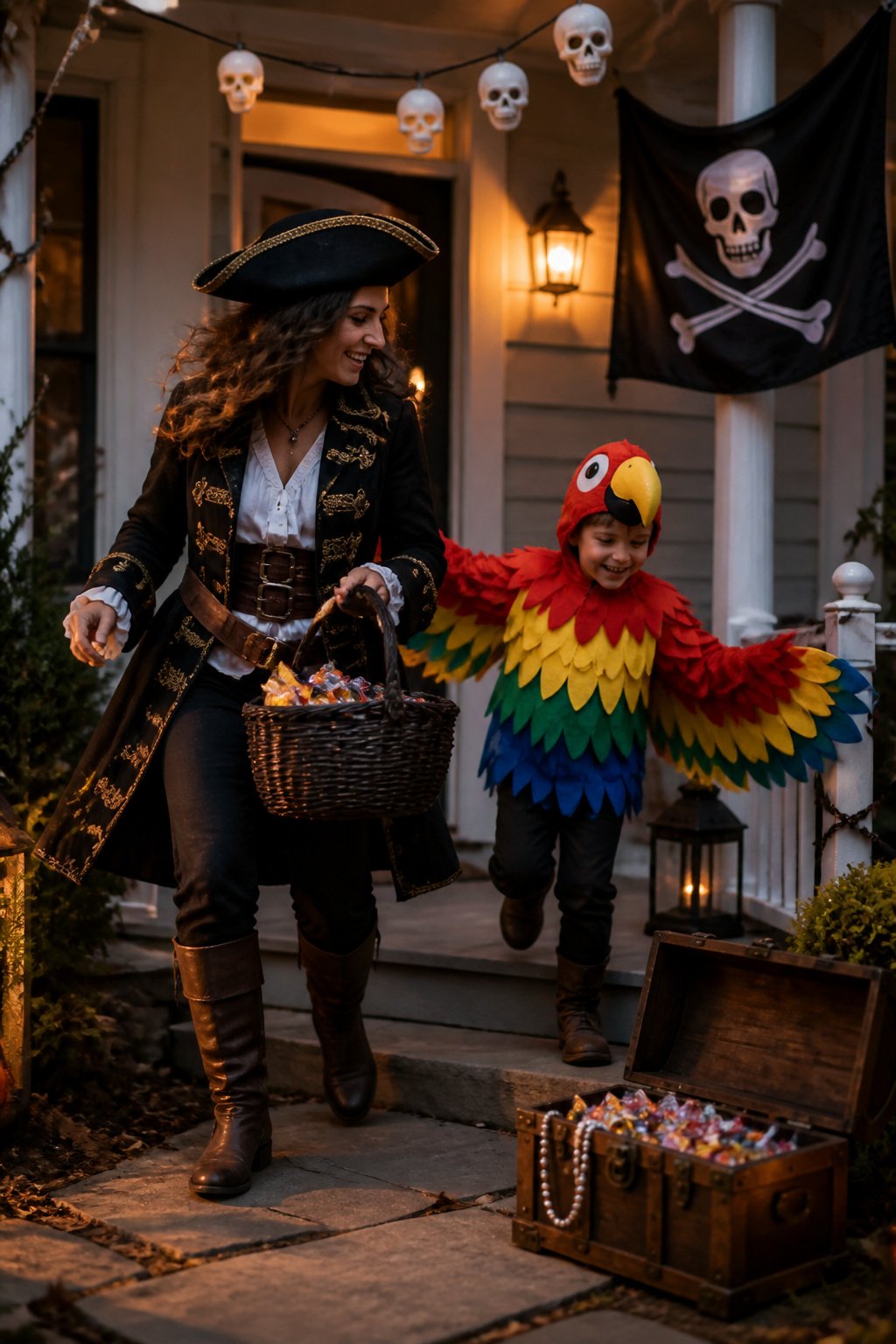
Pirate and parrot lands better than you might expect for mom and son Halloween costumes. The parrot role fits a son who wants to climb porch railings and flit between doorways instead of standing still for photos. He gets wings, a hood with a beak, and shoe covers in a plush swirl fur body; you get the captain’s jacket, neck scarf, belt, hat, and boot tops. The base is simple: a striped shirt and bandana under whatever you buy or build. The striped shirt and bandana are the easy base that carries the look even if the full pieces come off after the first hour of running. One route goes full Anne Bonny with a gold-trimmed jacket at $59.99 in sizes XS through XL. The parrot piece runs medium through extra-large and prices on Amazon. Matching pirate hats and eye patches work too if you both want to crew the same ship, though the parrot pairing has the clearer story.
4. Disney Characters
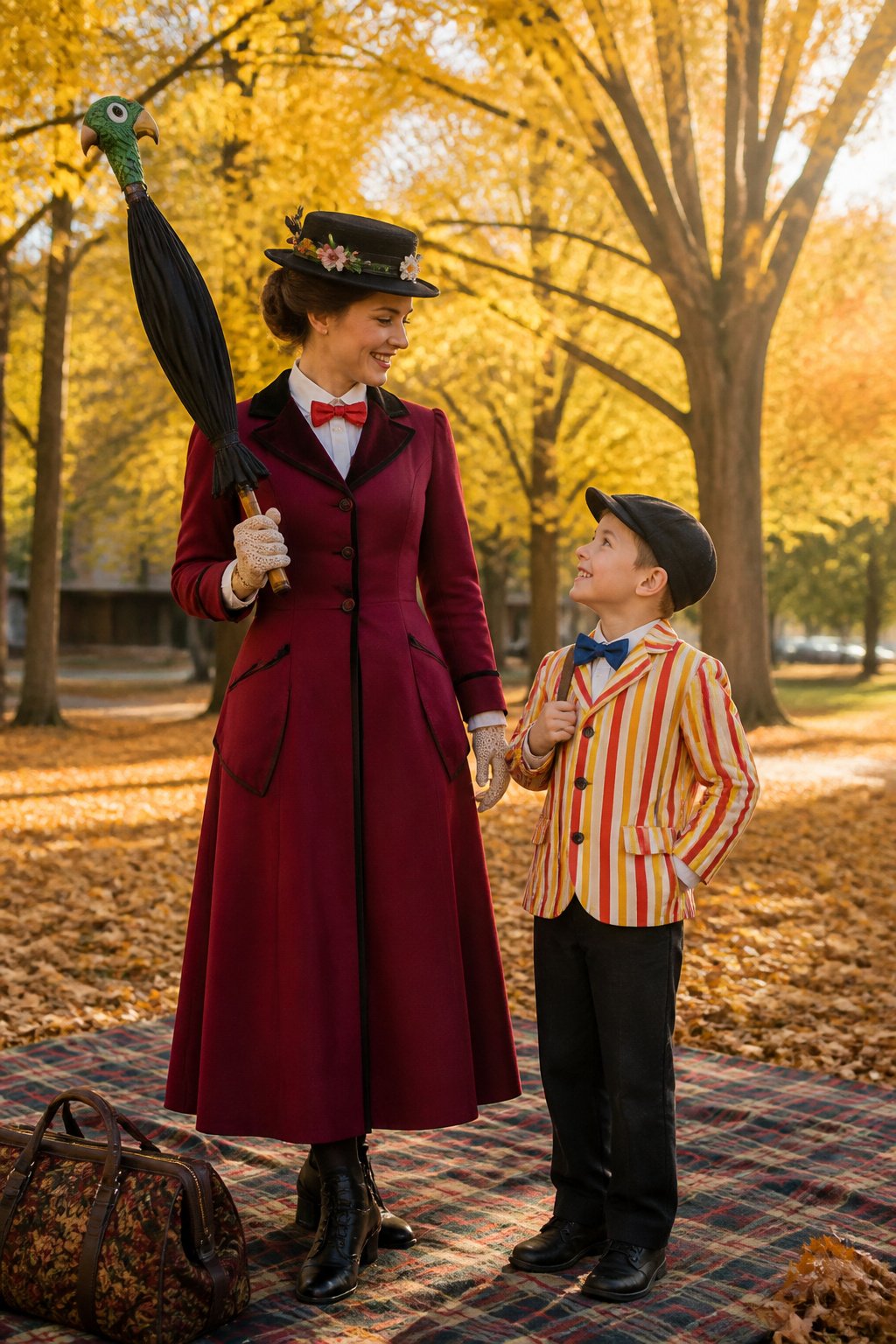
Disney gives you two very different paths depending on how much building you want to do. Mary Poppins and Bert asks for more pieces: the boater hat, a parrot-headed umbrella, a carpet bag, and for Bert, the chimney sweep brushes or the band jacket. You can thrift most of it, but budget an afternoon for gathering parts, because the silhouette falls apart without the hat and the bag. Skip either one and you are just a woman in a long skirt.
Moana and Maui run simpler. A rectangle of red printed fabric, a hook made from cardboard and foil, and you are most of the way there. The Maui tattoos are the detail that sells it: a pack of large temporary tribal tattoos from any party store, cut to fit arms and chest, and applied the morning of. They last the night, wash off in one scrub, and a three-year-old thinks he has turned into a demigod. That trade, extra time on Poppins versus extra tattoo precision on Maui, is the choice you are really making.
5. Wizarding World
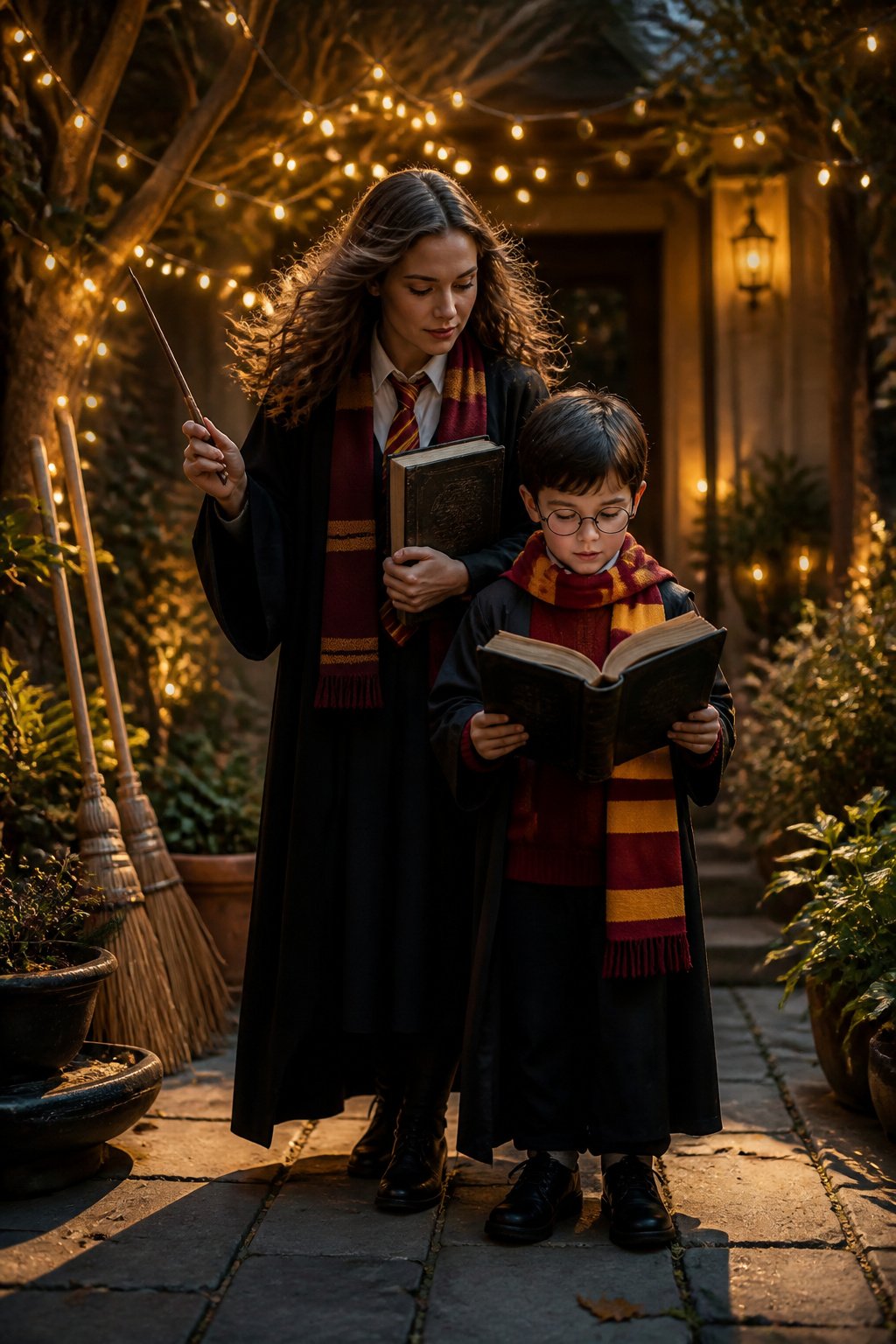
The robe is the one piece worth buying or borrowing for this pairing. Rectangular black fabric with sleeves looks simple until you try cutting it yourself, and most home attempts end up too narrow in the shoulders or wrong in the drape. A proper wizard robe solves that outright.
For the mom-and-son setup, you take Hermione and he takes Harry. The Skirfy Wizard Party Costume Set runs about $47 and ships with the robe, hat, wand, scarf, tie, glasses, and tattoo stickers. That covers most of what you need in one box, though you will still want a book for Hermione, maybe a picture book if he is young enough that you are carrying it.
Round glasses and a Gryffindor scarf do most of the work for Harry. For Hermione, the robe and wand read instantly, and the book gives you something to do with your hands in photos besides standing there wand-out. If you already own black academic gowns from a graduation, those work in place of a costume robe. Everything else you can assemble from closet pieces or a quick trip to a thrift store.
6. Food Pairings
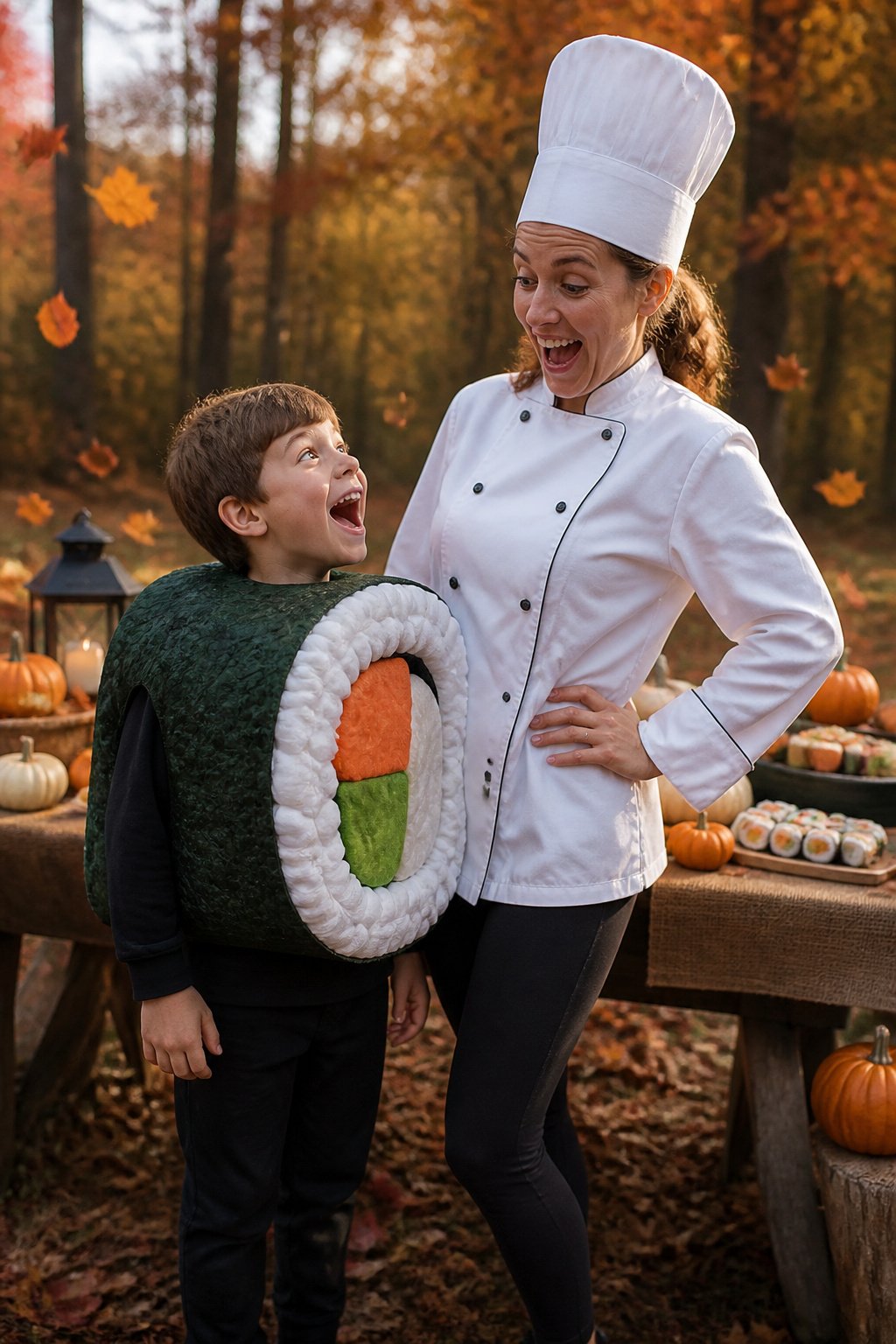
A chef and sushi roll pairing wins on comfort if your night involves lots of walking. The sushi roll builds around a cylindrical pillow wrapped in fabric with felt details for the fish and rice, so it stays light and wearable for hours. You wear a chef’s coat, which runs about $25 on Amazon and comes in sizes XS through 3XL, while your son wears the roll over a solid black outfit so the base reads as seaweed.
Chef and pizza works too, though you will need to build or buy the slice with toppings. The sushi option has the edge for simplicity; the pizza costume demands more construction to look like anything specific. Either way, the joke lands the same: you made the food, he is the food.
7. Fairytale Characters

The classic flip on Little Red Riding Hood and the Big Bad Wolf is where you either carry the red hooded cape or you hand your son the picnic basket while he wears the fur. Either works; what breaks the look is the face. A wolf without a molded nose and ears reads as a gray dog, so spend the roughly five dollars for a set. The cape side is simpler. A white dress underneath and a basket of treats finish it, though you will carry that basket all evening. One costume pack runs $49.99 and covers the dress, cape, and necktie. For the wolf, a faux fur romper sized from 6 months up to 3T costs $59, and the same piece could pass for a Teen Wolf throwback later if the sizing holds.
8. Animals
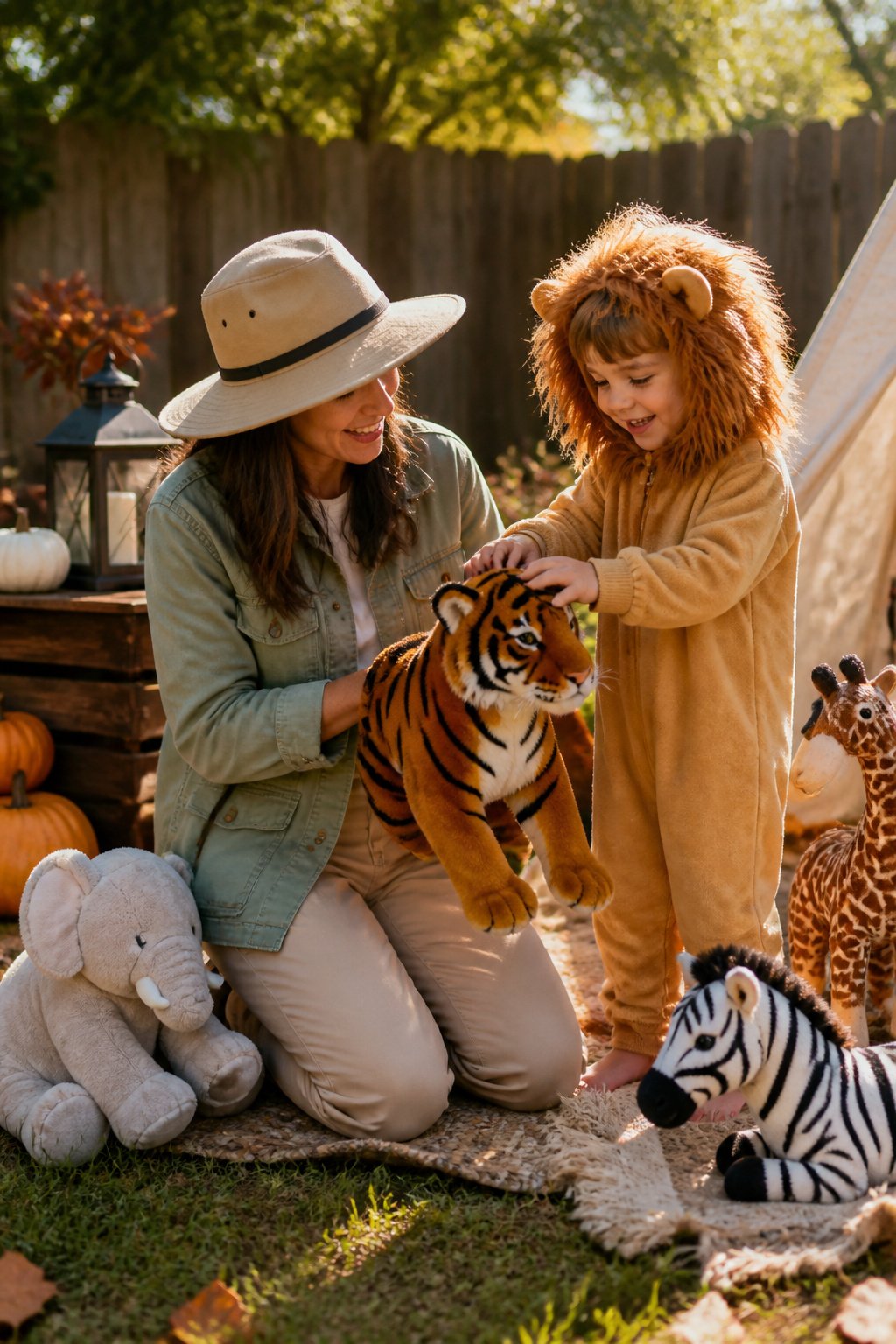
A zookeeper costume is the easier half of any animal pairing. Khakis, a button-down shirt, and a wide-brim hat get you most of the way there. Add a set of keys on a carabiner clipped to a belt loop and you look like someone who feeds the big cats at 6 a.m.
The animal half is where you choose your effort. A toddler in a plush lion or elephant onesie reads instantly from across a dim porch. Older kids carry more detail: a giraffe needs a long neck frame, a penguin needs a white belly panel. The simpler the animal, the more likely the costume survives a school party and trick-or-treating intact.
Beekeeper and bee works the same formula with a sweeter visual. A straw hat with tulle draped over it and a canvas jacket turns into the keeper; the son wears a striped shirt with pipe-cleaner antennae and wins every time.
The risk is imbalance. One of you looks ready for work, the other looks ready for a photo booth. That contrast is the joke, but if the animal half is too sloppy, the pairing falls apart. Spend your time on the ears, the tail, or the wings. Those are the details people notice first.
9. Outer Space
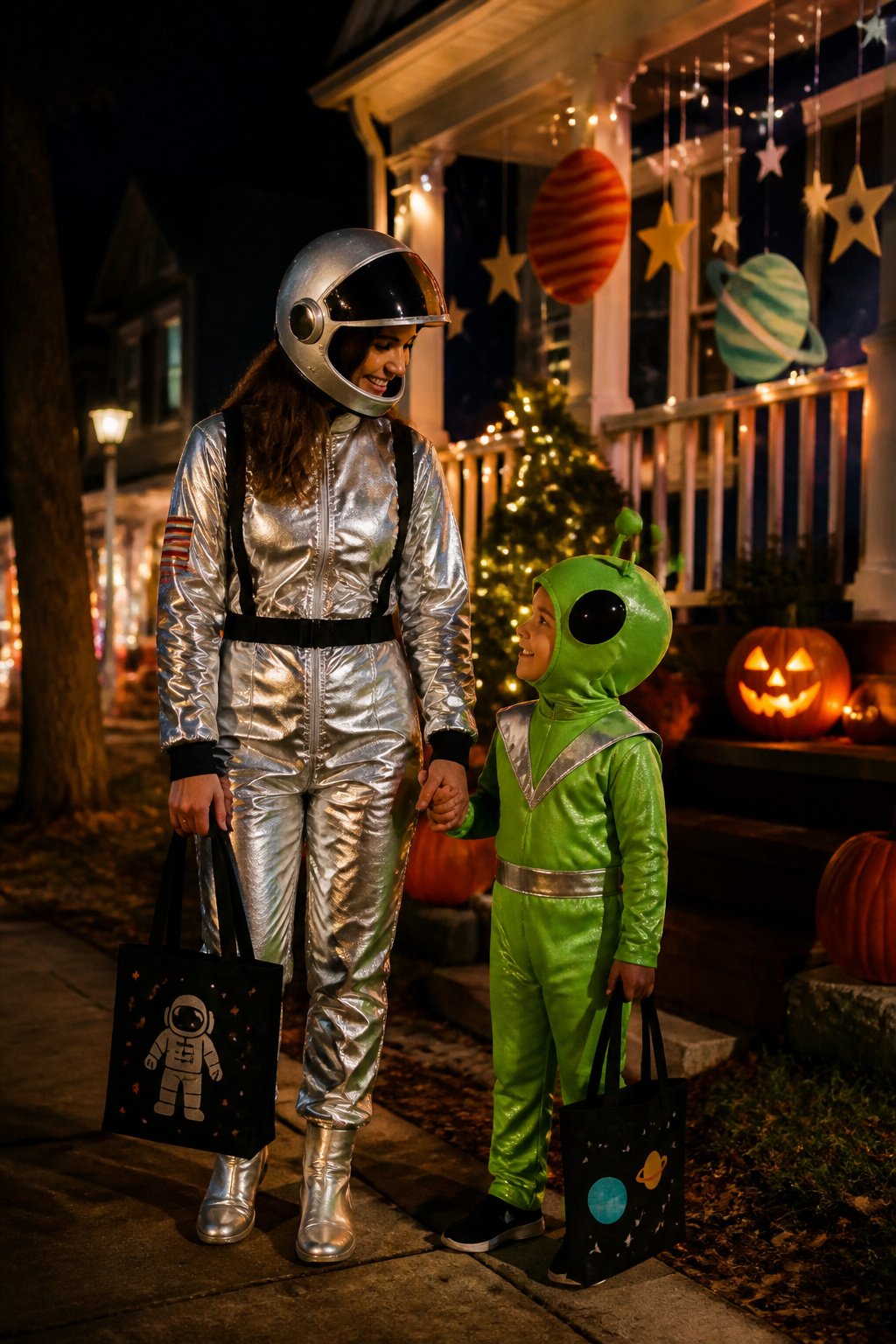
Astronaut and alien pairings work because the contrast is instant. The astronaut helmet is the one piece that reads from across the street; without it, you are a person in a white jumpsuit. Borrow one from a costume shop or build it from a plastic bowl and silver tape, but do not skip it.
The alien side can stay simple. One color head to toe, antennae on a headband, and you are done. Green reads alien fastest, but purple or orange works if that is what your closet offers. The antennae matter more than the shade.
Where this pairing falls apart is when both costumes fight for attention. Let the astronaut carry the detail, zippers, patches, the bulky silhouette. Keep the alien flat and graphic. A busy alien, tentacles and scales and glow paint, turns the pair into noise. You want one figure that looks engineered, one that looks like it drifted in from somewhere else.
10. Circus Performers
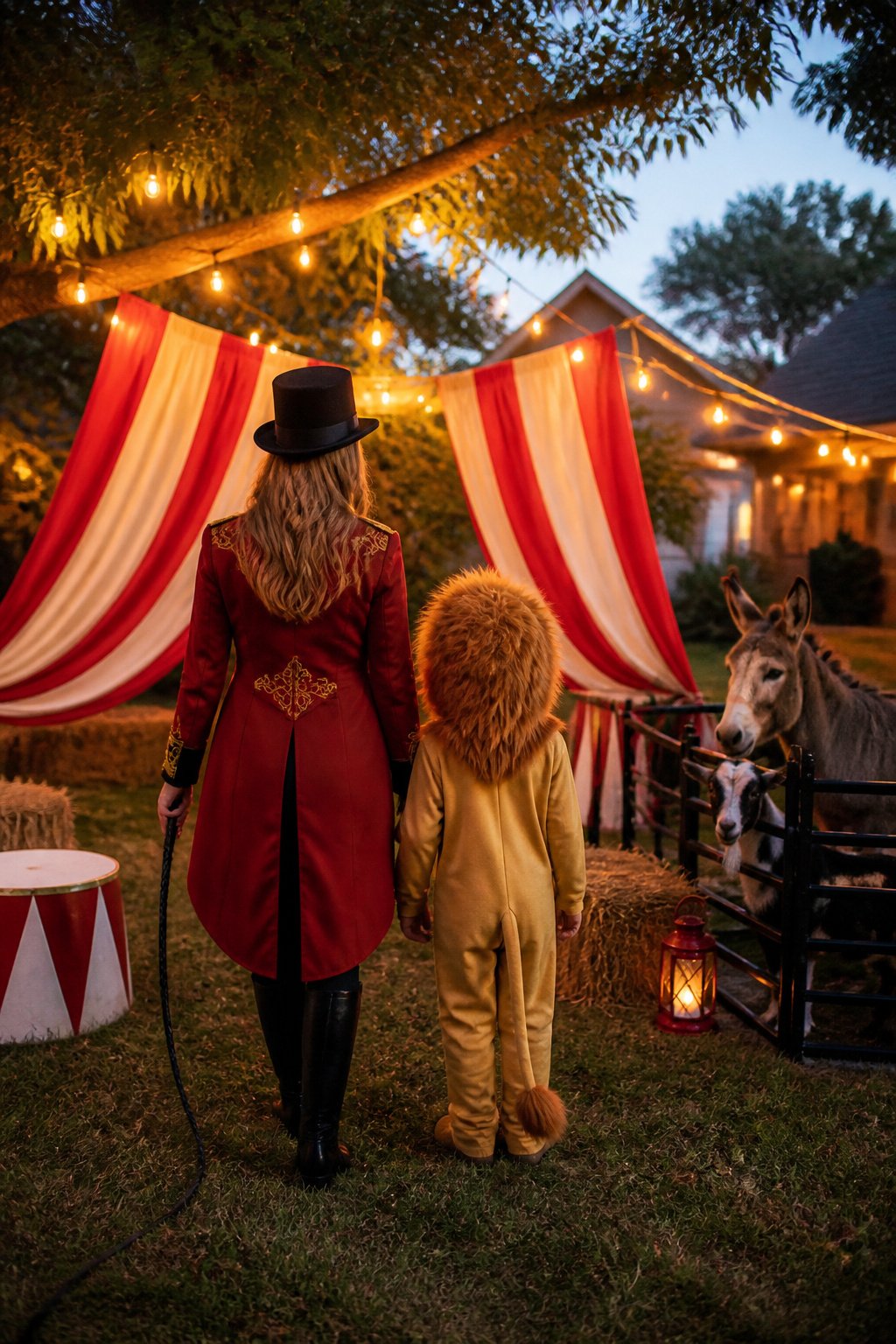
A ringmaster and lion pairing gives you the central tension of the circus in two costumes. The ringmaster needs the tailcoat silhouette to read instantly, and you can fake it by wearing a black jacket backward and cutting a slit up the center back so the fronts drape like tails. The top hat is the harder piece to substitute. A costume shop version runs cheap and finishes the look; without it, you read as someone in a blazer, not a ringmaster.
For the lion, a hooded sweatsuit in gold or tan with a yarn mane sewn around the hood is enough to sell it. Add a red bow tie if you want the circus color.
If you want to reverse the energy, make the son the strongman in a striped tank and stuffed muscle suit while you take the ringmaster role. A mother-son strongman duo works too, though two matching striped leotards veer toward clown faster than circus. Keep one of you in the ringmaster coat to anchor the theme.
11. Glow in the Dark Skeletons
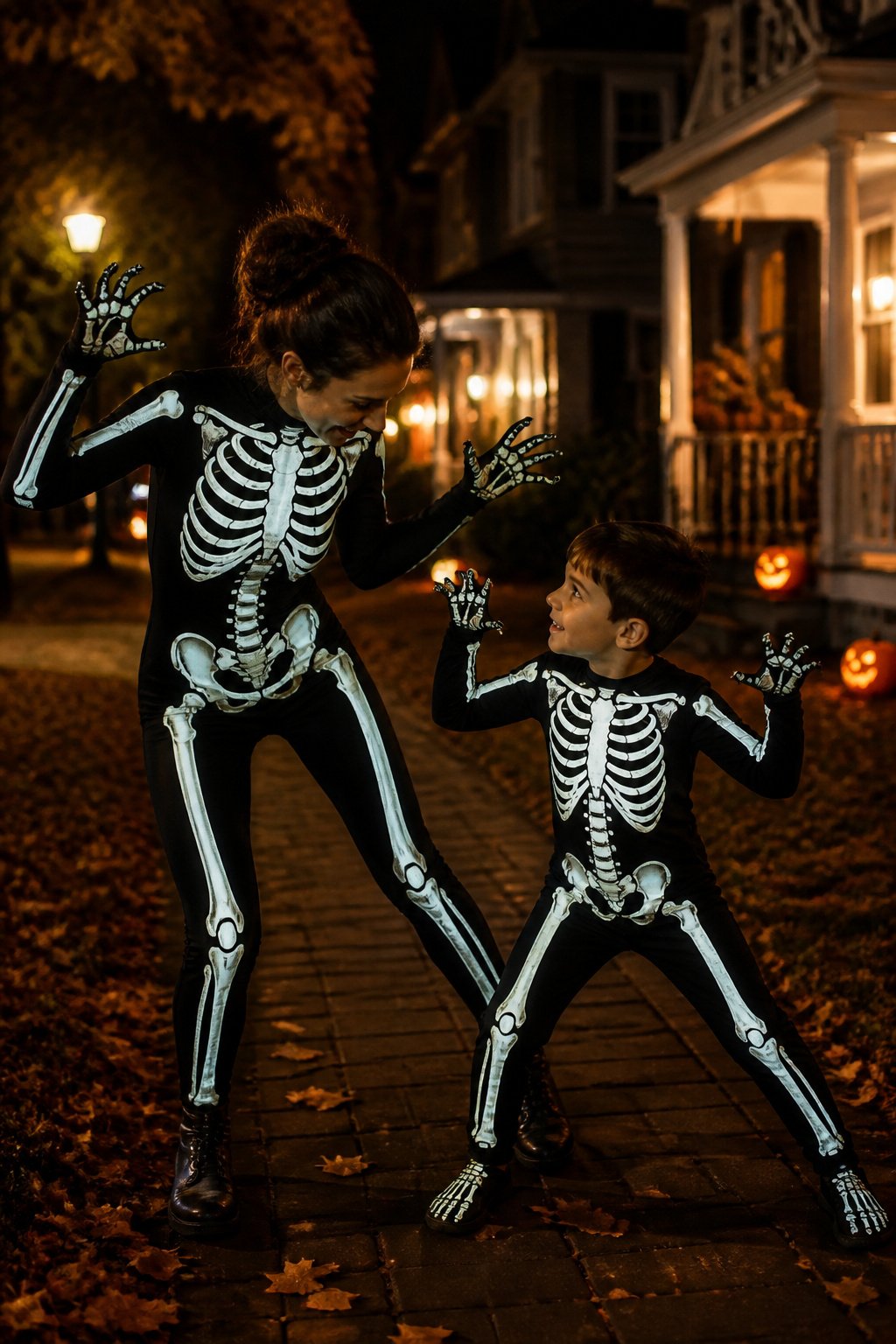
Black bodysuits skeletons with glow paint or tape give you full coverage with almost no sewing. You paint the bones on in white or neon green, or you lay down strips of glow-in-the-dark tape in the right pattern. The paint needs charging under a bright light every hour or so, or it fades to invisible. That rhythm matters more than you think. If you are walking a neighborhood with porch lights and streetlamps, you get accidental recharges as you go. On an unlit rural road, the glow dies and you are just two people in black spandex. The tape option holds longer but reflects less overall light, so it reads dimmer when it is fresh. For a mom and son pair, match the bone pattern so you read as a set from across the street. Skip the face paint if the kid is under six; the bodysuit hood and a simple skull mask keep the look without the struggle.
12. Emoji Costumes
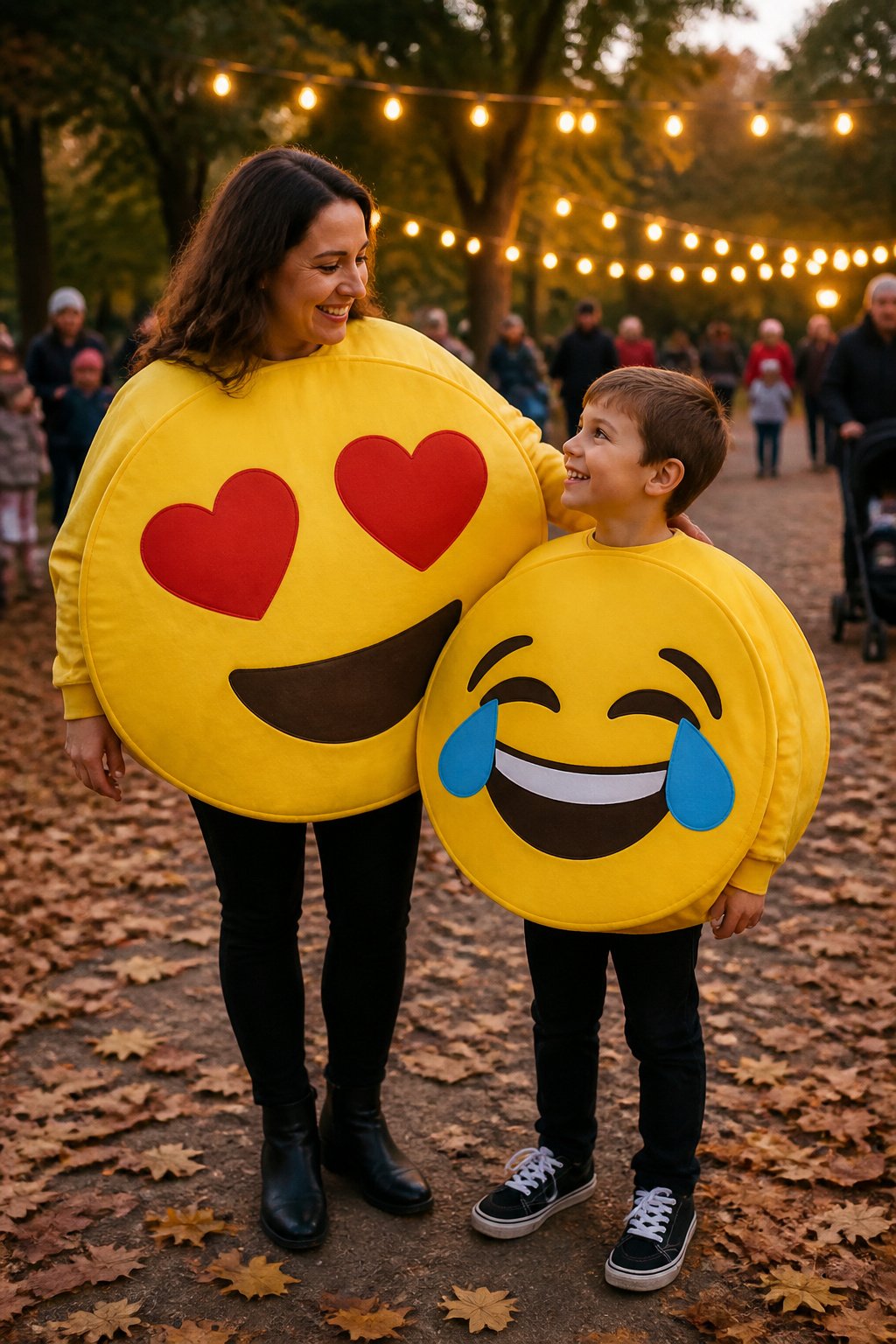
Two people dressed as emoji faces stop traffic because the joke writes itself. You stand there in your yellow circle with a heart-eyes grin while your son wears the crying-laughing face across the driveway, and every passerby fills in the conversation. That is the whole point of the pairing. The costumes read as an exchange, not just a match.
The base is simple enough: yellow felt or fabric over a cardboard disc, with the expression painted or glued on. Foam core board gets heavy after twenty minutes of holding, so rig straps or wear it sandwich-board style if you want to last the night. Face variations run from the classic smile to the kissy face, the eye-roll, or the flame-for-eyes rage emoji. Heart symbols work for a parent-child pair, though the contrast expressions draw more laughs. If you want to move beyond faces, the thumbs-up or the dancing lady in red dress both translate to a second body with minimal extra build. Keep the scale large enough to read from a car window, small enough that a seven-year-old does not vanish inside the frame.
13. Garden Themes
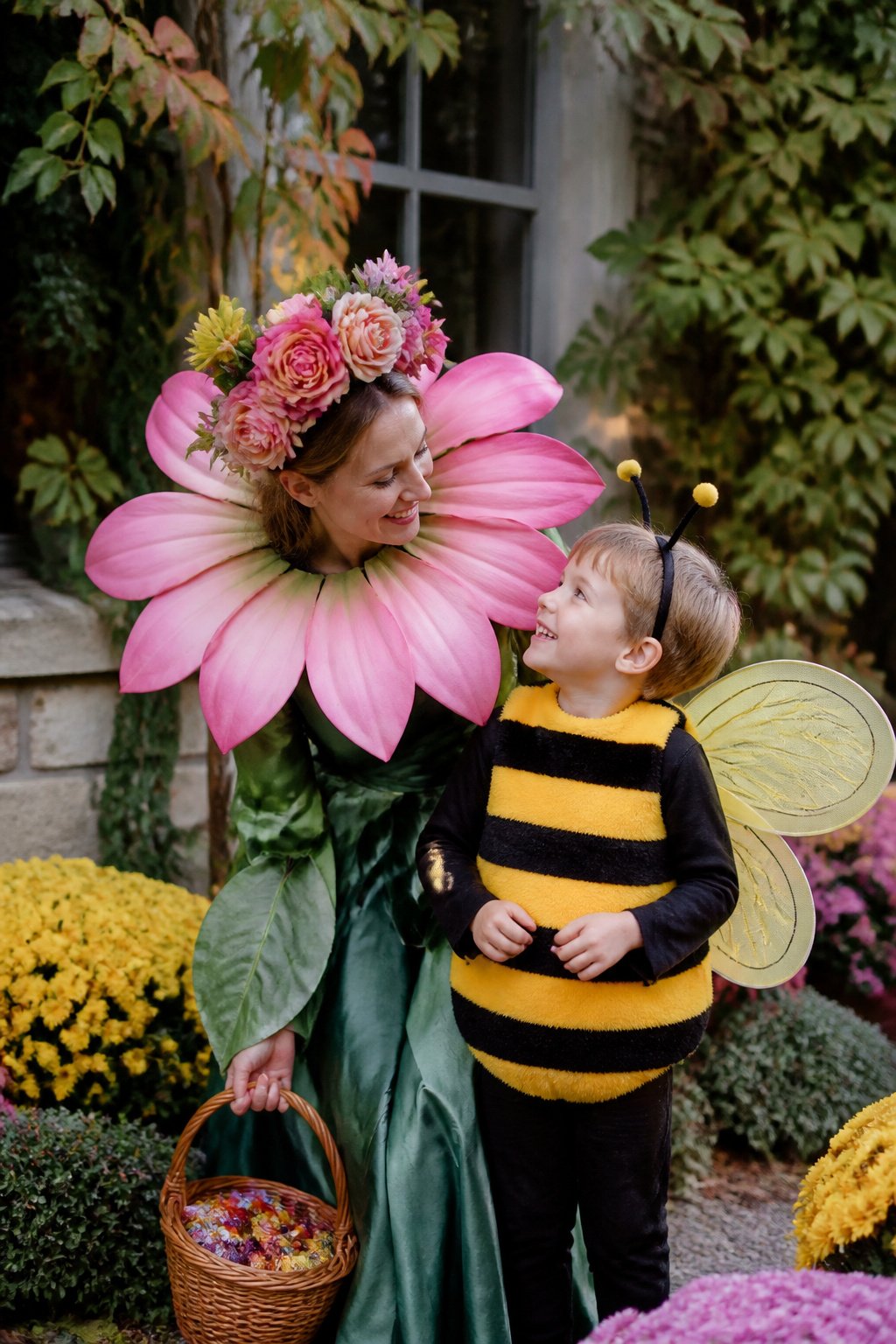
A flower and bee pairing works because the two shapes read instantly from a distance and the bee is the easier sell for a son. The bee costume leaves his arms and legs free, so he can run between houses and climb porch steps without the wings catching on railings. The flower, worn by the mom, is more stationary by design: the headpiece or petal collar frames the face and shows up under streetlights, but you are not chasing anyone down in it.
You can flip the garden idea to a watering can and sprout, though this pair is harder to find ready-made. The watering can reads as metallic or painted cardboard with a handle that sits over one shoulder; the sprout is basically a green cap with two leaf lobes. The watering can restricts one arm, so carry the candy bag on the free side or skip the handle and build the spout from a cardboard tube that hangs across the chest.
If you are deciding between the two, the bee and flower win for comfort. The bee’s only fragile part is the wing wire, which bends back into shape if someone sits on it in the car. The watering can looks clever in photos but tends to knock against doorframes, and the spout points at people’s knees.
14. Mythical Creatures
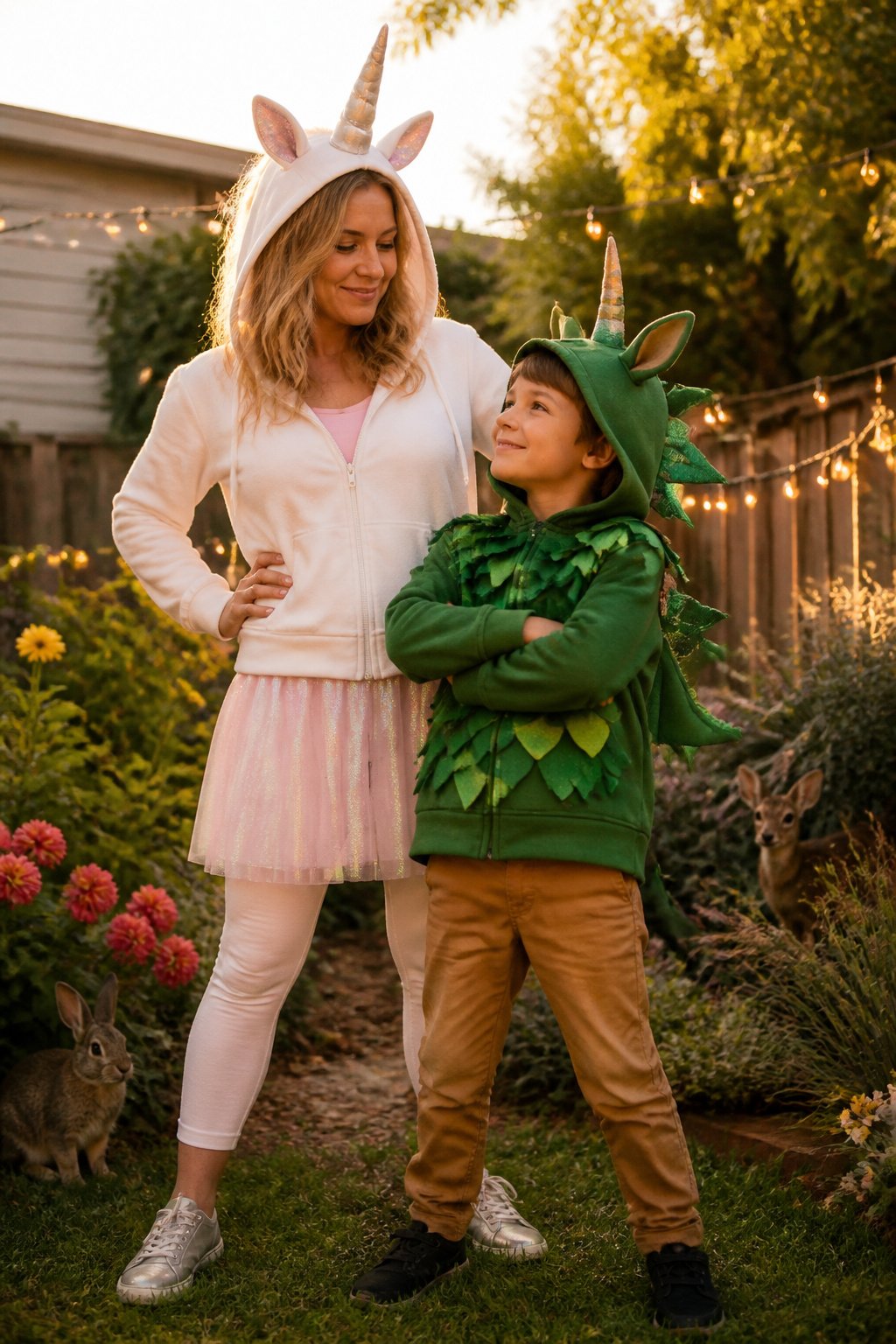
A unicorn and dragon pairing gives you two horned headpieces to keep upright, which is where this pairing usually falls apart with younger kids. Felt and a hooded sweatshirt handle most of the build for either costume, so you are not starting from yard goods and a prayer.
For the dragon, cut felt scales in two sizes and zigzag them in overlapping rows onto the back and sleeves of a green or charcoal hoodie. The headpiece is a single cone of stiffened felt with slits cut for the eyes, elastic going under the chin, and a second piece of felt tacked inside as a liner so the seam does not itch. The horn sits at the forehead, not the crown; that placement keeps it from flopping backward when the hood is up.
The unicorn uses the same hooded-sweatshirt base in white or cream. The mane is yarn looped through the hood seam and trimmed to length after it is tied off. The horn is a stuffed felt cone with a narrow base, about four inches tall, stitched to the center front of the hood so it points forward, not up. Too tall and it wags with every step.
Both costumes fail at the same point: the headpiece. Elastic under the chin works until it does not, usually around hour two. For kids under six, stitch the horn directly to a snug knit cap that goes under the hood, or accept that the headpiece becomes a handheld accessory by the end of the night.
DIY Builds from What You Own
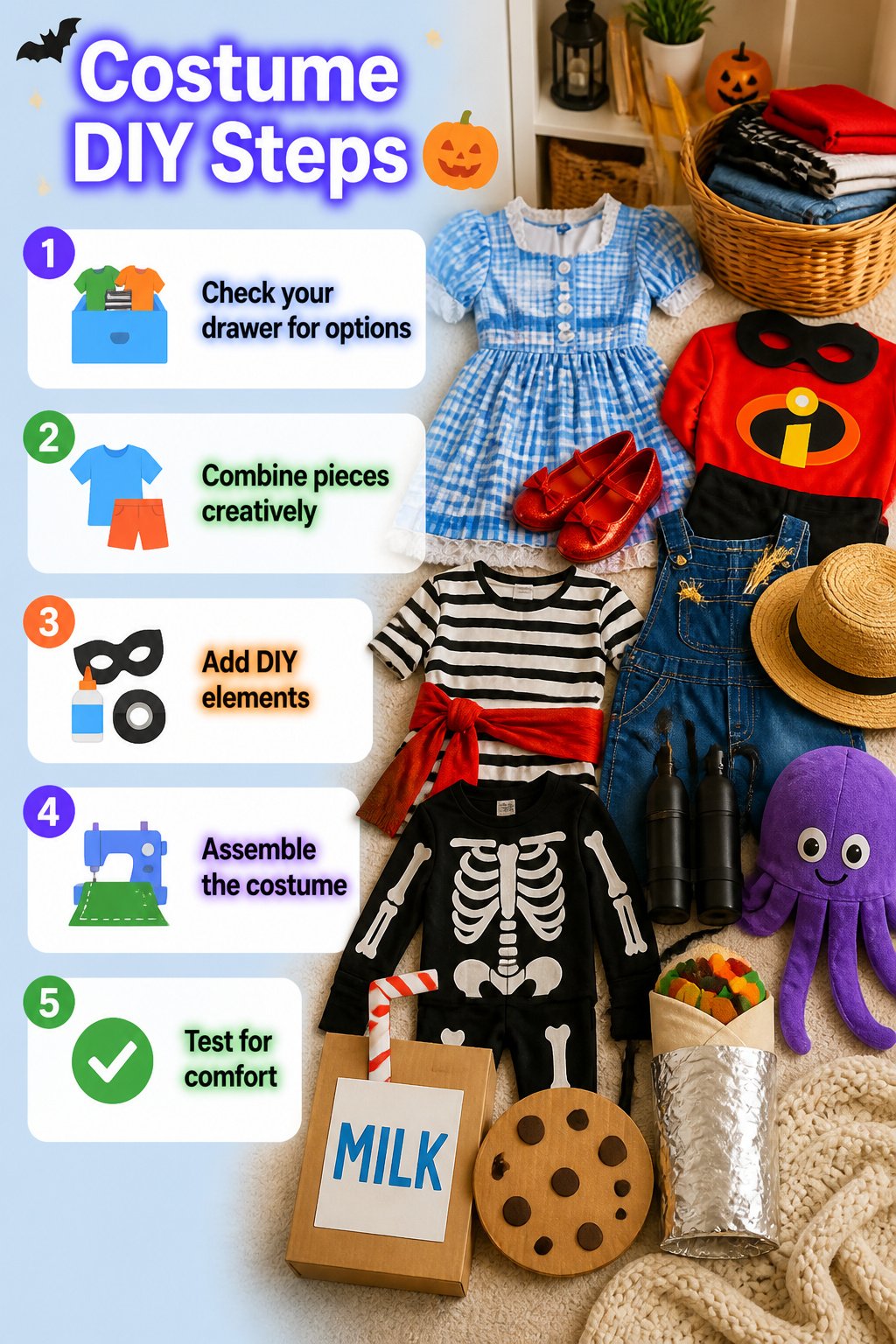
The best mom and son Halloween costumes start with what you already have in a drawer. A blue gingham dress and red shoes become Dorothy and Toto with a toddler in a dog-eared hoodie. Red stretchy fabric from an old dance recital or workout top turns you and a son into Mrs. Incredible and Dash; black electrical tape shapes the mask and logo.
Thrifted black-and-white stripes and a strip of fabric tied around the waist read pirate instantly. Overalls and a straw hat make a farmer against any farm animal onesie you already own. Two empty soda bottles, spray-painted black and strung upside down, turn into a deep-sea diver’s oxygen tank while your son wears an octopus hat.
The skeleton pajamas in his drawer work as a full costume. A cardboard box, construction paper, and a blanket swaddle become milk and cookies, or a Chipotle burrito with a foil-wrapped torso. Check the closet before you buy anything finished.
Age and Comfort Check
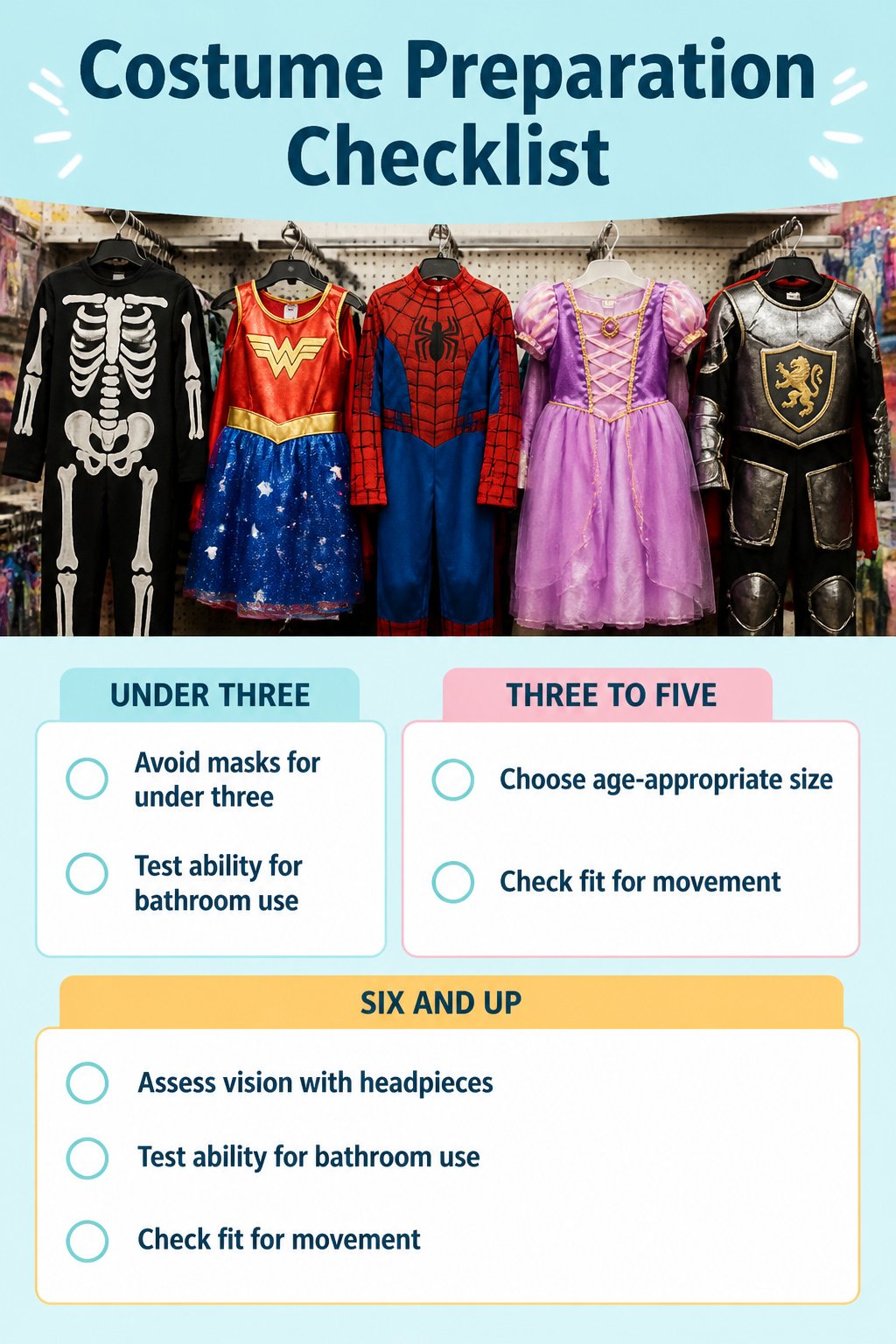
Pick the costume for the age your child actually is, not the size they wear. A three-year-old in a four-year-old’s skeleton suit will trip on the cuffs. A six-year-old crammed into toddler-sized superhero gear can’t raise their arms.
Under three, skip anything with a mask. Hoods that slip, eye holes that sit wrong, and any piece that needs to come off for a diaper change will stall your whole night. For the three-to-five bracket, capes shorter than mid-thigh stay out of wheels and underfoot; anything longer collects puddles and door slams. Test that your child can sit, crouch, and use the toilet without help. If the costume needs a parent for bathroom breaks, it will need one every twenty minutes.
From six to eight, kids move faster and farther from you. Check peripheral vision in any headpiece: turn your head left and right, and if the frame blocks what your hands can see, so will it block cars at dusk. Nine and up, they want the elaborate build, the full armor, the twelve-piece set. Let them wear it for a dry-run dinner at home. If they do not finish the meal still suited up, they will not last the block.
Matching or Complementary
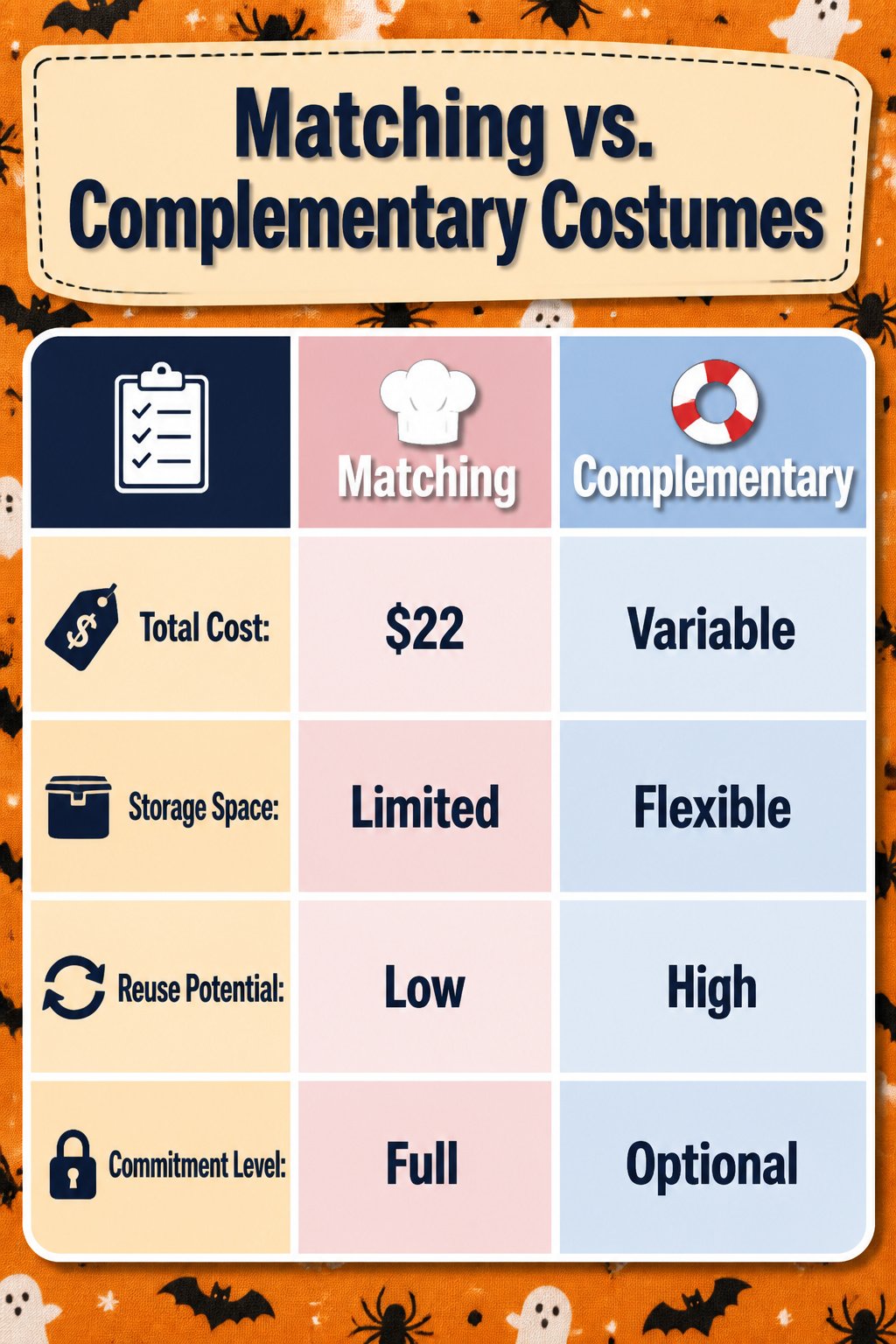
You have two ways to run mom and son Halloween costumes, and the difference matters after October 31. Matching exactly locks you into one look: matching aprons at $22 for the head chef and sous chef pairing, construction-paper hats you make once and store or toss. That works when the photo matters more than the closet space.
Complementary theming gives you more mileage. A shark and lifeguard setup nods to the same idea without identical fabrics or cuts, and you can pull the lifeguard shorts into a summer rotation or reuse the red jacket elsewhere. The same goes for food pairings like burger and fries against peanut butter and jelly; one side often uses pieces you already own.
The chef route demands you commit to the full kit or skip it. The shark route lets one of you go lighter if the weather turns or a kid changes his mind at the last hour. If you are buying anything new, ask which pieces survive outside the costume before you check out.
Frequently Asked Questions
What are some creative mother-son Halloween costume ideas?
Superheroes like Batman and Robin or Wonder Woman and Superman work well, as do classic monsters such as Frankenstein and Bride or Dracula and son. Disney pairings like Mary Poppins and Bert or Moana and Maui offer two different effort levels, while food themes like chef and sushi roll win on comfort for long walks.
How can I make DIY Halloween costumes for mom and son?
Start with what you already own: a blue gingham dress and red shoes become Dorothy and Toto with a toddler in a dog-eared hoodie, or red stretchy fabric turns into Mrs. Incredible and Dash with black electrical tape for masks. Thrifted black-and-white stripes read pirate instantly, and overalls with a straw hat make a farmer against any animal onesie.
What age-appropriate costumes are available for mother and son?
For under three, skip anything with a mask and use hoods that slip on easily. Ages three to five need capes shorter than mid-thigh and costumes that allow solo bathroom use. Six to eight requires testing peripheral vision in headpieces for safety at dusk, while nine and up can handle elaborate builds if they pass a dinner dry-run at home.