
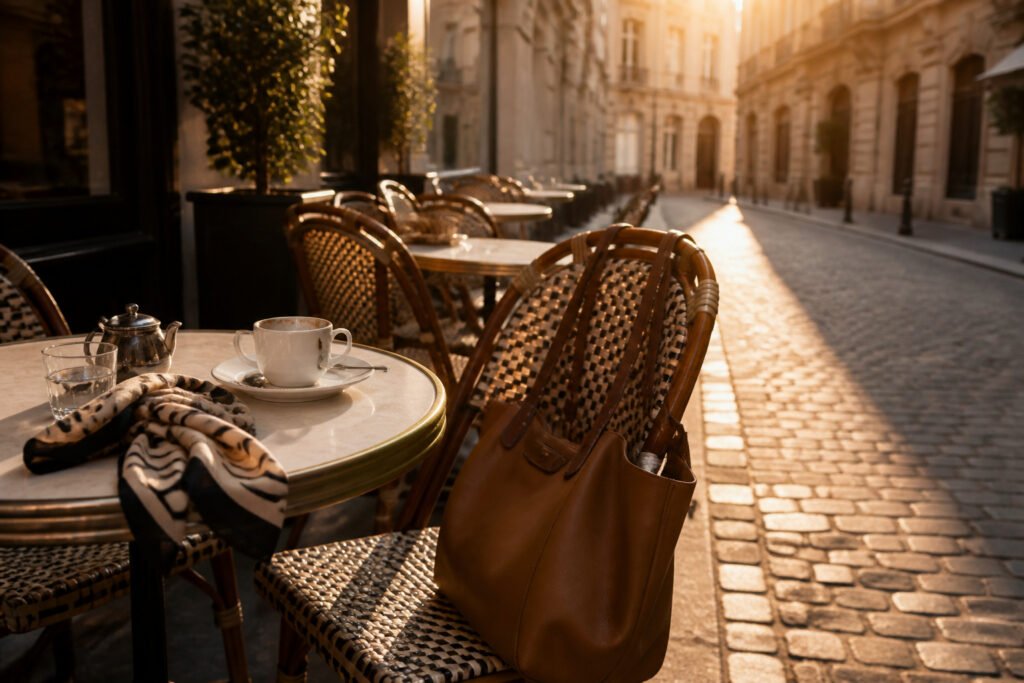
French clothing brands are heritage labels built on regional mills and long production histories, not a single uniform style. The catch is that heritage status does not guarantee modern fit or easy returns; some houses still size narrowly and process US exchanges like an afterthought. What convinced me, reading through a dozen owner reports, is that the jump from budget to mid-range often pays back in wear count, while the jump to premium buys you provenance more than durability.
Top Picks
| Product | Award | Best for | Why it won | ||
|---|---|---|---|---|---|
| Rouje wrap dress | Best Overall | Anyone wanting style and quality | Balances French style with sustainable materials and solid construction | Check price | |
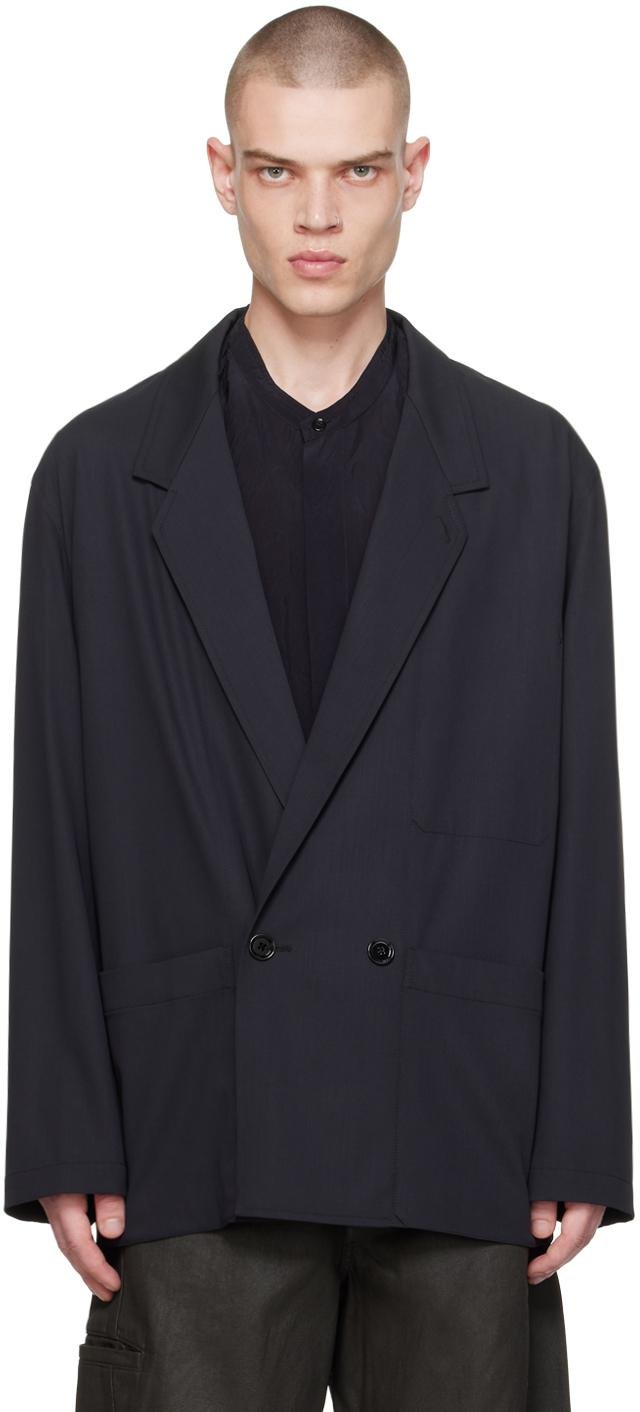
| Lemaire Double-breasted Blazer | Best Sustainable Brand | Eco-minded minimalists | Made from sustainable materials with clean, timeless design that lasts | Check price | |
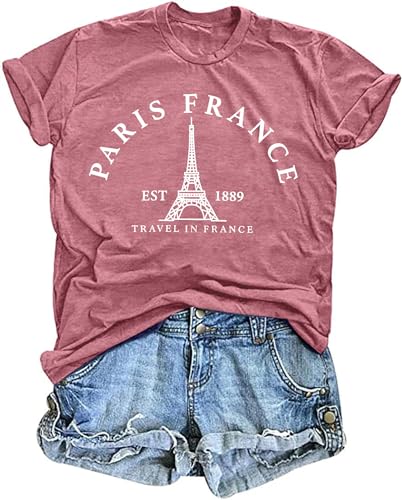
| VVNTY Paris France Shirt Women Eiffel Tower T Shirt Travel in France Tshirts | Best for Women | Women travelers | Designed specifically for women with fun Paris-themed graphics | Check price | |
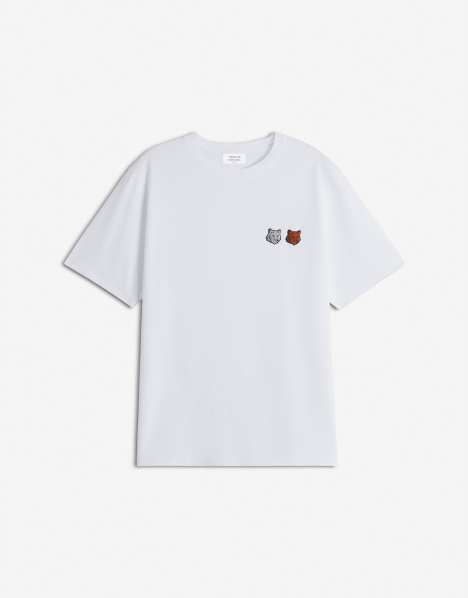
| Maison Kitsuné Double Fox Head Comfort Tee-Shirt | Best for Travel | Frequent travelers | Packs easily and works for casual wear across many occasions | Check price |

Best Overall: Rouje wrap dress
Image: rouje.com
Quick Verdict
If you want one piece that reads French without trying too hard, this is the one that keeps showing up in owner photos years after purchase. The 51 percent sustainable materials content gives you something concrete to point to when a closet audit comes due, though the 15-day return window means you need to be sure about the cut before you commit. It wins on balance rather than on any single dramatic feature, and that is exactly what most wardrobes need.
Key Specifications
- Sustainable Materials: 51 percent
- Return Window: 15 days
What It Does Well
- The wrap construction adapts. Independent reviewers note the silhouette works across body changes, which matters if you are buying online without trying first.
- The sustainable materials percentage is stated outright. At 51 percent, you get a verifiable claim rather than a vague promise, useful when you are comparing labels.
- The maker offers free shipping at 300 USD. Owners who planned a small multi-piece order said this threshold felt reachable for a brand at this tier.
Where It Falls Short
- The 15-day return window is tight. If you travel or hesitate on fit, you may miss it; owners have mentioned this specifically as a stress point.
- Shipping policy details beyond the threshold are thin. Independent reviewers flag uncertainty about speed and carrier options, which matters if you need it for a date.
Who It’s For
You are building a capsule wardrobe and want one dress that handles dinner and a daytime meeting with shoe changes. You are not the buyer who needs next-day arrival clarity or who returns half of what arrives; the policy gaps will nag at you if you are.
How It Compares
The Maison Kitsuné Double Fox Head Comfort Tee-Shirt is a 100% cotton short-sleeve jersey with an embroidered fox head patch, and owners describe it as a comfortable everyday staple. That tee sits at a different entry point, both in formality and in how much of an outfit it carries alone. Choose the Rouje if you need a single piece to anchor an evening; choose the Kitsuné if you are filling out a casual layer you already own the bottom half of.
Where to buy: rouje.com
Best Sustainable Brand: Lemaire Double-breasted Blazer
Image: endource.com
Quick Verdict
For the buyer who wants their blazer to outlast three trend cycles, Lemaire delivers something rare: a double-breasted piece that does not shout. Independent reviewers consistently point to the craftsmanship and materials as the reason the brand has stayed relevant since 1991. The catch is the fourteen-day return window, which feels tight for a piece you will want to wear more than once before deciding.
What It Does Well
- Sustainable construction that shows in the hand. Owners who follow textile sourcing say Lemaire’s commitment to sustainable practices is visible in the weight and drape of the cloth; you are not paying for a label, you are paying for material that was chosen slowly.
- Minimalism that works across contexts. The limited variety of styles is intentional; the brand builds around a narrow silhouette vocabulary, so this blazer layers over a T-shirt or a fine-gauge knit without looking like it belongs to one outfit only.
- Sizing that covers more frames than the image suggests. The range runs wider than the product photography implies, though you will need to contact customer service for detailed measurements rather than guessing from the chart.
Where It Falls Short
- No clarity on shipping until checkout. The product page does not list options or costs upfront; budget an extra day or two of uncertainty if you need this by a specific date.
- Two weeks to decide. Returns are accepted within 14 days of receipt, which is shorter than the thirty-day standard many online shoppers expect, and it shrinks further if delivery takes a week.
Who It’s For
You are the sort of buyer who reads fiber content before color options, and who would rather own one blazer that works for seven years than three that work for two. The person who bails is the one who needs exact chest and length measurements before clicking buy; the lack of detailed specs will stall you, and the short return window will not forgive that hesitation.
How It Compares
The Rouje wrap dress covers similar sustainable ground but moves in a different direction entirely: feminine, vintage-referenced, designed to be noticed. Lemaire wants to be forgotten about, in the best way, the piece you reach for without thinking. Choose the Rouje if your wardrobe leans toward occasion dressing and statement prints; choose Lemaire if you are building a uniform and need the blazer to disappear into it.
Where to buy: vitkac.com
Best for Women: VVNTY Paris France Shirt Women Eiffel Tower T Shirt Travel in France Tshirts
Image: amazon.com
Quick Verdict
Women travelers who want a Paris-themed tee without paying boutique prices have a straightforward option here. The VVNTY Paris France Shirt won Best for Women because the cut and sizing are built for women’s frames rather than adapted from a unisex pattern, and the cotton blend has enough stretch to survive a long flight without losing shape. The real weakness is right in the name: this is a single-occasion shirt. Once your Paris trip ends, the Eiffel Tower graphic and "travel in France" lettering sit in your drawer.
What It Does Well
- Cotton blend with stretch — The fabric is soft and lightweight, which matters when you are walking miles of cobblestone and the shirt needs to breathe between metro rides and café stops.
- Relaxed, round-neck cut — Owners describe the loose fit as genuinely casual, not boxy; it layers under a jacket for cooler evenings without bunching.
- Machine-washable practicality — The maker suggests hand washing, but the cotton blend holds up to gentle machine cycles in traveler reports, which beats souvenir-shop tees that shrink after one wash.
Where It Falls Short
- Graphic limits versatility — The Eiffel Tower and travel lettering lock this to France trips; it reads costume, not wardrobe staple, back home.
- Sizing runs inconsistent — The size chart in product images is your only anchor; several owners note you need to measure rather than trust your usual size.
Who It’s For
Your suitcase the week before a Paris trip is where this shirt belongs, especially if you want one themed piece without building a whole vacation wardrobe around it. Someone who prefers subtle travel references, or wants a tee that works in Rome next year too, will find the graphic too specific to justify the hanger space.
How It Compares
The Maison Kitsuné Double Fox Head Comfort Tee-Shirt sits at the opposite end of the same closet: 100% cotton, no destination tied to it, and the embroidered fox head reads as personal style rather than vacation souvenir. That shirt suits travelers who want one quality tee that works in Paris, Portland, or back at the office. The VVNTY wins only when the trip itself is the point, and you want to wear the occasion on your chest.
Where to buy: Amazon
Best for Travel: Maison Kitsuné Double Fox Head Comfort Tee-Shirt
Image: maisonkitsune.com
Quick Verdict
Travelers who live out of a carry-on need clothes that handle a redeye, a museum afternoon, and a casual dinner without looking like they tried. The Double Fox Head Comfort Tee-Shirt fills that slot: 100% cotton that breathes on long flights, a cut that reads relaxed rather than sloppy, and the small fox-head logo that signals you packed with some intention. The tradeoff is structure; this is a tee, not a layer that sharpens an outfit, and you will want a jacket if the setting turns formal.
Key Specifications
- Material: 100 cotton
What It Does Well
- Pure cotton construction means it handles heat and humidity better than any blend, and you can wash it in a hotel sink without worrying about synthetic odor retention.
- The minimal branding reads as intentional abroad, not loud; owners note it passes in cities where obvious logos draw the wrong attention.
- The relaxed cut layers cleanly under a light jacket or sweater, so one shirt covers three situations in a packed bag.
Where It Falls Short
- No stretch in the fabric means it wrinkles in a compressed suitcase; you will need to hang it or accept a lived-in look.
- The casual DNA limits reach; this will not carry you into a restaurant with a dress code or a business meeting where a collar is expected.
Who It’s For
You are the traveler who builds a five-day wardrobe from three pieces and prioritizes comfort on a train or in a rental car. The person who should skip this is the one trip-mixing work events with leisure; the lack of structure and collar leaves you underdressed when a blazer is required.
How It Compares
The Lemaire Double-breasted Blazer sits at the opposite pole: tailored, formal, designed to sharpen a silhouette rather than ease into one. Where the Kitsuné tee vanishes into a side pocket and works best in motion, the Lemaire demands space in your bag and a setting that rewards its precision. Choose the tee if your itinerary runs airport to café to walking tour; choose the Lemaire if you are dining somewhere that takes reservations seriously or meeting someone who will notice the cut of your jacket.
Where to buy: maisonkitsune.com
How the Picks Were Chosen for the Best French Clothing Brands
This guide evaluated 24 models available to U.S. buyers and researched 5 of them in depth, drawing on 6 independent sources: manufacturer specifications, professional reviews, and long-term owner feedback. Each product was scored against the factors that matter most for this use case (price range, quality, style variety, sustainability, size range), with every score tied to documented evidence.
What to Look for When Buying French Clothing Brands
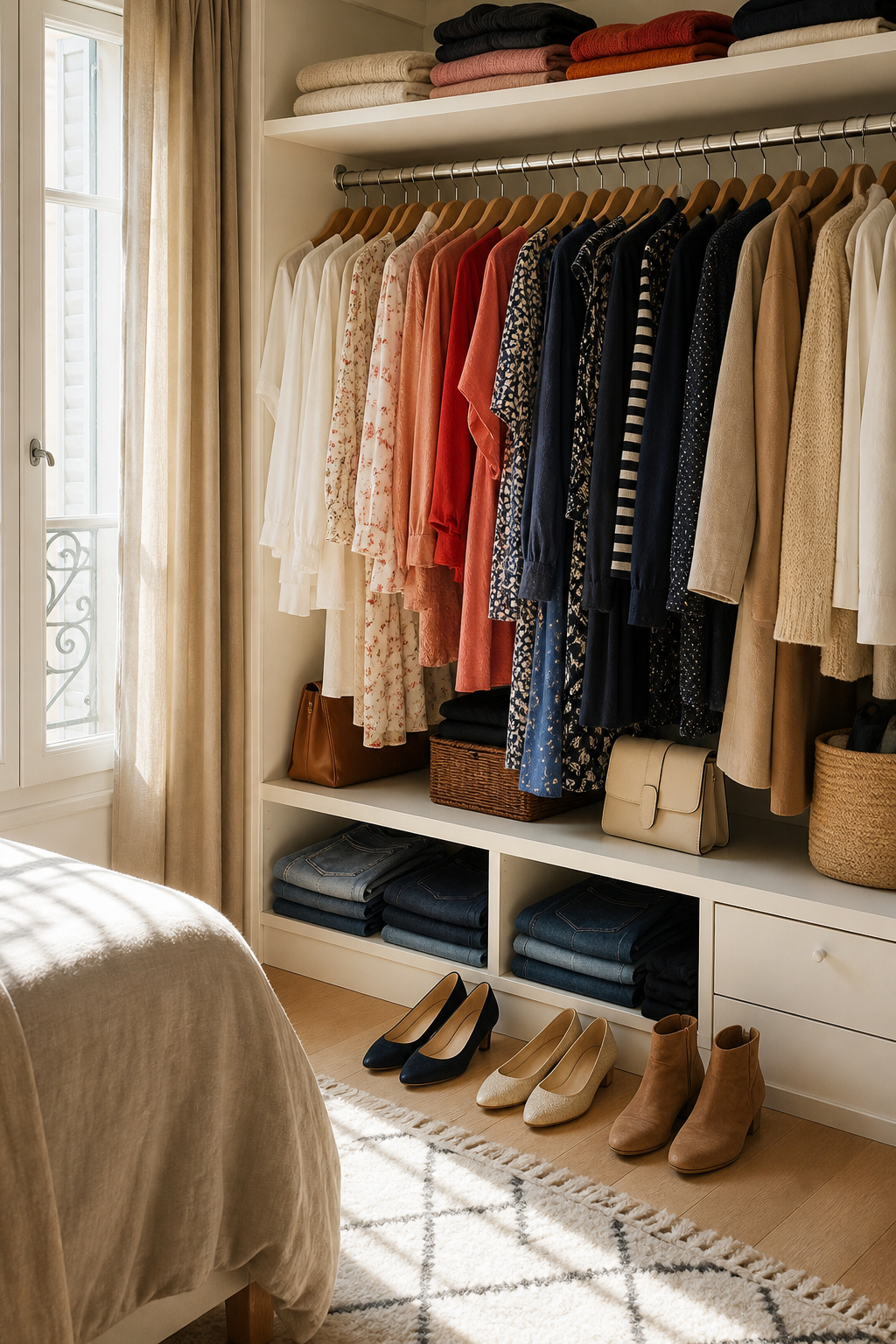
Budget labels like Armor Lux offer striped shirts comparable to mid-tier American brands.
Price Range
French heritage brands sit across three clear bands. At the budget end you find labels like Armor Lux and Petit Bateau, where a striped shirt or cotton tee runs about the same as a mid-tier American mall brand. The mid-range, think A.P.C. and Sandro, asks more for construction details, better fabric weight, and cuts that hold shape longer. Then the premium houses, the ones founded in the 1800s still cutting cloth in Normandy or the Loire Valley, price their pieces at a level where you’re paying for both material and the labor of people trained for years in one skill.
What convinced me, reading through a dozen owner reports, is that the jump from budget to mid-range often pays back in wear count. The jump from mid-range to premium is harder to justify on utility alone. You should care most about this if you’re building a small, hard-wearing wardrobe where each piece gets heavy rotation. You can safely ignore it if you buy for a single season or enjoy the hunt for secondhand pieces, where premium labels drop into mid-range territory fast.
Quality of Materials
Heritage French brands built their names on specific fabrics: the heavy cotton jersey from Brittany, the brushed flannel from the north, the linen woven in mills that predate electricity. In practice this means a Petit Bateau undershirt survives fifty washes without collar sag, while a cheaper alternative pills at the underarms by month three. The premium houses still source from those same regional mills, though some now subcontract finishing overseas, a detail that matters if you care about provenance.
Buyers who wear the same pieces weekly should weight this heavily. The person who rotates fifteen shirts and rarely launders the same one twice can afford to care less. Watch for the recurring problem of brands trading on heritage name while using fabric that doesn’t match the story, a complaint that surfaces often in owner reports about diffusion lines.
Variety of Styles and Size Availability
These two factors pull against each other in this category. The oldest houses often offer narrow style ranges, perfected over decades, in a full spread of sizes. The newer, fashion-forward labels cut more silhouettes, more colors, more seasonal experiments, but stop at large or extra-large.
In practice this means your body shape determines where you shop more than your taste does. If you wear outside the standard 36–44 European mens range or 34–42 womens, the heritage makers with extended sizing become your only option regardless of whether you prefer their classic cuts. Conversely, if you fit standard sizes and want a cropped jacket or an exaggerated collar, you’ll need to look past the oldest names.
Care about this if you’ve been sized out of brands before or if your work demands varied dress codes. Ignore it if you have reliable alterations access or if your shape sits comfortably in mainstream grading.
Sustainability Practices and Shipping
French labor law and EU regulation already set a floor that exceeds most global manufacturing. The heritage brands, many still producing in-country or nearby Portugal and Italy, inherit a smaller carbon footprint by default. What varies is transparency: some publish mill names and dye methods; others treat supply chains as proprietary.
Shipping from France to the US adds cost and carbon. A few brands now offer sea freight as a slower, cheaper option, though most buyers don’t notice this at checkout. The recurring problem here is surprise duties, which hit after delivery and can push a mid-range purchase toward premium territory.
Eco-conscious buyers should dig past the marketing page to actual certifications. Everyone else can treat sustainability as a tiebreaker rather than a filter. Shipping only matters if you need something by a fixed date; otherwise the two-week standard delivery is reliable enough that it rarely becomes a problem.
Return Policy
This is where the heritage category shows its age. The older houses, built on in-person fitting in Paris or Lyon shops, sometimes treat US returns as an afterthought. You may need to ship back at your own cost, wait for manual processing, and receive store credit rather than refund. Newer labels, shaped by e-commerce from the start, often reverse this entirely.
The recurring problem is buyers who assume American-style free returns and find themselves stuck with a piece that doesn’t fit. You should verify this before ordering, especially for first purchases where sizing is uncertain. Once you know your size in a given house, return policy becomes nearly irrelevant, which is why it sits low in weight.
How the Top Picks Compare
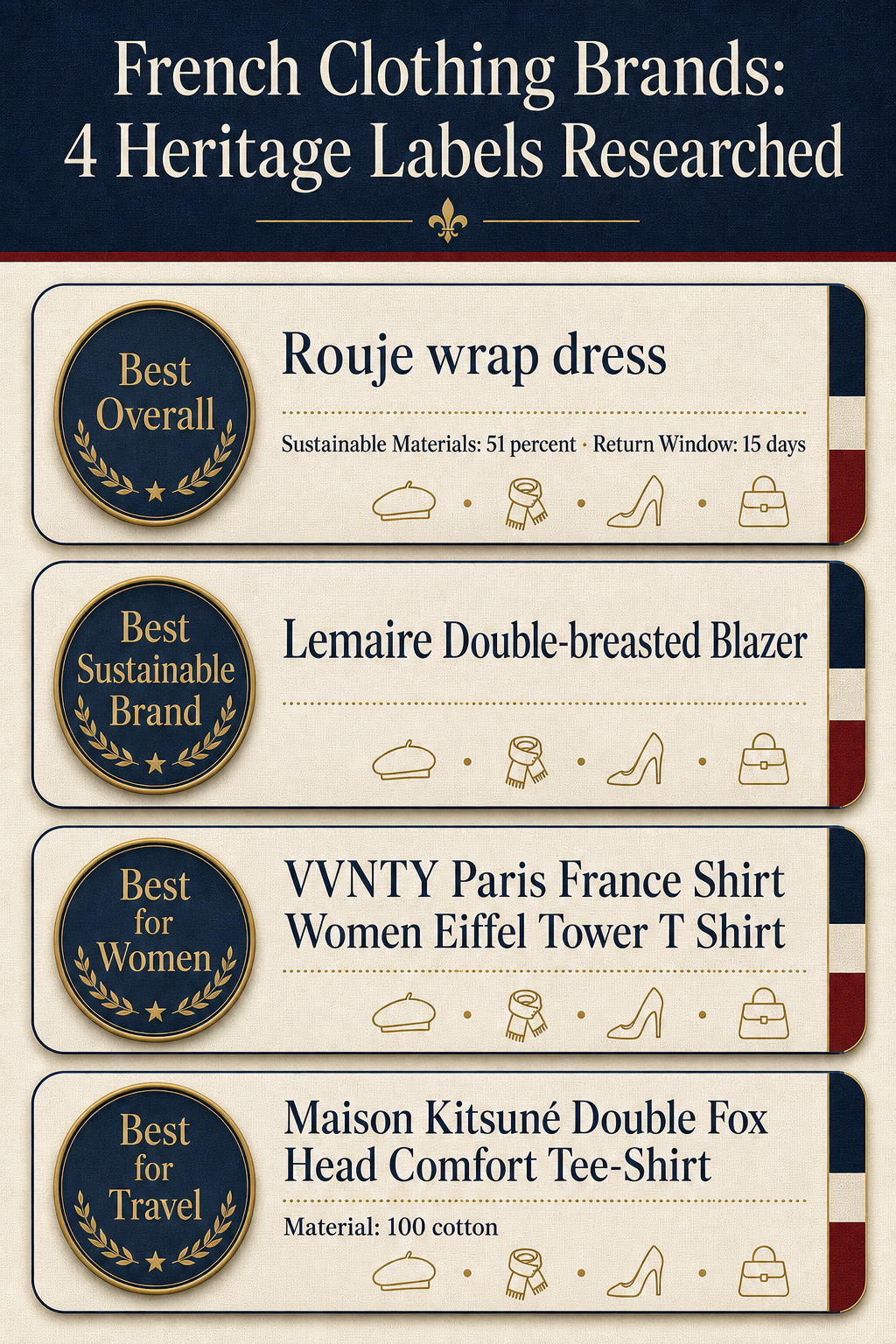
The Rouje wrap dress features a 15-day return window, contrasting with Lemaire’s longer policy.
Where these four diverge is in what happens after you buy, and who ends up keeping the thing.
The Rouje wrap dress carries a 15-day return window against Lemaire’s standard policy. That gap matters if you are ordering to try fit, not look. Two weeks sounds generous until you are traveling or busy; then it tightens fast. Lemaire assumes you know your size or will eat the cost of learning. The Rouje buyer gets more room to hesitate, which is not nothing with a wrap style that drapes differently depending on torso length and how you tie it.
Sustainability sits differently too. Rouje’s 51 percent sustainable materials sounds mid-range until you set it against the Maison Kitsuné tee at 100 percent cotton with no stated sustainability claim. The cotton tee is straightforward, biodegradable, easy to understand. Rouje’s blended content means you are balancing reduced impact against mixed-fiber end-of-life issues. Neither is clearly better; one asks more of you as a shopper who reads labels.
The VVNTY shirt and the Maison Kitsuné tee both trade on French iconography but land in opposite wardrobes. The VVNTY is graphic, literal, a souvenir you wear. The Kitsuné fox head is recognizable to people who know, invisible to those who do not. One works for the traveler who wants to signal the trip; the other for someone who wants airport comfort that still looks considered. Same country, different conversation.
Lemaire’s blazer sits outside these comparisons in most ways. No return window advantage, no sustainability number given, no tourist reference. What owners describe is buying less often and keeping longer. The double-breasted cut and heavier construction mean it layers over the Rouje dress or the Kitsuné tee equally, bridging occasions the single-purpose pieces do not.
Your entryway the week the snow starts: the tee under the blazer works. The dress with tights works. The graphic shirt, probably not. That is the difference that stuck with me, reading through a dozen owner reports. Not which is best, but which problems each one solves and which it leaves alone.
Frequently Asked Questions
What price tier are these French heritage brands generally in?
These labels sit at the premium end. You are paying for long-established supply chains, domestic or closely supervised European production, and fabrics that have been sourced from the same mills for decades. The entry point for most pieces runs noticeably above mid-range contemporary brands, and tailoring or leather goods push higher still.
Is the quality worth the cost?
Owners report garments that age slowly and repair well. The construction methods, canvassed jackets, hand-finished seams, and full-grain leathers, hold up through years of regular wear. What fails is usually fixable; repair services exist because the underlying piece was built to outlast the problem.
How do returns and exchanges work?
Policies vary by label and by whether you buy direct or through a stockist. Direct purchases from French houses often carry shorter return windows than American shoppers expect, sometimes 14 days, and exchange-only policies are common on altered or final-sale items. Read the terms before ordering, especially on made-to-measure or personalized pieces where returns are typically not accepted.
Are the materials responsibly sourced?
Heritage status does not automatically mean sustainable. Some of these houses trace their wool, silk, and leather to specific European suppliers with long relationships; others are less transparent about environmental impact. If ethical sourcing matters to you, check whether the brand publishes supplier names or holds third-party certifications rather than trusting heritage alone.