
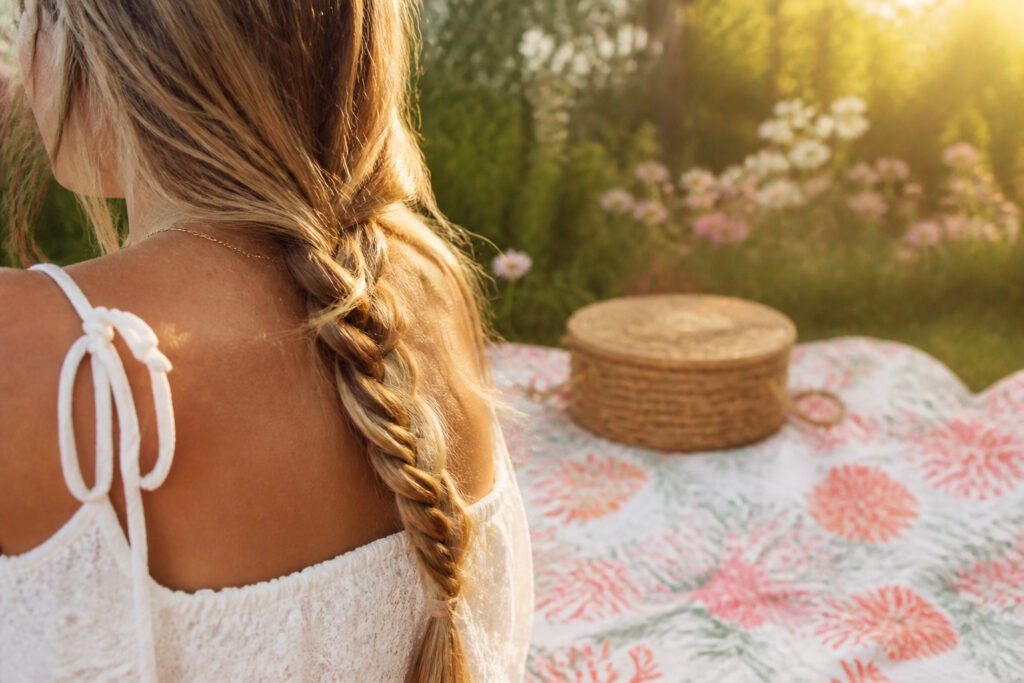
The best cute summer hairstyles sit in a narrow band between "off your neck" and "still looks intentional," and the one you pick depends on how much time you have before sweat wins. Most of these styles need under ten minutes, but the real split is whether your hair is clean or not: second-day strands grip a twisted ponytail better than fresh ones, while a waterfall braid wants enough slip to keep tension even as you braid. The rope twist braid ponytail proves the point with a single detail, squeezing nearly dry in about thirty seconds after swimming because the twisted channel lets water run straight out.
1. Twisted Chignon
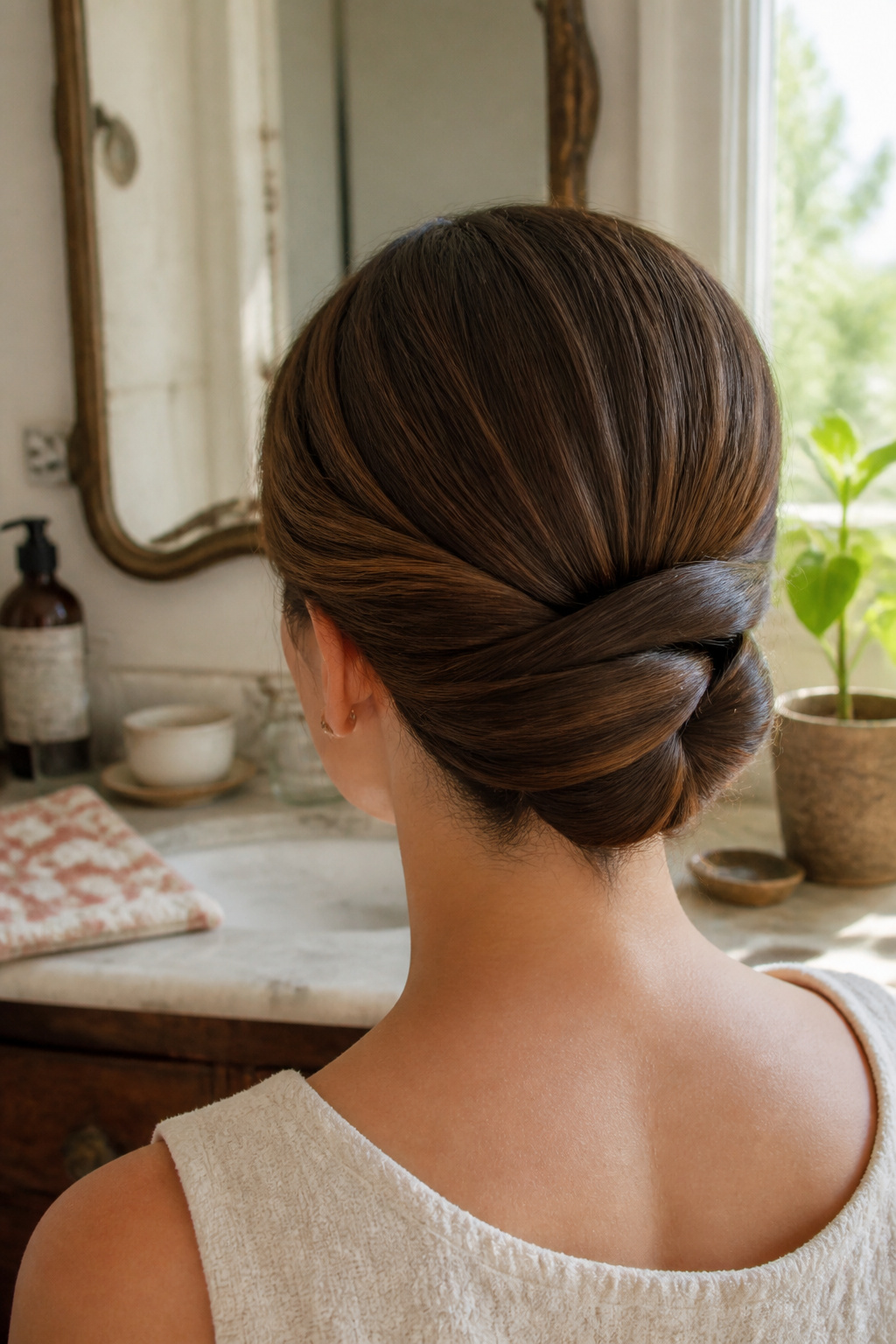
A twisted chignon starts with two sections, one from each side, that you twist away from your face and pin flat at the nape. The whole style takes under ten minutes from start to finish, which matters on a morning when the bathroom already feels like a greenhouse. You do not need any curl or texture to begin; straight hair grips the pins fine once you twist it tight enough.
The real advantage here is how little hair touches your neck once you are done. Every strand is wound and pinned at the lowest point possible, so the heat has almost nothing to catch. If one side slips while you are pinning, just twist it again and cross the pin in the opposite direction. That is usually enough to hold it through a full day.
2. Waterfall Braid
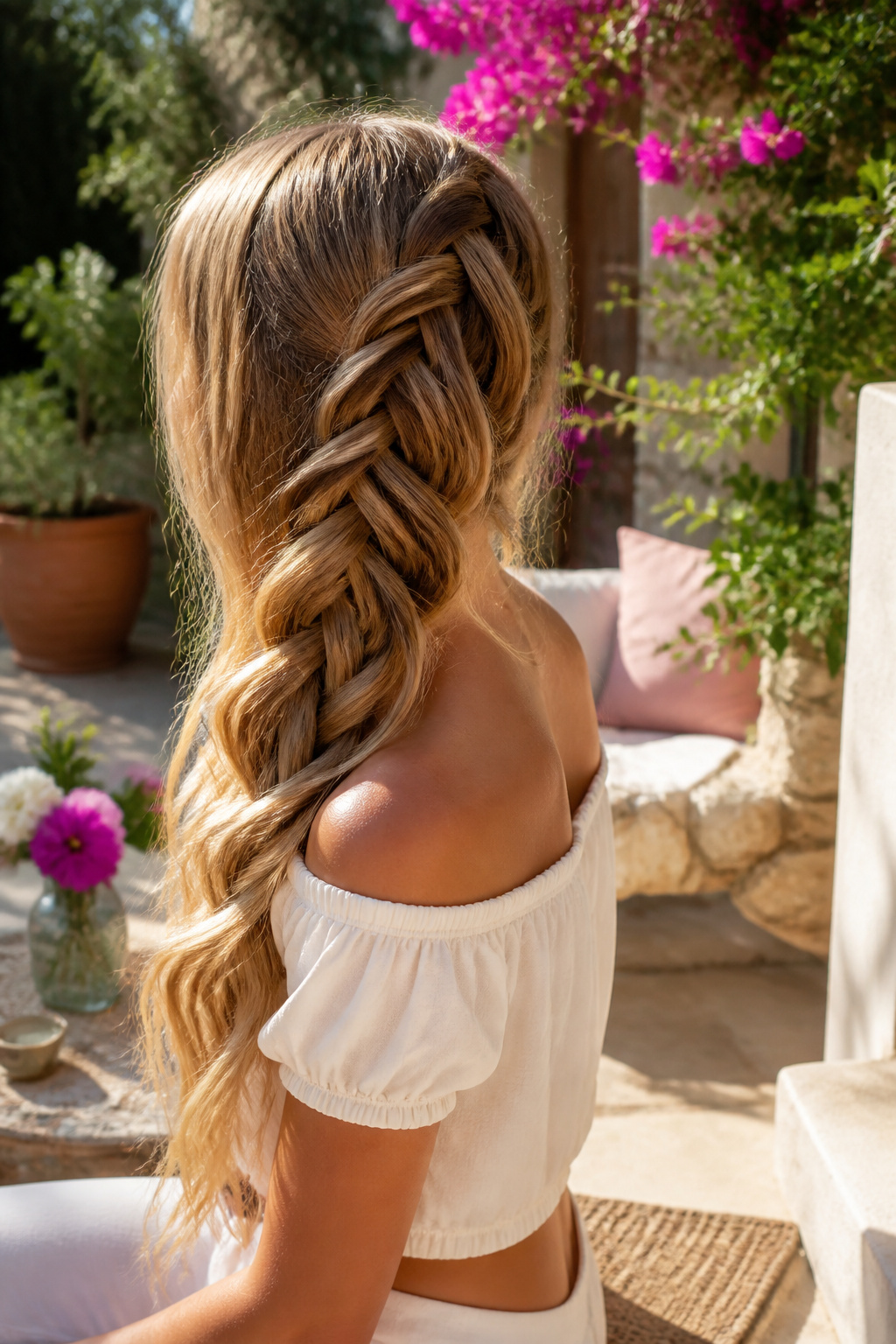
A waterfall braid works by letting each outer section drop out as a new one picks up, so hair cascades down like a tiered ribbon while the braid itself curves along your head. Start it at the thinner side of your part and braid toward the heavier side; this direction keeps the tension even and the sections easier to control as you add in new hair. The result is hair that reads partially up, partially down, which is exactly what you want when a full updo feels too done but loose hair turns into a neck sweat situation by noon.
You can pull the finished braid into a low messy bun for errands, or keep it cleaner and tighter if the occasion is a wedding or a dinner out. The same braid handles both because the structure itself looks intentional; it does not rely on flyaways or texture tricks to seem finished. Add a small elastic at the end, or tuck the tail under the bun and pin. Either way you get the style off your neck without sacrificing the look of having done something.
3. Twisted Ponytail
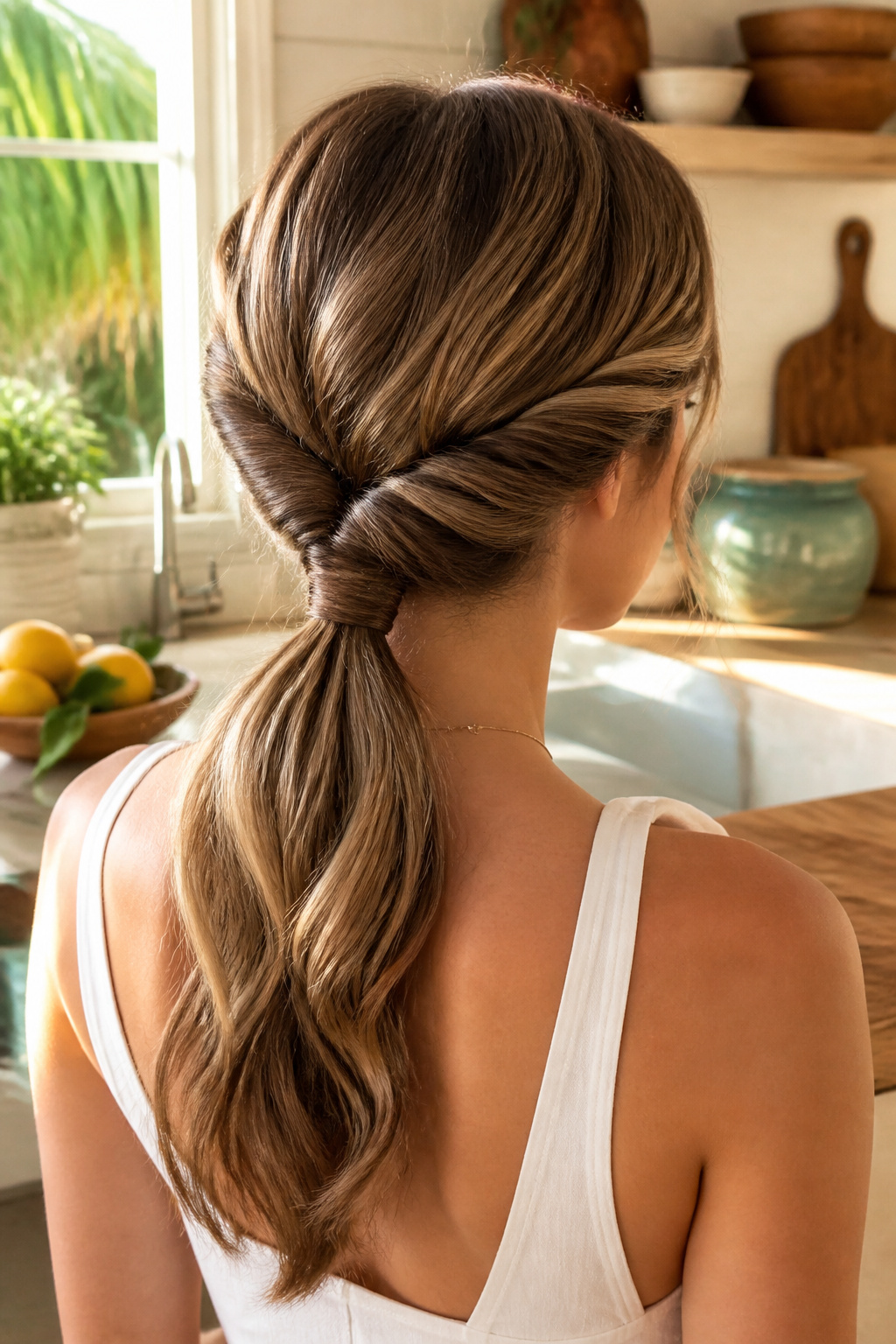
The twisted ponytail works because it asks very little of your hair. You can start with second- or third-day strands, the kind that hold a grip better than freshly washed hair anyway. Take two sections from the front, twist each away from your face, pull them back to meet the rest of your ponytail, and secure. The twists hide the elastic and add enough structure that the style reads as deliberate, not like you gave up.
From there you have two moves. Wrap the twisted sections around the base to cover the band completely, or continue the twist down the length of the ponytail itself for a rope effect. The second option takes maybe a minute longer and holds well enough for a full day. Five minutes is the outside estimate, and that is only if you are being careful about symmetry.
This is the style you reach for when you woke up late, when the humidity has already won, when you need something that stays put through a commute and still looks reasonable at dinner. It does not require clean hair, it does not require tools beyond a single elastic, and it does not require skill you do not already have.
4. Braided to One Side
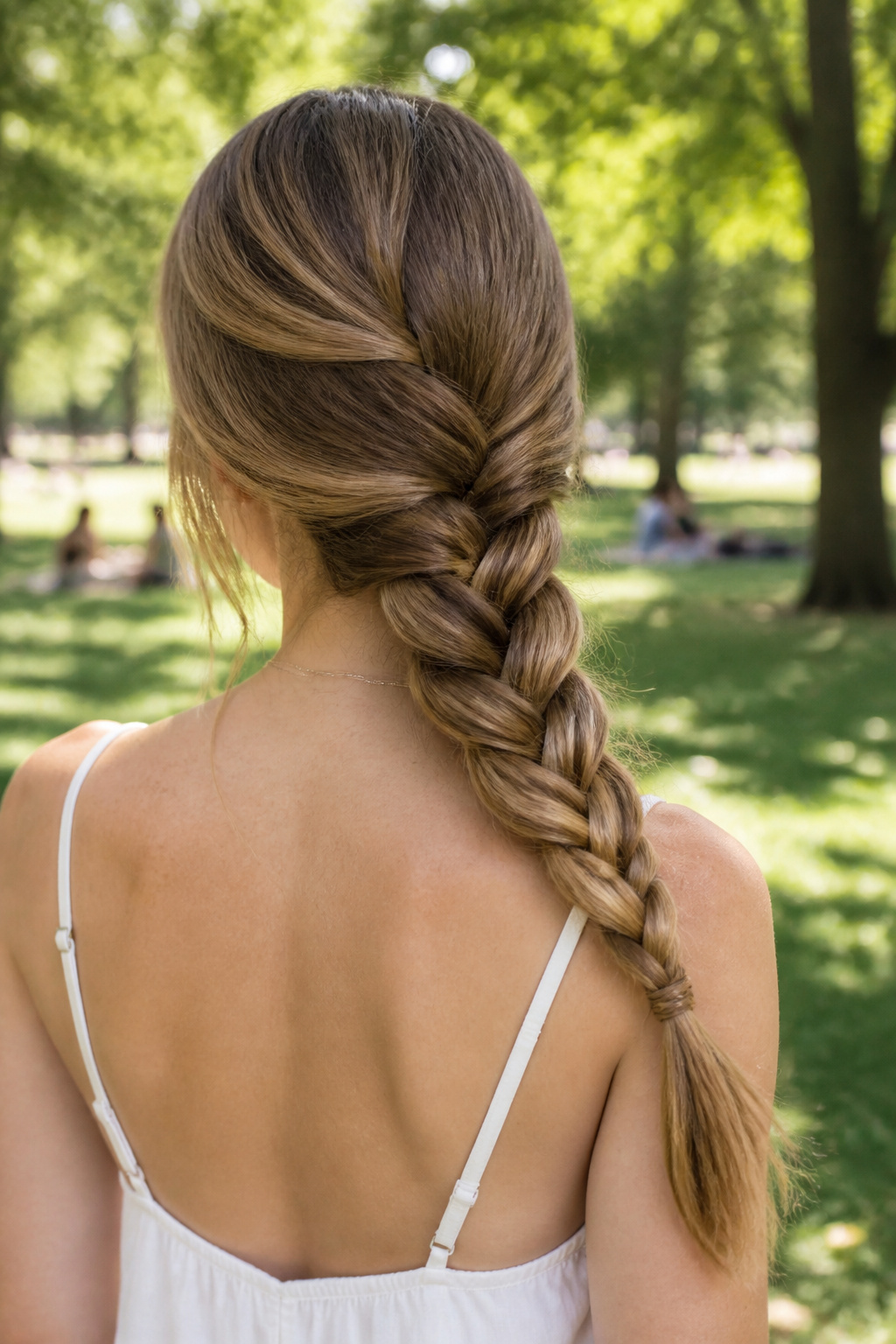
A single braid swept across the shoulder does more than look polished. It keeps every strand off your neck and contained against humidity, which is why it survives a morning commute and still photographs well at a wedding. The same braid that works with jeans and a tank top can be loosened slightly and pinned with a single clip to read formal; the structure does not change, only the tension.
A tighter braid at the nape holds better in heat than one started higher, where sweat loosens the weave. If you are coming out of a pool, squeeze the braid rather than combing it out; the shape revives with a little water and a quick re-twist.
The real versatility is in where you gather it. Bring all the hair to one side before you braid, and the result sits visibly over the shoulder. Braid straight down the back and then pull it across, and you get a cleaner line at the front with the same side-swept finish. Either way, uneven layers or bangs stay tucked in rather than escaping around your face.
5. Braided Bun
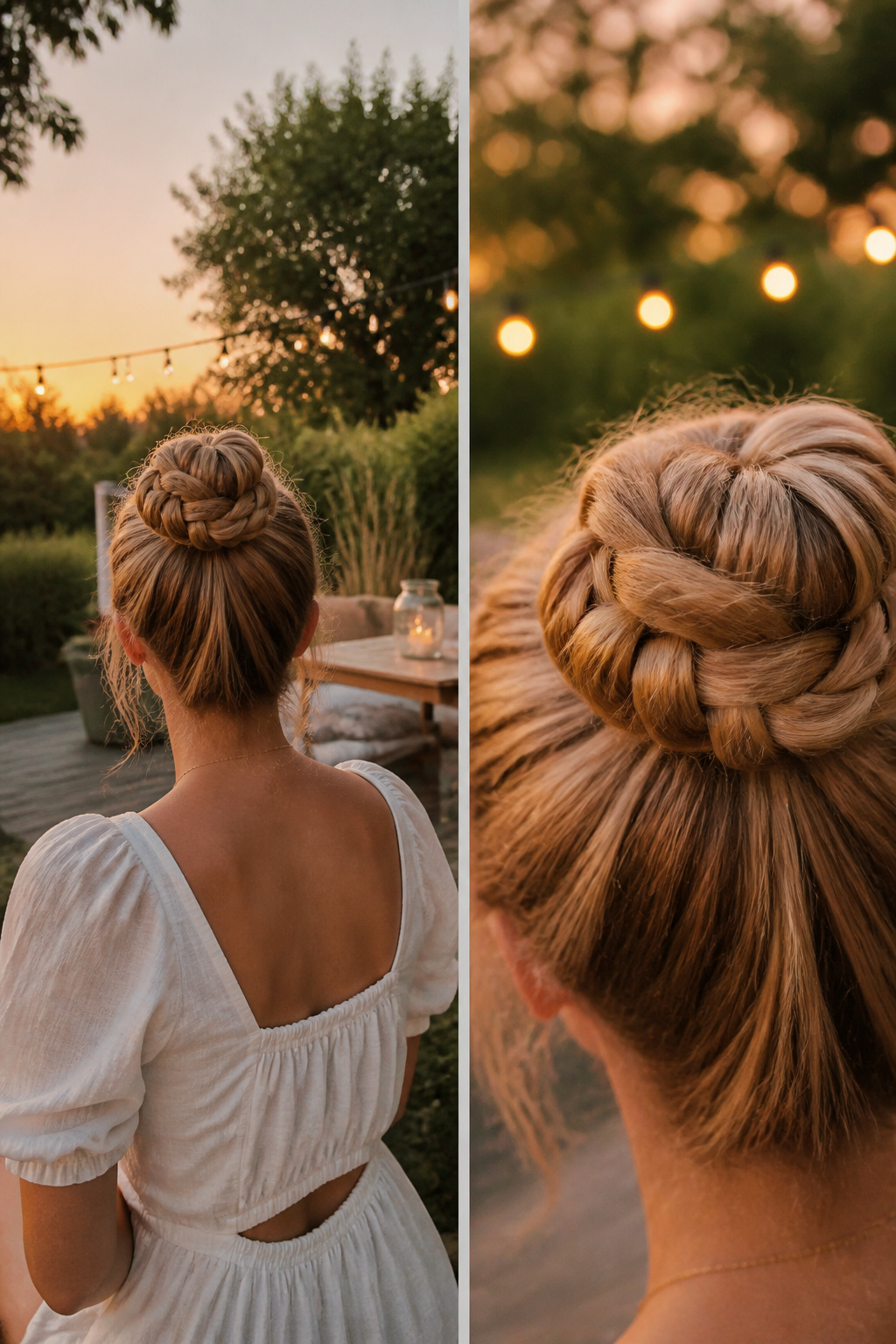
Wrap a finished braid into a coil and pin it flat against your head, or loop it around itself and anchor it with bobby pins. Either way you get all the hair up and completely out of the way, which is exactly what you want when the day involves both heat and water.
The braided base changes everything for swimming. Loose hair tangles the moment it hits chlorine or salt, but a braid holds the strands in a fixed twist. When you climb out, you squeeze the water from a single rope instead of fighting a knotted mass. The bun on top keeps the length from trailing in the water to begin with.
For hot weather the same structure works: no loose pieces sticking to your neck, no elastic band digging in where you sweat. The braid distributes tension more evenly than a ponytail gathered straight back, so the style holds longer without pulling at individual spots.
If your hair is long enough for a single thick braid, you have enough for this. Pin the coil low for a flat profile under a hat, or higher for more hold during active movement.
6. Messy Buns
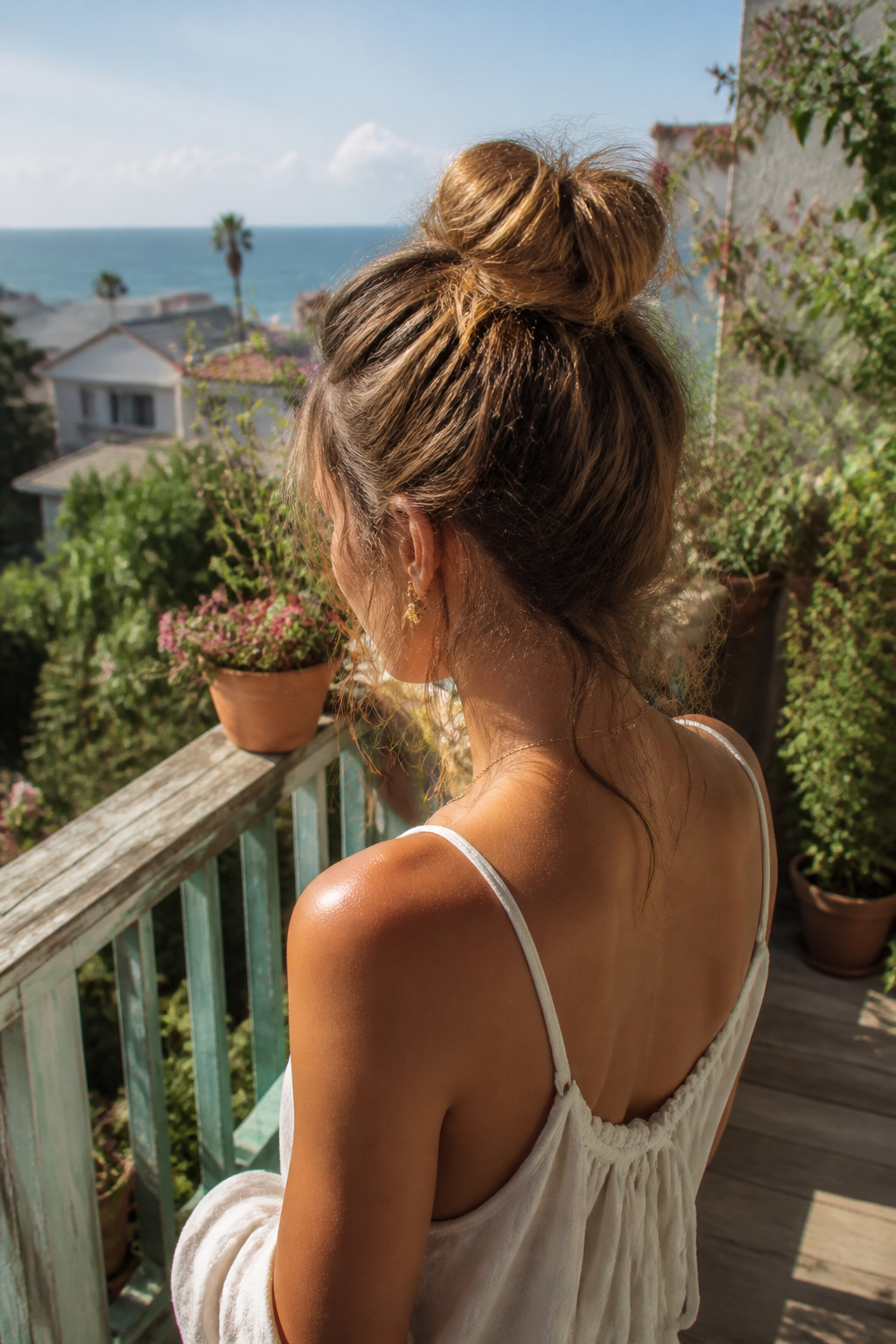
A messy bun lives or dies on how little you try. Gather your hair high, twist it loosely, and pin it where it lands. Pull out two or three pieces around the face and one or two from the nape so it does not look like a gym bun that lost its way. The pieces left free are what make it read as summer rather than sloppy.
Thick hair has the advantage here. The bun holds volume without effort, and the extra width balances the looseness rather than collapsing into a thin knot. Fine hair can fake the same fullness by backcombing the ponytail base before twisting, though it will want more pins.
This is the style you reach for when the temperature climbs past comfort and you need hair off your neck in under a minute. It survives humidity, wind, and the kind of busy afternoon where you forget you styled anything at all. The sources rank it as a go-to for hot days and active ones alike, and that tracks: it asks nothing of you once it is up.
7. Space Buns

Two buns pinned high on either side of the head lift every strand off your neck, which is exactly what you want when the temperature climbs past eighty and stays there. Keep the part straight down the middle so the buns sit level; uneven placement shows immediately when they are this exposed. Pull a few pieces loose at the hairline to soften the look around your face.
This style handles wind and heat better than most. You will see it on amusement park lines and at backyard barbecues for exactly that reason: nothing swings into your eyes, nothing sticks to your shoulders. The tradeoff is that symmetry matters more here than with a single messy bun. If your hands tend toward lopsided results, mirror the buns against each other as you go rather than finishing one and starting the other.
8. Basic Ponytail
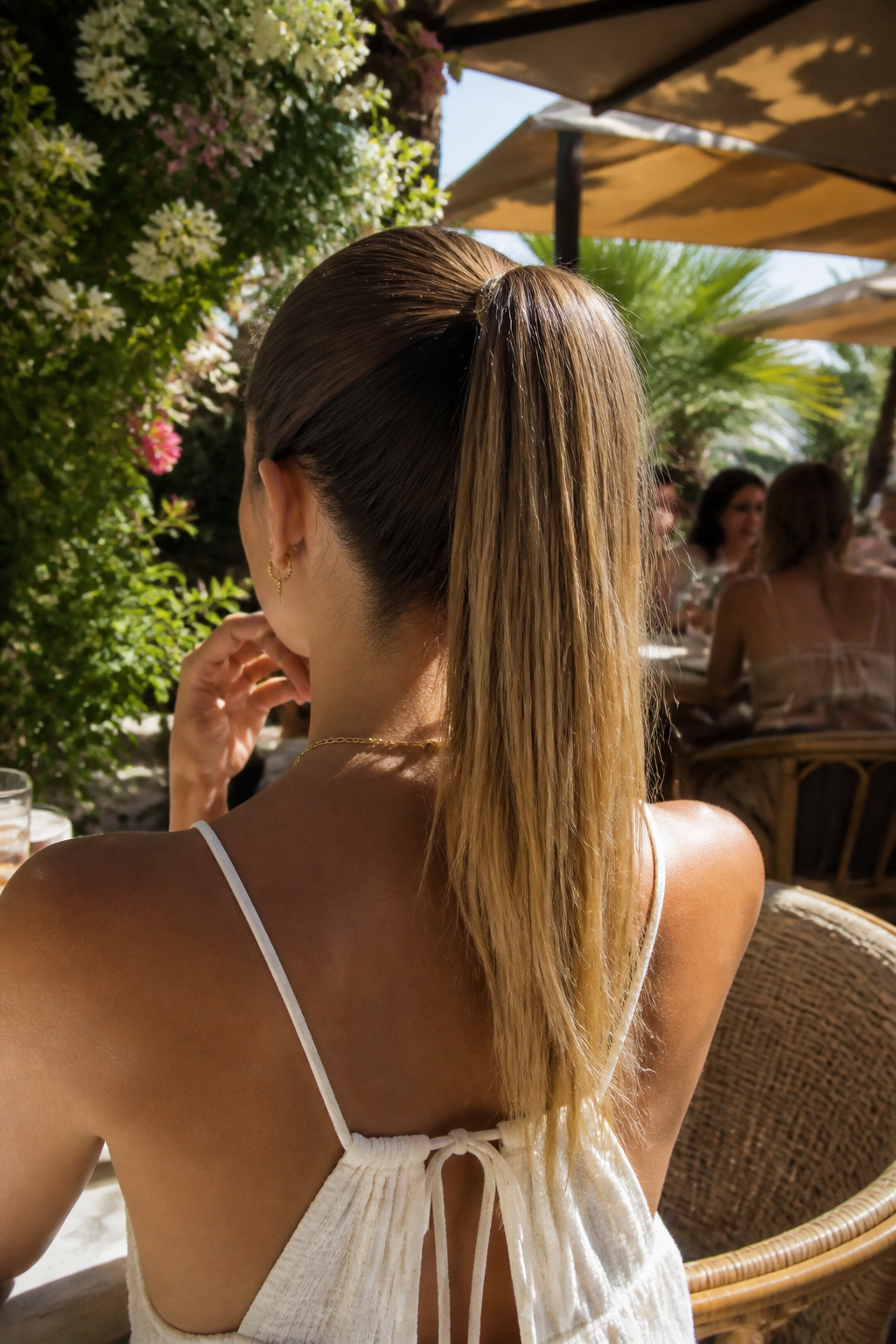
Gather everything at the crown, the middle of the head, or the nape and you have the fastest heat relief you can get from a hairstyle. Nothing else competes with it on time. Hair up and off the neck is the whole point for hot days, and this is the style that gets you there with the least work. A basic ponytail works for every hair length that reaches at least to the jaw, and the only tool you need is a single elastic. You can pull it smooth for an office morning or leave it slightly slept-in if you’re running to the store. The placement matters more than most people think. High at the crown gives the most cooling on the back of the neck, which is where you feel the heat first. Mid-head is the compromise if you want the hair away from your face without the lift. Nape level keeps the weight lowest and works best if your hair is heavy enough to give you a headache when it is piled up. For the speed alone, you will reach for this more than any other style in the list.
9. Rope Twist Braid Ponytail
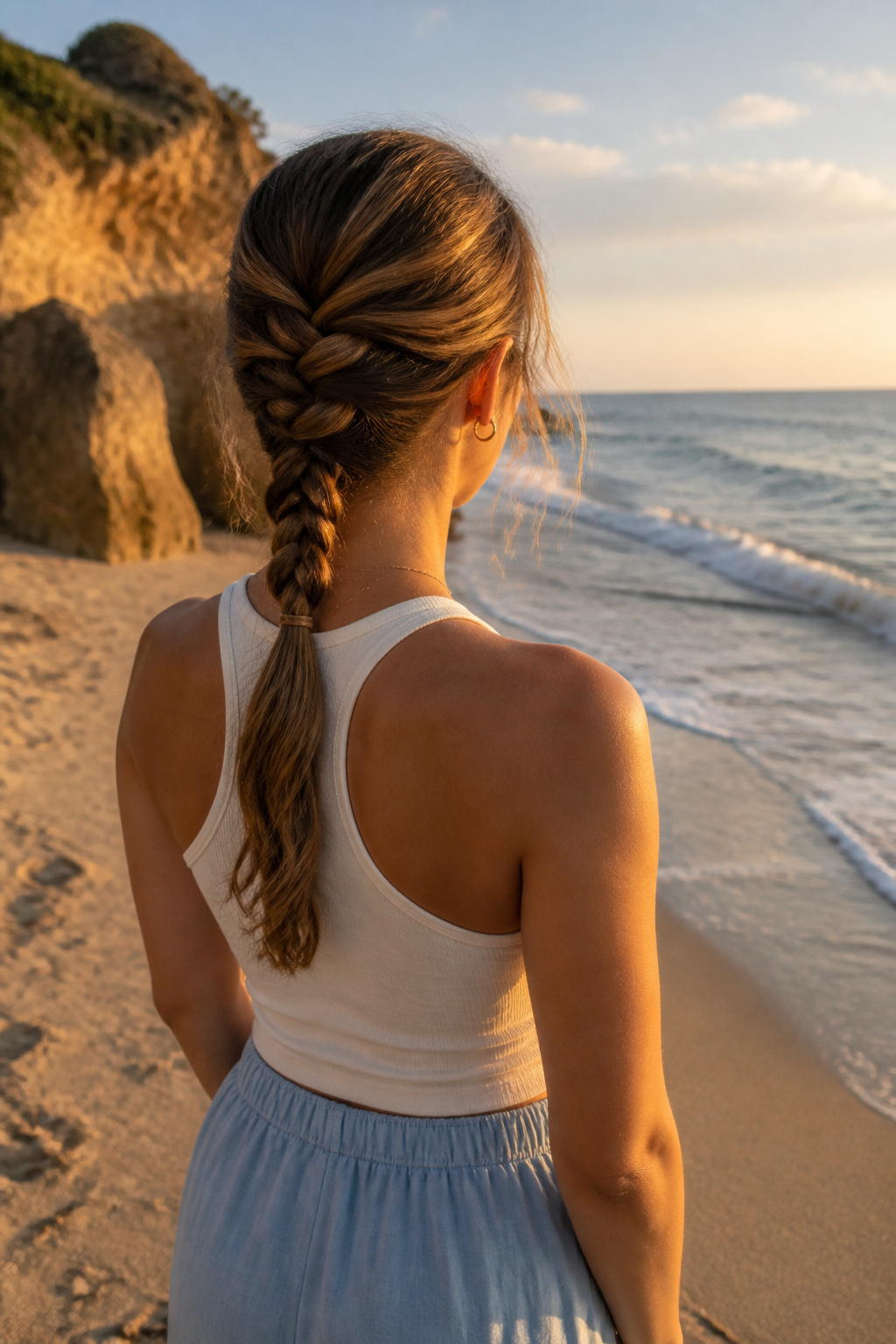
A rope twist braid ponytail starts like any other ponytail, then splits the length into two sections you twist around each other until the ends. The rope structure holds itself together without an elastic every few inches, so you are not fishing for bands with wet fingers later.
The real payoff comes after swimming. Squeeze the two braids flat and water runs straight out; the twisted channel does the work. A regular ponytail traps water at the base and drips down your neck for an hour. This one you can wring nearly dry with a towel in about thirty seconds.
Style it high or low depending on what you are doing. High keeps it off your shoulders for laps; low sits under a hat if you are walking the boardwalk after. Either way, the twist gives you something more deliberate than a basic ponytail without the time a three-strand braid takes.
10. Small Ponytail and Double Braids
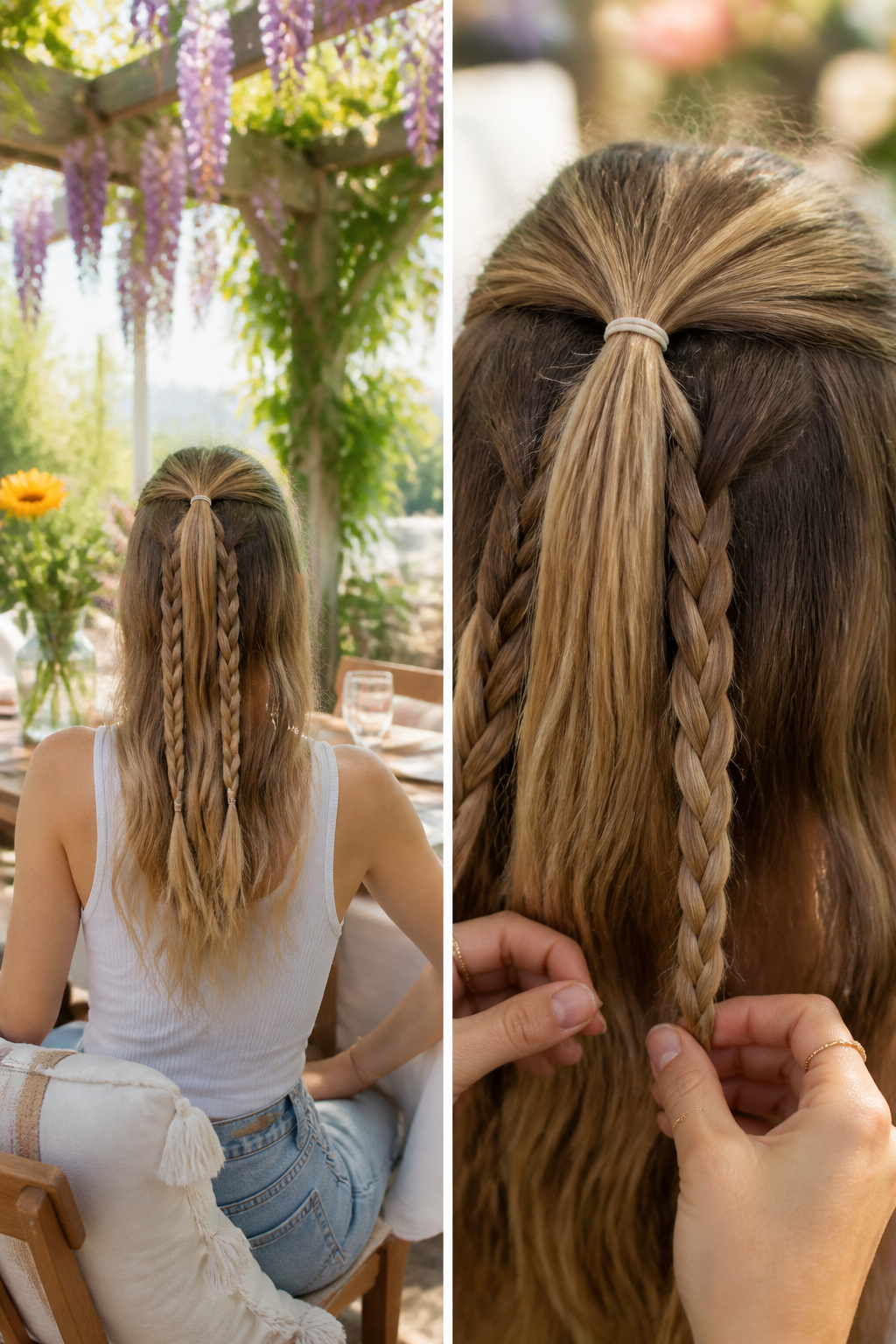
Gather the top section from the crown and the hair near your temples into a small ponytail. Split the remaining hair down the back into two halves, braid each, and let them hang or wrap them up into the ponytail itself. Parts on the back of the head catch far less sun than a part running front to back over the crown, which matters on long summer days outside.
This setup keeps layered hair from slipping loose in humidity. The small pony controls the shorter pieces around your face, and the braids anchor the rest. You can leave the braids hanging for a style that reads as two looks in one, or loop them up and pin them with bobby pins so everything stays clear of your neck and off the waterline if you swim. Either way, the braids do the holding so you are not fighting flyaways by noon.
11. Linked Ponytails
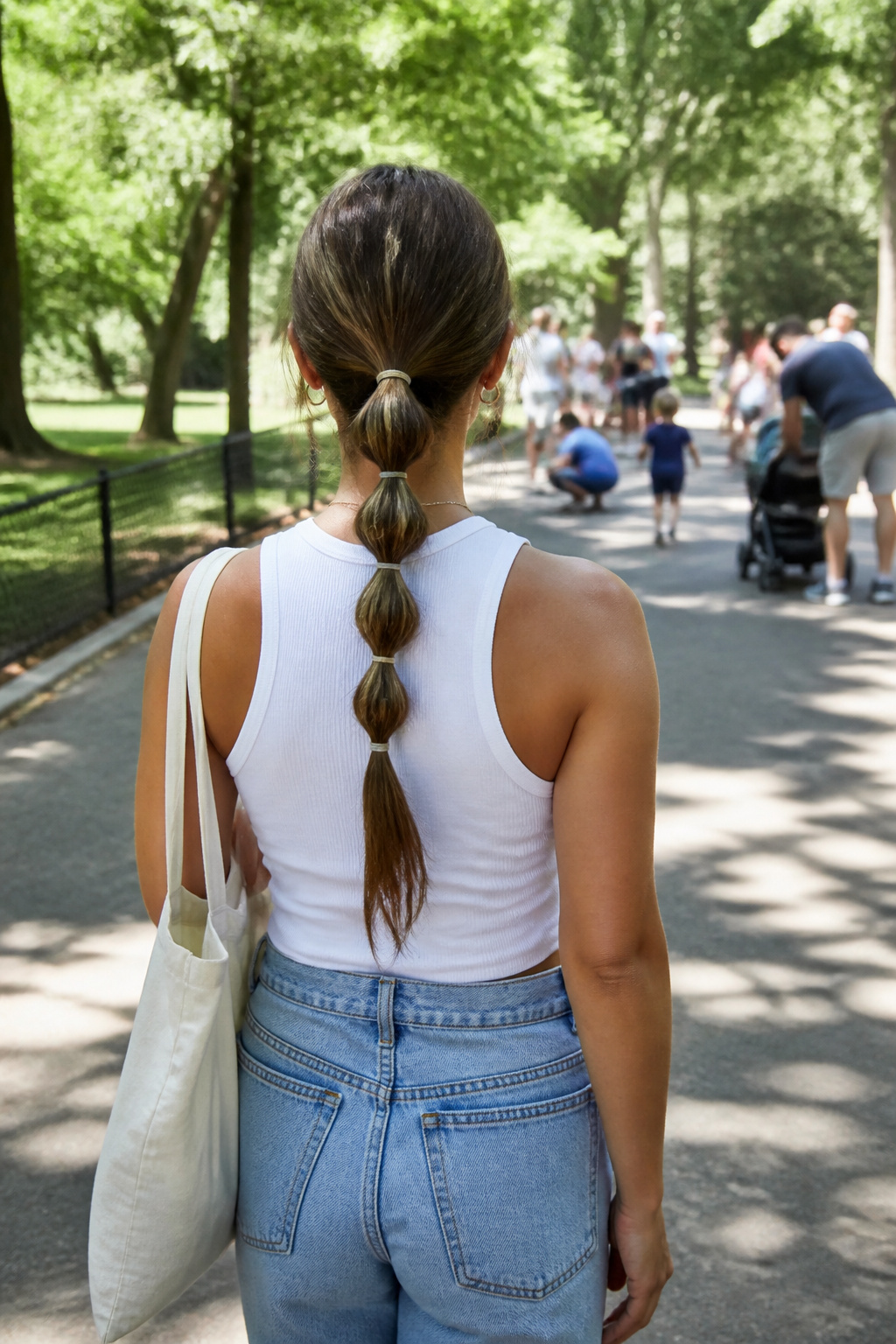
Small elastics spaced down the ponytail length turn a basic pull-back into something that stays locked through humidity and actual movement. You work in sections, fastening each with a clear band, then tugging the hair gently between bands to create a bubble or chained effect. Space the elastics about two inches apart on wet or dry hair, closer for finer textures that slip, wider for thick hair that already holds bulk.
The real payoff comes in active summer conditions. Where a single elastic lets the ponytail swing and loosen, the distributed bands keep every section secure. You can run, swim laps, or spend an hour on a bike without the tail falling flat or the base sagging. The style also survives the transition from damp beach hair to dry evening air without needing a rebuild.
For longer hair, the chain effect runs the full length. On shoulder-length cuts, three to four sections usually reach the ends. Either way, the elastics hide in the volume or you lean into them with colored bands for contrast.
How These Styles Keep You Cool
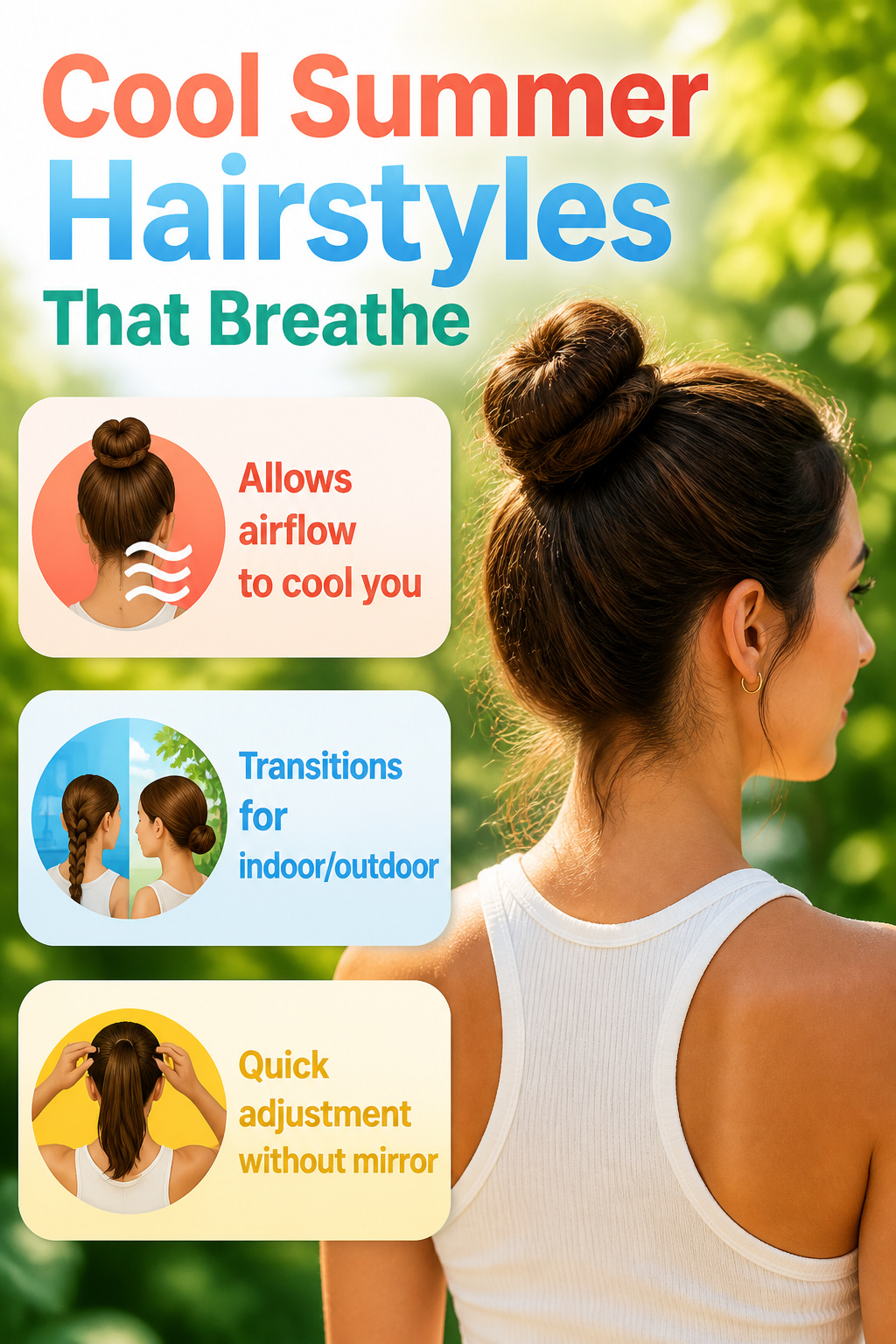
Hair that sits on your neck traps heat against your skin the same way a scarf would in winter. Lifting it into a ponytail or bun breaks that seal and lets air move across the back of your neck, where your body pushes heat out fastest. The difference is immediate: you feel the breeze instead of a warm weight.
Styles that start down but can pull up matter on days that shift between indoors and out. A braid worn over the shoulder works until the sun hits; twisting it up takes seconds and buys you hours of comfort. The same goes for a low bun that loosens at the nape: re-pin it higher and the heat relief follows.
Speed matters here. The best summer styles are the ones you can reshape without a mirror, without pins scattering across a park bench. If it takes longer to adjust than it does to feel the relief, you will leave it down and sweat instead.
What Works Best After Swimming
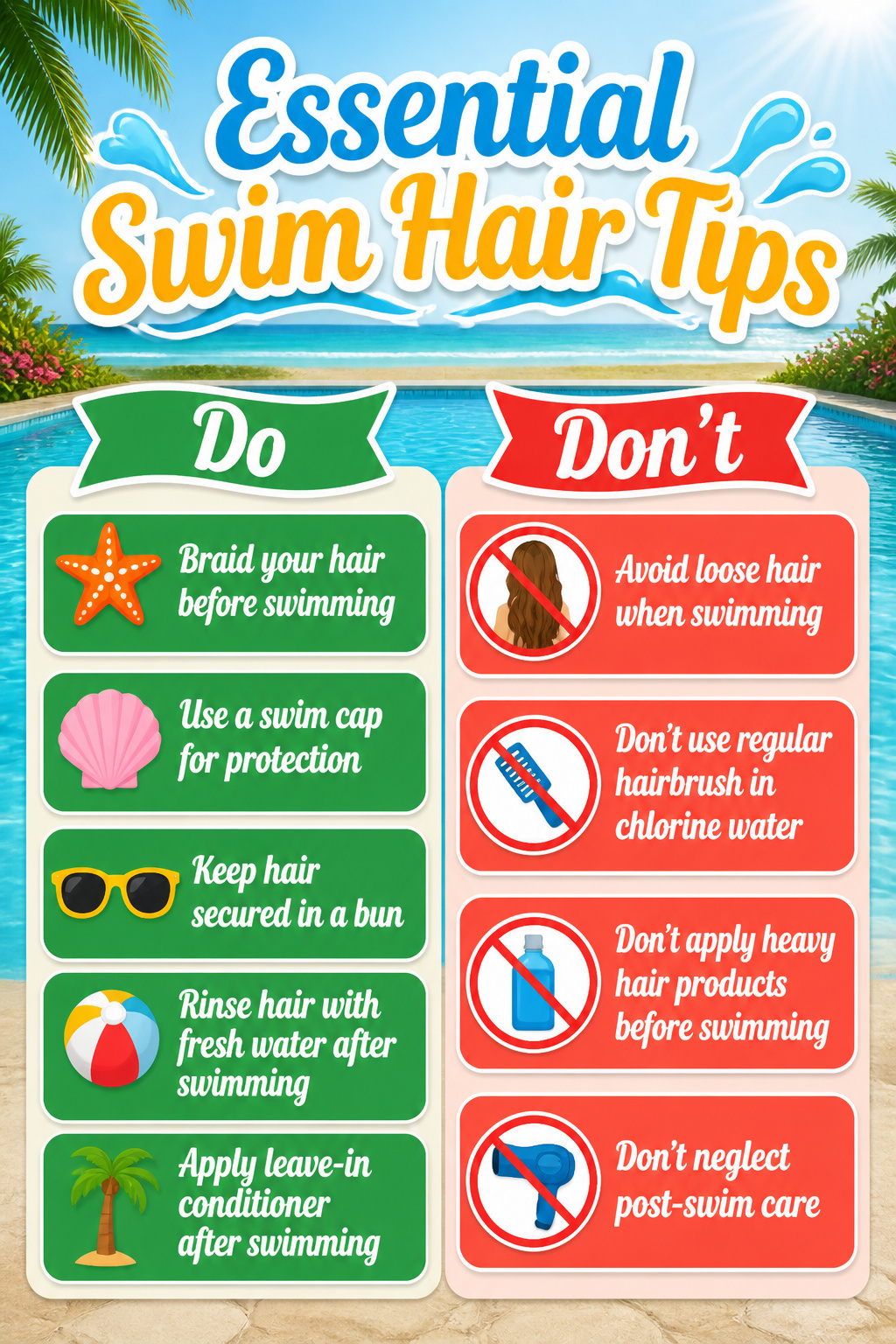
You need a style that keeps hair contained before you even hit the water, and braids and buns do the heavy lifting here. They stop strands from floating free and knotting up with chlorine or salt, which means less time with a comb afterward and less breakage when you are still sun-drunk and tired.
The braided bun sits flat and stays put under a swim cap if you wear one, and even without it the braid structure holds together when wet. For something quicker, the rope twist ponytail twists two sections of hair around each other so the whole tail stays tight and squeezes dry almost instantly when you step out of the pool. No dripping rope of hair down your back, no tangles worked in while you are still in the water.
Protecting Your Scalp in the Sun
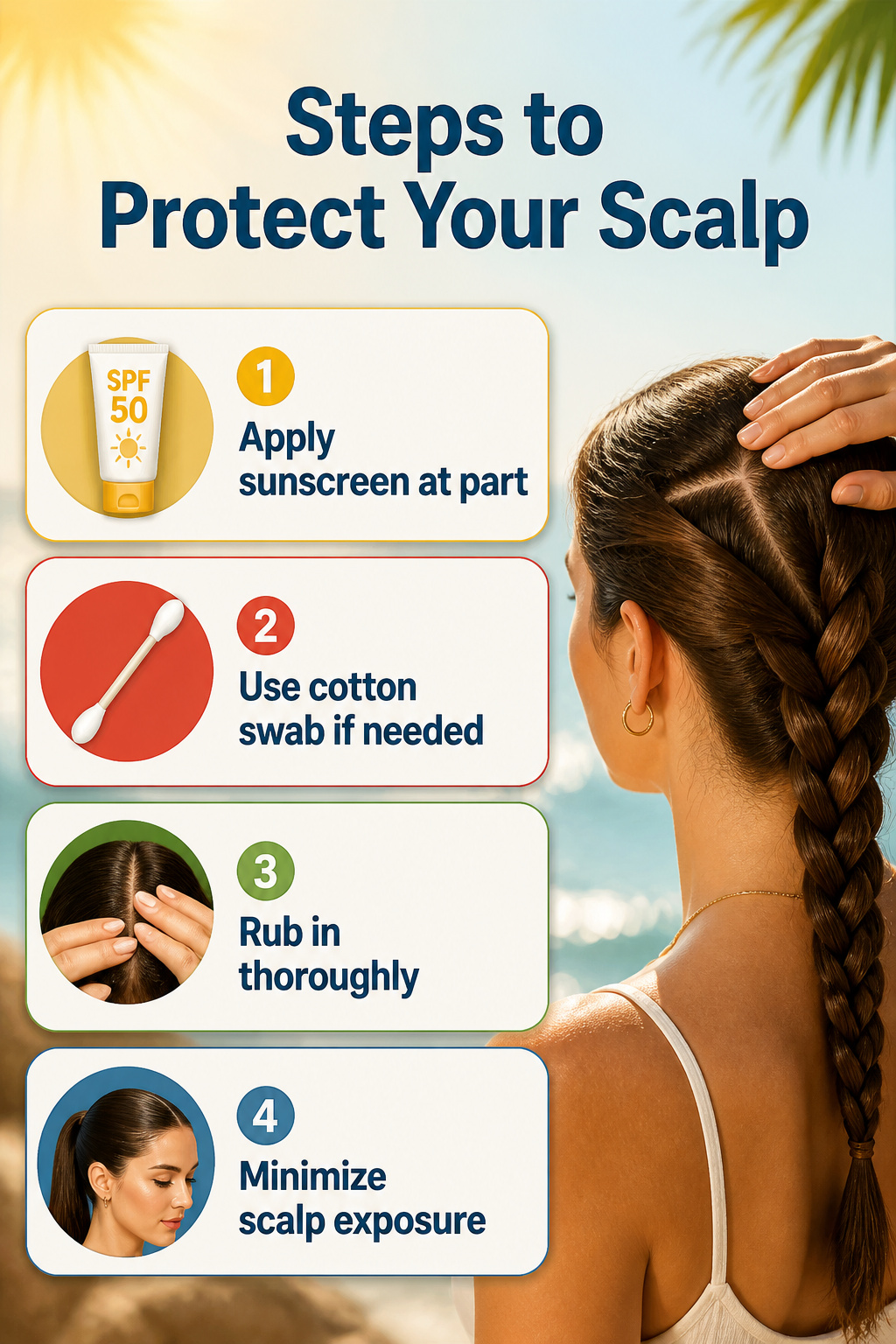
Sunscreen belongs on your scalp wherever your cute summer hairstyles leave skin bare. A tight center part, a pulled-back ponytail, a braided crown, each one opens a strip of scalp to UV that your hair would normally block. The burn you feel that night flakes for days after, and the peeling is impossible to hide.
The fix is simple and takes ten seconds. Dab sunscreen onto your index finger and run it along the part line, or use a cotton swab if you have one within reach. Rub it in thoroughly, the way you would on your face, so you are not left with a streak of white residue or a line of pink by evening.
The less scalp you expose, the less you have to protect. That is why minimal, clean parts beat zigzag or multiple sections when the sun is strong. A single straight part needs one pass of sunscreen and holds coverage for hours. A style with crisscrossed braids or several small buns turns your scalp into a checkerboard of thin skin demanding attention you will forget to give.
Frequently Asked Questions
How do I keep my hair cool in the summer?
Lift your hair into a ponytail or bun to break the seal against your neck and let air move across the skin. Your body pushes heat out fastest at the back of your neck, so getting hair off that spot matters more than anywhere else. Styles you can reshape without a mirror or scattered pins work best, since speed determines whether you actually adjust or just leave it down and sweat.
What are some easy hairstyles for the pool?
Braids and buns keep hair contained before you hit the water and stop strands from knotting up with chlorine or salt. A braided bun sits flat enough for a swim cap and holds together when wet, while a rope twist ponytail squeezes nearly dry in about thirty seconds because the twisted channel lets water run straight out. Both mean less combing afterward and less breakage when you are still sun-tired.
How can I protect my scalp from sunburn?
Dab sunscreen onto your index finger and run it along any part line where scalp shows through, or use a cotton swab if you have one nearby. Rub it in thoroughly so you are not left with white residue or a pink stripe by evening. Minimal, clean parts beat multiple sections when the sun is strong; one straight part needs a single pass and holds coverage for hours.