
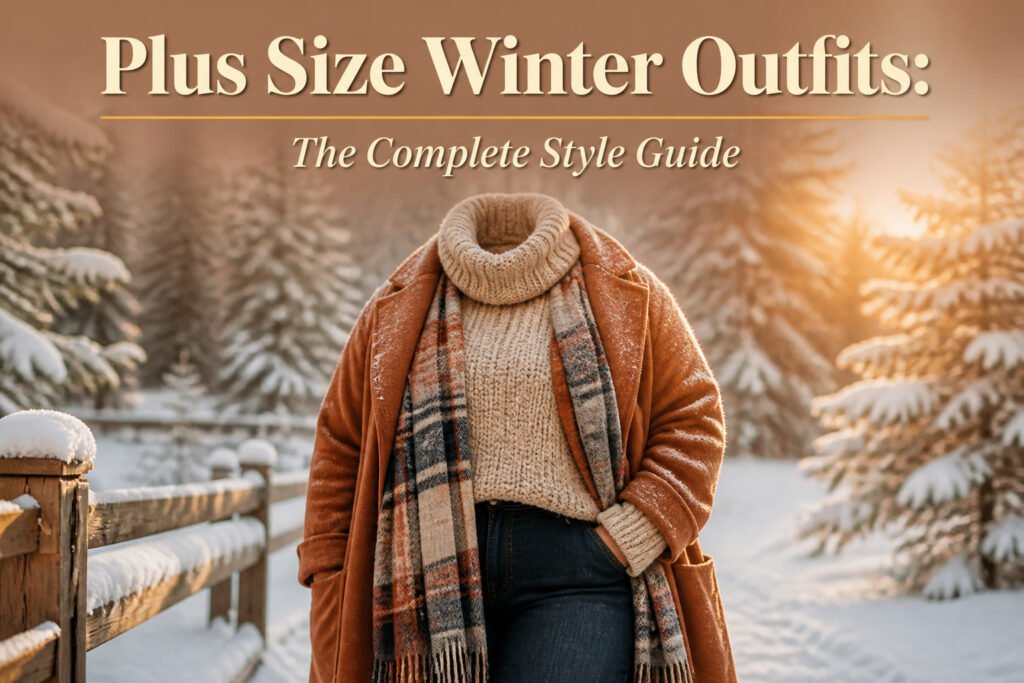
Plus size winter outfits are built in layers, and the base layer decides whether you stay warm or end up clammy and cold by noon. The trick most people miss is that merino wool breathes while cotton traps sweat against your skin, so the fabric matters more than the label. A six-piece capsule handles every combination if each item earns its place with at least three others.
Base Layers
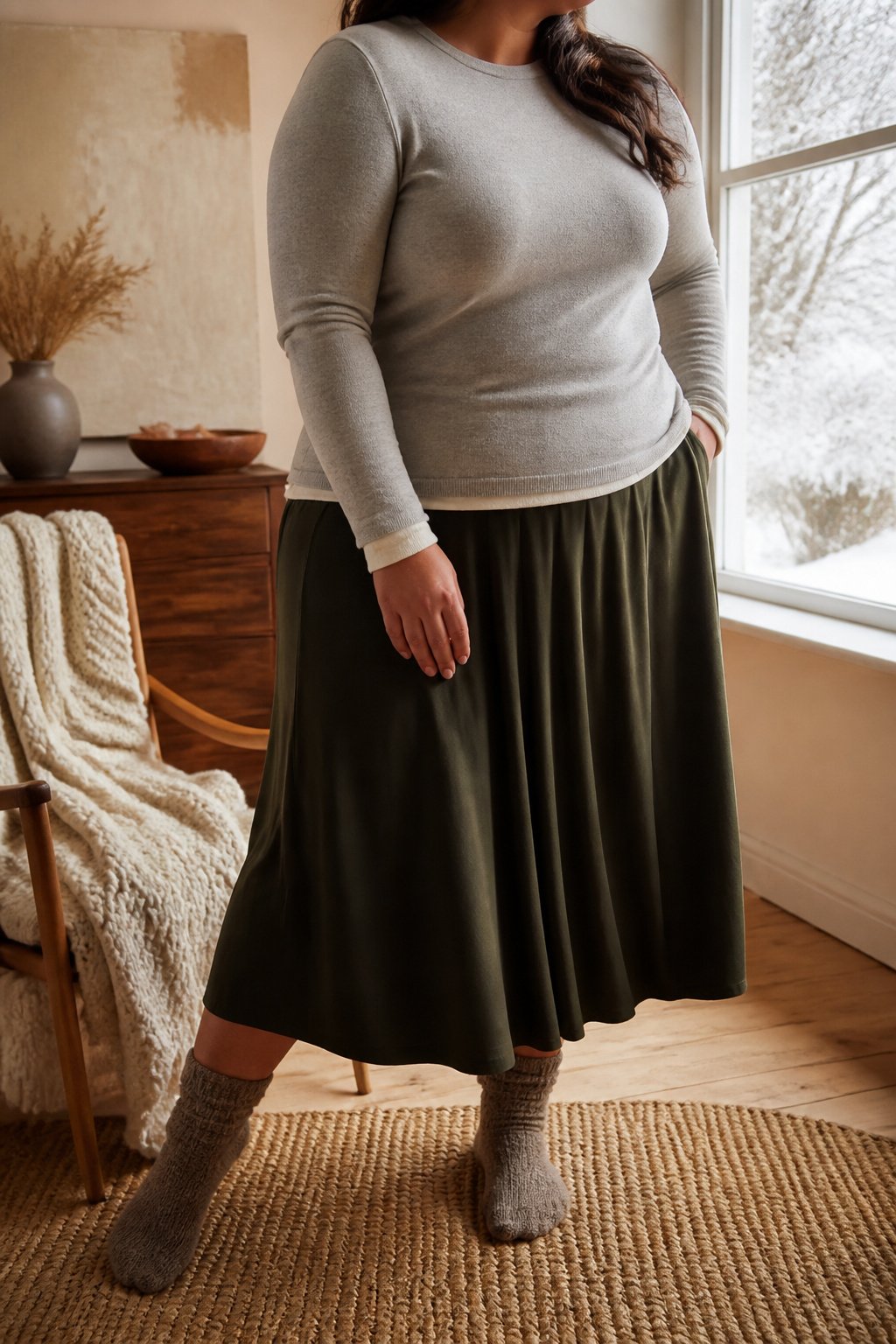
Your base layer makes or breaks a winter day. Get it wrong and you spend the afternoon clammy, then cold, no matter what you threw on top.
Start with thermal tops and fitted long-sleeve shirts cut close enough to layer but not so tight they pinch. The fabric matters more than the label. Merino wool blends breathe and pull moisture away from your skin before it turns to chill. Cotton traps sweat; synthetics can stink after an hour. Merino manages both.
Seamless or tagless construction saves you from the itch that has you tugging at your collar by noon. The fit should be snug, not squeezing, so you keep full range through your shoulders and arms.
Wear one under a midi skirt with leggings, or beneath your everyday jacket when the temperature drops. The right base layer disappears under your outfit and keeps the day yours.
Mid Layers
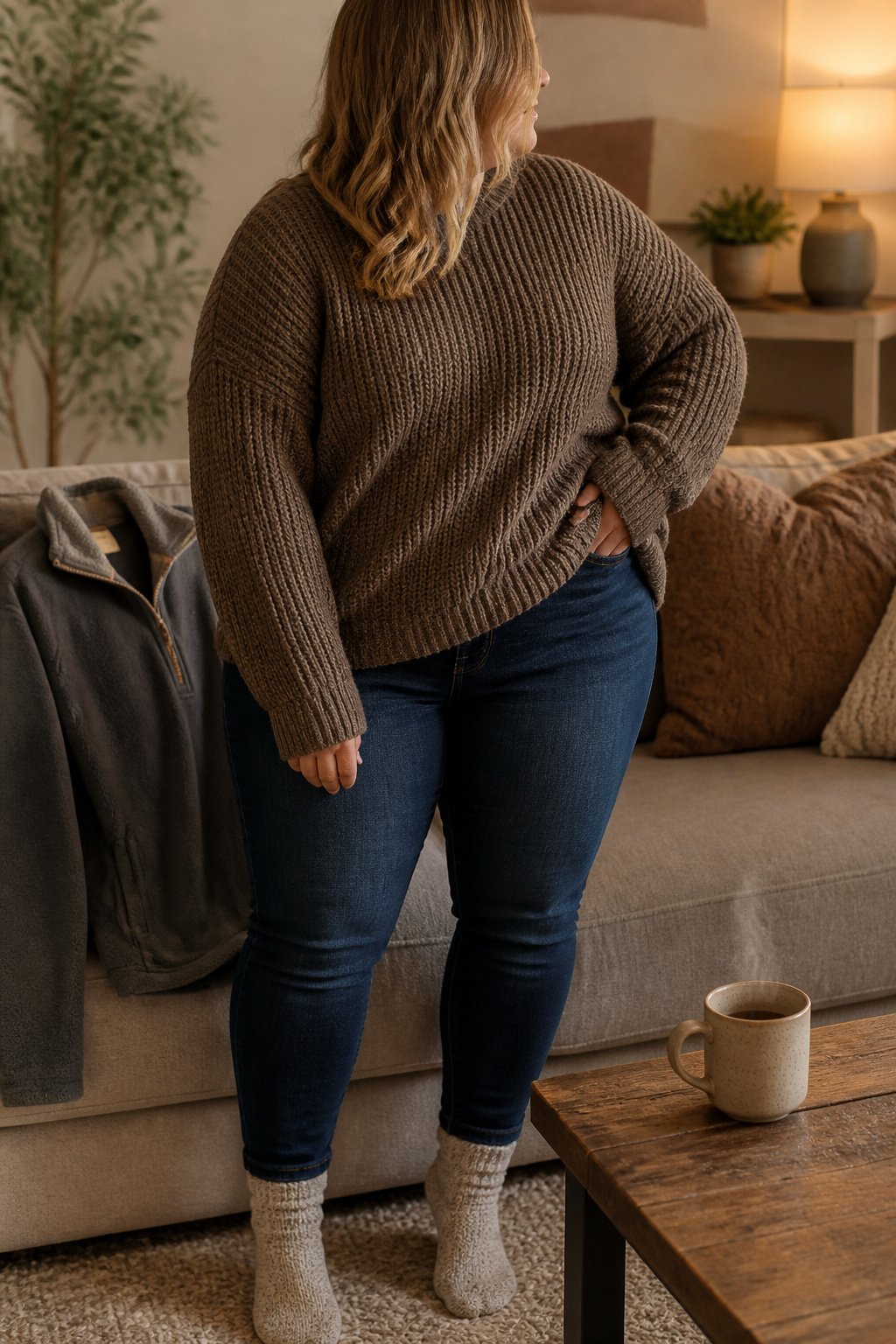
Chunky knit sweaters and fleece-lined pullovers do the heavy lifting in plus size winter outfits once you step inside and shed the coat. The trick is reading the texture before you buy. A loose, open cable knit traps air and warmth but adds visual bulk; a denser rib or fisherman’s weave lies flatter against the body while still holding heat. Fleece-lined pullovers solve this differently, the synthetic pile doing the insulation so the outer shell can stay sleek. Either way, you want a mid-layer warm enough to stand alone at a heated office or a friend’s living room.
Color choice shapes how this reads on a plus-size frame. Neutrals in the mid-layer, soft greys, beiges, earthy greens, mix across more outfits and break up the silhouette less than a loud pattern that stops the eye. Two warm mid-layers, sweaters or fleece, are enough to rotate through a winter capsule without crowding the closet. Build from there based on which texture you actually reach for: the one that keeps you from adjusting your clothes all evening, or the one that stays in the drawer.
Outerwear
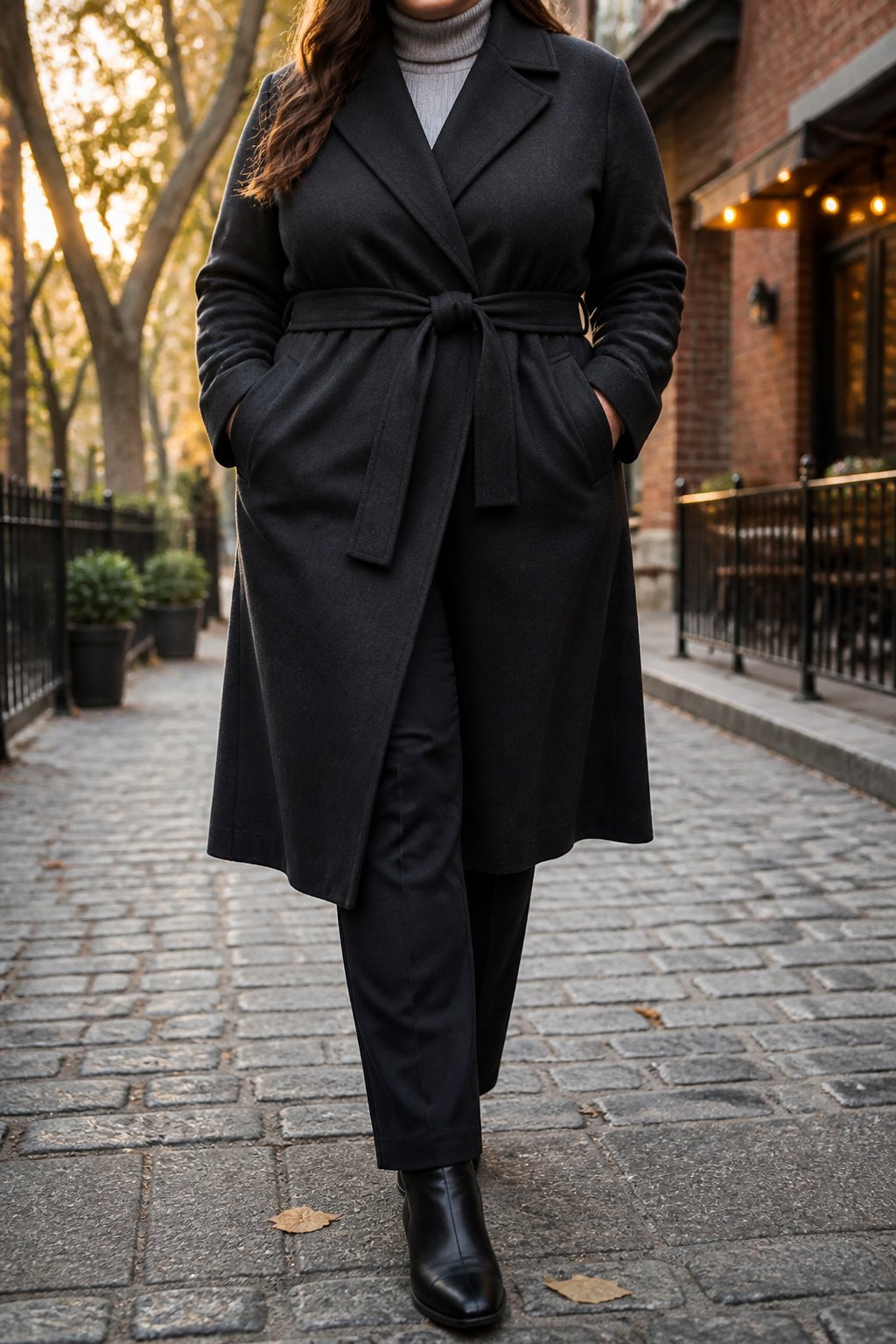
A belted coat does something a boxy puffer cannot: it gives you a waistline in temperatures where bulk is the default. The sources back this up plainly. A wool-blend belted coat cinches at the waist and accentuates curves while still delivering warmth, something the puffer, for all its insulation, simply skips. Puffers have their place. Horizontal or diagonal quilting avoids the overstuffed look, and a mid-thigh length gives you better coverage than a cropped cut. But the silhouette stays straight. For apple shapes, that straight line can work; for hourglass or pear shapes, it flattens what you might want to define.
Trench coats with lining fill the gap between seasons. They handle transitional winter weather where a parka would sweat you out. Dark or neutral tones, black, navy, camel, keep the coat working across outfits. If you want the statement, deep reds or emerald greens do it without the neon-bright regret.
The mistake is buying outerwear for the coldest day only. You need the puffer for twenty degrees and the belted wool for forty. One coat rarely covers both, and the trench handles the muddy middle. Check what you actually reach for on a Tuesday morning, not what photographs well.
Bottoms
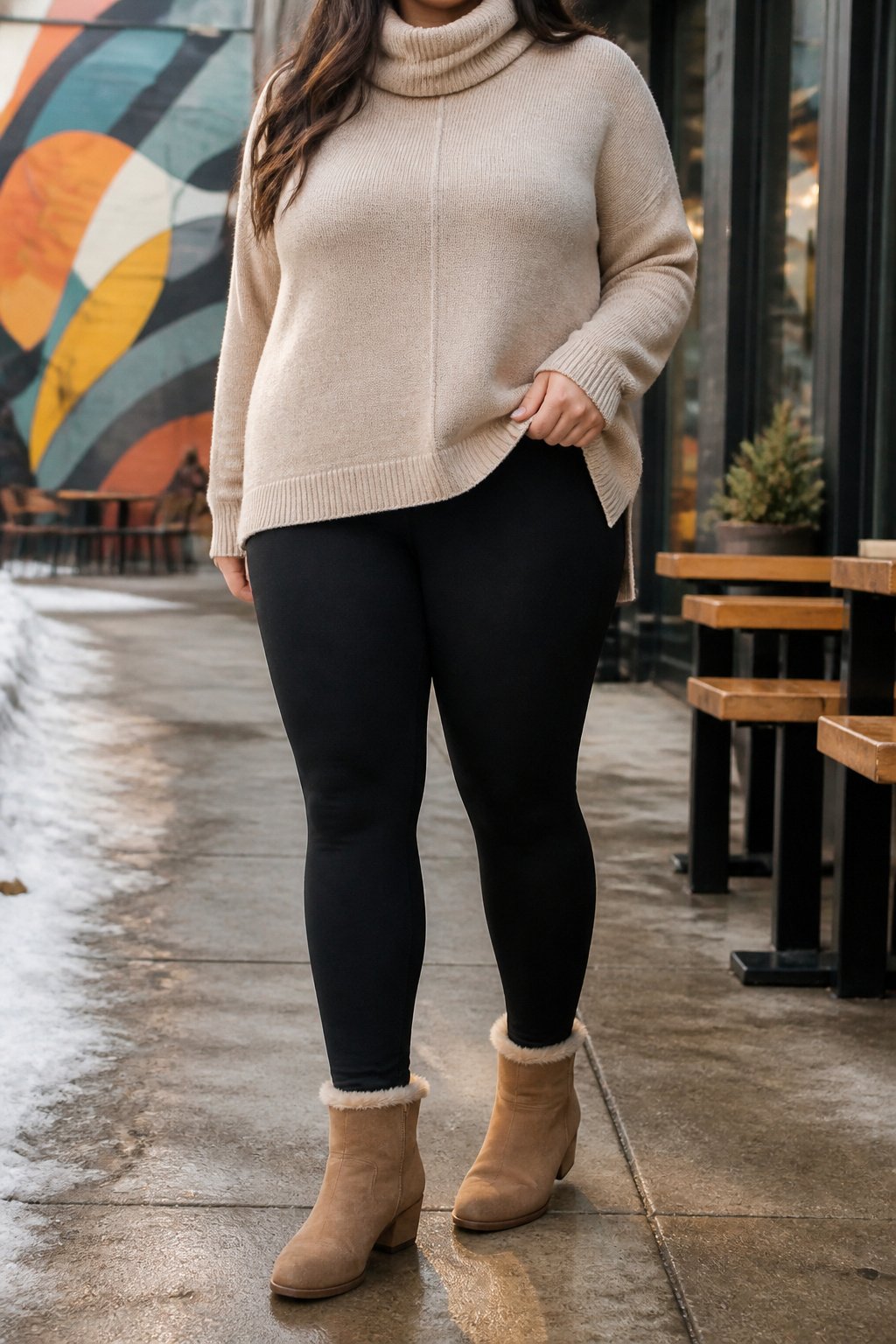
Fleece-lined leggings solve the winter problem that regular leggings leave you with: that thin jersey layer does nothing against a Chicago wind. The fleece-backed knit traps heat without adding visible bulk, so you can wear them under a tunic or long sweater and still look like you’re in clothes, not long underwear. Look for a wide, high waistband that stays flat; a too-narrow band will roll down by noon and you’ll spend the day tugging.
Wool-blend trousers hit a different need. They read as office-appropriate or dressed-up casual, and the wool content gives you warmth that all-polyester dress pants simply do not. A proper plus-size cut here matters more than with leggings. You need room through the thigh and a rise that actually sits at your waist, not a straight-size pattern blown up proportionally. The difference shows up in how they wear by 3 p.m.: a scaled-up design pinches or sags; a true plus cut keeps its shape.
The Kosha approach, with ski pants built to move, illustrates the broader point. Thermal layering bottoms designed for your body should give you the same freedom of movement a thinner person gets from standard gear. That means gussets, articulated knees, or at minimum a fabric with cross-grain stretch. Without it, you’re making a choice between warm and able to sit comfortably. You should not have to make that choice.
Footwear
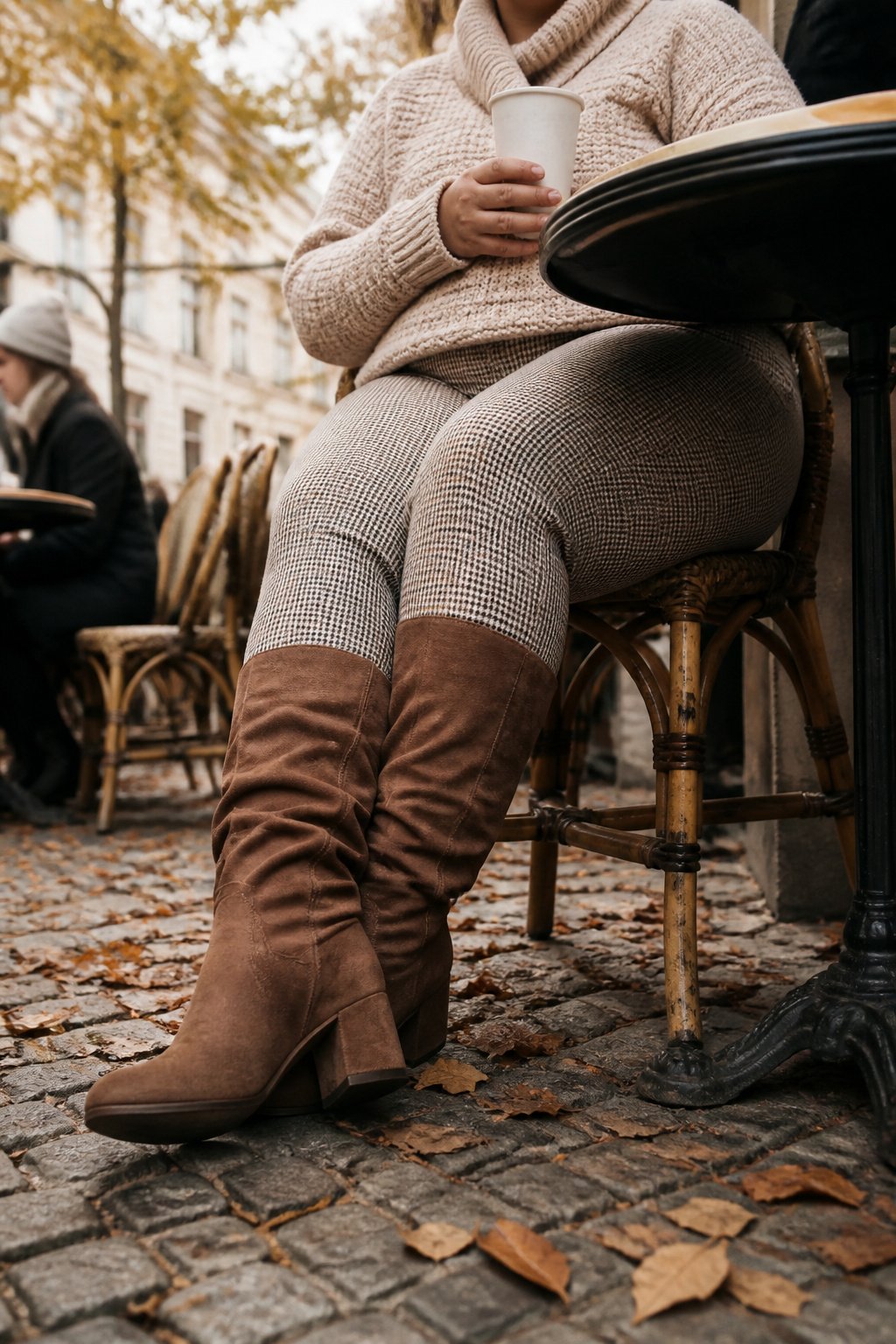
Knee-high boots carry most of the visual weight in a winter outfit, which is exactly why the shaft width matters so much. On plus-size calves, a boot that grips too tightly cuts the leg line short and creates bulging at the top edge; one that slouches or gaps reads as sloppy rather than intentional. Try on boots with anything you would actually tuck inside, because even thin ponte leggings add millimeters that change the fit.
A flat ankle bootie wins over a heeled knee-high when you are facing more than about four hours on your feet. The bootie keeps your center of gravity low, which is less tiring across a full day, and it pairs cleanly with cropped or wide-leg pants where a tall shaft would compete for attention. Save the knee-high heeled boot for evenings or shorter commutes where the taller line is worth the trade in stamina.
For the in-between days, a low-block heel ankle boot gives you height without the strain. Look for a shaft that hits just above or just below the ankle bone, not mid-ankle where it visually chops the leg.
Accessories
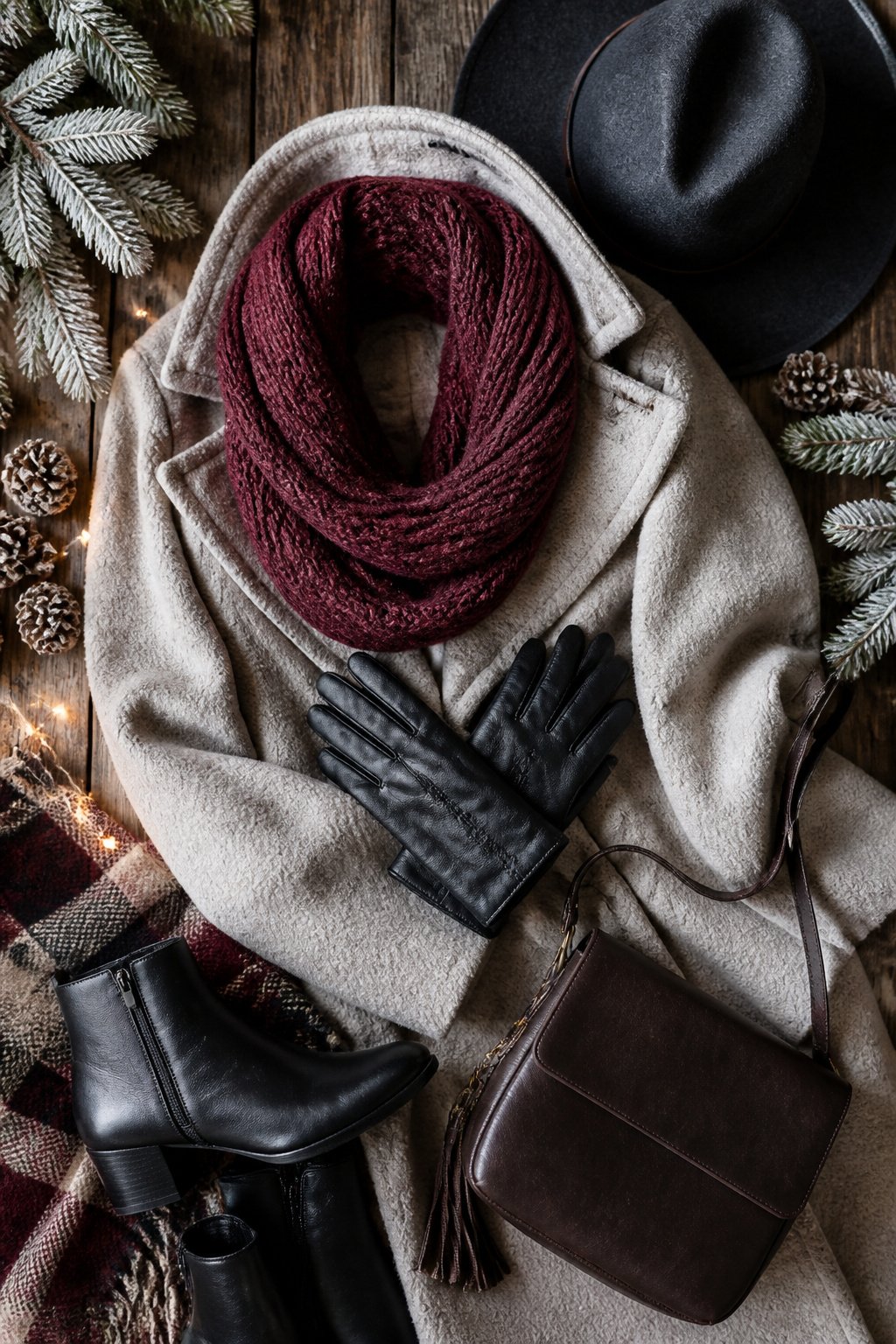
A too-small scarf on a larger frame looks accidental, not minimal. Scale matters with accessories: an infinity scarf with real volume fills the neck and frames the face, while a narrow strip of wool disappears against a coat and leaves the whole outfit looking unfinished. The same rule holds for gloves and hats. A wide-brim hat in a strong color, like the coffee tone paired with that sweater dress and faux fur jacket, gives the eye a place to rest and balances the horizontal line of a heavy coat. Touchscreen-compatible gloves in leather, in a mocha that relates to the rest of the look, keep you from fumbling your phone bare-handed at the train station. A statement belt over even the thickest coat redefines your silhouette when the outerwear alone risks reading as a shapeless block. Build your accessory set as a capsule of its own: 2–3 scarves, one structured hat, one beanie for casual days, gloves that work with your coat colors. That way the finishing move is already decided before you walk out the door.
Layering Without Bulk
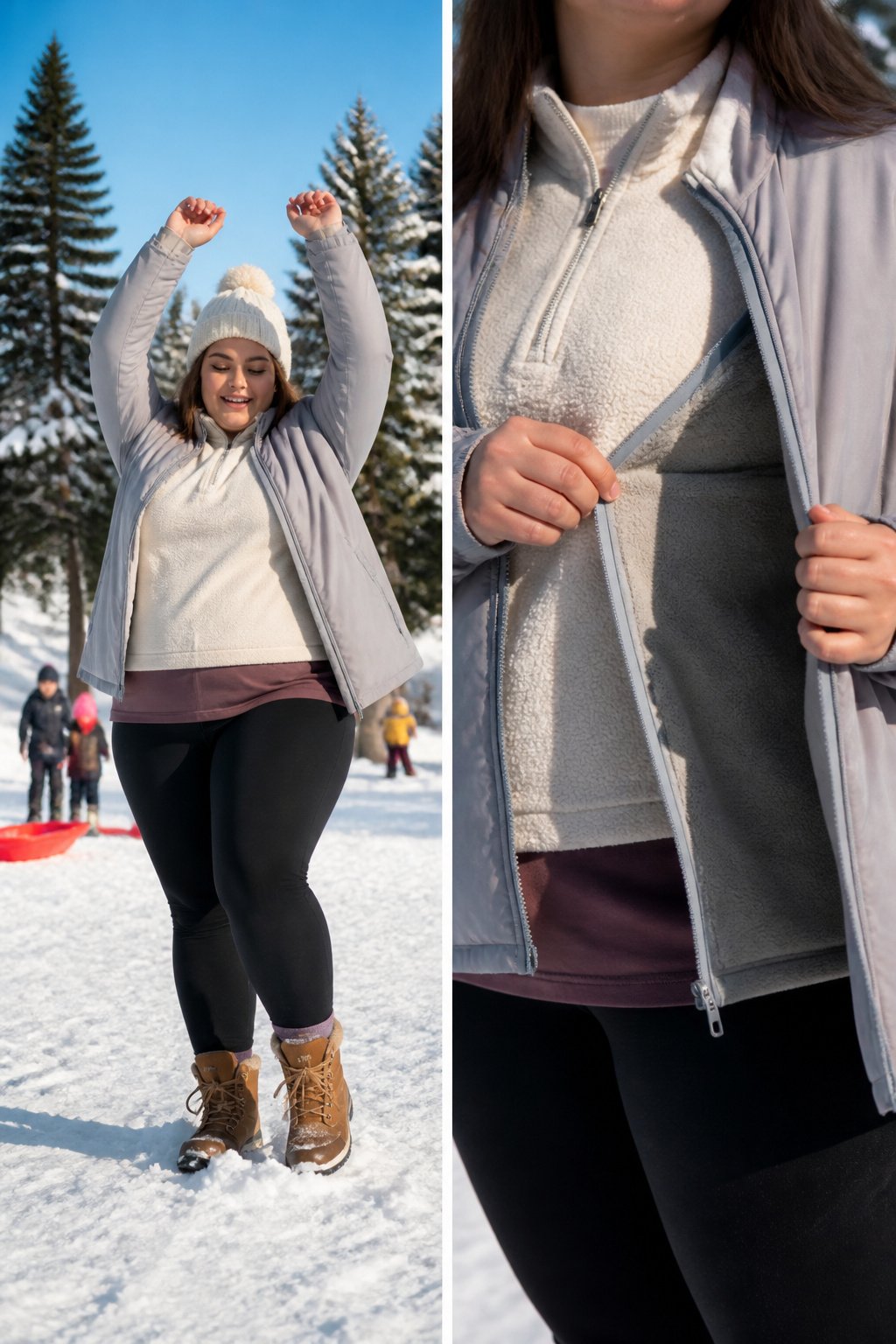
The order of layers matters more than the number of them. Start with a moisture-wicking base in a Merino wool blend, snug but not tight, and look for seamless construction so you forget it is there. The mid layer does the actual warming: a lightweight wool sweater or a fleece-lined pullover in grey, beige, or earthy green keeps the palette mixable. The outer layer is your windproof shell or insulated jacket, cut roomy enough that the mid layer does not compress and lose its loft.
Each layer has to let the next one sit right. A base layer that binds at the shoulder will push the mid layer out; a mid layer too thick in the sleeve turns the coat into a straitjacket. The test is the reach: arms overhead, the whole stack should move as one unit with nothing riding up. If your coat suddenly feels tight across the back, the problem is almost always the layer beneath it, not the coat itself. Peel off the mid layer and the shell should still look like it belongs on you, not like a tent you retreated into.
Winter Capsule
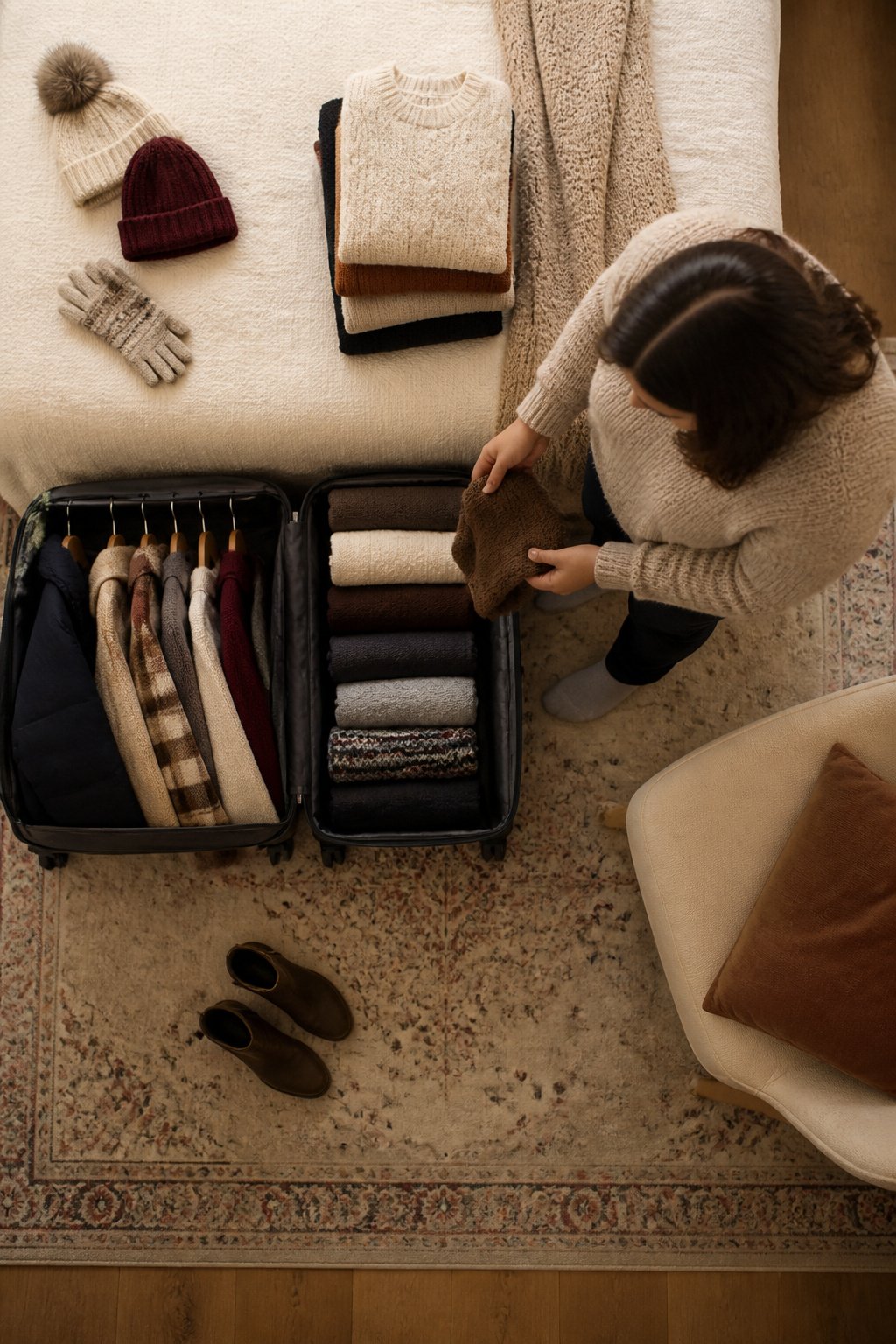
A winter capsule built for plus size winter outfits runs on six to eight pieces that handle every combination. Start with two solid thermal base layers, two warm mid-layers in sweater or fleece weight, one weatherproof outerwear piece, one to two bottoms that move from work to weekend, and the accessories you need for warmth and for pulling the look together.
The math is what sells it. Those six to eight items stack into more outfits than a closet twice the size, because every piece has to earn its place with at least three other pieces. A thermal that only works under one sweater wastes space and morning time.
Packing is where you notice the payoff. A long-weekend bag holds the full capsule with room left. Morning decisions shrink to which layer goes on top, not whether anything fits together. The trap is adding a ninth piece for variety; that ninth piece usually duplicates a job and breaks the system. Keep the core tight and the combinations stay automatic.
Outfits for the City
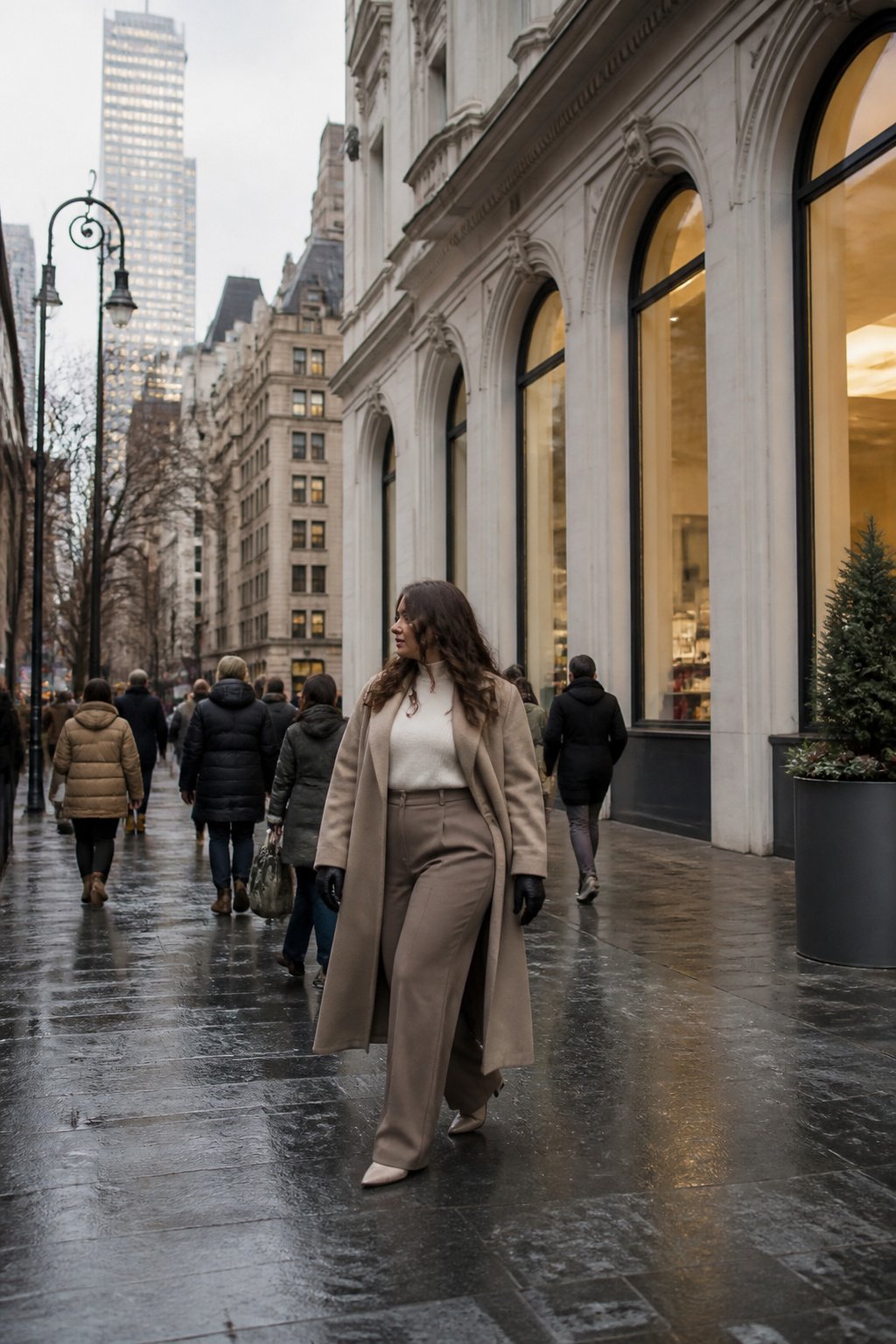
A thermal top under a long tailored coat with wool trousers gives you a clean line that holds up on city streets from about 35°F up to the mid-40s. The coat does the heavy lifting for warmth; the thermal stays invisible and the wool trousers keep their shape through a full day of walking. When the wind picks up, swap the tailored coat for something with a closure at the neck and a hem that hits below the knee. A scarf helps, but the real fix is length and weight in the outer layer. Without it, you end up with cold legs and a torso that overheated on the subway. Below freezing, add a thin mid-layer under the thermal and choose a coat with some loft to it — the tailored cut still works, but the fabric needs more body than a standard city-weight wool.
Outfits for the Outdoors
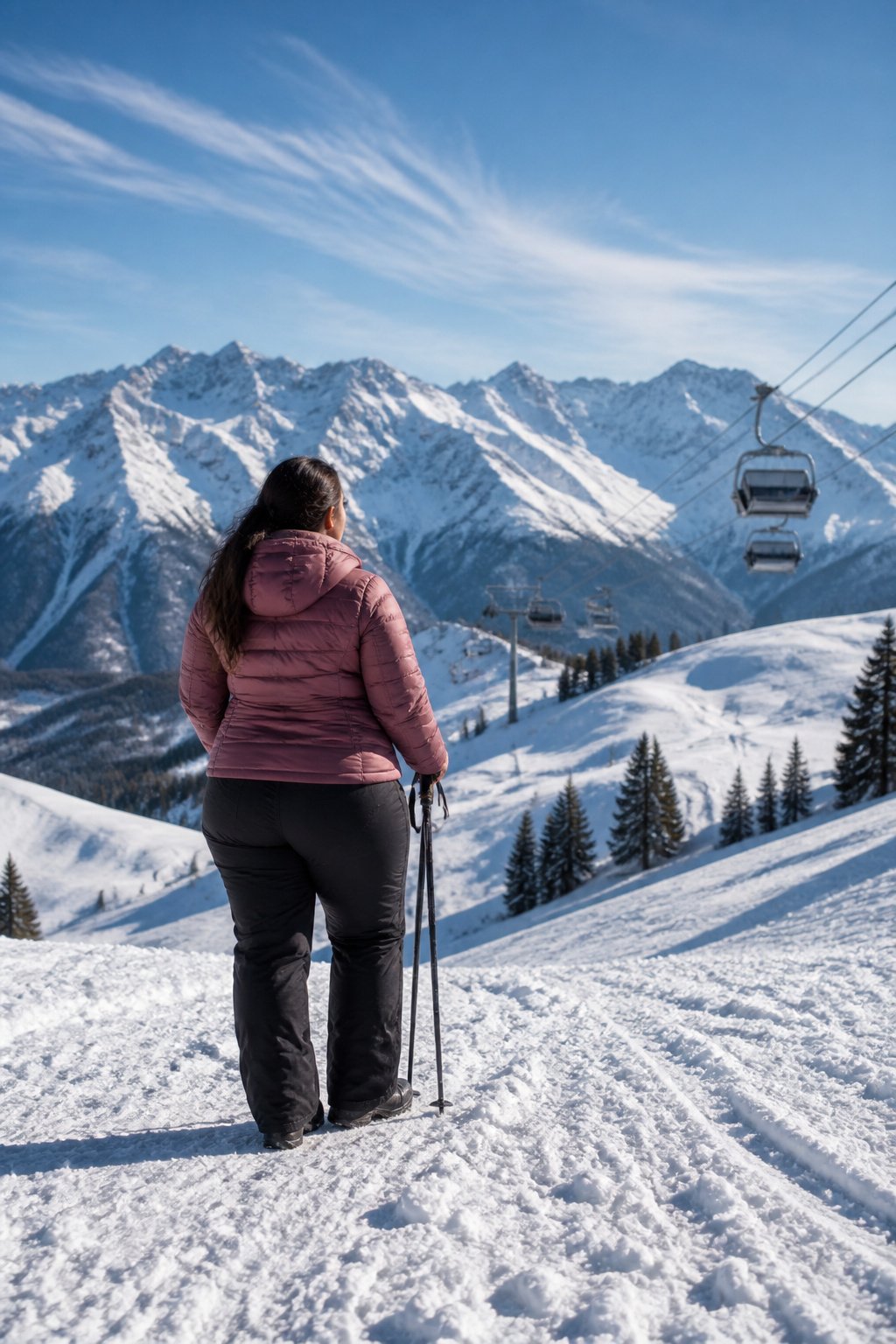
A thermal top and bottom set is your first move for any real time in the snow, because once you stop moving, the cold finds every gap. Layer waterproof ski pants and a puffer jacket over that base and you have a shell that holds heat in and weather out. Water-resistant fabric beads light moisture for a while, but sit on a wet sled or a lift seat for twenty minutes and it soaks through. Waterproofing with sealed seams is the only spec that holds up to contact with packed snow or melted slush. Puffer fill varies, and you will want to check the tag: down compresses smaller for packing, synthetic stays warm if it gets damp, and either works if the jacket itself is a true shell, not just treated fabric. The cut matters too. Ski pants with a higher back rise keep snow from sliding in when you bend or sit, and articulated knees let you move without the waistband dropping. A puffer that hits at hip length gives you coverage without bunching under a safety bar. Fit the shell roomy enough for the thermal underneath, but not so loose that the fill compresses and loses loft.
Frequently Asked Questions
What are good base layers for plus-size winter dressing?
Thermal tops and fitted long-sleeve shirts in Merino wool blends work best. Merino pulls moisture away from your skin before it turns to chill, unlike cotton which traps sweat. Look for seamless or tagless construction and a fit that is snug, not squeezing, so you keep full range through your shoulders and arms.
Where can I find plus-size outerwear that will keep me warm and look good?
Look for pieces designed specifically for a plus-size body rather than straight-size patterns scaled up. Thermal layering bottoms built for your shape should include room to move and proper insulation. A wool-blend belted coat cinches at the waist and accentuates curves while still delivering warmth, which a standard puffer skips.
What are some simple plus-size winter outfit ideas for different scenarios?
For city walks from about 35°F to the mid-40s, wear a thermal top under a long tailored coat with wool trousers. Below freezing, add a thin mid-layer under the thermal and choose a coat with more body. For outdoor snow, start with a thermal top and bottom set, then layer waterproof ski pants and a puffer jacket over the base for a shell that holds heat in and weather out.