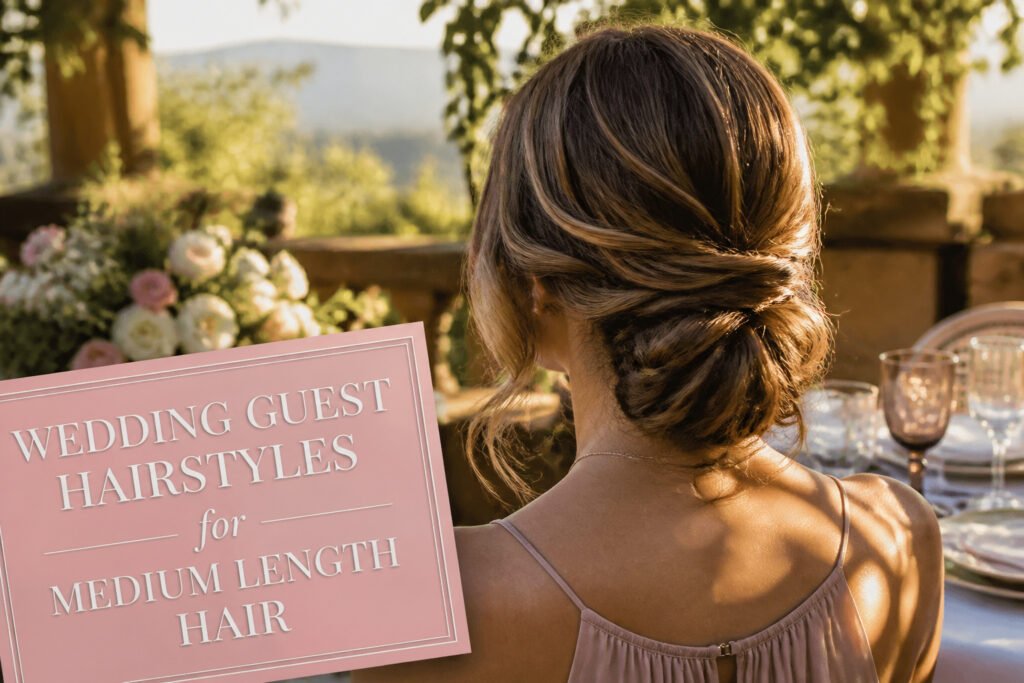
Medium-length hair, the kind that falls between your chin and your shoulder blades, carries just enough weight to twist and pin without the bulk that fights back. The right wedding guest hairstyle for you depends on one thing: whether your dress has a high neckline or a bare back, because an updo clears space for detail while hair down competes with it. A chignon reads classic, not attention-seeking, and the low placement keeps the line clean when you are seated in rows of guests.
1. Low Chignon

A low chignon sits at the nape of your neck and stays there. Medium length hair, the kind that falls between your chin and your shoulder blades, carries just enough weight to twist and pin without the bulk that fights back. Longer hair can sag; shorter hair slips out. This length gives you the right ratio to build a knot that holds.
You twist, you tuck, you pin. The style keeps your hair secure through hours of dancing without requiring a bathroom repair job with plastic bobby pins. It also does not compete with the bride. A chignon reads classic, not attention-seeking, and the low placement keeps the line clean when you are seated in rows of guests.
Leave a few soft waves loose to frame your face, or keep it sleek. Either way, the structure does the work.
2. Half-Up Twist

A half-up twist keeps your hair out of your face without hiding the length you have. Start by taking the top section from each temple, twist them back toward the crown, and pin them so the ends disappear into the rest of your hair. What falls below stays loose and visible.
This style bridges formal and relaxed better than most options. The pinned section reads as intentional for a ceremony, while the length below keeps it from looking overdone at a more casual reception. It works on kinky or wavy hair especially well, since the natural volume at the back gives the twist something to sit against. If your hair is straighter, you may need to add a little texture first so the twist does not slip.
For necklines, the half-up twist suits almost everything. The exposed hair at the back fills bare necklines on strapless or halter dresses without competing, and the lifted front keeps the line clean if you are wearing something with a collar or higher cut. The only mismatch is a very ornate back detail on your dress, since the twist and the pins can distract from it.
Add a small, delicate clip or comb where the twists meet if you want something that catches light during the evening. Skip anything heavy; the structure here is the twist itself, and a large piece fights it.
3. Braided Crown
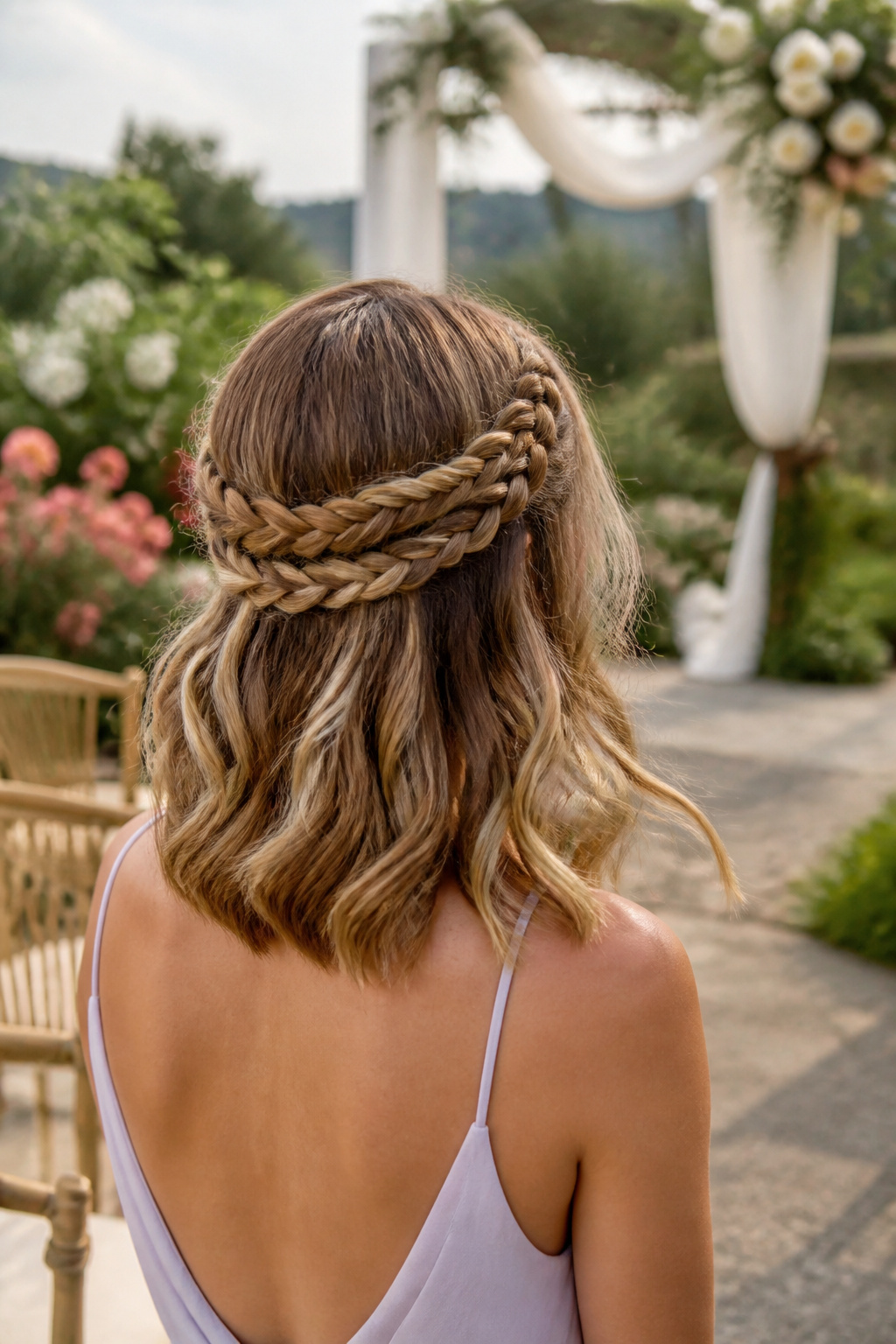
A braided crown lifts every strand off your neck and temples, which is exactly what you want when the ceremony is outdoors and the wind picks up. You weave two simple braids back from each temple, pin them across the crown like a headband, and tuck the ends under the opposite braid. Medium length usually gives you just enough hair to reach without extensions, though a few hidden pins at the nape keep shorter layers from slipping loose.
Garden venues are where this style earns its place. Loose hair gets blown into lipstick; sprayed curls fall flat in humidity. The braided crown stays put because the structure is pinned to itself, not teased upward against gravity. You will still want a light coat of workable hairspray before you start braiding, because flyaways along the part line show up brutally in afternoon light.
The tradeoff is time. A neat crown takes longer than a messy bun and it does not forgive rushed pinning. If your hair is layered, expect a few short pieces to escape by the reception. Most people find the security worth the extra ten minutes, especially when the alternative is brushing tangles out of wind-whipped waves in the venue bathroom.
4. Loose Waves With Clips

Loose waves give you a way to wear your hair down to a wedding without looking like you rolled out of bed. The finished style just needs to look smart and complement your outfit; that is the line between guest-appropriate and underdressed.
Pin back one side of your waves and leave tendrils loose in front of the ears. This partial clip placement keeps the look polished while still reading relaxed. A flat claw clip secures the hair in seconds and works across textures, whether your hair is sleek or already holding curl. Clip type matters as much as placement: a flat, decorative claw clip sits flush and reads intentional, while a bulky athletic clip drags the whole look toward casual.
The half-up, half-down construction also balances the formality question. You are not fully up, not fully down, and that middle ground aligns with how you already wear your hair day to day, just elevated for the setting. Sparkly or delicate accessories finish it without tipping into costume territory.
5. Polished Ponytail

A polished ponytail starts with the same detail that separates guest hair from everyday: slick the crown smooth and keep the band at midi height, neither scraped high nor sitting low. Brushed, polished lengths finish it. That alone reads deliberate, but the ribbon is what moves it into wedding territory. Thread a narrow velvet or satin tie through the band, leave the tails short, and you add ceremony without competing with the bride’s own accessories.
Back-brushing the ponytail itself builds the volume that reads expensive rather than gym-ready. A few clip-in extensions underneath add the thickness that makes the tail swing rather than hang stringy, and a mist of strong-hold spray keeps the shape through the reception. For flyaways along the part, a bristle brush and a drop of argan oil give the ultra-smooth finish that photographs catch from every angle.
The line you walk is texture versus control. A braided ponytail works year-round and takes pins or small combs easily, but the sleek version stays safer for a formal church or evening venue. Either way, the accessory stays small: one ribbon, one pearl pin, nothing that catches light from the front row.
6. Messy Bun

A messy bun sits at the hairline or crown with deliberate flyaways and loose pieces framing the face, nothing pinned into submission. It reads as effortless, which is the trap: you still need texture spray and a few hidden bobby pins or the whole thing collapses by the cocktail hour.
This controlled chaos works for barn weddings, vineyard receptions, and any venue where the couple chose string lights over chandeliers. The style loosens up a stiff dress and fits right in where the dance floor is grass and the bar serves beer in bottles. You will look underdressed at a black-tie hotel wedding or any event where the invitation specified formal attire. The same rumpled texture that charms in a field looks careless against crystal and floor-length satin. If the wedding starts after six and the venue has a coat check, pick something else.
7. Textured Waves
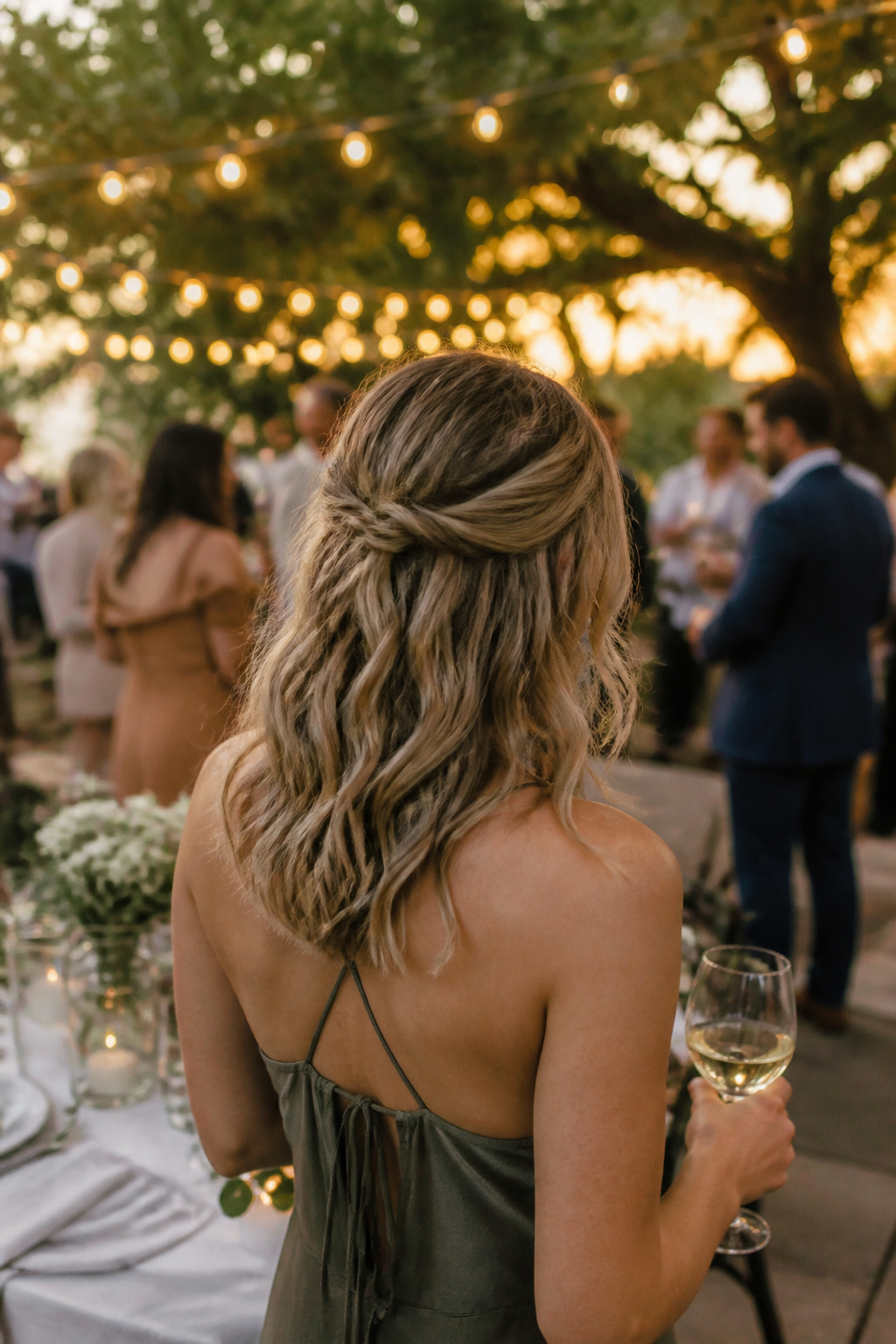
Textured waves sit right at the crossroads of effort and ease, which is why they work so well for a wedding where you are neither the center of attention nor invisible. You can build them two ways, and the difference matters once the dancing starts. A curling wand gives you control: wrap two-inch sections away from the face, leave the ends out for that broken, modern line, and let each coil cool fully before you touch it. The heat sets the shape into something you can brush through with your fingers and still count on for six hours. Braiding damp hair overnight delivers a softer ripple, more lived-in from the first hour, but the set is looser and humidity finds the gaps faster. In heavy summer air, the wand wins; the braid method asks for a layer of flexible-hold spray at minimum, and even then you are touching up by cocktail hour. For medium length specifically, the sweet spot is shoulder to collarbone, where the waves have enough weight to hang in a shape rather than frizz into a cloud. Skip anything below one-inch barrel width; you are aiming for texture, not ringlets, and tight curls on medium hair read more prom than guest.
8. Sleek Straight Style

A sleek straight style on medium-length hair reads as deliberate only when the finish is flawless enough to look like effort, not like you skipped the curling iron. Start with a heat protectant, then run a flat iron through each section until the strands fall with that glass-like, swingy shine sources describe as A-list rather than underdressed. The difference between polished and plain is the serum at the end: a light application tames flyaways and keeps the line clean from root to tip, which is what makes this formal enough for wedding wear. The flat iron has to hit every section, not most of them, because any wave left behind breaks the illusion of intention. Medium length works in your favor here; the hair stays light enough to move without collapsing into helmet territory, and the straight line keeps the look toned-down so your outfit stays the focus. Skip the volume products entirely. Black-tie settings punish 80s-style body, and even a little root lift can tip this from refined to unfinished.
9. Half-Up With Volume

The half-up with volume gives you lift at the crown instead of pulling everything back flat. Tease the roots at the top of your head with a fine-tooth comb, working in half-inch sections from back to front, then smooth the surface layer over with a bristle brush so the texture stays hidden. This is the move that separates it from the flatter half-up twist: that style keeps the crown smooth and relies on the twist itself for structure, which can lengthen a rounder face, while the teased crown adds height that balances longer or more angular shapes.
Waves through the lengths help the style read as relaxed rather than pageant-stiff, and face-framing pieces left loose keep it from looking too done. If your hair is fine to medium, a thickening mousse at the roots before blow-drying will give the teasing something to grip; skip heavy oils the day before or the backcombing will slide out by the ceremony. One warning: too much height and you drift into bouffant territory, which reads costume on a guest. Stop when the crown sits about an inch above where it would lie flat.
10. Romantic Curls

Romantic curls sit somewhere between a polished set and an easy wave, and getting the distinction right matters if you want the style to last through a long reception. Where textured waves break up for an undone, piecey effect, romantic curls stay uniform and soft, usually built with rollers or a 0.75-inch to 1-inch barrel wand rather than the 1.25-inch or larger iron most people instinctively grab. The smaller barrel gives medium-length hair enough bend to survive the inevitable drop; on a large barrel, the hair wraps once and falls flat inside twenty minutes.
If you are setting the hair rather than wand-curling it, skip the foam drugstore rollers. They pull moisture and leave frizz. Velcro rollers on fully dried hair, heated first with a blow dryer and left to cool for at least twenty minutes, lock the shape in. Take them down while the hair is still warm and you have undone your own work. A deep side part, pinned back to keep the face open, finishes the look without needing an updo you do not have the length for.
11. Accessorized Styles

A single pearl-studded slide or a small diamante clip can shift a low chignon from office to occasion without rebuilding the whole style. The same clip at the temple works on a half-up twist, and a thin ribbon woven through a polished ponytail reads formal without stealing focus. The rule is to keep the accessory subtle enough that it never competes with the bride. That means skipping fascinators at semi-formal weddings, where they look overdone, and saving statement pieces for the reception if you wear them at all. Hairstylist Ricky Fraser puts the balance plainly: you want to feel beautiful and confident, but never take away from the bride. A wedding guest follows the lead of the bride and the setting, so a chic chignon with one discreet accent usually wins over anything that reads as embellishment for its own sake.
12. French Twist

A French twist sits higher on the head than a chignon, running vertically from the crown to the nape rather than coiling low at the neck. That upward line draws the eye along the back of the head, which is why it pairs well with narrow necklines like halters or high collars where a low bun would disappear against the fabric.
The structure asks more of medium-length hair than you might expect. You sweep everything to one side, anchor a row of pins from crown to nape, then fold the hair back on itself and pin again. The result is a pleated roll rather than a gathered coil. Height matters here: you need back-brushing for grip and lift, and the finished shape should stand proud enough that a veil can fasten at either the top or the bottom without pulling the twist apart.
The French twist carries a formality that reads as 1990s throwback in the best way, a luxe updo with some edge beneath the polish. Leave it to a stylist. The dexterity with kirby grips and the exact tension for your hair density make this one hard to self-direct in a hotel mirror.
13. Wavy Two-Bun Updo

Two smaller buns sit wider apart than a single centered mass, so the silhouette reads as horizontal and open rather than vertical and contained. That width at the crown balances a narrow jaw or a long face in a way one large bun rarely manages. The space between the buns also catches light differently; you get shadow and lift where a single bun would read as one flat shape.
This style lands in a specific spot on the wedding-guest spectrum: playful enough for an outdoor afternoon ceremony, but controlled enough that you will not look underdressed at the cocktail hour. It works best when the waves feeding into each bun are real texture, not sprayed-on stiffness. If your hair is freshly washed and slippery, the buns loosen and drift apart within an hour. Day-two hair, or a light texturizing mist, gives the pins something to bite into.
For medium length specifically, two buns solve the problem of a single bun that ends too small to feel finished. Splitting the hair doubles the visual volume without requiring extensions. The tradeoff is precision: the buns need to match in placement and tension, or the asymmetry looks accidental rather than intentional. Check the back with a hand mirror before you leave; what feels even by touch often reads half an inch off in a photograph.
14. Glamorous Curly Ponytail

A glamorous curly ponytail carries curl or wave through the full length, not just at the tail or in the wrap hiding the elastic. Start with your natural texture or set the hair in rollers, then gather it at the mid-level or nape. Leave the waves loose enough to read as a unified cascade, not a polished shell with a separate tuft at the end.
The polished ponytail keeps the shaft smooth and controlled; this version does the opposite. Finger-raked texture, loose flyaways, and natural wave make it read romantic rather than gym-ready. For medium-length hair, that built-in wave also bulks out the tail so the pony doesn’t look thin or wispy against a cocktail dress.
Where the polished style pairs with a wrapped section to hide the band, the curly ponytail often skips that step or keeps the wrap minimal. The curl itself is the ornament. Add a fine pin or comb at the base if you need it, but let the wave be the point. The risk is frizz, so you’ll need real hold through the length. Skip heavy oils that separate the curl into stringy strands.
15. Classic Chignon

The classic chignon sits higher on the head than its low cousin, anchored at the occipital bone rather than the nape. That placement changes everything about how it reads against your outfit. A chignon at this height clears space for a high neckline or a statement earring, whereas the low version competes with both.
The structure is more formal by design. Hair is smoothed back with controlled tension, then folded and pinned into a compact roll rather than gathered loosely. You will need more pins than you think, and they should be pushed in on the diagonal to lock the shape. Medium-length hair has just enough to form the roll without bulk; anything shorter fights the fold, anything longer risks a shape too wide for the neck.
This is the style to reach for when the dress has a bateau or jewel neckline, or when the ceremony is before six and the code reads formal. It pairs poorly with halter straps, which cut across the same visual line and make the neck look crowded. If your hair is fine, a small mesh padding inside the roll keeps the silhouette from collapsing by the second hour of dancing.
16. Low Ponytail With Twists

A low ponytail with twists gives you the polish of an updo without the pinning and praying. You part your hair, twist back a section from each side, and let those twists meet at the nape before you secure the ponytail. The twists create a subtle crown effect that frames your face, while the rest falls simple and clean below.
This shape works especially well if you are still getting comfortable with wedding-guest styling. You avoid the severe, pulled-back look that can read too fussy, and you skip the brush entirely. Run your fingers through to gather the hair instead. A brush will crush the volume you built and leave bumps you did not plan for.
For medium-length hair, the real advantage is flexibility. The twists add enough interest that you do not need elaborate braiding or a full half-up construction. A velvet bow or a jeweled clip at the band finishes it, but the style holds its own without one. Keep the waves loose and tousled before you twist, not tight or defined, or the contrast turns the ponytail into an afterthought rather than the point.
Choosing by Dress and Venue

Start with your dress, not a Pinterest board. The neckline sets the silhouette your hair needs to answer: an updo clears space for a high or detailed neck, while hair down softens a strapless or simple cut. A sleek bun reads right for a modern city wedding, but that same shape can feel stiff in a country garden where soft waves or a textured ponytail fit the relaxed setting better. The mistake is treating the hair as a separate decision. Your outfit sets the tone, and your hair should complement it, not compete. If you normally wear your hair down, wear it down here too, just elevated: cleaner ends, a little more polish, maybe a pin where you usually use nothing. The goal is the best version of your everyday self, not a costume version of someone else.
Hair Products That Keep the Style
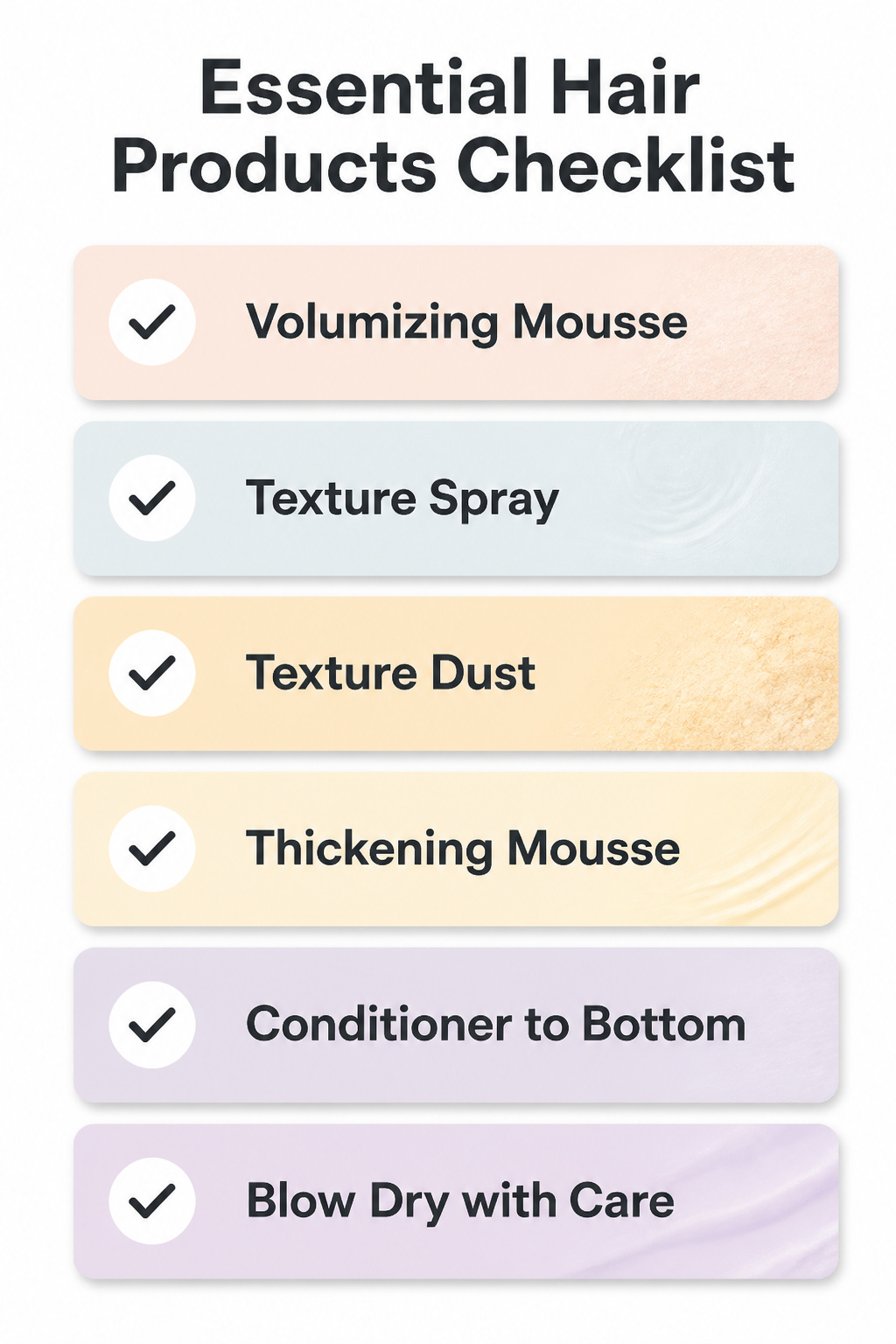
Volumizing mousse, texture spray, and texture dust are the three products worth having on hand for wedding guest hairstyles for medium length hair. Each solves a different problem.
- Thickening mousse builds touchable volume into fine-to-medium hair before you even pick up a hot tool. Work it through damp roots and mid-lengths, then blow dry. Skip this and an updo collapses by the reception.
- Texture spray adds the slight grit and movement that keeps half-up styles and waves from looking too "done." It replaces the old "dirty hair" trick; day-old hair is fine, but actual grease adds weight that medium length cannot counterbalance.
- Texture dust delivers grip at the roots for pins and clips without the wetness of spray. Tap a small amount where you need hold.
The mistake is testing any of these for the first time on the morning of the wedding. Mousse can stiffen, dust can matte, and sprays vary widely in finish. Run a full trial with your chosen style at least a week ahead.
Weather and Humidity

Humidity is the reason a soft blowout turns limp and frizzy before the first champagne toast. Shoulder-length hair sits in the high-friction zone, catching moisture from the air and from every hug you give. Styles that survive humidity start with prep, not hairspray. Wash with clarifying shampoo twenty-four hours out, keep conditioner to the bottom two inches, and blow dry with volumizing mousse rather than air drying. Heavy oils or leave-in treatments before the day of will weigh the hair down and undo the structure you built.
What fails in damp air: anything that relies on smoothness alone. A sleek straight style or romantic curl pattern opens every strand to the moisture in the room, and by the time dancing starts you are pinning hair into a frantic ponytail in the bathroom. What holds: updos and twists that work with the texture humidity creates rather than against it. A low chignon, braided crown, or textured bun gains grip as the air adds slight swell to each section. The style that looked too controlled at 4:00 PM looks intentional at 7:30 PM because the moisture filled in gaps you would have fought to conceal.
If the venue is outdoors or the forecast reads above sixty percent, skip the miracle treatments and engineer for movement.
Mistakes That Undo the Look

A few missteps can undo even the most carefully chosen wedding guest hairstyles for medium length hair before the reception ends.
- Over-pinning flattens volume and leaves a scalp-hugging silhouette. Medium hair has natural body that pins can crush if you use too many.
- The wrong tools matter more than you might expect. A curling iron with too large a barrel on medium layers drops the wave by cocktail hour, and standard elastics on a polished ponytail create that telltale dent.
- Styles that look secure in the mirror often loosen during the first dance. Medium length shifts weight differently than long hair, so a twist that holds on a longer head of hair may slide on yours.
- Not practicing beforehand is the mistake that compounds all the others. The sources agree: give yourself time to test the style under real conditions, not just five minutes of bathroom mirror optimism. A trial run reveals whether your hair needs clarifying shampoo the day before, or whether that volumizing mousse actually builds the grip it promises.
Frequently Asked Questions
Can I wear my hair down to a wedding?
Yes, as long as the finished style looks smart and complements your outfit. Loose waves with a decorative clip or a half-up, half-down style keeps the look polished without reading underdressed. The line you want to avoid is anything that looks like you rolled out of bed.
What hairstyles are appropriate for a wedding?
Choose elegant styles that do not overshadow the bride, such as low chignons, chic updos, or polished ponytails with a ribbon or small accessory. The setting matters too: a sleek bun fits a modern city wedding, while soft waves or a textured ponytail suits a country garden venue better.
How do I choose a wedding guest hairstyle?
Start with your outfit and the venue, not a Pinterest board. Match the formality of your hair to your dress neckline and the wedding’s setting, then elevate how you normally wear your hair rather than trying a completely unfamiliar look. If you usually wear your hair down, wear it down here too, just with cleaner ends and a little more polish.