
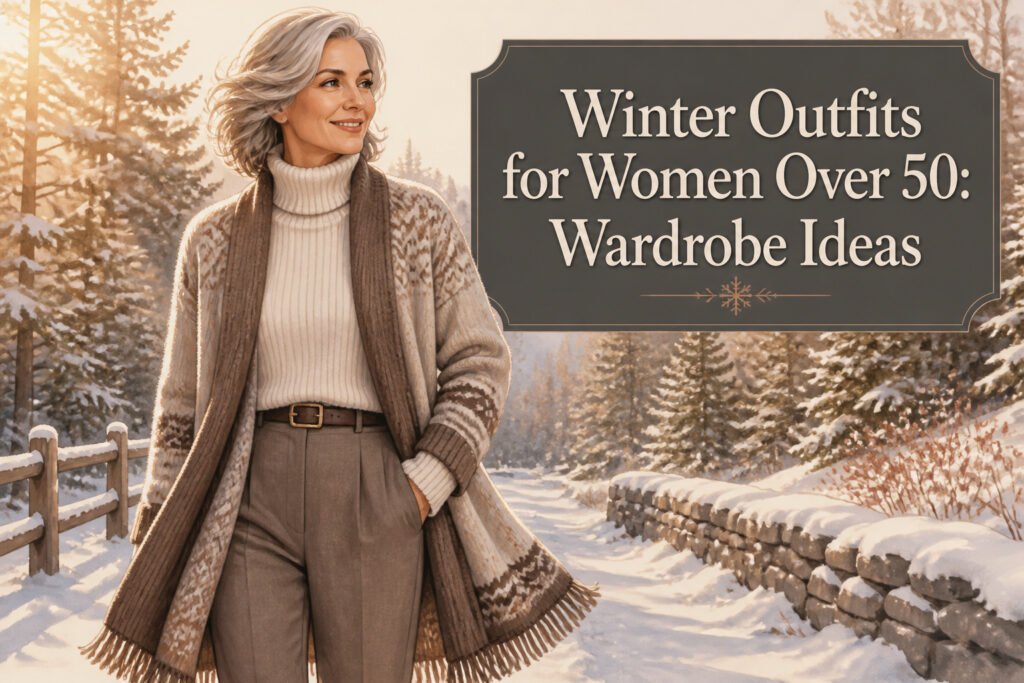
Winter outfits for women over 50 are a set of deliberate choices about proportion, fabric weight, and where the eye travels. The trap is starting with bulk and losing your shape before you add a second layer. A ribbed turtleneck under an open Alpine cardigan, with structured trousers below, gives you warmth without the puff.
1. Cozy Sweaters
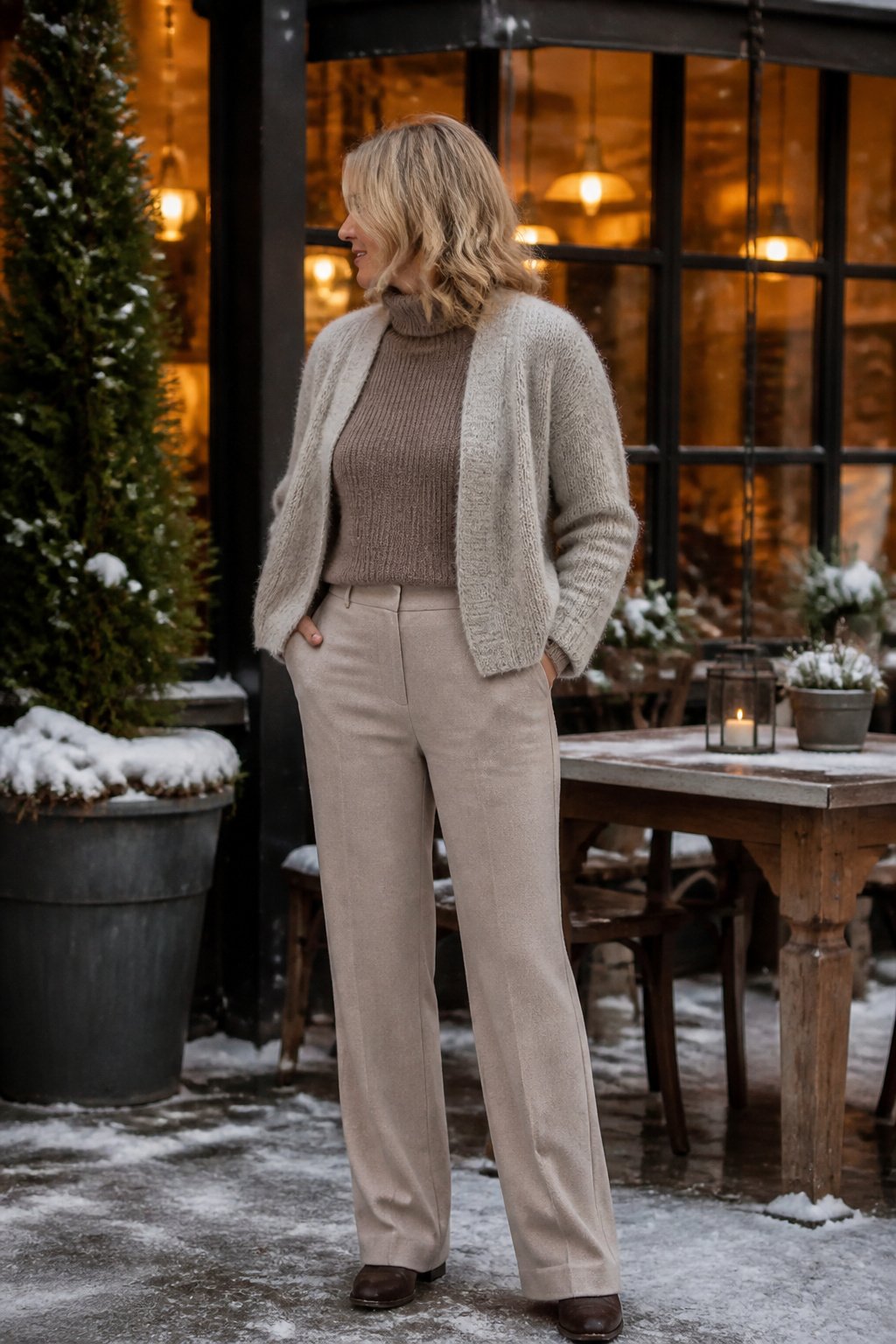
A good sweater is where most winter outfits for women over 50 start, and for clear reason. You need warmth first, then a shape that does not work against you. The wrong knit can add bulk where you do not want it, especially if your body has changed in ways that heavy fabrics no longer forgive. A lightweight base layer under a structured cardigan or wrap coat keeps the heat without the puff, and that pairing shows up again and again because it actually works. Five sources flag this combination as essential for the age group. The Alpine cardigan formula is worth stealing here: cozy texture on top, structured trousers below, and you have something that reads as polished at brunch and comfortable at home.
Winter makes some particular demands from fashion lovers, especially those who prefer a dress. Between the chill outside and the blasting heat indoors, choosing a style that can keep you comfortable—all while remaining chic and flattering for women "of a certain age"—requires some very particular attributes.
That same principle applies to sweaters. The best ones handle temperature swings inside and out, and they do it without making you choose between looking pulled-together and feeling warm. A ribbed turtleneck or thin thermal tee under an open cardigan hits at your natural waist and creates a vertical line that elongates rather than widens. Skip the bulky pullover that hides your shape unless you are deliberately going for volume on top and fitted on bottom.
2. Layering T-Shirts
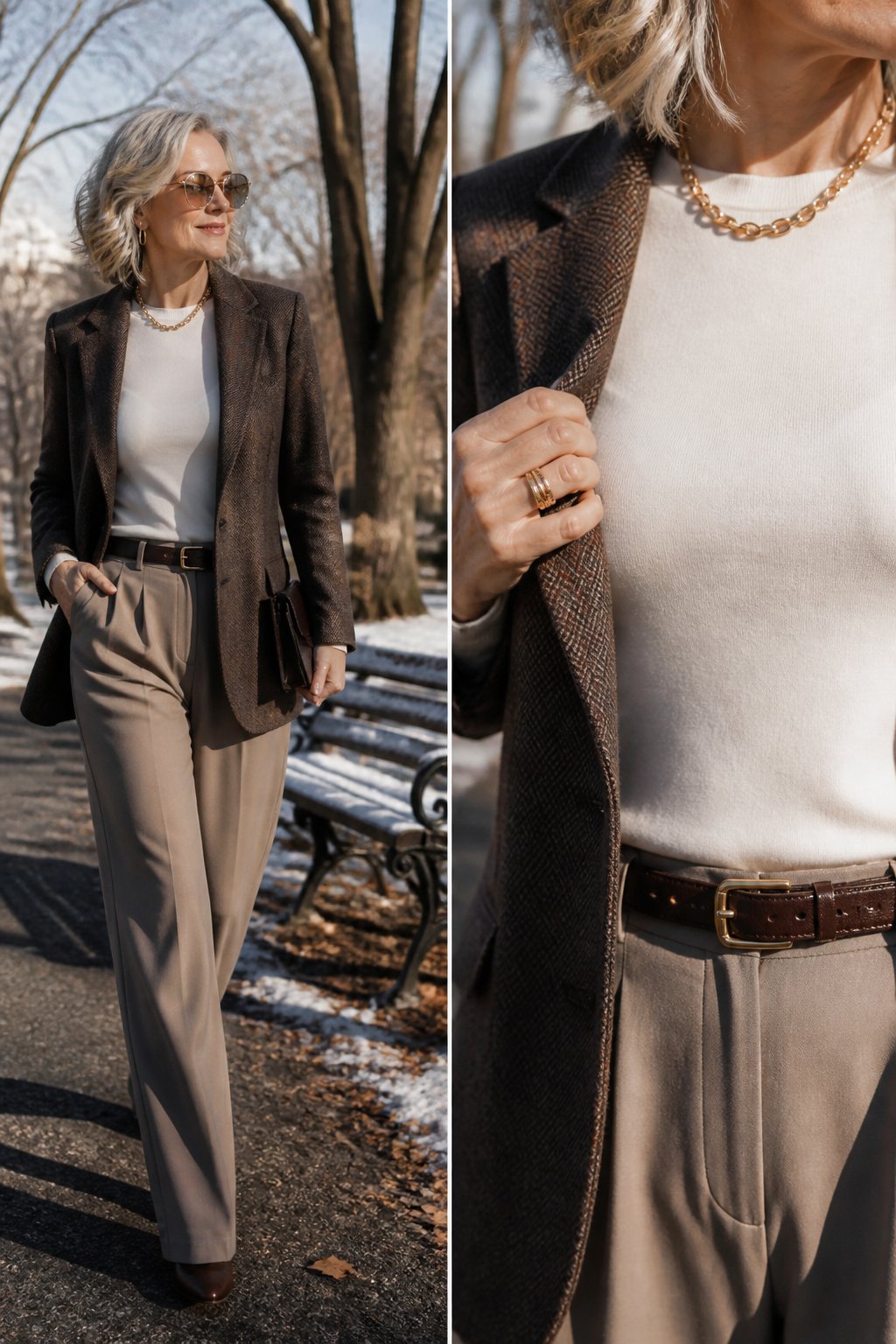
A thin ribbed turtleneck or thermal tee sits closer to your body than any sweater you own, and that is exactly why it belongs at the bottom of every winter stack. Start there, and you build warmth in thin increments instead of one thick lump. The base layer keeps your shape readable; what goes on top, a cardigan or a tailored blazer, then has something smooth to glide over. You are not hiding under bulk. You are creating depth.
The mistake is reaching for the heavy knit first. A bulky sweater adds weight and erases the silhouette, which is why women over 50 who dress with intention keep the foundation light. Start thin and build up; that is the sequence that keeps you warm without the grab-bag look of whatever was clean. A simple white tee beneath a pullover does the same work, adding a layer of depth that reads as thought-out rather than thrown-on.
If the top is loose, keep the bottom fitted. If the base is sleek, the outer layer can carry the structure. The balance is what streamlines the frame.
3. Wide-Leg Jeans
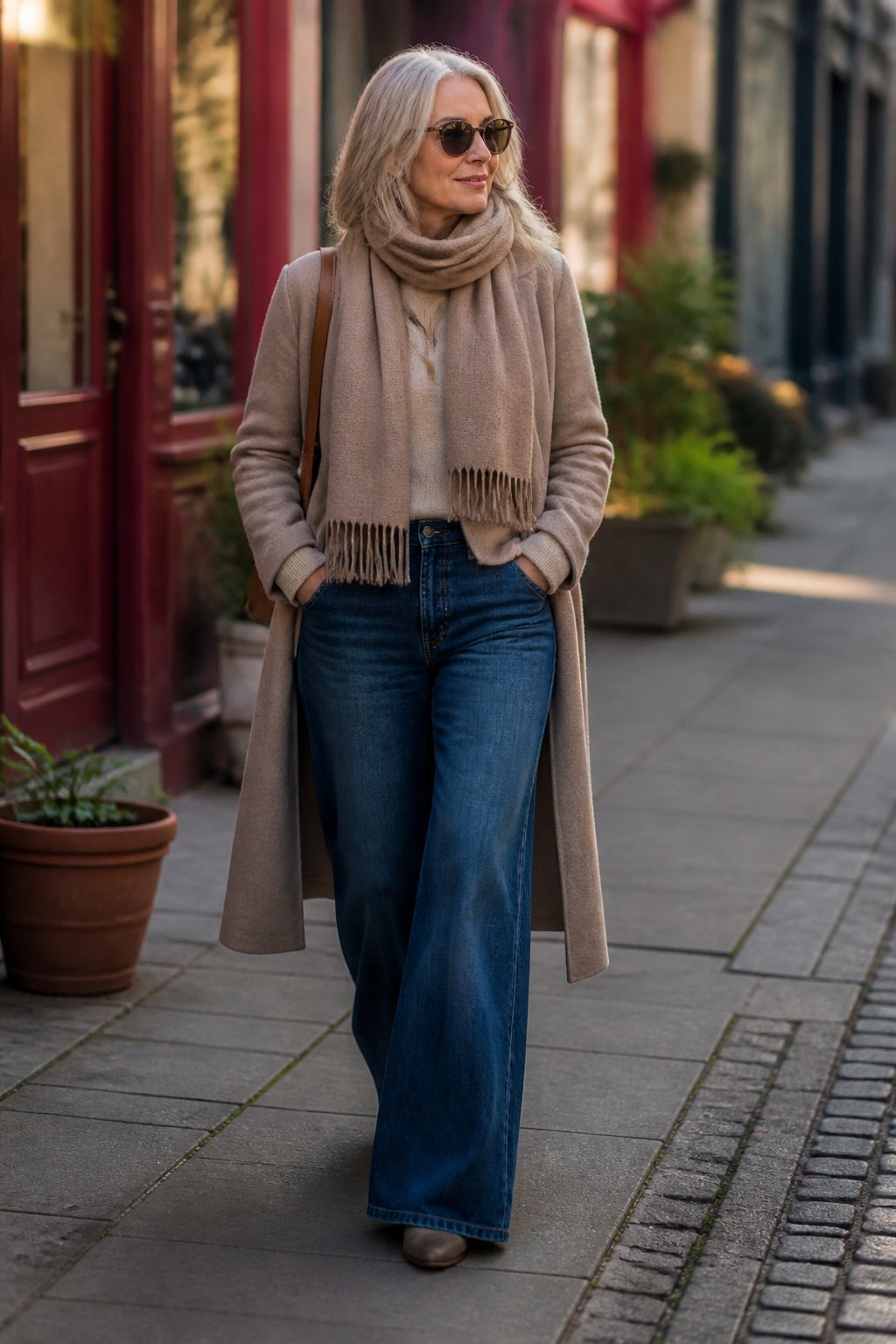
Wide-leg jeans give you a longer, leaner line than anything tight at the ankle, and that shape matters more in winter when you are already layered up top. The cut skims instead of clings, which balances broader shoulders and does not fight your boots the way skinny jeans do.
Four different takes on this winter outfit for women over 50 all land on the same point: loose through the leg beats fitted for cold weather. Pair them with boots that disappear under the hem or with loafers like the Easy Spirit Vitalia knotted slip-on in dark red, which one wearer describes as all-day walking shoes. Either way, the jean does the work of making the outfit feel current without chasing anything temporary.
4. Statement Jackets

A standout jacket does the heavy lifting in winter outfits for women over 50. Pair it with monochrome basics underneath and the look stays polished even when you never take the coat off indoors.
Skip the puffy box. Wrap coats, belted styles, or those with princess seams define your waist without extra bulk. A subtle A-line cut adds instant elegance, and structured denim elevates the entire outfit when your footwear leans casual. Princess seams or a strong shoulder line skim instead of cling, giving crisp edges without stiffness.
Wool blends keep you warm without the itch, especially soft mixes with nylon or cashmere for breathability. Ponte knit works for pants or skirts under shorter coats; it smooths without squeezing and keeps its shape all day. Leather, real or faux, adds edge and polish with a structured jacket. These fabrics move with your body rather than adding unwanted bulk, and they layer beautifully over a refined coat and quality knit.
The practical win: you walk into a heated restaurant, office, or shop and the jacket still reads as intentional. No fussing with removal, no piling layers on a chair. The jacket carries the outfit, and the simple base underneath stays exactly that: simple, clean, done.
5. Ankle Boots
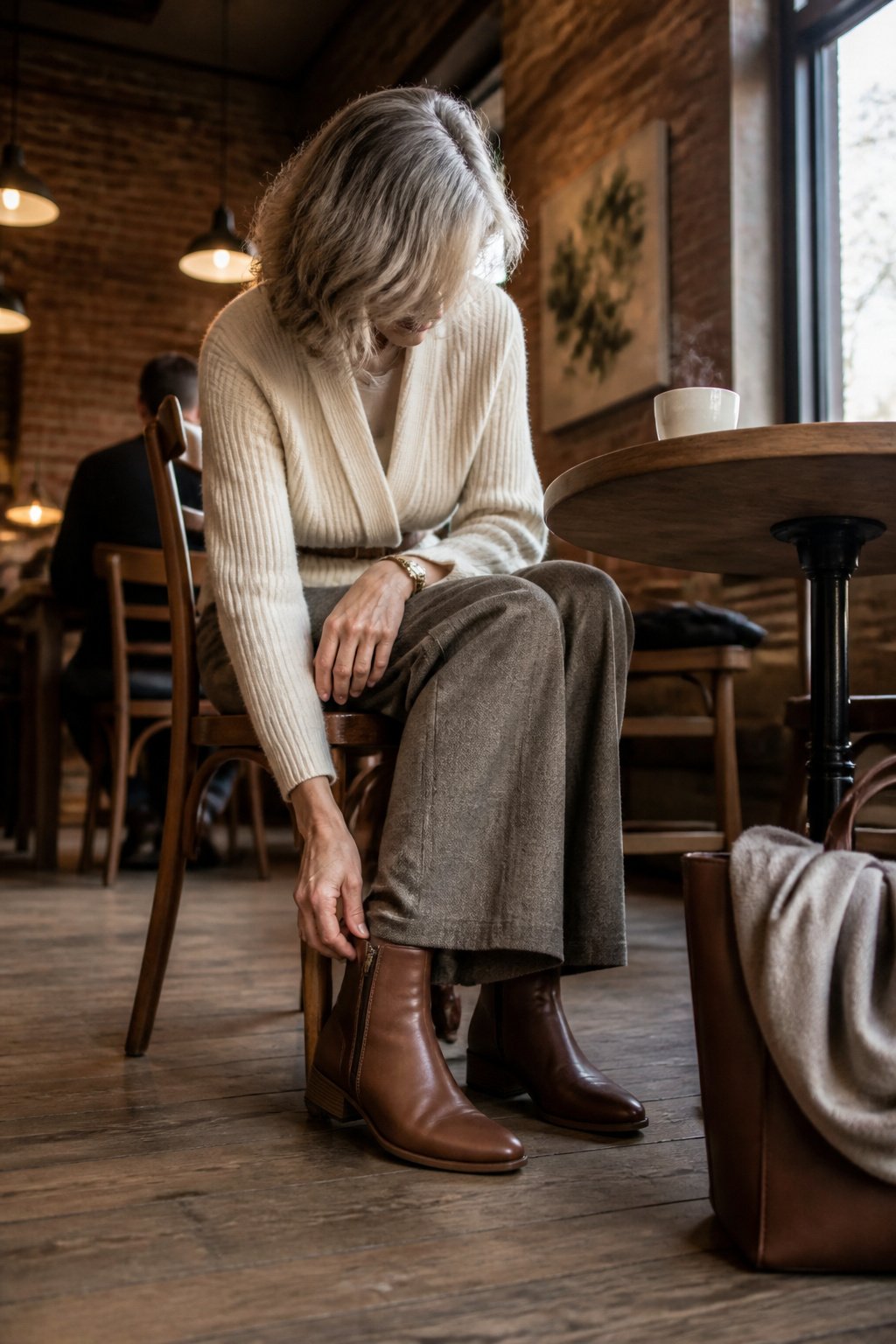
Ankle boots have become the workhorse of winter dressing for good reason: they bridge the gap between looking put-together and staying comfortable through long days. The right pair handles errands, lunch meetings, and evening plans without a change.
A low heel under two inches is the height that works all day. Higher heels exist, but the block-heeled or flat versions are what you will reach for repeatedly. One option worth the investment comes waterproof out of the box, in whiskey brown or black, with a low enough heel that standing through appointments does not punish you. Note that the black runs slightly grainier in texture than the brown, a small detail that matters if you want a smoother finish.
Pairing is straightforward. With jeans, the boot shaft should sit right at or just above the ankle bone, no gap, no bunching. The clean line this creates grounds the outfit without the heaviness of a taller boot. With dresses, the same low heel keeps the look from feeling costume-like; add tights when temperatures drop and the proportions stay balanced.
Structured styles with a defined heel and clean ankle line elongate the leg, especially against fitted pants or leggings. Skip anything too clunky or too minimal; the middle ground holds its shape and your comfort simultaneously.
6. Cardigans
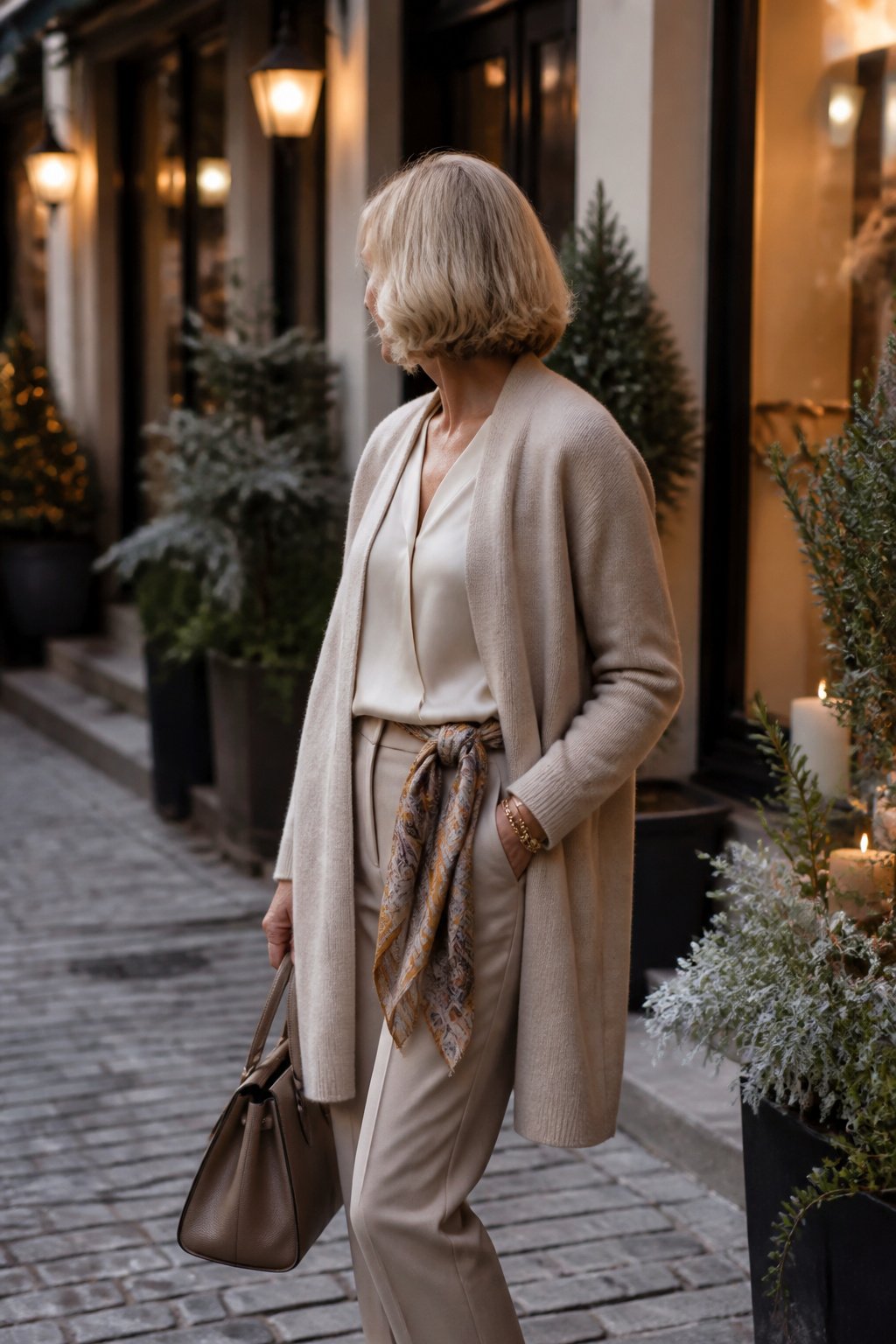
A cardigan is the first thing you reach for when the office thermostat wars begin. Button-front styles let you peel layers without the sweater-over-head drama, and hip-length or mid-thigh cuts give you actual coverage instead of riding up past your waistband. The longer length also smooths over the spot where a tucked-in shirt meets trousers, which matters more than most people admit.
You will still see cropped cardigans in stores. Skip them. They hit at the widest part of the ribcage and create a horizontal line that fights most figures. The mid-thigh version, worn open over a thin turtleneck or closed over a silk blouse, handles the twenty-degree swing between overheated lobbies and January parking lots. Fine-gauge merino or cotton-cashmere blends work here; bulky knits add volume you do not need and snag on bag straps.
The mistake is treating a cardigan as an afterthought. Worn open, it frames what is underneath. Worn closed, it becomes the outfit. Choose the button stance carefully: too high, and you look like you are wearing someone else’s uniform; too low, and it gapes. The right one stays closed without a pin, moves with you, and comes off without a struggle when the radiator hisses.
7. Sweater Dresses and Casual Dresses
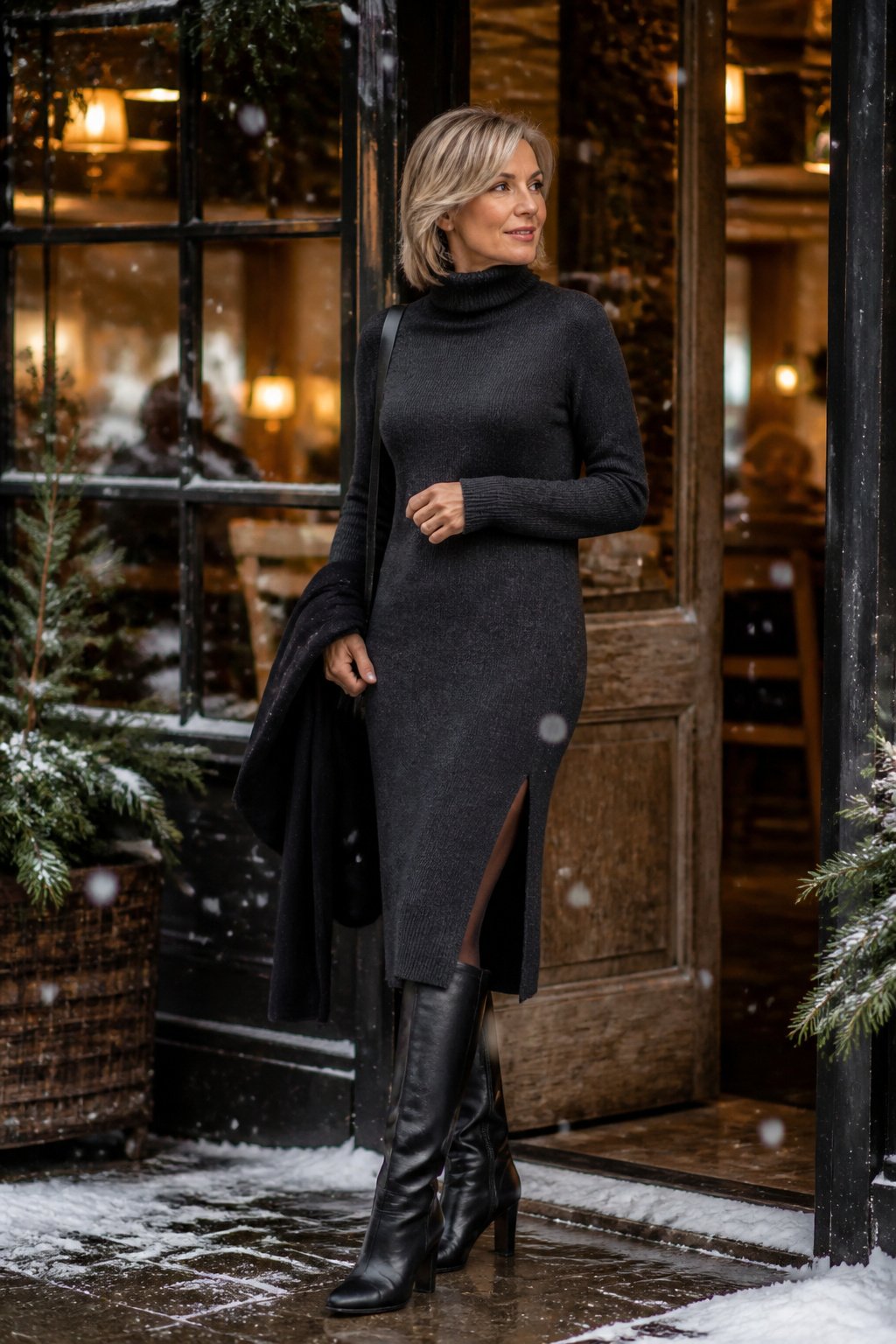
A sweater dress with opaque black or brown tights and knee-high boots carries fall straight into January without changing the dress at all. The Rails Imara at $298 runs to the knee with a side slit and contrast stitching; the high neck keeps heat in, and the slit keeps you from walking like you are in a tube.
Under a cardigan or jacket, a casual dress becomes the layer you build on. A striped tee dress with structured denim and smart winter footwear balances the relaxed shape against something sharper on top. The dress does the work of a top and bottom in one piece, which means fewer decisions at 7 a.m. and less bulk under a coat.
Tights and tall boots extend the season of any dress you already own. That is the practical case: one item, three months of extra wear. A scarf or belt over the knit defines the waist without tightness, and you swap accessories instead of buying new shells.
8. Scarves

A scarf is the fastest way to add color to a winter outfit without replacing your whole closet. Wool blends mixed with nylon or cashmere give you warmth without the itch that pure wool can bring, and they breathe well enough to wear indoors without overheating. Cashmere does the same job lighter and softer, though it costs more.
Length matters more than you might expect. A long winter-white scarf drops a clean vertical line down the body, which lengthens rather than widens your silhouette. Shorter patterned pieces work too; a $15 scarf with movement around the face can lift a whole neutral base. The trick is keeping the proportion in check: too much bulk and the scarf wears you.
You see this done well in Greece, where women pair colorful silk scarves with leather jackets. Rust, gold, and sea green against black or cream; the scarf does the work so the rest of the outfit stays simple. Soft knits, modal, or bamboo blends drape better after 50 than stiff fabrics, moving with your body instead of fighting it. Pick one piece in a color you would not wear as a sweater, and let it run against your usual neutrals.
9. Polished Footwear
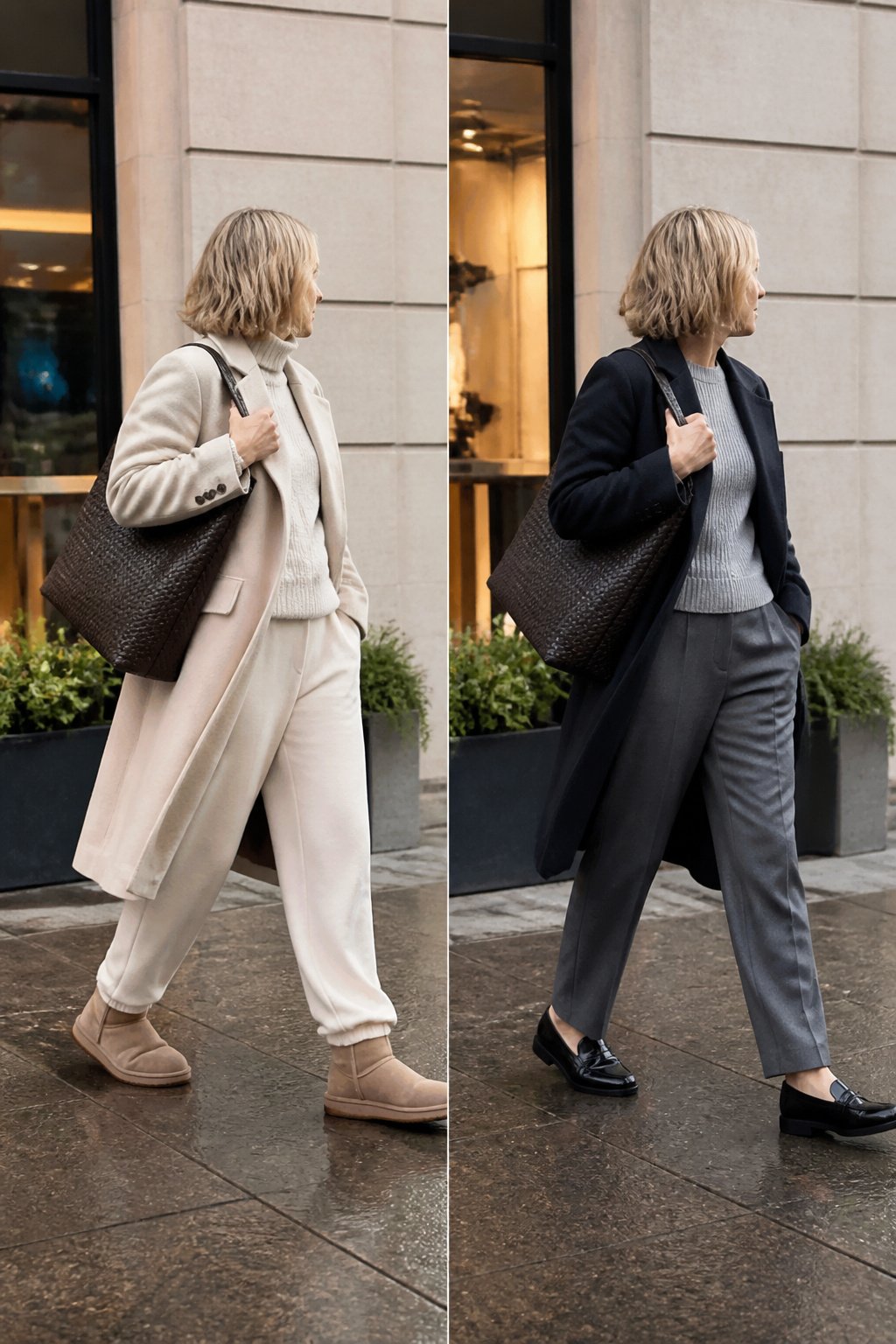
Ankle boots are not the only move for winter. A well-chosen loafer, oxford, or chelsea boot does something boots rarely manage: it pulls a casual outfit toward intentional without adding try-hardness. The trick is knowing which day calls for which sole.
A leather-soled loafer fails on wet pavement, so keep it for dry commutes and indoor days. For slush and salt, a crepe or rubber sole saves the leather and your balance. A penny loafer in dark suede, worn with wool trousers and a puffer, reads as considered where sneakers would look like you gave up.
Chelsea boots bridge the gap. The elastic side panel lets you pull them on without the boot-shaft bulk, and a sleek toe works under a wide-leg pant that would swallow a rounder shape. Choose a storm welt if you walk through real weather; the sealed edge keeps water out where a standard welt lets it seep.
Oxfords with a commando sole are the least expected option, which is why they work. Worn with dark denim and a cashmere crewneck, they signal that you thought about the day before you left the house. Black calf is the safest start; burgundy or dark brown suede rewards the second pair.
Polished shoes earn their place by adding structure to soft fabrics. A fuzzy cardigan and relaxed trouser need that counterweight, or the whole look collapses into lounge. The shoe does not need to be formal; it needs to be deliberate.
10. Jewelry and Bags
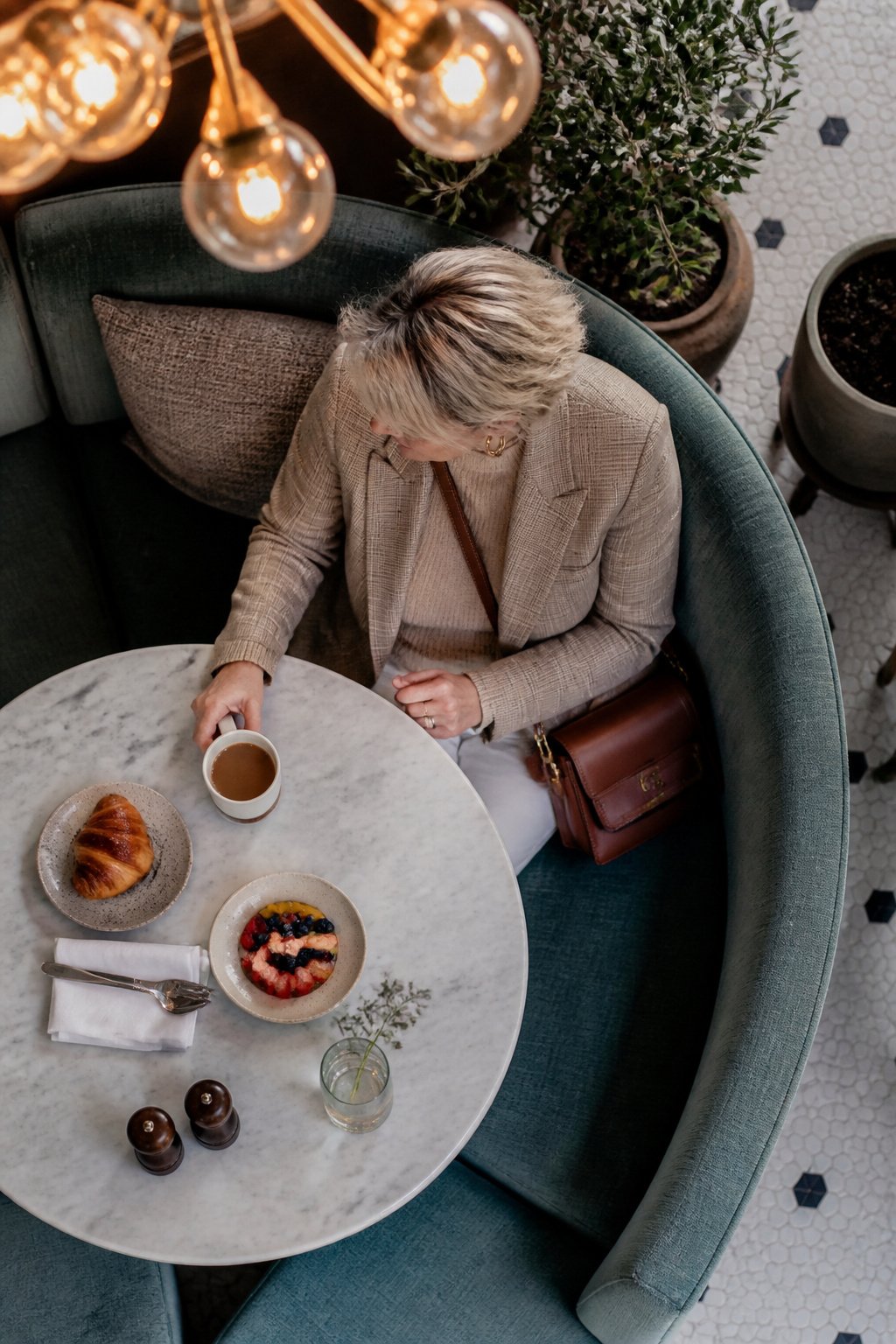
A winter collar or sleeve can swallow a delicate chain whole, so scale is the move that pays off here. Try a medium-weight hoop, the kind that still reads as a classic, in gold or silver. It catches light without fighting your coat, and it shows up under a turned-up lapel or a thick knit cuff. Long necklaces work the same way: they drop below the neckline and keep drawing the eye downward, which helps when your base layers are all in the same quiet palette.
Your bag choice changes shape against bulky outerwear. A slim clutch gets lost; a structured satchel or a crossbody with some body to it sits cleanly against a puffer or wool coat and actually shows up in silhouette. Scarves already do heavy lifting for color and texture, so let your bag handle polish. Swap one in, swap one out: the same coat and jeans become a different outfit by morning.
Layering Techniques That Skip the Bulk
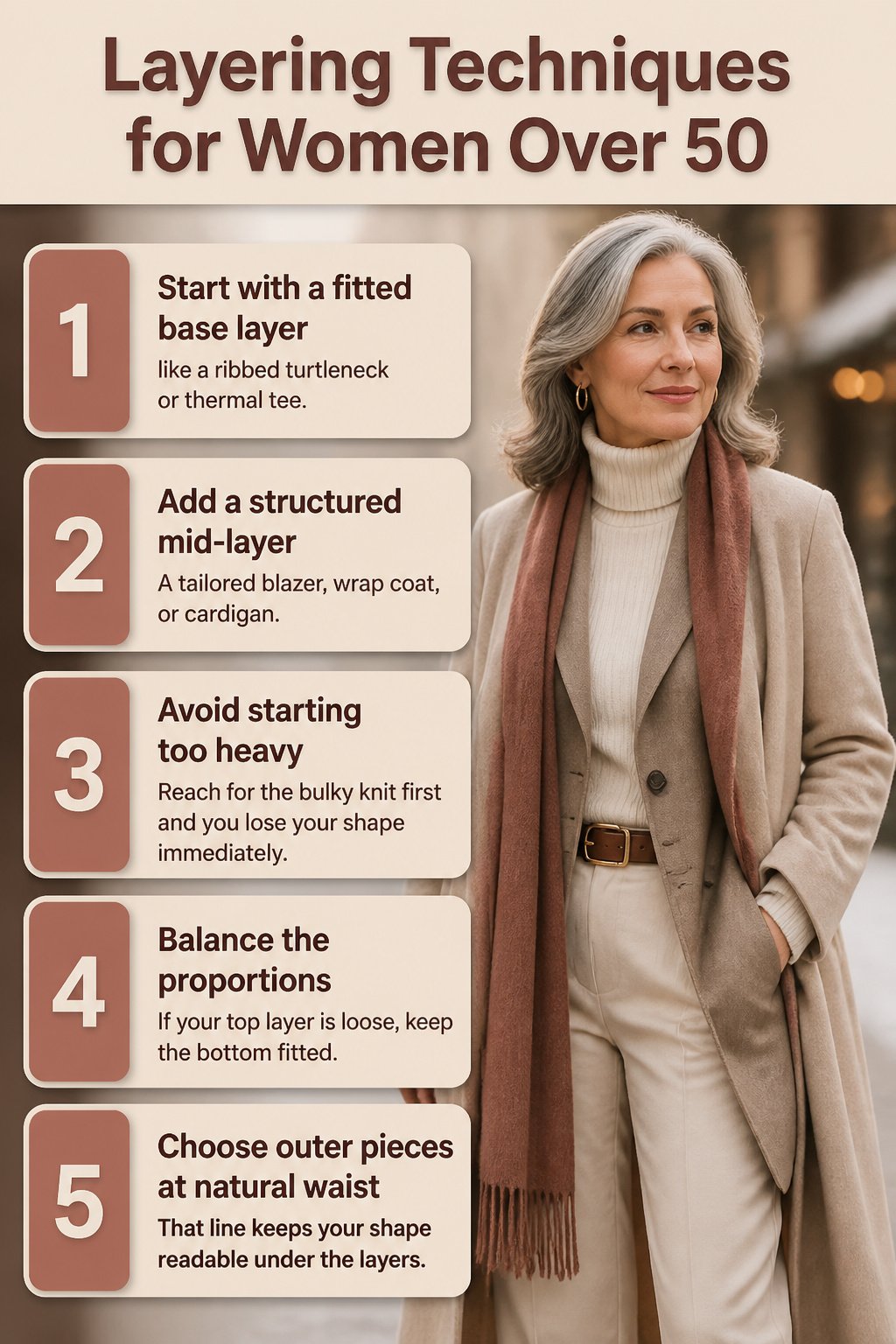
- Start with a thin, fitted base layer, like a ribbed turtleneck or thermal tee. This traps heat without adding volume and keeps the silhouette smooth.
- Add a structured mid-layer on top. A tailored blazer, wrap coat, or cardigan gives your outfit shape and defines your waist even through multiple layers.
- The common mistake is starting too heavy. Reach for the bulky knit first and you lose your shape immediately; the puff sits on top of puff and the whole look goes wide.
- Balance the proportions. If your top layer is loose, keep the bottom fitted. If the top is sleek, a wider pant works. Long scarves or open cardigans draw the eye up and down, not across.
- Choose outer pieces that hit at your natural waist. That line keeps your shape readable under the layers, so the warmth does not cost you the structure.
Fabrics That Hold Heat Without the Weight
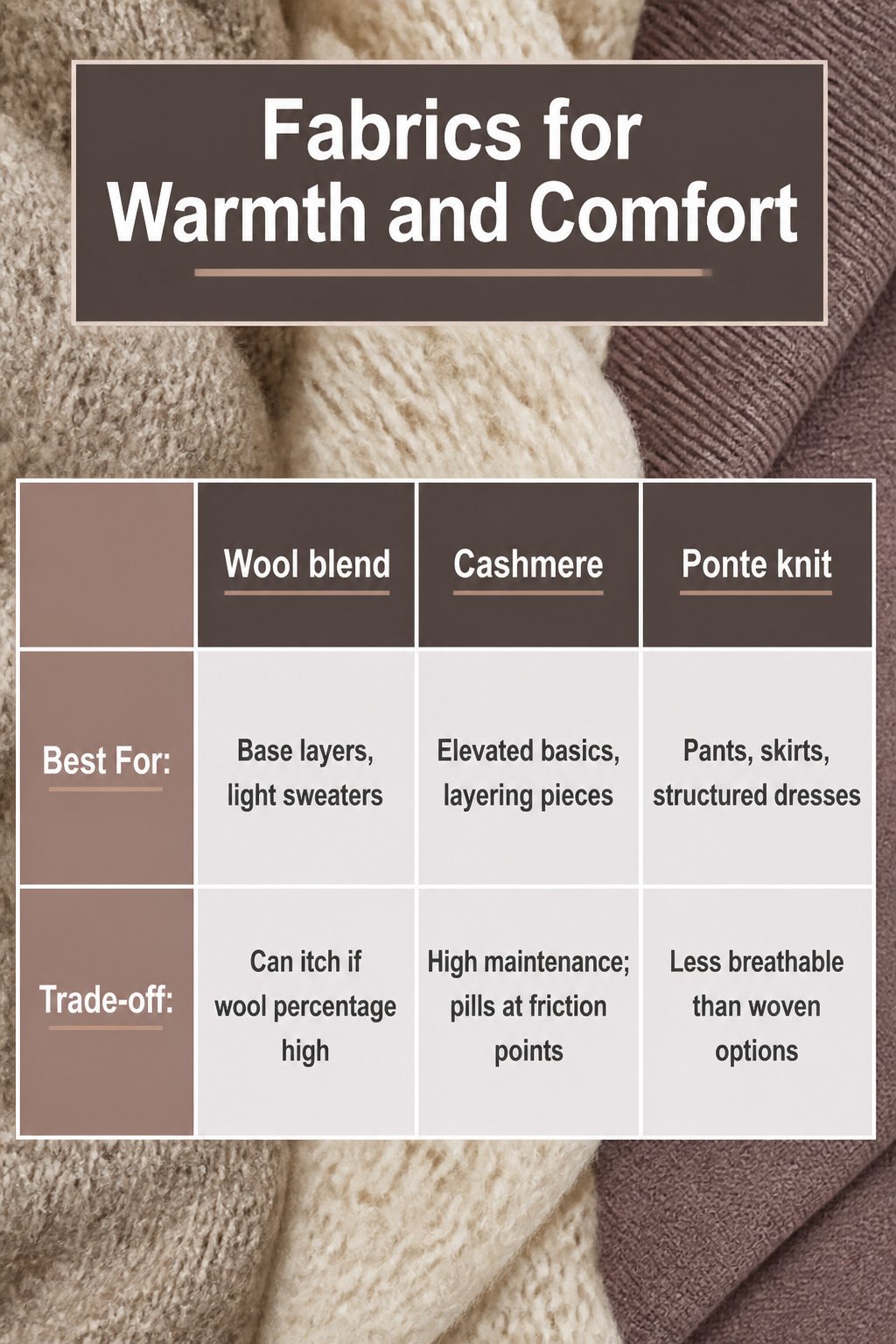
Wool blends with nylon or cashmere give you breathability and stretch without the scratch of pure wool, which matters more as skin gets drier. Cashmere feels lighter than it is, but it pills under friction and demands hand-washing or a trusted dry cleaner; one good sweater is worth the closet space if you will baby it. Ponte knit carries the load for structure because the double-knit build smooths without squeezing and returns to shape after a day of sitting.
| Fabric | Best For | Trade-off |
|---|---|---|
| Wool blend (with nylon or cashmere) | Base layers, light sweaters | Can still itch if the wool percentage runs high |
| Cashmere | Elevated basics, layering pieces | High maintenance; pills at friction points |
| Ponte knit | Pants, skirts, structured dresses | Less breathable than woven options |
Modern Without Chasing Trends
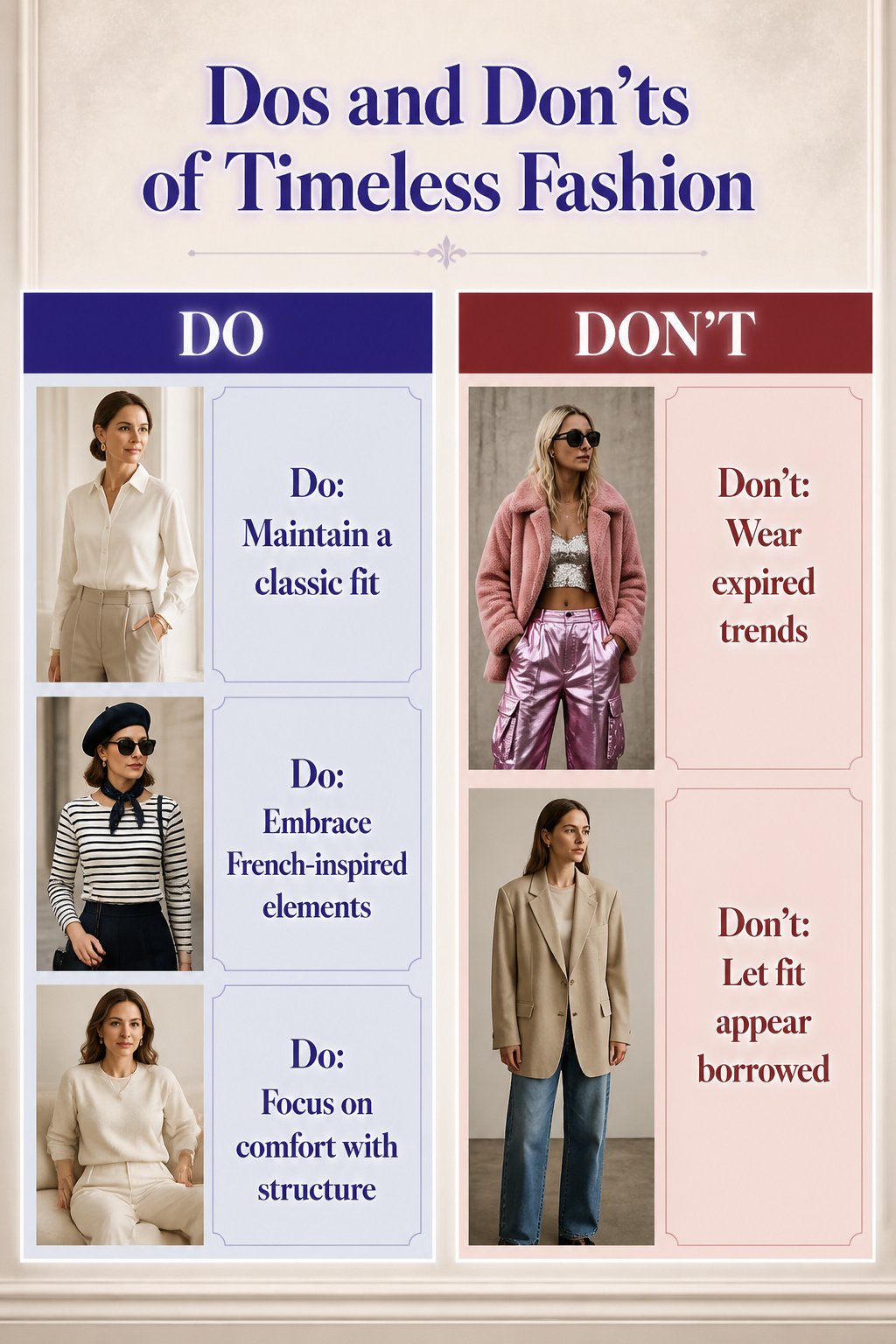
The quickest way to date yourself is wearing a trend that has already died. You see it in the mirror before anyone says anything: the silhouette that felt fresh two winters ago now sits wrong, the color that dominated every window display last year suddenly looks tired. A trend has passed its useful life when you start adjusting it instead of wearing it. You tug the hem, you layer over it, you tell yourself it still works. That is the signal to let it go.
Fit matters more than any label’s target age. A classic cut that gaps at the shoulder or pulls across the back reads as borrowed, not chosen. The same wide-leg jeans that elongate a frame when the waistband sits right will look like a mistake if they slide or pool. The sources agree on this much: comfort is non-negotiable now, but comfort without structure just looks like you gave up. The winning move is proportion, not youth. Balance broader shoulders with a wider leg. Skim rather than cling. Let the piece do its job and then stop talking.
French-inspired elements help here. A clean line, a single chic detail, nothing shouting. You are not dressing to prove you still know what is in. You are dressing so the clothes disappear and the woman remains.
Outfit Formulas That Actually Work
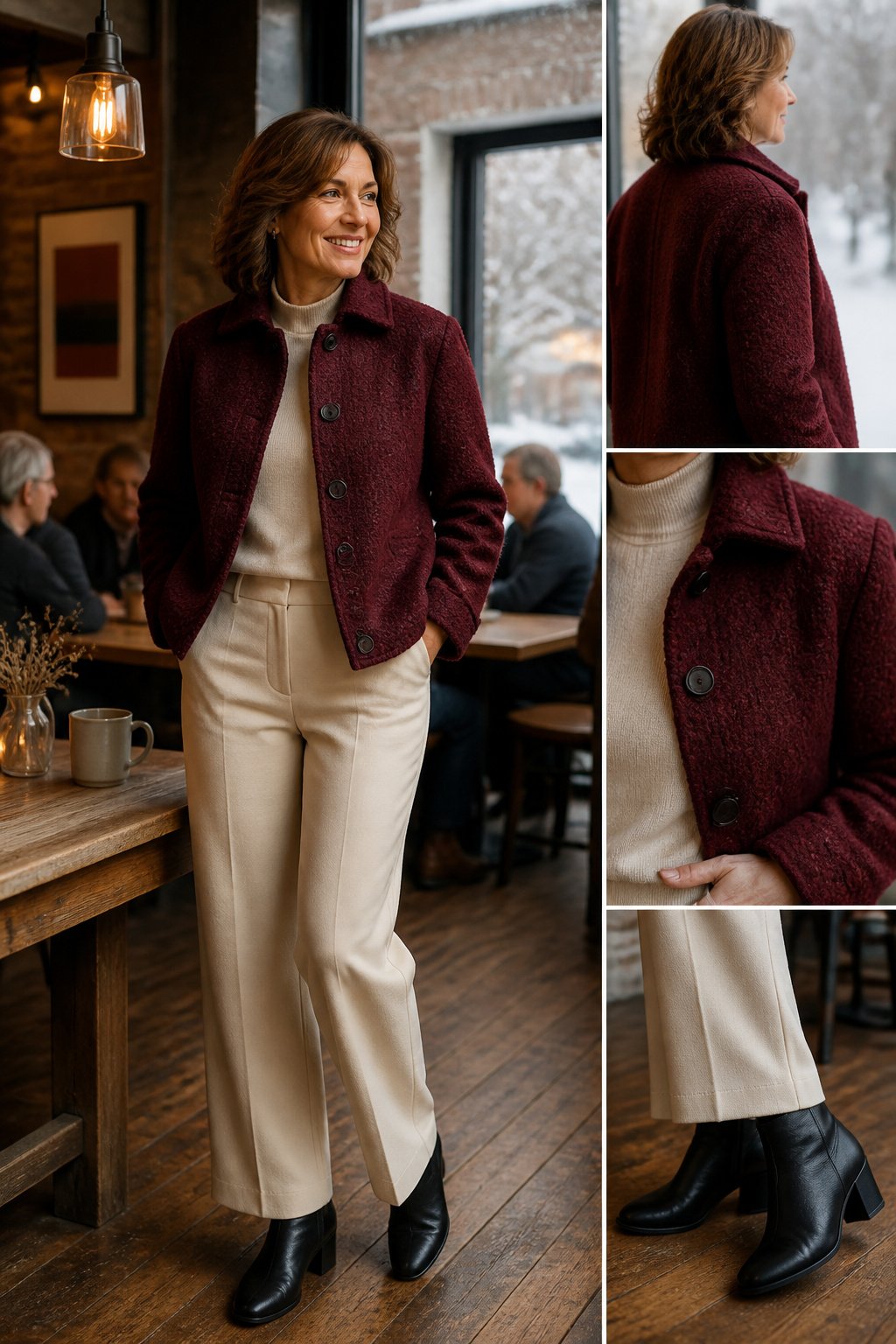
The real value in winter dressing is having three or four combinations you can reach for without thought. A statement jacket over a neutral base is the first to master: let the jacket carry the color or texture, keep the trousers and top in one quiet tone, and the whole look reads intentional even when you threw it on in five minutes. Cream trousers with black boots and a piped jacket give you that polish for lunch or a meeting without any morning deliberation.
A sweater dress with tall boots solves the problem of wanting to look put-together while staying warm. Add a belt to give the dress shape at the waist; the boots do the rest. J.Crew’s wide-rib merino version with button-front styling lets you decide how much skin to show, and the ribbing keeps it from reading as basic knitwear.
For days when comfort is the priority, layer a cardigan over a t-shirt with wide-leg jeans. The jeans elongate the leg line and balance broader shoulders, while a slightly cropped or front-tucked sweater keeps definition at the waist rather than letting the layers swallow your shape. A long necklace or scarf finishes it in the time it takes to knot the ends.
Frequently Asked Questions
How can I layer effectively for winter?
Start with a thin, fitted base layer like a ribbed turtleneck or thermal tee, then add a structured mid-layer such as a tailored blazer or cardigan. The common mistake is reaching for the bulky knit first; that adds volume immediately and erases your silhouette. Keep the foundation light and build warmth in increments.
What are the best fabrics for winter outfits?
Wool blends with nylon or cashmere give breathability and stretch without the scratch of pure wool. Cashmere feels lighter than it is but demands careful maintenance. Ponte knit works best for pants, skirts, and structured pieces because it smooths without squeezing and holds its shape all day.
How do I choose age-appropriate styles?
Focus on modern pieces that flatter your body without chasing trends. A trend has passed its useful life when you start adjusting it instead of wearing it. Comfort is non-negotiable, but comfort without structure reads as giving up; proportion and fit matter more than any label’s target age.