
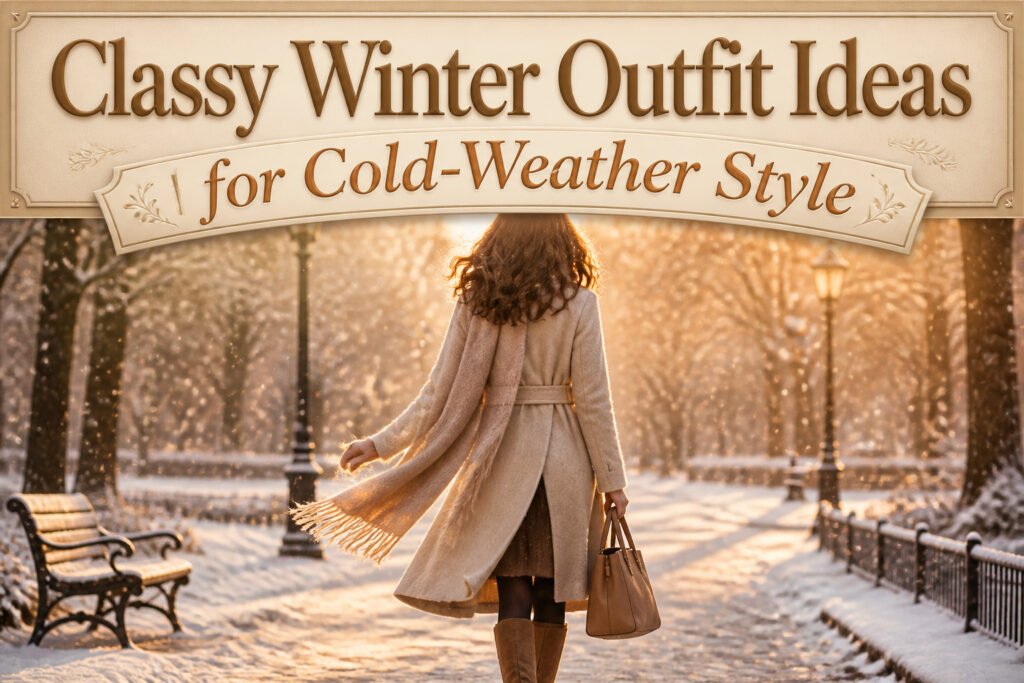
Classy winter outfits sit somewhere between the coat you already own and the one detail you keep getting wrong. The difference is rarely the budget; it is knowing which textures fight each other and which layer has to cover your seat. A 70 by 200 centimeter cashmere scarf does work no necklace can manage in January, and thermal tights matter more than standard pairs the moment a wool miniskirt leaves your legs exposed.
1. Cream Coat, Chic Hat, Tights, Heels
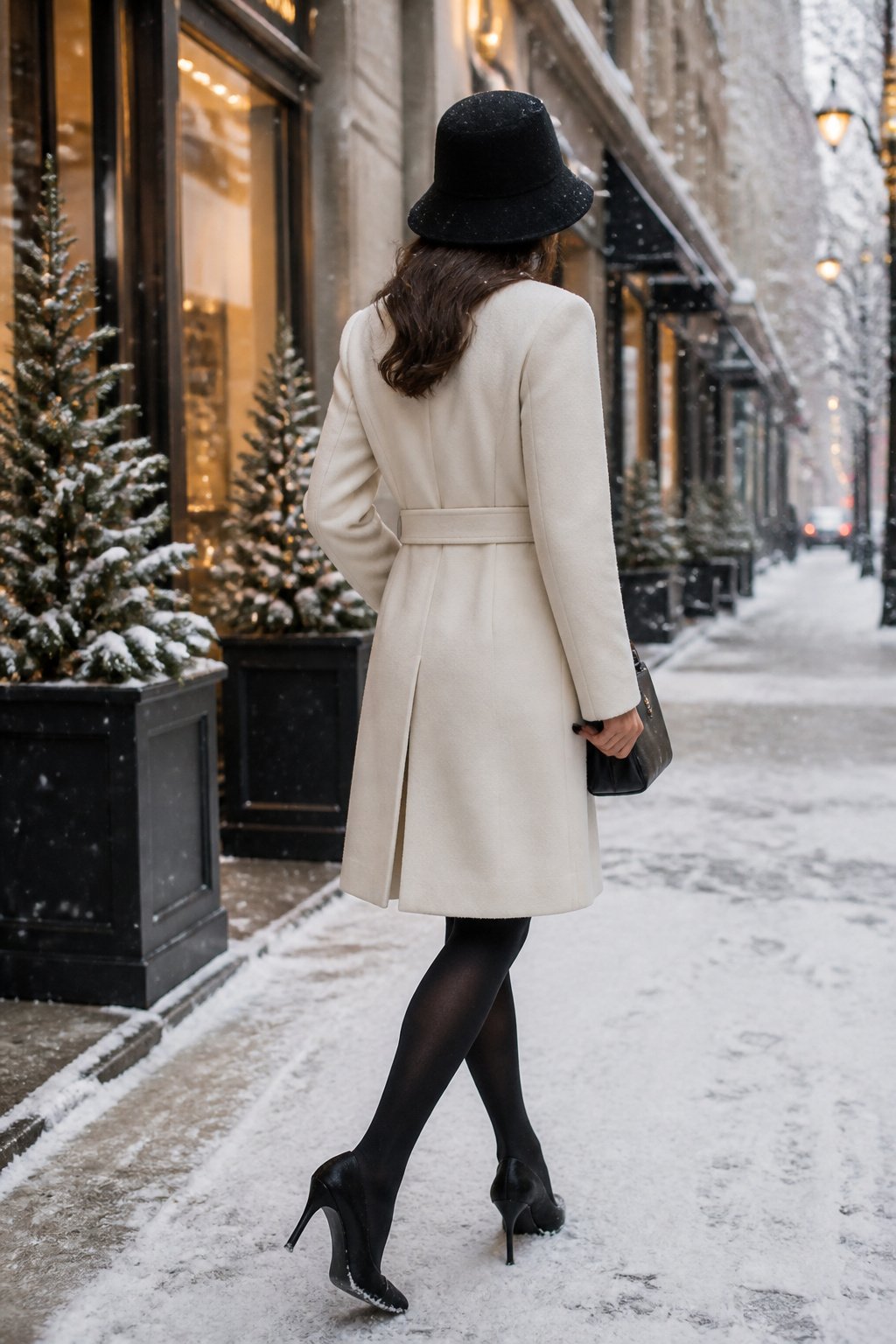
A cream coat sets the tone the moment you step outside. It reads as expensive because the color is high-maintenance by nature; the fabric has to be good to survive a winter without looking tired. Pair it with a structured hat, something closer to a minimalist wool bucket than a slouchy beanie, and you keep the line sharp from head to hem.
Opaque tights and closed-toe heels finish this without pretending the season does not exist. The tights give you coverage, the heels give you height, and neither competes with the coat. Black heels against cream is the obvious move, though pointed knee-high boots would carry the same polish if you are walking farther than the cab line.
The whole thing rests on a neutral base: cream, black, maybe a chocolate bag if you want warmth without color. No single piece shouts, so the overall effect does. That is where the money reads. A soft cream knit underneath keeps the interior consistent when the coat opens, and straight-leg denim or a simple skirt keeps the proportion clean.
The mistake is treating the hat as an afterthought. A beanie drags this toward casual every time. The structured hat is what keeps it pulled together.
2. Maxi Skirt, Wool Jacket
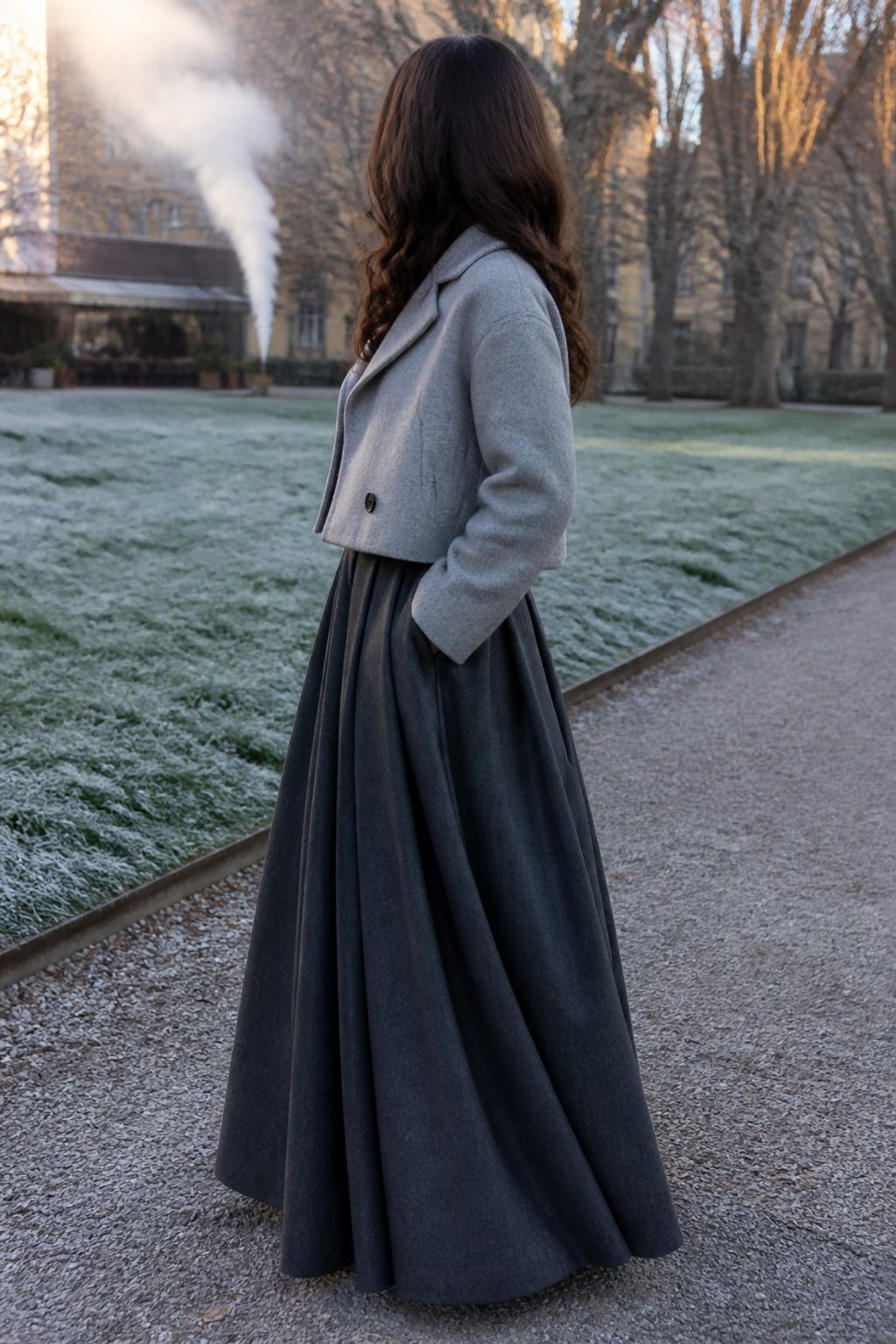
A long skirt carries more winter logic than most people credit it. You get full coverage from ankle to hip without the stacked bulk of three separate layers, and the right wool jacket keeps the silhouette from going shapeless. The trick is proportion: a maxi skirt needs a cropped or hip-length wool jacket on top, never something that drops past the seat and swallows your frame.
The skirt itself traps heat better than you’d expect. Floor-length fabric holds a pocket of still air around your legs, and underneath you can run thermal tights or even fleece-lined leggings if the cut is full enough. The wool jacket does the opposite job at the top, giving structure and a clean shoulder line that keeps the whole thing from reading as slept-in. Play the textures against each other: a heavier skirt, a crisper jacket. Roll neck underneath when the temperature drops, skip the T-shirt unless you are actually dressing for April.
3. Suede Jacket, Skinny Jeans, Ballet Pumps
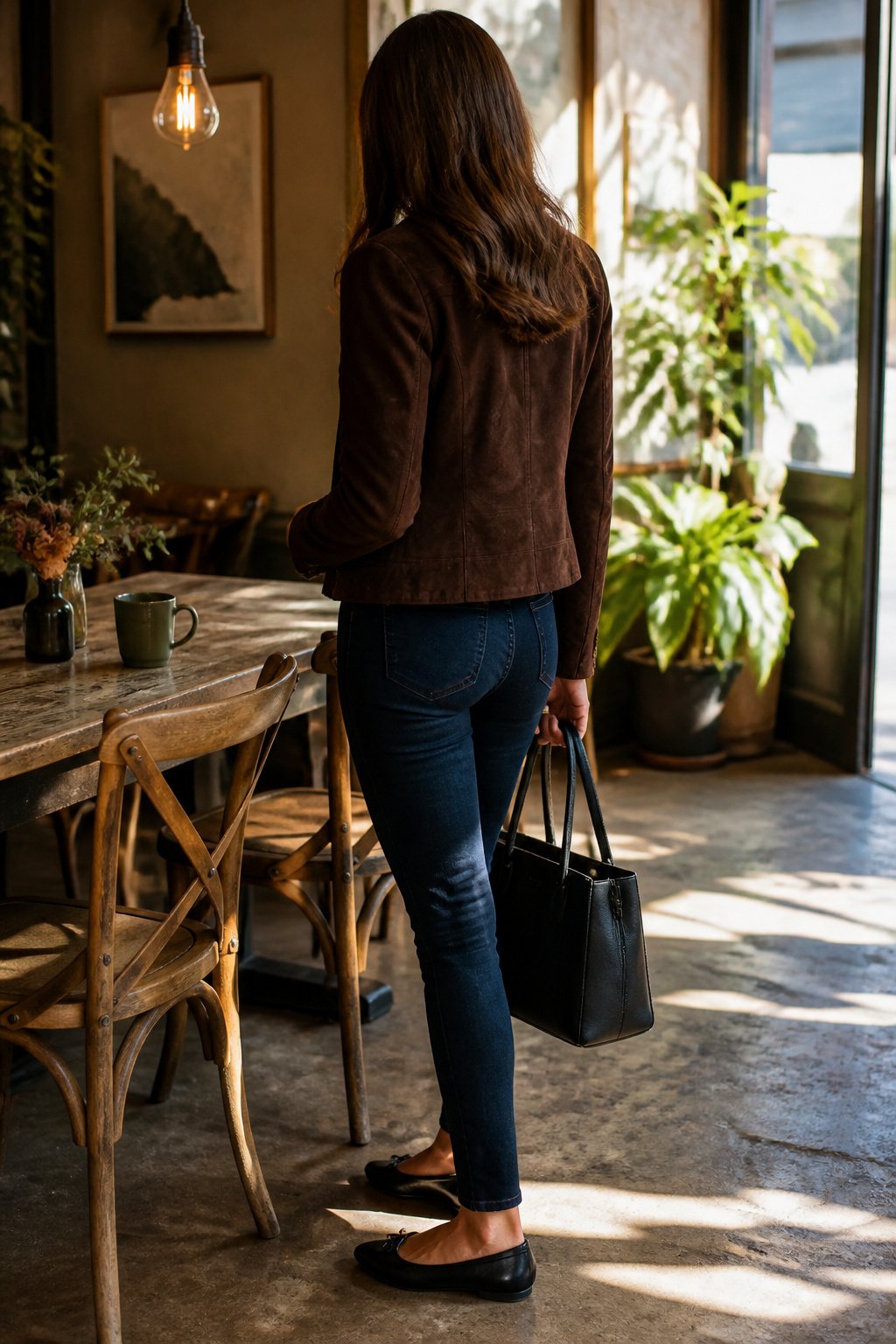
Suede looks expensive because it is expensive to ruin. Water darkens the nap permanently, and salt from sidewalk slush leaves white rings that brushing won’t lift. If you are going to wear this jacket through winter, you need a spray-rated repellent applied the day before, not the morning of, and you still step around puddles rather than through them. Dark brown or black hides the marks that get through; sand or tan suede is a dry-sky-only gamble even with protection.
That limitation is worth naming outright. This is a dry-day outfit. Sleet turns the whole thing into an anxiety exercise, and the pumps fare no better.
The cut that makes this work is the line from hip to toe. Skinny jeans slip into ballet pumps without the bunching you get with straight-leg denim folded at the ankle. You want a clean tuck, no gathering, no visible sock above the shoe line. A dark wash keeps the leg looking longer and matches the jacket’s formality. The pump itself should be leather-soled or thin-rubber; anything platformed breaks the silhouette you just spent that tuck achieving.
4. Leather Jacket, Roll Neck Jumper, Miniskirt, Tights
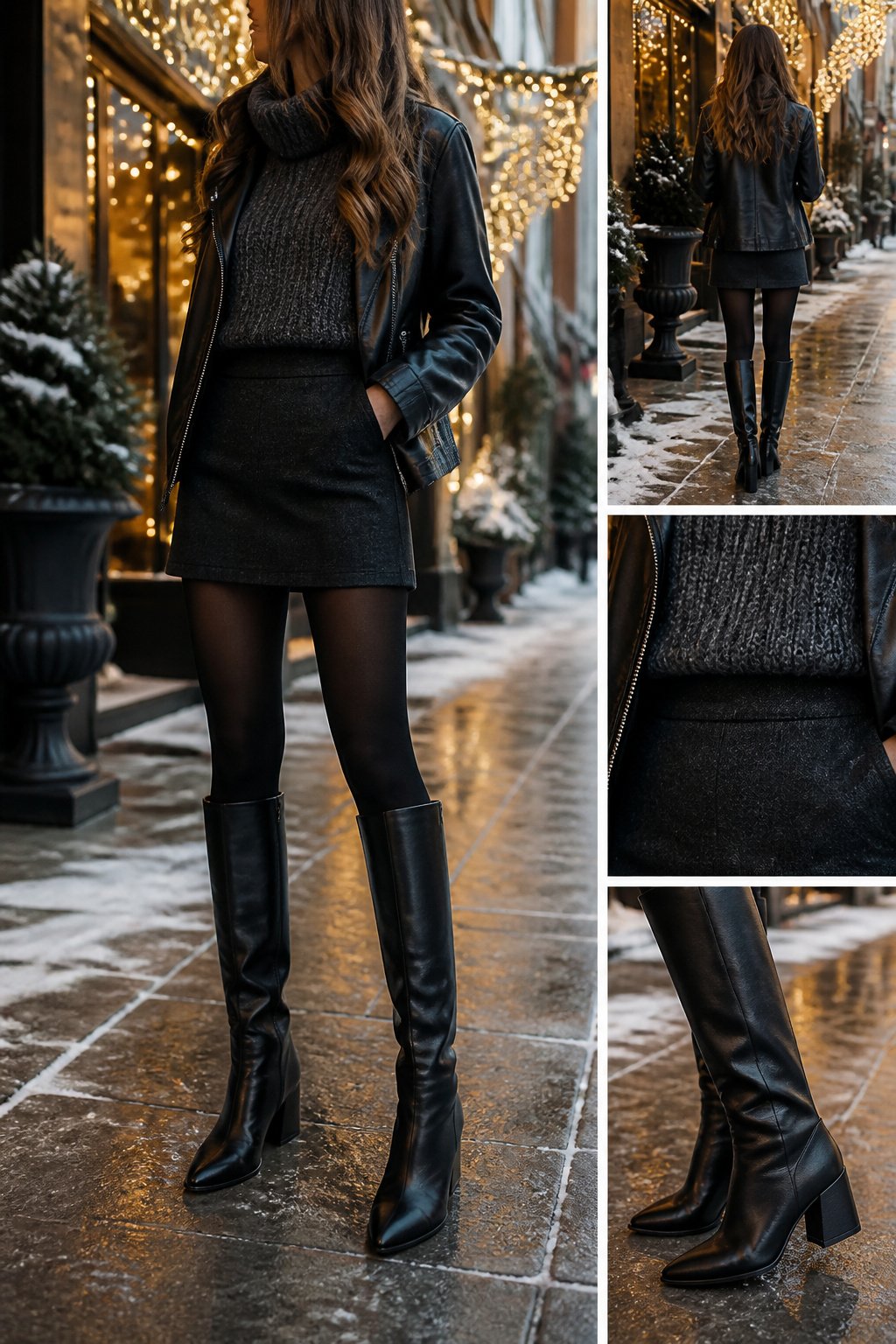
A leather jacket worn open at the throat leaves a gap that a roll neck jumper fills precisely. The ribbed knit sits against smooth leather, and both textures read clearly because they differ. Below, a woollen miniskirt holds its shape against winter wind better than anything lighter, and thermal tights matter more here than standard pairs because the skirt leaves your legs exposed. Sheer tights would break the line too delicately for cold weather; opaque or thermal weight keeps the proportion grounded. The coverage stacks vertically: roll neck at the collar, leather open over it, then bare thigh above the tights. That balance is what lets the miniskirt read as intentional rather than underdressed. Leather knee boots extend the warmth downward and repeat the jacket’s material without matching it exactly.
5. Wool Coat, Jumper, Jeans, Bag
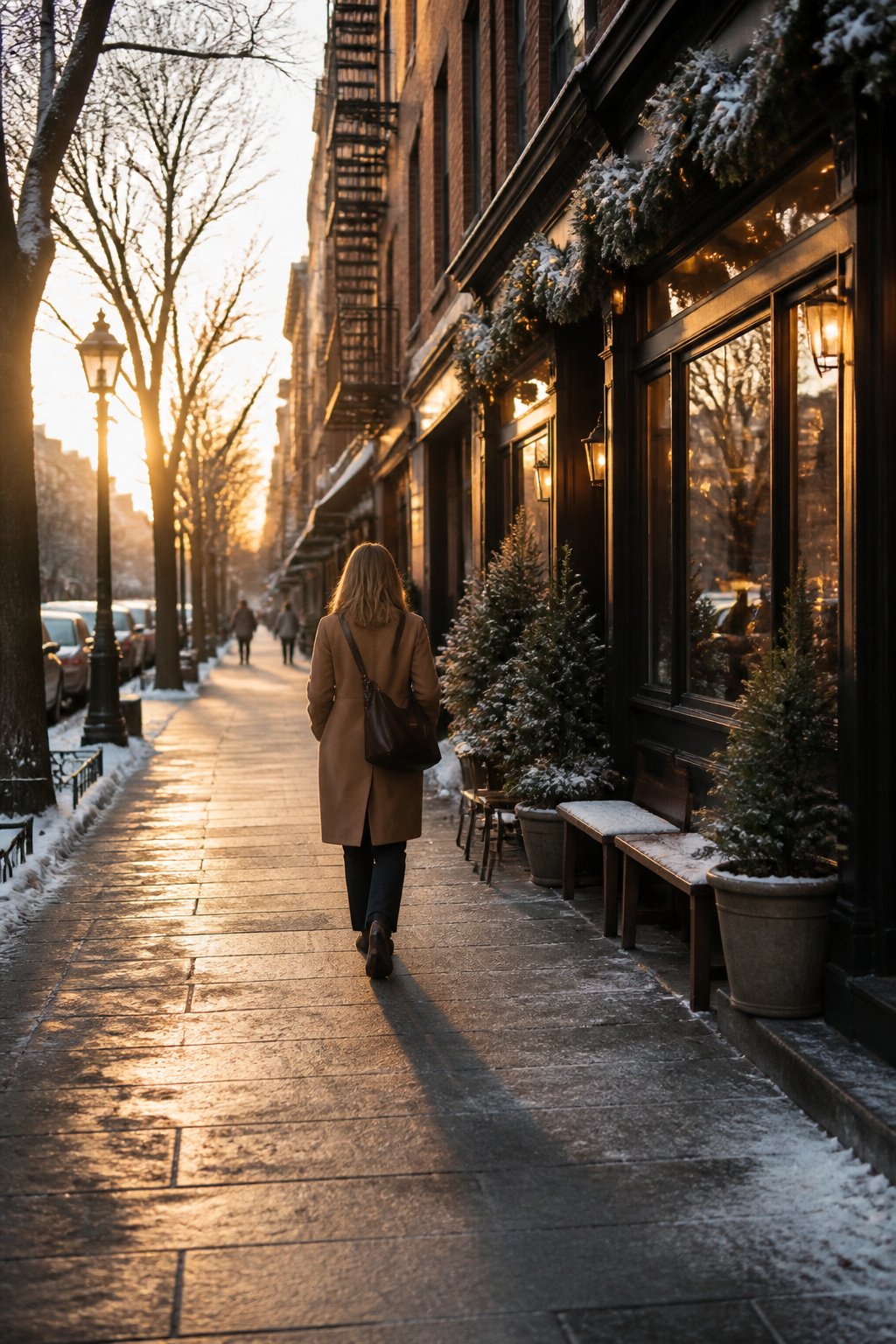
You already own the pieces. The question is whether they read as an accident or a choice.
A mid-length wool coat in camel or black sets the tone before anyone sees what is underneath. Tailored, not belted, and ending somewhere around mid-thigh. The jumper matters more than people admit. Merino wool pills less than cashmere in the long run, though all sweaters give up eventually. Run your hand across the fabric before you buy; you will know whether it will turn against your skin by March.
Jeans with a clean hem, no stacking at the ankle, keep the silhouette deliberate. Balance the coat’s length with a straight or slim leg, not both oversized.
The bag is where you signal intention. Large enough to swallow gloves and a beanie without bulging, structured enough to stand on its own. A long leather glove helps, but the bag does the heavier work of pulling denim and knitwear toward something polished. The French trick of proportion, a fitted layer against a fuller one, applies here too. Coat over jumper, clean line to clean line, and the bag at your shoulder finishing the equation.
6. Jumper, Wide-Leg Trousers, Secret Layers
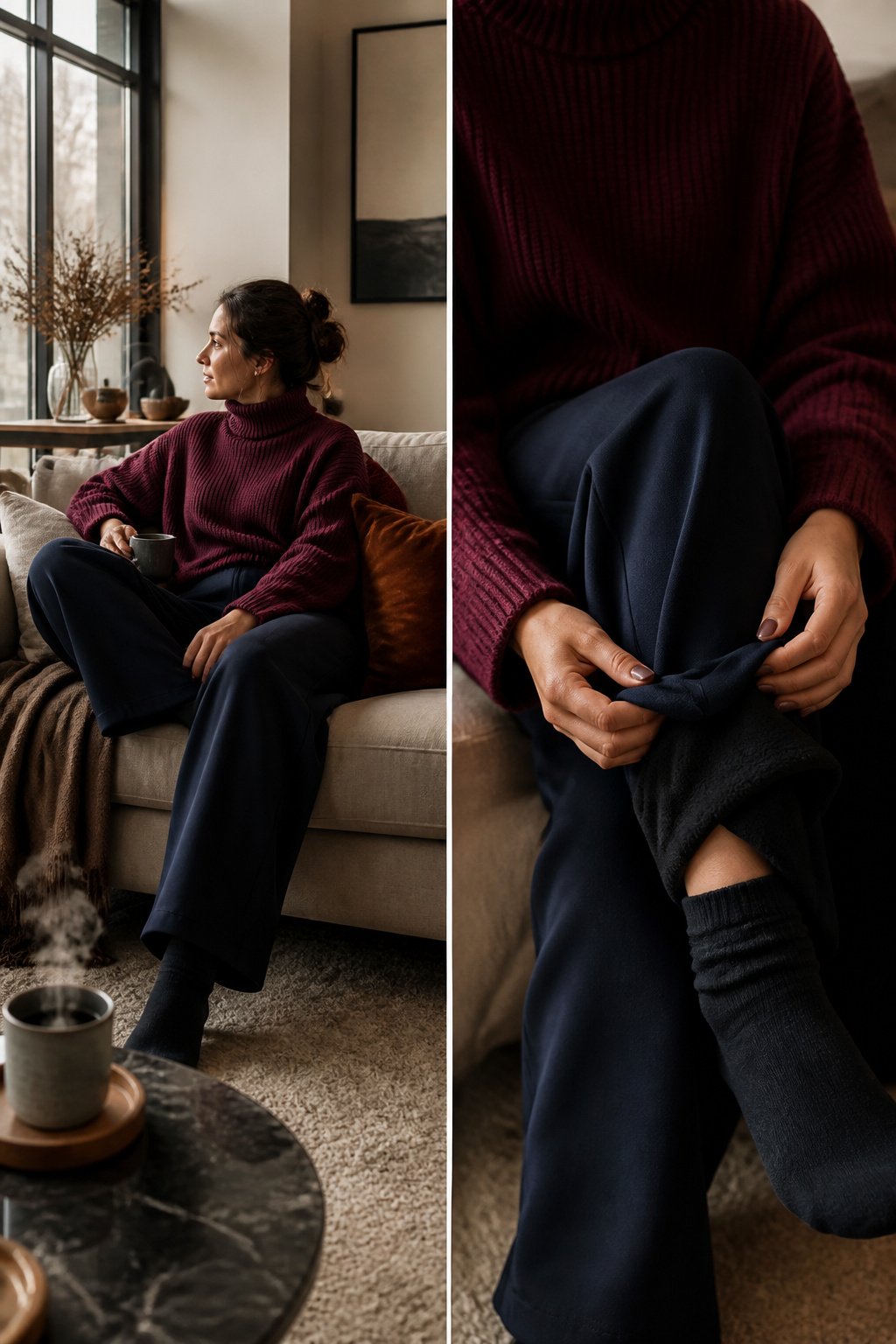
A thermal long-sleeve under your jumper and silk long johns under your trousers is the hidden architecture that makes this look possible in real cold. The wide-leg silhouette is doing more than looking polished; the volume hides the bulk so completely that no one can tell you are wearing two layers below the waist.
The trick is choosing trousers with enough fullness through the leg and a waistband that sits flat over whatever you have on underneath. A waistband that gaps or rolls tells the whole story. Look for a mid-rise or higher cut with a clean closure, no bulky hardware, and fabric that drops straight from the hip rather than clinging.
Under the jumper, a long-sleeve thermal top in a fine Merino wool blend adds warmth without the waffle-knit texture that catches on finer knits. The jumper itself should be generously sized, not fitted, so the thermal layer disappears into the drape.
Matching the tones helps the layers read as a single intentional piece rather than an outfit you threw together. Burgundy on burgundy, or camel on camel, keeps the eye moving and hides the seam where one layer ends and another begins.
7. Jumper, Jeans, Scarf, Clogs
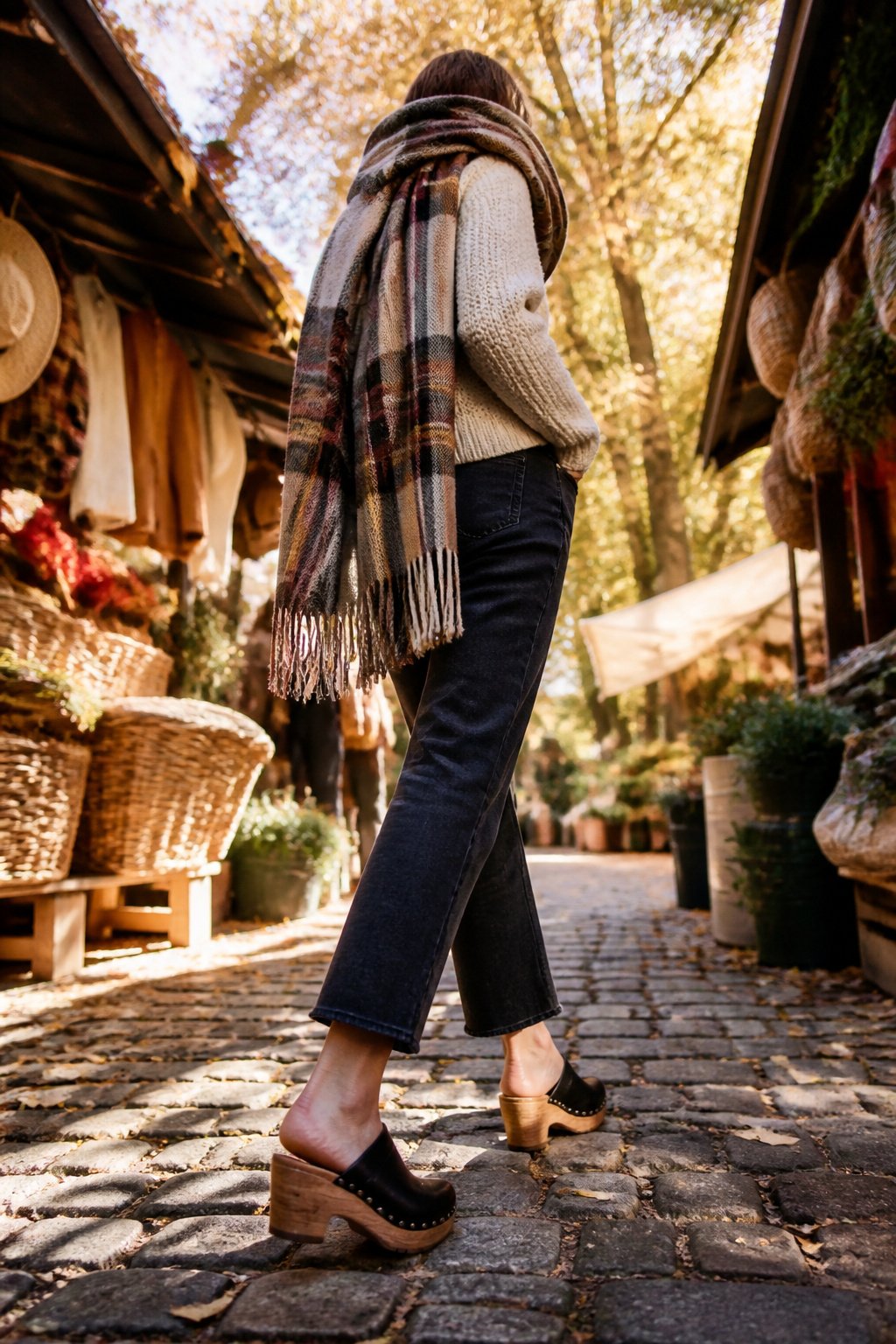
The wooden sole on a clog keeps you a full half inch above cold pavement, which matters more than you’d think on a morning when frost still clings to the sidewalk. That lift is the reason the shoe works in winter at all, and the closed toe does the rest of the work your summer sandals can’t. The open heel is the compromise you have to name before you step out, because once the temperature drops past 40 degrees, you feel it.
A large wool scarf is what buys you those extra degrees. Wrap it twice and let the bulk sit high on the neck, where it traps the heat a hat would have caught if you were wearing one. The scarf has to be large enough to matter; a narrow one leaves the gap at your collar open and the whole outfit reads as a mistake you made before coffee.
This is a transitional outfit, best in that window between a hard freeze and the first real thaw. The jumper and jeans do the easy work of looking put-together; the scarf and clogs are where you solve the problem of staying warm without pretending it is still autumn. Below 40 degrees, the open heel wins and you lose.
8. Sweater Dress, Tights
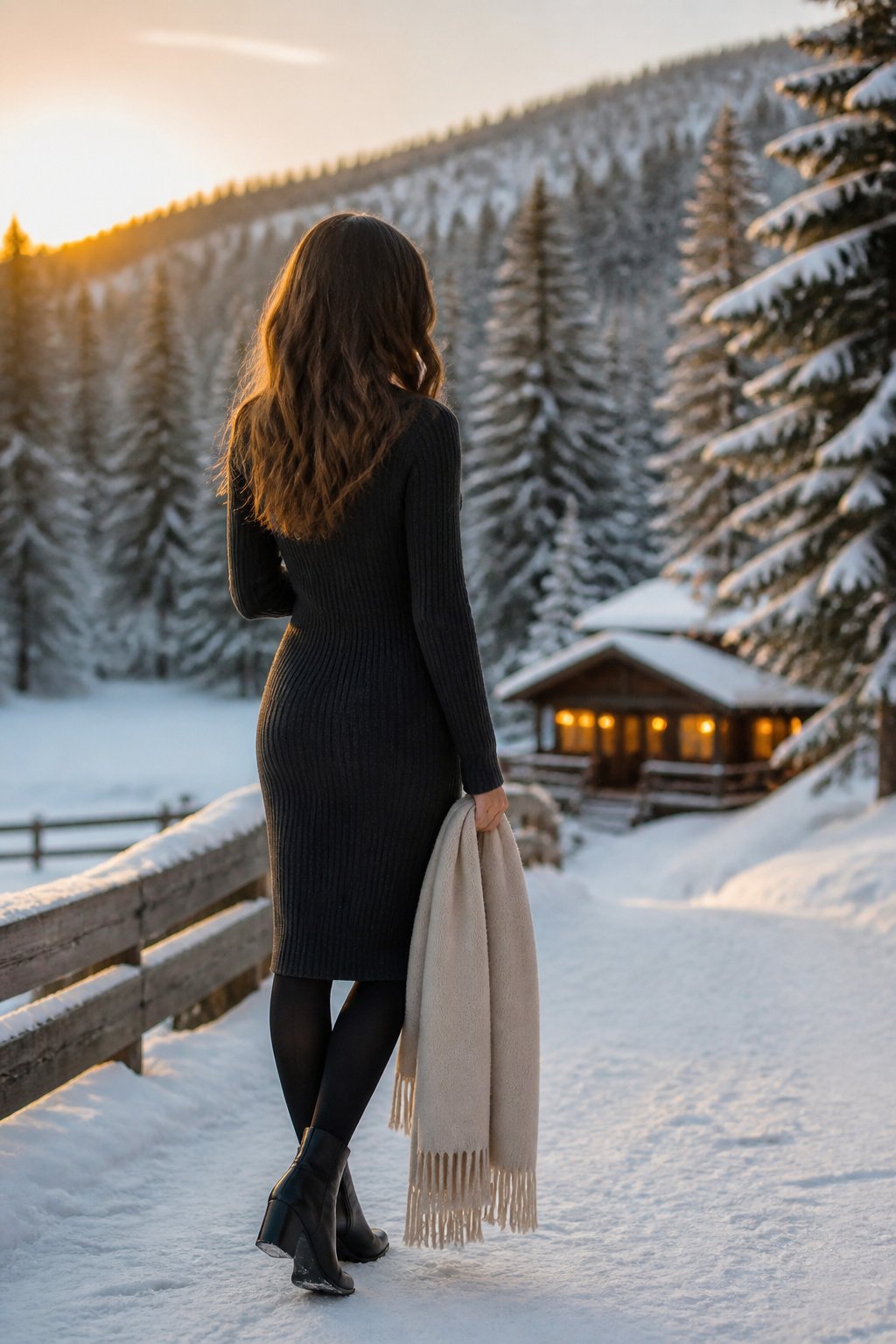
A sweater dress looks like the easiest win in your closet until you catch your reflection and see a walking blanket. The knit has to hold its own weight, so look for ribbed construction or a belted waist that pulls the silhouette back to your body. Without that definition, you lose the shape that makes this feel intentional rather than lazy.
The tights matter as much as the dress. Opaque tights only; sheer hosiery against a heavy knit reads like you grabbed the wrong season from your drawer. Black or charcoal in 60–80 denier keeps the line clean from hem to shoe.
Hem length sits at or below the knee. Anything shorter fights the proportions of winter layers and leaves you adjusting hemlines instead of moving through your day. Pair the dress with ankle boots or a low block heel; the slight lift helps the longer hemline without turning the look into something formal you did not plan for.
9. Chic Jeans, Cozy Sweater
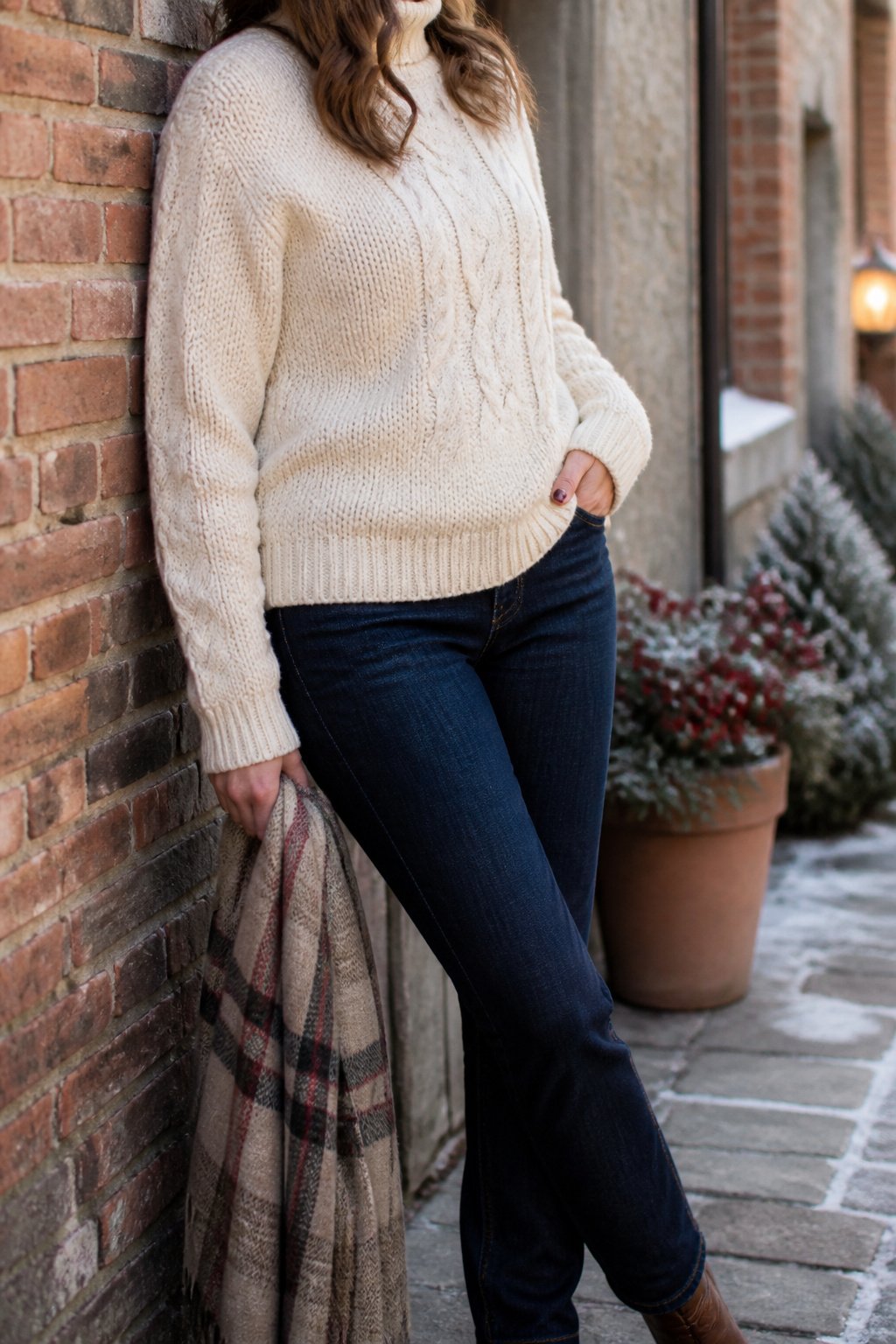
Dark wash jeans with zero distressing are the only denim that earns the word chic here. Anything lighter or ripped reads weekend, not winter polished. Pair them with a sweater that has real weight to it, something you can feel in your hands before you buy it. The neckline matters more than most people notice: a crew or a turtleneck that sits close to the face frames it, while a loose, sagging collar lets the whole look collapse.
Fit is where this outfit lives or dies. The jeans need to hold their shape through the day; if they bag at the knees by noon, you have lost the tailored line that makes this work. The sweater is worse if it fails. One that stretches at the shoulders or pills after three washes becomes a shapeless layer you reach past. La Ligne makes a striped chunk knit you can wash at home on delicate, and that home-washable detail is worth noting because dry-clean-only sweaters rarely get cleaned, then they stretch, then they sit in the drawer.
Finish the look with simple accessories and a structured coat if you are heading out. The coat gives the architecture; the sweater and denim give the ease. Without that outer structure, you are just in comfortable clothes. With it, you are put together.
10. Midi Skirt, Turtleneck
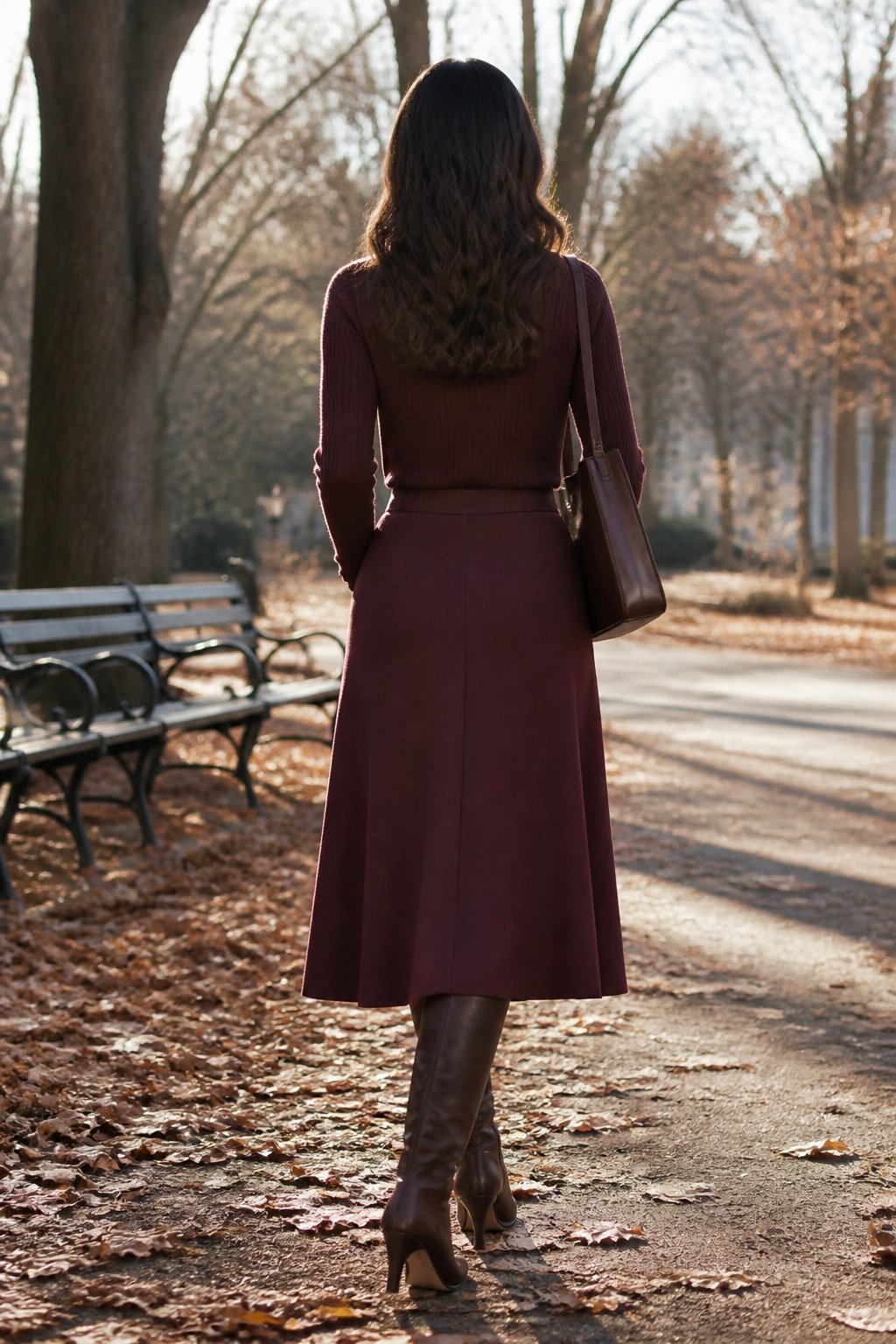
The midi skirt has become the professional default in winter because it covers enough leg to keep tights from looking like an afterthought while still moving easily under a desk. You want the hem to hit somewhere between the bottom of the kneecap and the top of the calf muscle; anything shorter starts reading as transitional, anything longer drags in slush.
Tuck your turtleneck fully for a clean line, or do a half-tuck at the front if the skirt sits at your natural waist and you need to break up the block of fabric. The turtleneck itself should be thin, a fine merino or silk blend that stays where you put it. A bulky knit will puff out above the waistband and below it, giving you volume in exactly the spot where the whole point of this pairing is to look pulled together.
For the skirt, wool crepe holds its shape through a day of sitting and standing without going shiny at the seat. Heavy satin works for evening if the lining is substantial enough to block wind. Leather, real or good faux, adds the most structure but needs a cut with some swing to it; a stiff leather tube is hard to walk in and reads costume quickly.
11. Leather Leggings, Blazer
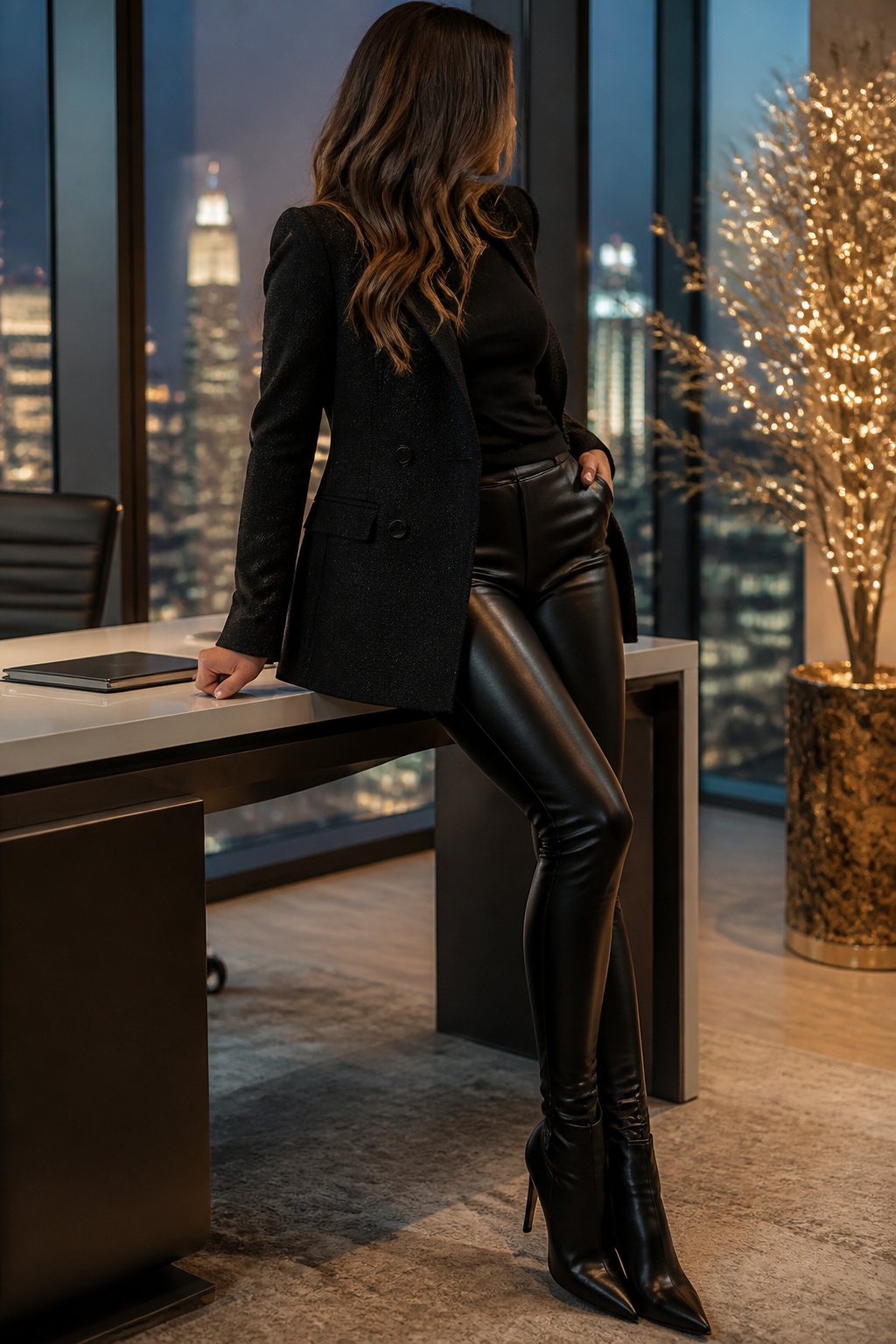
Leather leggings want to read as evening wear, which is exactly why the blazer matters. The jacket must cover your seat; anything shorter leaves the leggings exposed and the whole look tips toward club rather than office. You are aiming for daytime polish, not a statement piece that shouts.
The leggings themselves need to be genuine leather or high-quality faux. Cheap versions crack across the knees within a season and squeak when you walk. That sound is not something you can style away.
Footwear keeps the balance. Ankle boots or loafers ground the outfit in something you could wear to a meeting. Athletic shoes, even clean ones, break the contract entirely; they read as gym clothes trying to sneak into somewhere they do not belong. A turtleneck beneath the blazer adds the warmth winter actually demands, and the layers keep the silhouette from feeling too bare for daylight hours.
12. Stylish Winter Jumpsuit
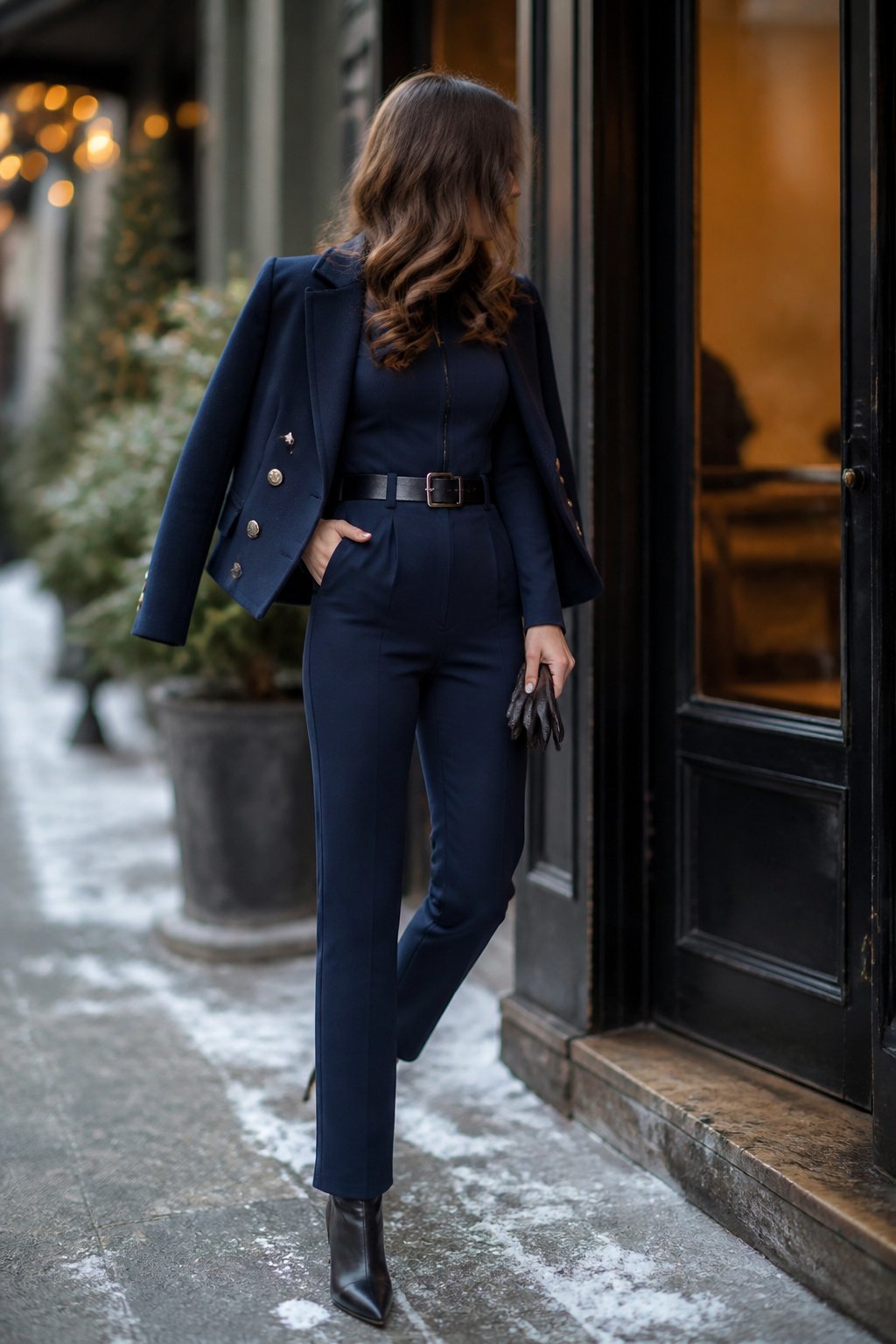
A winter jumpsuit solves the one problem every layered outfit creates: the tuck. No bunching at the waist, no shirt riding up, no half-hour adjustments every time you stand. You step in, zip up, and the silhouette stays clean from shoulder to ankle.
The catch is real, though. Bathroom trips mean nearly full undress in a stall, so you learn to check the weather and your coffee intake before committing. Coats become another puzzle; a cropped jacket works better than anything long, since you are removing the whole suit either way. Fit is the hardest part. Most brands cut for either a long torso or long legs, rarely both, so you will try on more of these than any other piece. A defined waist in a dark color does the work of shaping; black or deep navy reads as deliberate rather than utilitarian.
Layer a thin turtleneck underneath when the temperature drops, or wear a sharp coat over top and treat the jumpsuit as your base. The look is polished because it is one continuous line, and that simplicity is what makes it read as intentional rather than lazy.
Layering That Actually Works
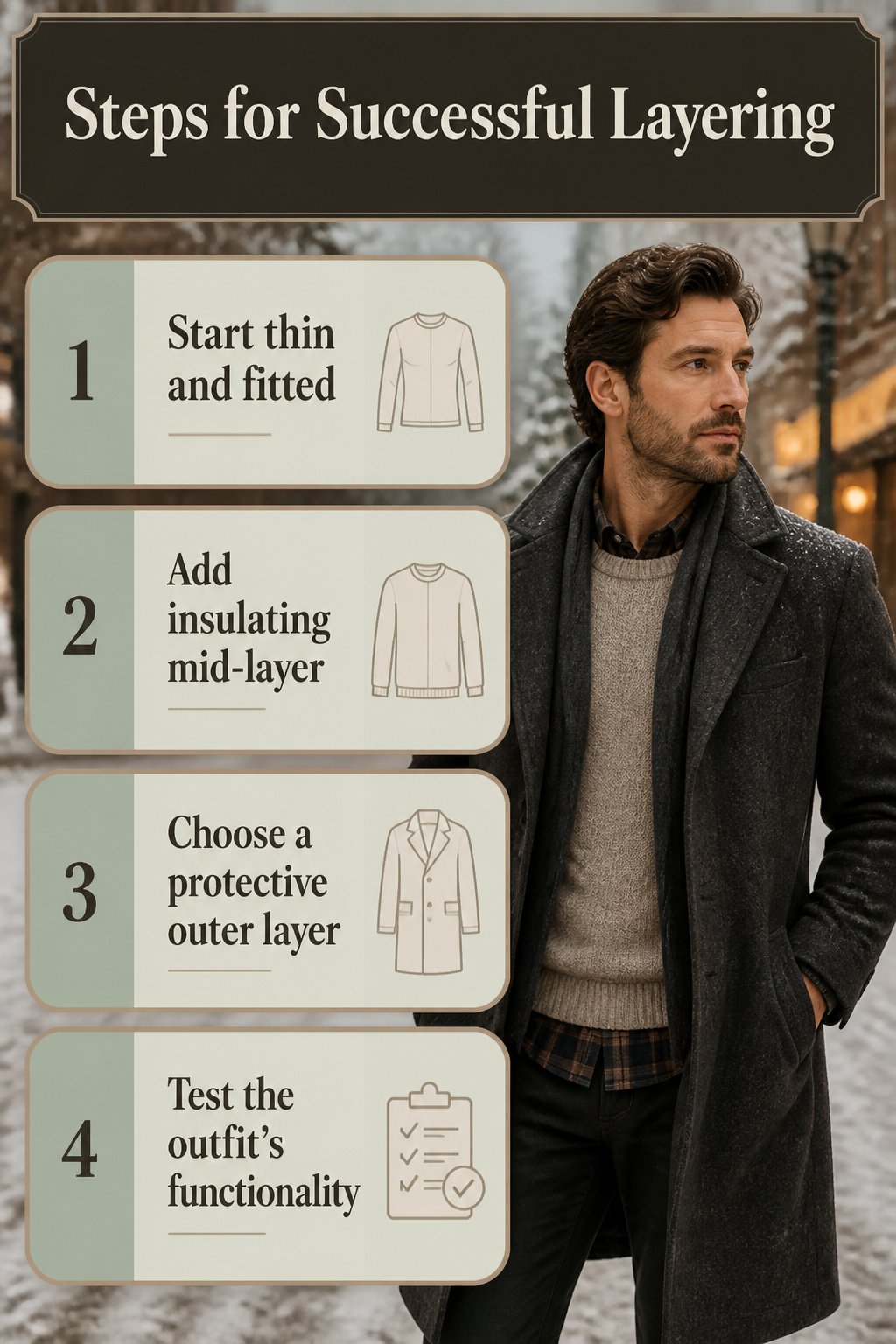
The first layer sits closest to your skin, and this is where most people go wrong. You reach for something thick, figuring more fabric equals more warmth, and by noon you are sweating through a sweater that cannot come off without the whole outfit falling apart. Start thin and fitted: a merino or silk base layer that hugs the body and wicks moisture without adding visible bulk under your shirt or dress. That base layer should look presentable on its own if you strip down at a heated restaurant or office.
Your mid-layer does the actual insulating work. A fine-gauge cashmere crewneck, a lightweight flannel shirt, or a thin quilted vest traps heat without the marshmallow effect of a heavy knit. The outer layer blocks wind, snow, or sleet: a tailored wool coat, a structured parka, or a clean-lined puffer in a matte finish. Each piece needs to function alone. If removing your coat leaves a thermal undershirt that belongs on a ski slope, the system fails. Test it before you leave the house: peel off the outer layer and ask whether you would sit through a meeting in what remains.
The Neutral Color Palette
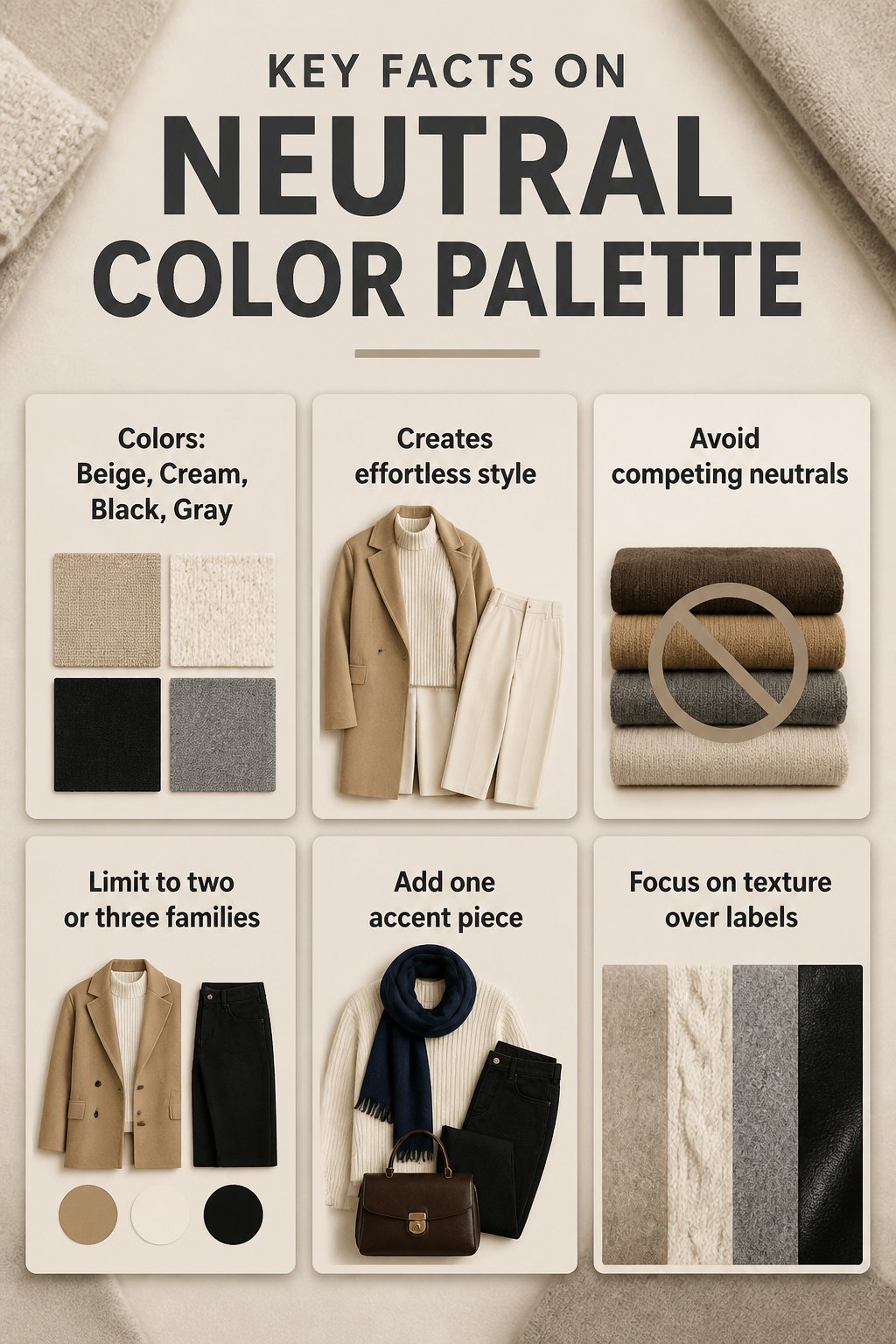
Beige, cream, black, and gray dominate classy winter outfits for a simple reason: they never fight each other. A camel coat over a cream knit reads as expensive even at mid-range prices because the eye reads the texture, not the label. Wool against cashmere, suede against leather, denim against fine knit; the neutral ground lets those contrasts do the actual work.
The mistake is piling on too many neutrals that compete instead of cooperate. Chocolate brown, camel, gray, and cream in one look turns muddy; the pieces cancel each other out. Limit yourself to two or three neutral families per outfit, then add one accent, a navy scarf with black denim, or a chocolate bag against camel and cream. That single move keeps the quiet-luxury effect intact without tipping into monotony.
Textures Worth Mixing
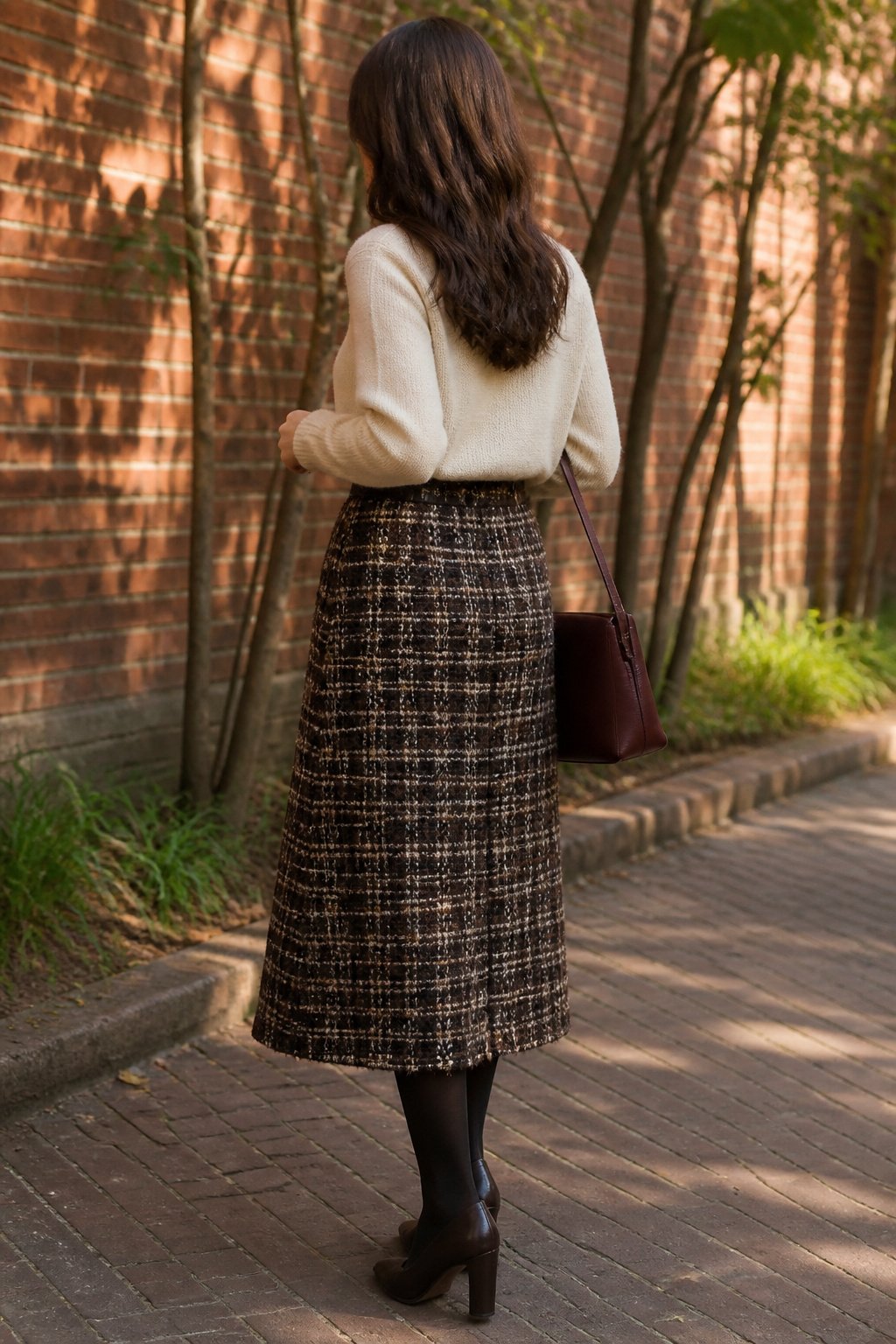
A cashmere crewneck against a tweed skirt already looks considered because one surface slides and the other catches light. Pair one smooth texture with one nubby texture, then stop. Add a third only when it is quiet, like matte wool hosiery against that same cashmere and tweed. Go to four and the eye loses the thread entirely.
All matte reads as laundry day. All shine reads as costume. The woman in head-to-toe silk charmeuse looks like she is trying to sell you something; the woman in all boiled wool looks like she gave up. You need friction between the surfaces.
Leather and suede count as different textures, not the same. Leather holds a hard gloss; suede drinks light. Wear them together and they argue. Pick one leather piece per outfit, or one suede, and let the other textures do the work.
Silk works as your smooth against almost anything nubby, but winter silk needs weight. A silk blouse under a cable-knit cardigan is the move; a summer-weight camisole under that same cardigan looks like a mistake with your closet, not a choice.
Accessories That Earn Their Keep
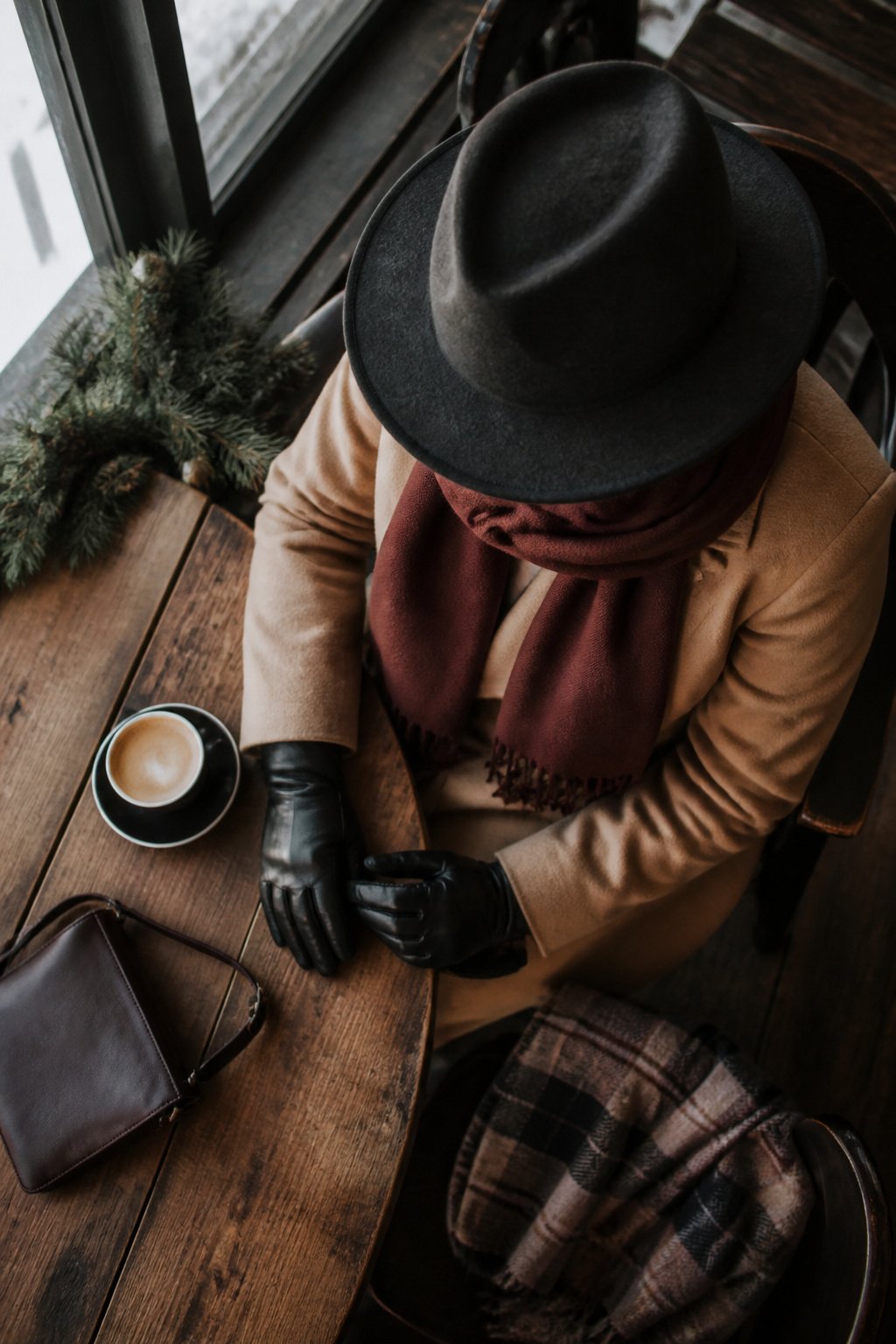
A cashmere scarf in the classic 70 by 200 centimeter size does work that a necklace cannot in January. You wrap it close to the throat where a pendant would tangle in wool, and the drape becomes the whole gesture. Leather gloves beat knit for polish every time, though you pay in warmth below twenty degrees. The cashmere-lined pairs split the difference without looking like ski gear.
The real mistake is treating these as afterthoughts grabbed on the way out. You have seen it: the beautiful coat, then a beanie mashed down over any face, any haircut. Hat shape should match face shape. A long face wants width, a round face wants a bit of crown height, a strong jaw can carry the clean line of a cloche. Try three in front of a mirror and the wrong ones announce themselves immediately. The right one you stop noticing, which is the point.
Frequently Asked Questions
What are some classy winter outfits?
Strong options include a cream coat with structured hat and opaque tights, a wool jacket over a maxi skirt, a leather jacket with roll neck and miniskirt, or a sweater dress with opaque tights in 60–80 denier. Each relies on clean proportion and intentional texture rather than statement pieces.
How do I layer for winter outfits?
Start thin and fitted against your skin, a merino or silk base layer that wicks without bulk. Add a mid-layer for insulation like fine-gauge cashmere or a thin quilted vest. Finish with a tailored outer layer that blocks weather. Every layer should look presentable alone; if removing your coat exposes ski-grade thermals, the system fails.
What colors are best for winter outfits?
Beige, cream, black, and gray dominate because they let texture, not label, do the work. Limit yourself to two or three neutral families per outfit and add one accent only, such as a navy scarf with black denim or a chocolate bag against camel and cream. Too many competing neutrals turn muddy.