
Short hair only looks effortless when the cut itself does the daily work. The difference between a style that holds shape until evening and one that collapses by noon comes down to whether your stylist layered for your texture or simply shortened what was there. A six-week trim schedule keeps the neckline sharp, but the right product at the roots, like a volumizing spray or fiber pomade, buys you the structure that styling alone cannot fix.
1. Bixie Cut

A bixie lands in that narrow space between a pixie and a bob, and that is exactly why it works for short hair. You get enough length around the face and collar to tuck or sweep, but the back and crown stay short enough to hold shape without constant pinning. The cut builds in movement through layered texture that shifts between workdays and weekends without needing a restyle. Shorter layers at the top give roots the lift they need, especially if yours tend to lie flat against your scalp. A rounded, airy shape keeps the silhouette soft rather than severe, and shadow roots in warm or cool blonde tones add the visual height that makes fine hair read fuller. For daily styling, a volumizing spray at the roots does the heavy lifting when natural lift does not come easily. The texture is already in the cut, so you are working with the shape rather than fighting it. Piecey, grown-out iterations are moving through 2026 with more frequency on runways and in salons, which means the bixie has enough momentum that a skilled cutter will know the proportions without you needing to over-explain. Ask for shorter layers at the crown and enough length through the front that you can still push it behind an ear when you want the face clear.
2. Textured Pixie Bob
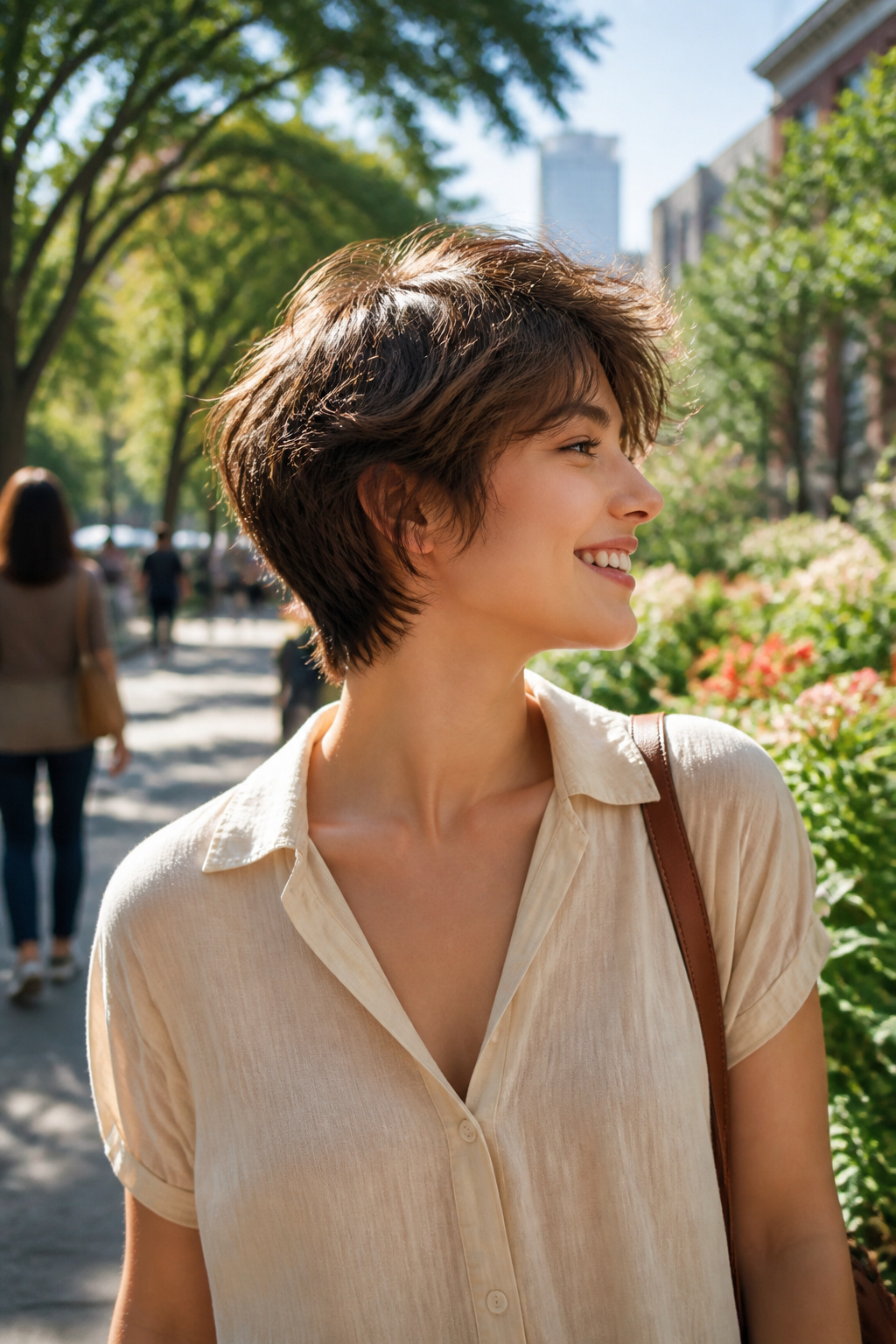
A textured pixie bob sits right in the middle ground that makes most short cuts fail or succeed. It keeps enough length to frame the face, usually brushing the jaw or just above, but takes the top layers shorter than a standard bob so the crown does not fall flat. That shorter crown is what borrows from the pixie side of the family, while the perimeter stays bob-length to avoid the exposed-neckline look that a full pixie demands.
The texture is the real maintenance saver. Instead of a blunt line that shows every week of growth, the cut relies on imperfect, uneven layers that tousle into place with a quick pass of a straightener curled randomly through the hair. Beach waves work here too, since the added body creates the illusion of natural volume, especially if your hair is fine or layered short. The grow-out is forgiving because the cut is already designed to look slightly un-done.
What separates it from a standard pixie is the perimeter length and the safety net that gives you. What separates it from a standard bob is the shorter, more active crown and the deliberate messiness that replaces a neat line. Most people can wear this because the face-framing length softens strong features while the shorter top adds height where heads tend to go flat.
3. Jaw-Length Bob

A jaw-length bob lands right at your jawline with a blunt, straight-across end. That sharp, even cut with minimal layering is what gives it the polished finish that reads as professional without any morning effort.
You can wear this across textures. Straight hair stays sleek with a flat iron and a shine serum like IGK Crybaby Smoothing and Finishing Serum. Wavy hair holds the shape with a simple blowout and a side part. The cut does the work; you are not fighting it into place.
The key choice is how you style it day to day. Keep it refined for work, or soften the same cut with a headband or a few barrettes when you are off the clock. More layers shift the whole mood toward something messier and more modern, but the jaw length itself stays forgiving. You will need regular trims to keep that line sharp.
4. Feathered Bob

A feathered bob works because the layering starts higher on the crown than you might expect, keeping the top light enough to move when you turn your head. The ends are point-cut rather than blunt, so they separate into soft pieces that read as texture, not bulk. That makes this cut one of the few short styles that still lets you flip from a center part to a side part without the whole shape collapsing.
Show your stylist photos of the exact layering you want, since "feathered" covers everything from subtle graduation to heavy razoring. The wrong interpretation leaves you with a shag instead of a bob.
This cut suits straight to slightly wavy hair best. The movement comes from the cut itself, not from styling, so if your hair is very curly the layers can spring up unevenly. Fine hair gets volume from the reduced weight on top. Thick hair needs the interior thinned so the feathering does not turn into a pyramid.
5. Classic Pixie Cut

The classic pixie keeps the back and sides short while leaving slightly longer layers on top, which is where the styling happens. You can sweep everything forward for softness, push it straight back for an edgier line, or switch the part from one side to the other and get a noticeably different silhouette without a second cut. That range matters more than people expect, and it is why a lot of people come back to this shape after growing out into longer styles that looked good in the mirror but ate up too much morning time.
The cut works across textures, and it frames the face without needing daily heat or product overload. Towel-dry out of the shower, work a small amount of fiber pomade through the top for definition and a satin finish rather than crunch, and style with your fingers. The real mistake is going too uniform in length; without that contrast between the closely trimmed neck and ears and the lifted top, you lose the structure that makes the pixie read as intentional rather than grown-out. Ask for short sides and back with longer layers on top, and specify whether you want the finish softer and feathered or more dramatic and spiky, since the same basic shape can read either way depending on how the ends are cut.
6. Bob with Messy Surface Layers

Blunt ends on a bob give you a clean line that reads as intentional, not grown-out. The contrast comes from the top: tousled surface layers that break up the silhouette and push the volume upward. You get structure at the perimeter and movement everywhere else, which keeps a short cut from looking too heavy or too prim.
The teasing matters. Lift the crown with a fine-tooth comb at the root, then work a texturizing paste or dry wax through the mid-lengths with your fingertips. Skip the brush after that; the piecey separation is what sells the shape. If you need the look to hold through an evening, a lightweight volumizing mousse at the root before you blow-dry will do more than extra hairspray on the finish. For days when you want the edge without the mess, a fine-bristle brush will lay those surface layers flat and give you a sleeker read on the same cut.
7. Curly Crop

Short layers in a curly crop do not fight your texture; they follow the coil where it wants to go. The cut builds volume at the crown and keeps the shape from flattening out by noon, which is what happens when a stylist treats curly hair like straight hair and just shortens it.
Ask for layers that trace your natural curl pattern, with slightly longer pieces on top so the curls have room to form without stacking into a triangle. Some stylists will want to carve in bulk-removing layers; that works for some heads, but for this shape you want strategic layering that adds structure without puffing the silhouette.
For product, a curl-enhancing cream or a rich leave-in will keep the definition soft rather than crispy. Work it through with your fingertips to create separation, then diffuse or air-dry depending on how much movement you want. The playful shape comes from the contrast: controlled underneath, freer on top.
8. French Bob

The French bob sits right at the jawline, usually with a fringe that blends straight into the cut. That length matters because it frames the face instead of hiding it; the inward curve draws the eye to cheekbones and the line of the jaw itself. The bangs are not an afterthought here. Worn together, the short edge and the fringe create the soft, rounded shape that reads as Parisian rather than just short.
Style it sleek for work or let it go slightly tousled for weekends. The texture is what keeps it from looking too done. Ask your stylist for a textured bob cut that falls at or just below the jawline, plus a fringe that grows out of the rest of the hair naturally rather than sitting on top like a separate piece. That seamless grow-out is what makes the cut wearable past week two.
9. Blunt Bob

The blunt bob lands at a single length all the way around, usually just below the jawline, with no layers to break the line. Stylists call it universally flattering because the clean edge sharpens any face shape without fighting your bone structure.
You ask for a blunt, straight-across end with minimal layering and keep the cut sharp and even. Maintenance is trim appointments and little else. For daily styling, a flatiron smooths the surface, and a shine serum finishes the look. The IGK Crybaby Smoothing and Finishing Serum is one option for that last step.
The cut works on straight hair and holds well enough on wavy texture. What it does not do is air-dry into shape on its own; the blunt line depends on that smoothness to read as intentional rather than grown-out.
10. Beach Waves

Beach waves on short hair live or die by the product you put in while it is still wet. A salt spray or light texturizer gives the grip you need before the hair sets, because once air-dried, short layers lock into whatever shape formed while evaporating. Without that early hold, you end up with limp separation instead of the uneven, piece-y movement you are after.
The heat-free route is where this style pays off for shorter cuts. You scrunch the product through damp hair, twist random sections away from the face, and leave it. The result reads as unstyled in the way that works, not the way that looks like you gave up. Fine hair especially benefits, since the added texture builds body that reads as natural volume rather than product buildup.
A straightener can refine the look if you want more control, curling sections at random angles so nothing falls into a pattern. The tousled effect holds up because the base layer was already set with grip, not just moisture. Skip anything that feels slick or heavy going in; on short hair, that weight flattens before noon.
Products That Actually Hold

The right product keeps a short style from falling flat by noon. Here is what to reach for and when:
- R+Co Hyperlink Fiber Stretch Pomade works best on pixie cuts while hair is still damp. Towel dry out of the shower, run this through, and you get definition, texture, and a satin finish that holds its shape without going stiff.
- Bumble and bumble Surf Spray gives you that lived-in, beachy texture on waves. Spray it in to define the shape and keep the piecey separation that makes a short cut look intentional rather than grown-out.
- A flexible hold gel sets a sleek slicked-back style. Apply it to damp strands, rake everything back with a wide-toothed comb or your fingers, and let it dry into place. Tuck the rest behind your ears and it stays clean all day.
- Texturizing sprays are your catch-all for anything tousled or layered. They add grip and separation without the shine of a pomade, which helps when you want the cut to do the moving instead of the product.
Face Shape and What Changes

Asymmetrical bobs draw the eye sideways, which changes how your face reads in a mirror. If your jawline is strong or your forehead is narrow, that diagonal line softens the angle and adds width up top. The cut gives you options: wear it slicked back for emphasis, or let a feathery front fringe wisp around your eyes to break the edge.
Blunt bobs work on more faces because the straight line does not pick a direction. Ask for the cut to fall just below the jawline with a blunt, straight-across end and minimal layering. The even weight keeps the look polished whether your hair is straight or wavy, and you smooth it with a flatiron and a shine serum for the finish.
The French bob sits at the same jawline point but curves inward with a fringe that blends in. That rounded, tousled shape flatters various proportions without asking you to commit to the drama of asymmetry. You get the Parisian effect with texture rather than angle.
Your forehead width settles the choice. A wide forehead pairs better with the asymmetrical cut or the French fringe, since both add interest up top. A narrow forehead needs the blunt bob’s clean horizontal to avoid looking pinched. Jawline strength is the second check: blunt for soft, asymmetrical for sharp.
Trim Schedule and Upkeep

Short hair lets you sleep ten minutes later, then punishes you for skipping the trim. Stretch past six weeks and the shape goes soft at the neckline first, then the whole cut starts to mushroom or go lopsided depending on how you part it. You end up styling harder to hide what a scissors could have fixed in fifteen minutes.
Short hair does need regular upkeep to stay healthy (and to keep its shape)…trimming hair consistently every six weeks or so to maintain its structure.
— Vogue
That six-week mark is the window where the cut still does the work for you. Past it, you are compensating.
The daily product routine matters more than the styling. A hydrating leave-in keeps the hair itself healthy, not just arranged. For curls, something like IGK Rich Kid Wave Enhancing Air Dry Cream does both jobs, or a light paste such as Shu Uemura Ishi Sculpt if you need hold without the crunch. The point is nourishment first, style second. Short hair has less length to hide damage, so healthy is the only look that actually works.
Frequently Asked Questions
What are some cute hairstyles for short hair?
The bixie cut, textured pixie bob, jaw-length bob, feathered bob, classic pixie, bob with messy surface layers, curly crop, French bob, blunt bob, and beach waves all work well for short hair in 2026. Each uses length and layering differently to add volume, frame the face, or simplify daily styling.
How can I style my short hair?
Use a volumizing spray at the roots for lift, a texturizing paste or dry wax for piecey separation, or a fiber pomade worked through damp hair for definition and hold. For beach waves, scrunch a salt spray through damp hair and air dry, or refine with a straightener curled at random angles.
What hairstyles are trending for short hair?
The bixie cut and blunt bob are both moving strongly through 2026, with piecey, grown-out bixie iterations appearing on runways and in salons. The textured pixie bob and French bob also carry momentum, while beach waves remain a reliable heat-free option for shorter lengths.