
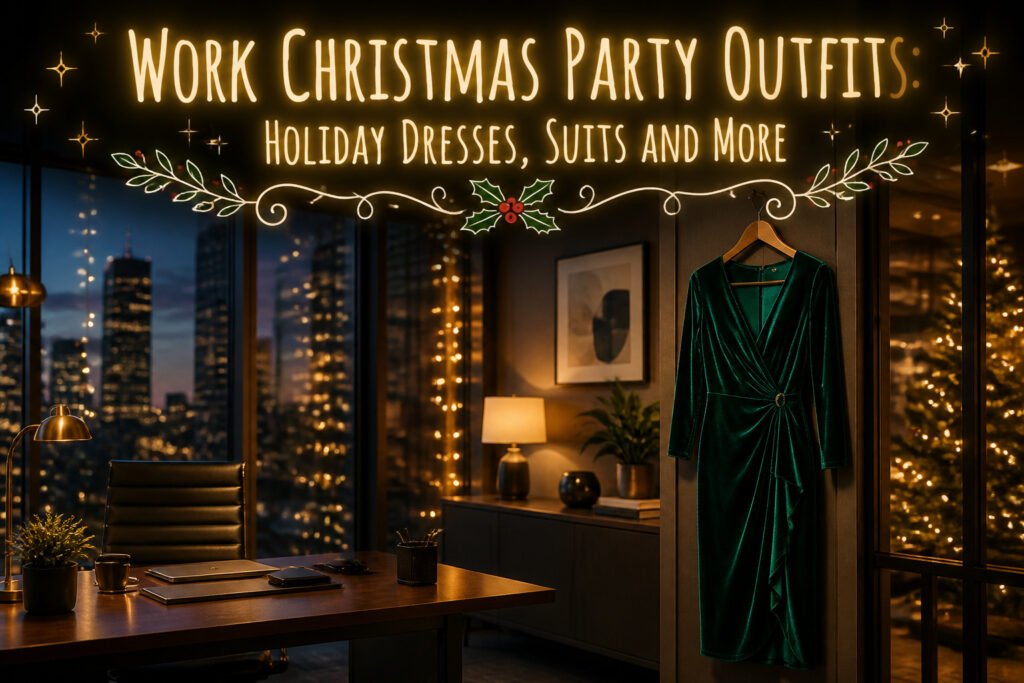
Work Christmas party outfits are the clothes that carry you from your desk to the holiday event without a full wardrobe change. The catch is that most people guess too casual and wind up underdressed, or they overcorrect into costume territory with sequins and bright red from head to toe. Jewel tones in velvet or satin, like an emerald midi dress or a burgundy suit, signal the season while the tailored cut keeps you looking like someone who still belongs in the room where decisions get made.
Holiday Dresses
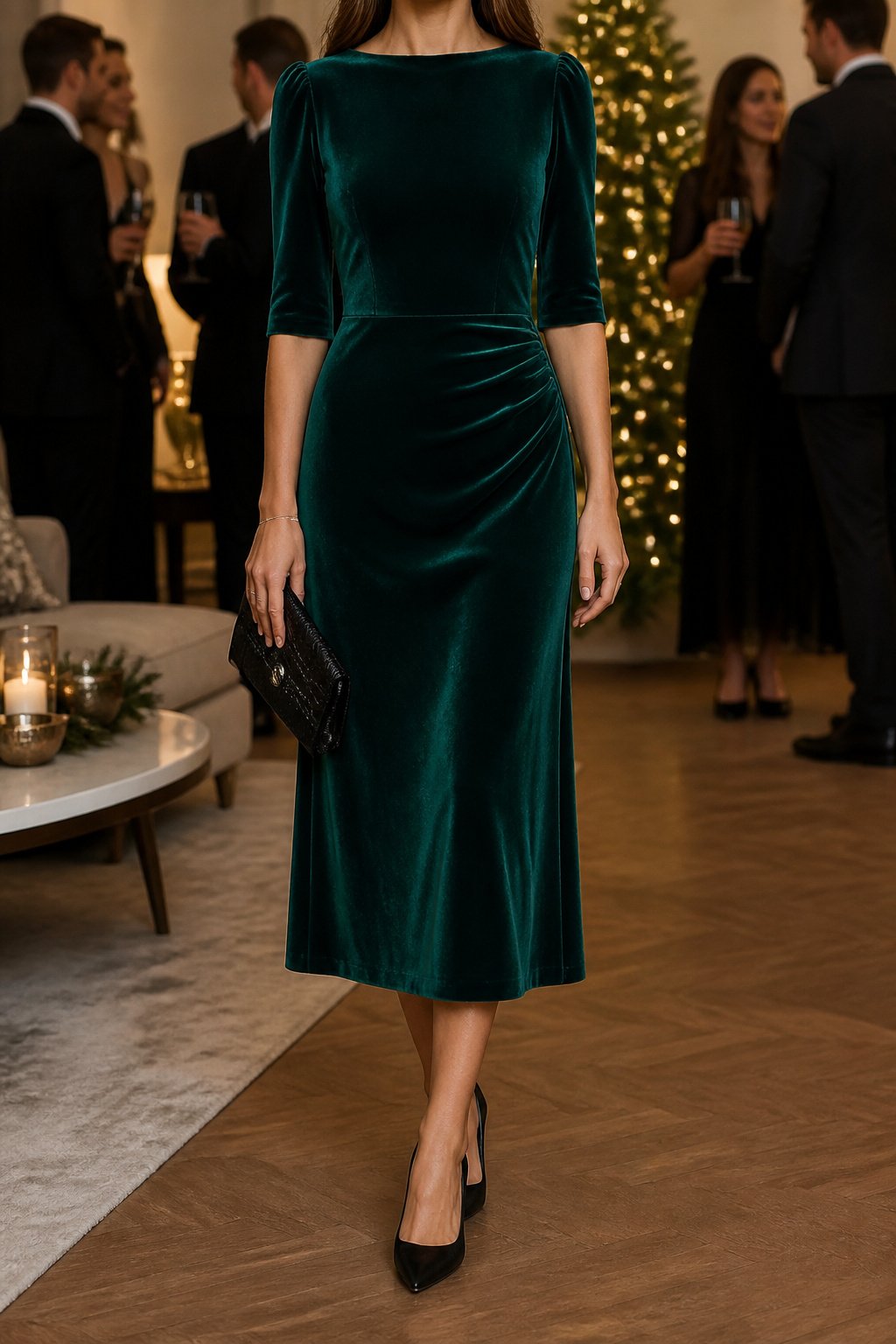
Velvet and satin in midi or maxi lengths read as festive without trying too hard. A midi dress in emerald green velvet catches light softly across a crowded room, while a maxi in sapphire blue satin moves well and stays appropriate when you stand to make small talk. The key is jewel tones and metallic finishes that signal holiday without shouting it: ruby red, emerald, sapphire, with gold or silver accents on buttons or a thin belt.
Keep the cut modest. Sleeves balance a shorter hem, and a higher neckline keeps velvet from looking like loungewear. One reliable shape is a midi with elbow-length sleeves and a fitted waist: the Elodie Dress from Tuckernuck comes back in stock sporadically, but the proportions are the thing to copy. If you prefer separates, a velvet midi skirt with a simple blouse gives the same effect and layers under a blazer for the office half of the evening.
Statement Suits
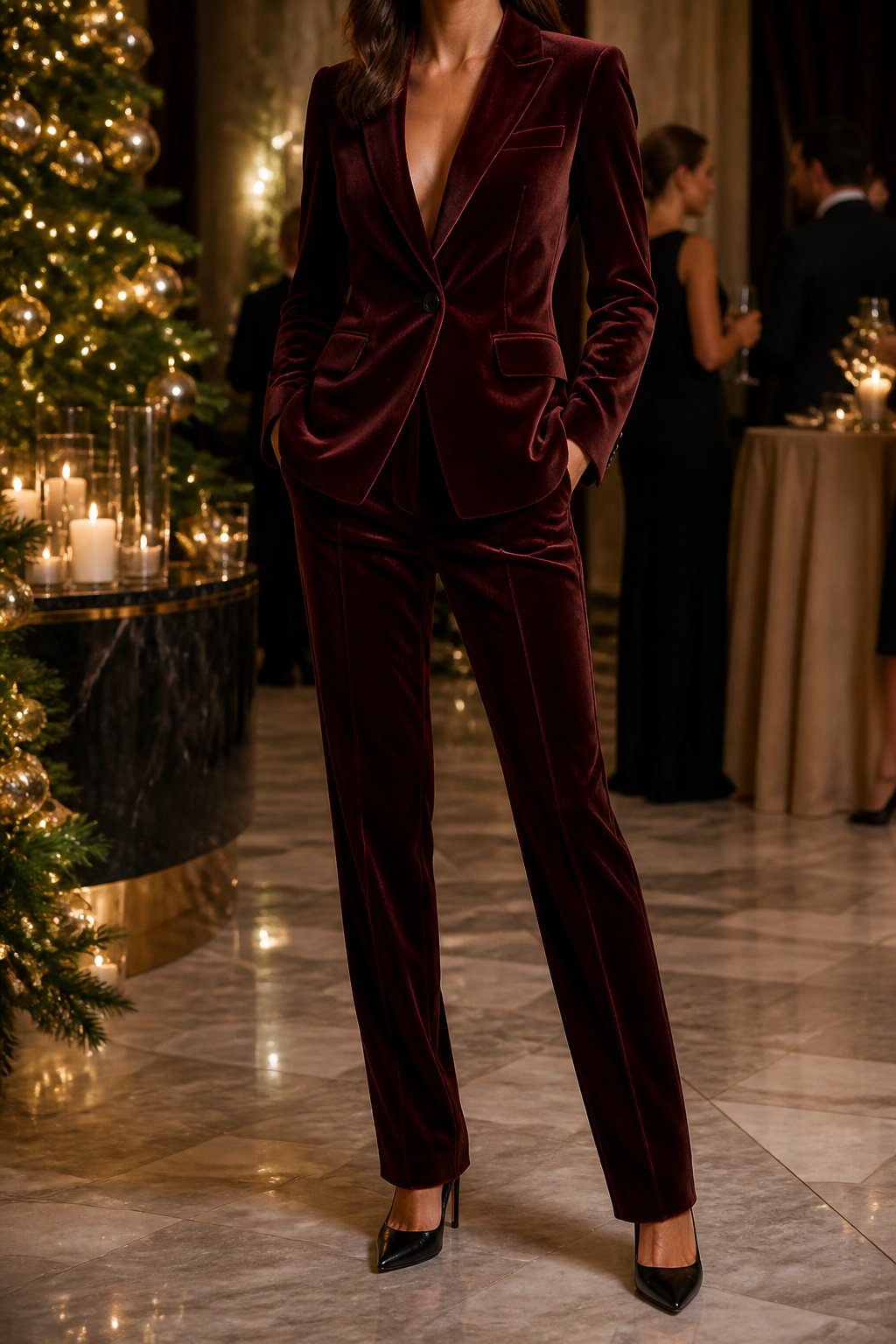
A suit frames you differently than a dress because it builds authority from the shoulders down rather than flowing from the neckline. That structure matters at a work Christmas party, where you want to read as festive but still in charge of the room. Velvet in emerald, burgundy, or dark coral red carries the holiday note without drifting into costume territory, and the fabric’s natural weight photographs well under dim party lighting.
Festive prints work too, though the line sits in the cut. Licensed patterns from pop culture can spark conversation, but only when the silhouette stays tailored and professional. The safer play is a bold color in a traditional shape: a complete set with a matched tie or scarf removes the morning-of guesswork, and you can break the pieces into your regular wardrobe afterward.
Where a suit wins over a dress is in adaptability and body framing. The structured shoulders and defined waist flatter a wider range of figures than most dress cuts, and you control the temperature by adding or removing the jacket. Machine-washable fabrics remove the dry-cleaning stress if someone spills eggnog. Choose the suit when you need to move from a seated dinner to standing cocktails without the outfit shifting out of place on you.
Jumpsuits
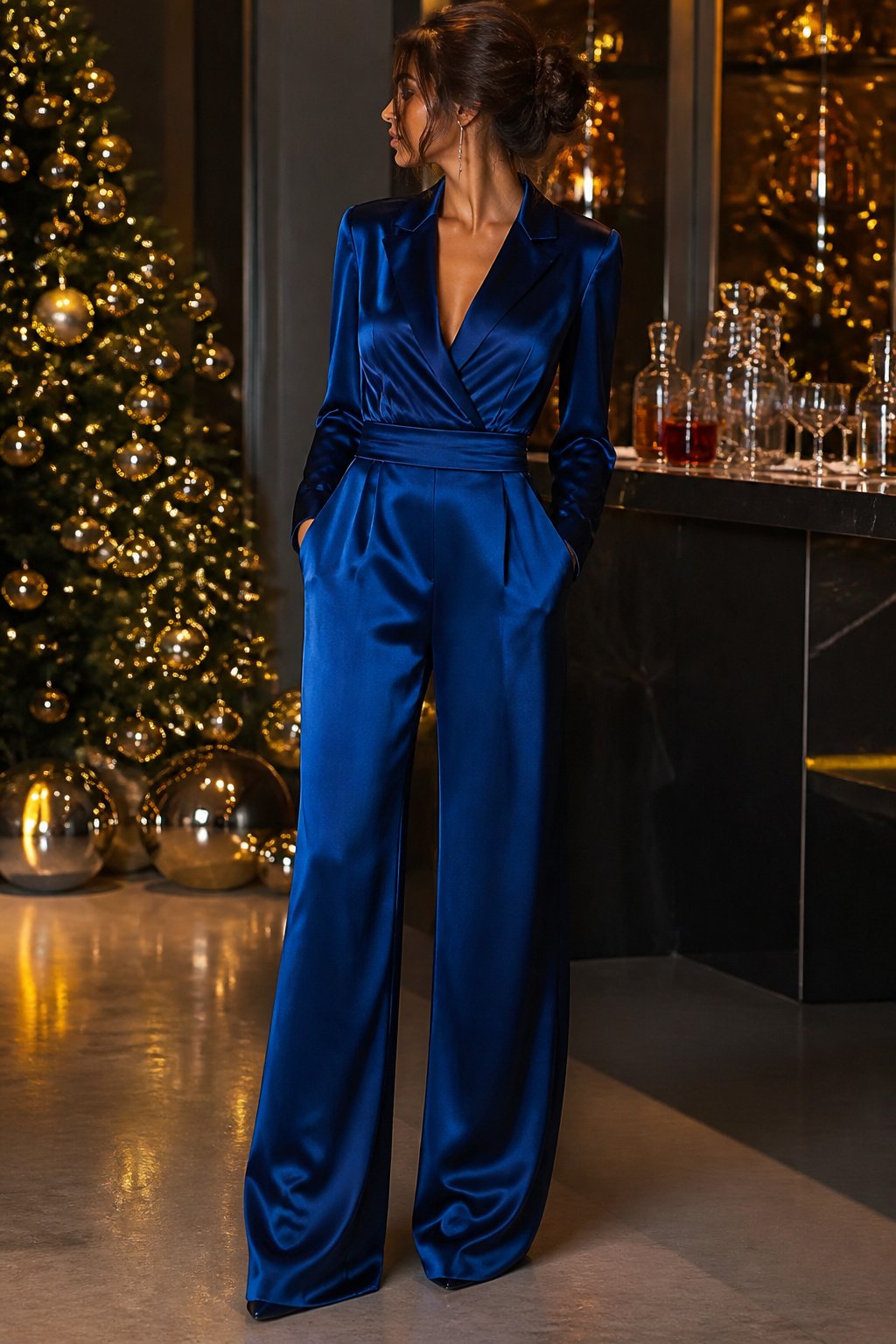
A jumpsuit solves the morning-of question of what pairs with what, but only if the fabric does the heavy lifting. Velvet, satin, and metallic jacquard read as intentional for a work Christmas party; machine-washable synthetics read as afterthought. The same material that feels celebratory under office fluorescents should still hold its shape through the after-party.
Fit at the waistline is what separates polished from pajamas. A defined waist keeps the silhouette structured when you are seated across from your manager. Without it, the eye reads the shape as casual no matter how luxe the fabric.
Prints that spark conversation work if the tailoring is sharp. Bold patterns on a loose cut look like loungewear. Bold patterns with a fitted bodice and clean shoulder line look like a choice.
Pair with heels and statement jewelry to lift the formality, or swap to flats once the room thins out. The jumpsuit moves between those two modes only when the cut is right.
Tailored Separates
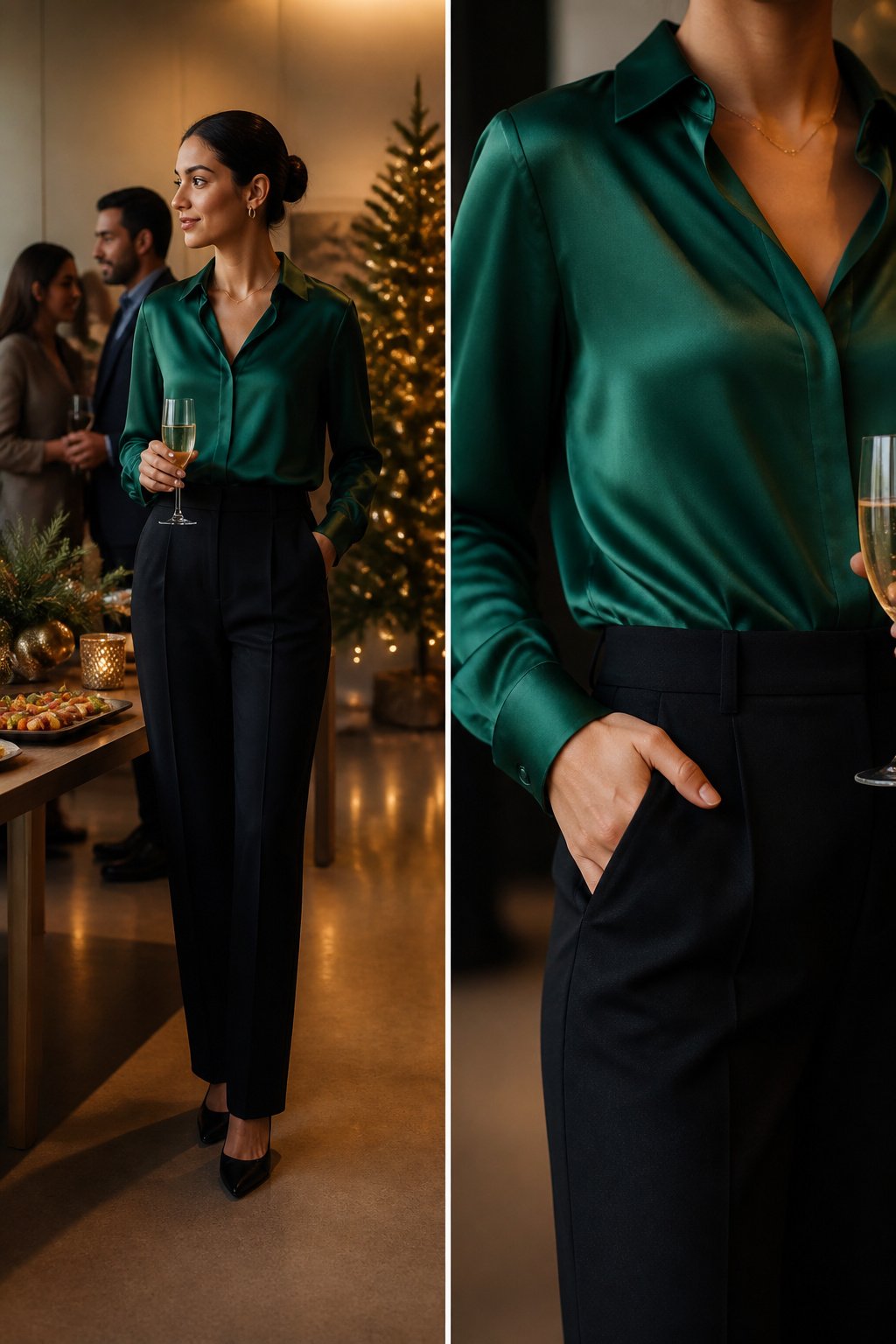
A satin blouse in emerald or ruby tucked into the black trousers you already wear to the office reads festive without looking like you stopped at the mall on the way over. The same trousers with a lace top and a switch from loafers to heels carry you straight into the evening. If your closet holds a midi skirt, pair it with a fitted turtleneck in a jewel tone and pointy-toe flats; the texture of satin or a subtle pleat does the holiday work so the rest of the outfit does not have to shout.
The mistake is buying a full set instead of mining what you own. A velvet blazer from last year over a silk shell you wore in September, with the navy trousers from your regular rotation, looks assembled rather than borrowed. The pieces should each answer to at least two other items in your closet; if that lace top only works with one specific skirt, it is not a separate, it is a costume.
Casual Options

Not every office party demands a new dress or a pressed suit. Dark denim or work slacks paired with a festive top is the practical uniform for casual events, and the difference between relaxed and underdressed is in the fabric and fit. A well-fitted sweater in wool or cotton reads intentional; a hoodie or baggy athletic wear drifts into territory that only works when the invitation explicitly calls for it.
Themed parties sit on their own branch of casual. Ugly Christmas sweaters have earned their place, but the better versions borrow from Fair Isle tradition rather than pure irony. A classic pattern in seasonal colors like deep emerald or burgundy works at the party and survives the rest of winter afterward. Over 60% of companies now encourage creative holiday expression, so leaning festive beats playing it safe.
If the invitation mentions "festive casual," treat it as a step up from your daily uniform. Accessories do the heavy lifting here: a pair of holiday earrings or a scarf adds personality without demanding a full wardrobe change. The line you do not cross is texture and condition. Dark jeans are fine if they are clean, well-fitted, and paired with a structured top or blazer. Anything you would wear to run weekend errands stays in the drawer.
Accessories
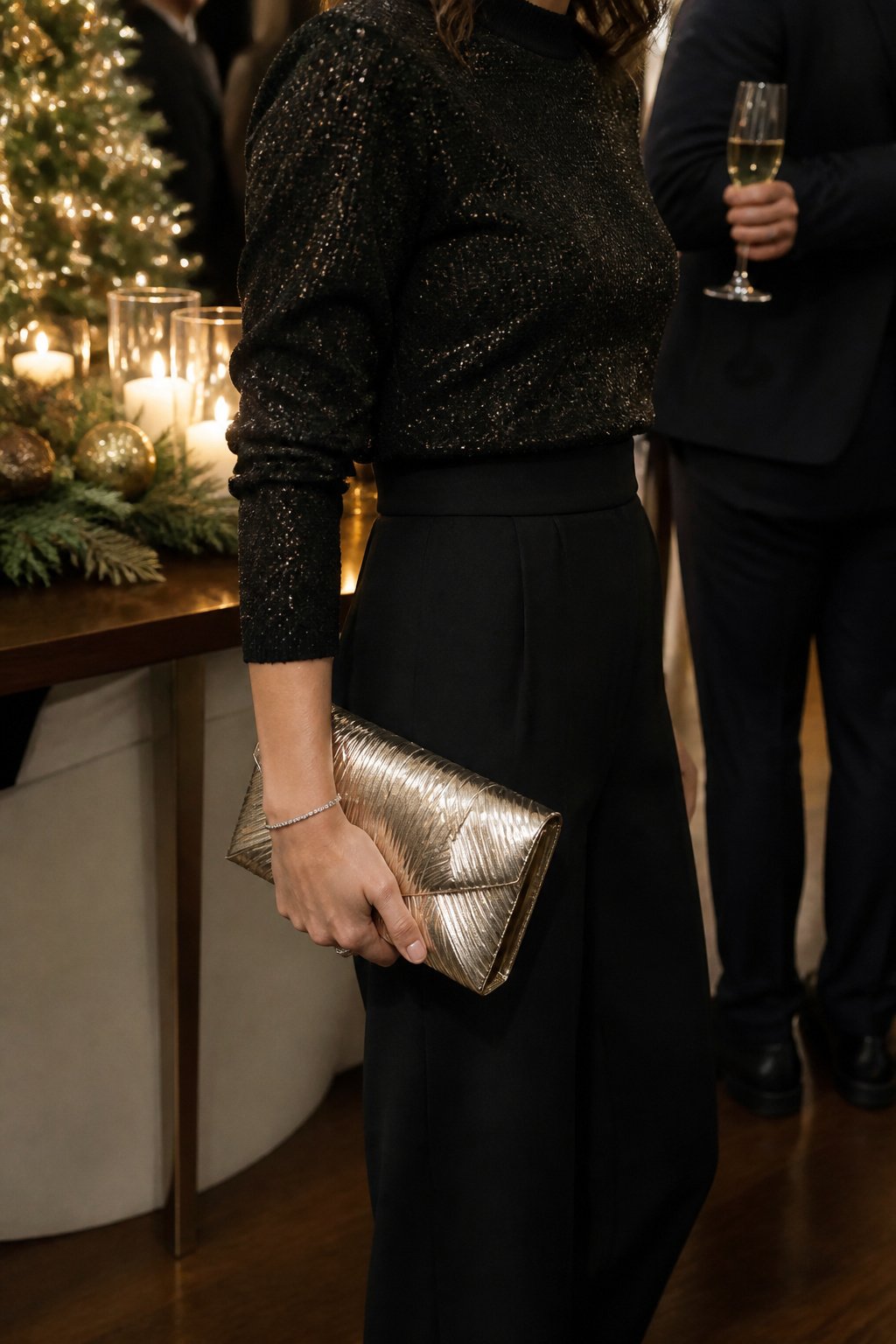
A metallic clutch does more work than you expect. It catches the light when you reach for a drink and signals the occasion without shouting. Pair it with stud earrings or a delicate bracelet, or swap in bow earrings if your dress is plain and needs the lift.
One or two festive pieces is the limit. Add a third and the outfit turns costume. Statement earrings with a simple necklace create visual interest, but let them tell one story rather than compete. A seasonal brooch or a watch with metallic details does the same job, a pocket square in a seasonal pattern adds personality without rewriting the suit.
If you wear a bolder piece, keep the rest restrained. Platform heels work when they are tasteful, red lips when the rest of your makeup stays simple. The balance is what lets you walk back into the office on Monday.
Footwear
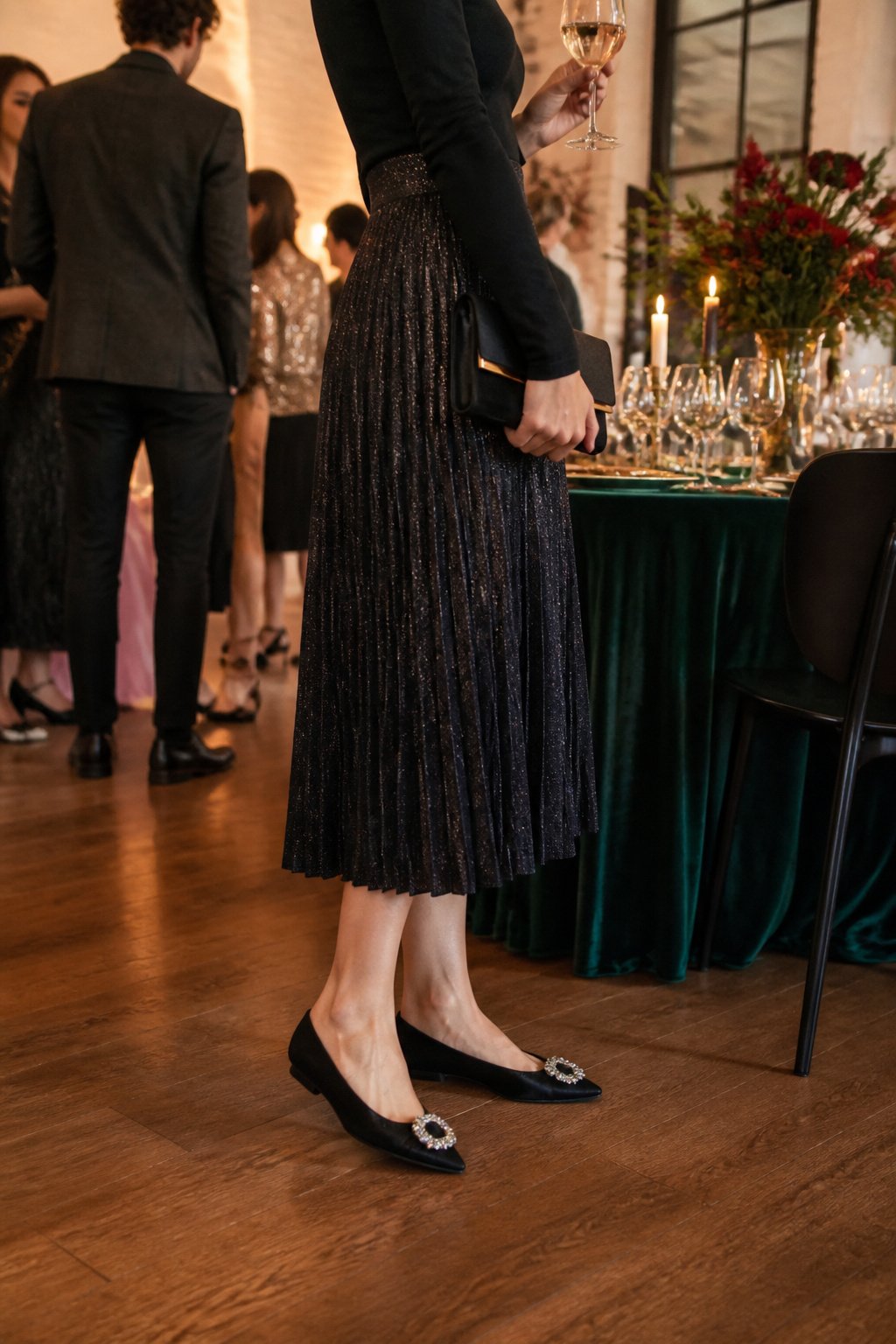
The same dress reads office-casual with dressy flats and after-hours formal with a kitten heel. That swap is the cheapest upgrade you own.
Dressy flats and kitten heels, usually one to two inches, keep you upright through standing cocktails and an hour on the dance floor. Platform heels can wear surprisingly comfortable for their height because the front platform eats some of the effective lift. If you do not know the venue, skip the stiletto; uneven concrete or polished hotel tile turns a confident entrance into a hobbled one.
For suiting, polished dress shoes, oxfords, and loafers set the tone. Oxfords hold traditional formality. Loafers slide toward smart-casual unless the leather is immaculate and the rest of the outfit is strict. Dress boots split the difference for parties that move between outdoor arrival and indoor warmth.
Weather matters more than the rulebook. Waterproof boots in a metallic or deep festive color handle slush without looking like you gave up. You want to arrive polished, not recover from the commute.
When your office culture runs genuinely casual, clean minimal sneakers can work. If you are unsure, default up. A too-formal shoe looks like you tried; a too-casual shoe looks like you did not.
Reading the Invitation

The invitation gives you most of what you need, but you have to read it carefully. A hotel ballroom means cocktail attire: a dress with some structure, or a suit that is not your office navy. An office conference room signals business casual with a holiday touch, which is trickier to hit than it sounds. A restaurant or bar leans smart casual, the widest zone and the easiest to miss.
Time of day matters. Evening events call for dressier choices than afternoon gatherings, so the same venue written two different ways produces two different outfits. When the wording is vague, check your company’s social media for photos from previous years. Past parties are the most reliable dress code intel you will find.
Guessing wrong has a direction. Showing up overdressed to a casual party makes you the person who tried too hard; showing up underdressed to a formal one makes you the person who did not try at all. Between those two errors, most people who guess choose too casual, not too formal. The safer bet, when you are unsure, is to land one step above your everyday office look and let the venue pull you the rest of the way.
Balancing Festive and Professional
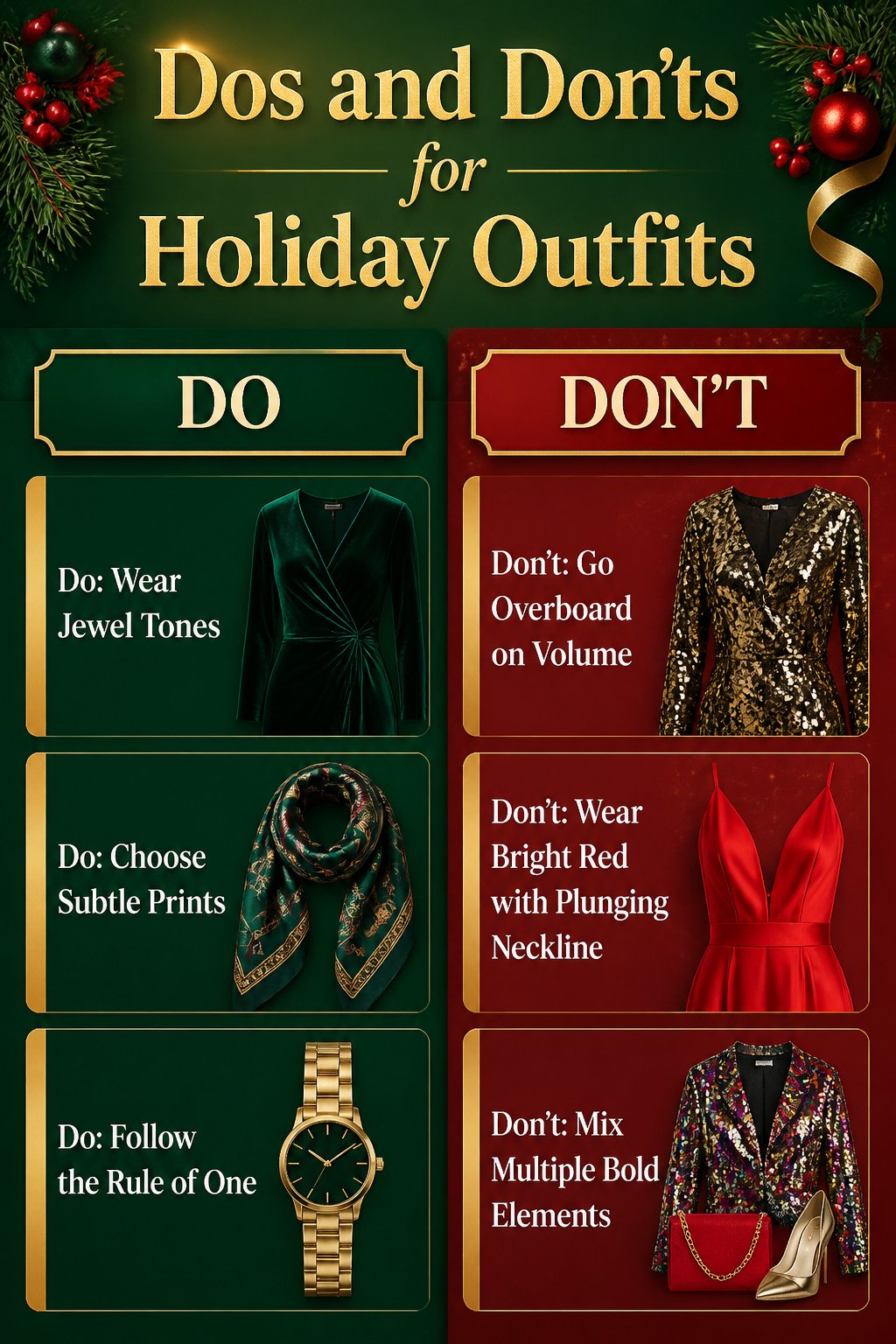
Jewel tones do the heavy lifting for work christmas party outfits that read festive without crossing a line. Emerald, sapphire, and burgundy signal holiday spirit through color alone, so the cut can stay modest and the overall effect still feels seasonal. A velvet dress in deep green works for a formal office party because the fabric and color carry the celebration; the same dress in bright red with a plunging neckline shifts the same elements into territory that will have you avoiding the partner who organized the event.
The rule of one keeps the balance practical. Pick one bold piece, one statement earring or one metallic-detail watch, and keep the rest quiet. A silk scarf in holiday colors layered over a tailored blazer moves from desk to drinks without a change. What pushes it too far is competing volume: sequins plus bright color plus bare skin reads costume, not colleague. Subtle prints and classic jewel tones in tailored fits give you the holiday reference while the structure says you still belong in the room where decisions get made.
Layering for Winter
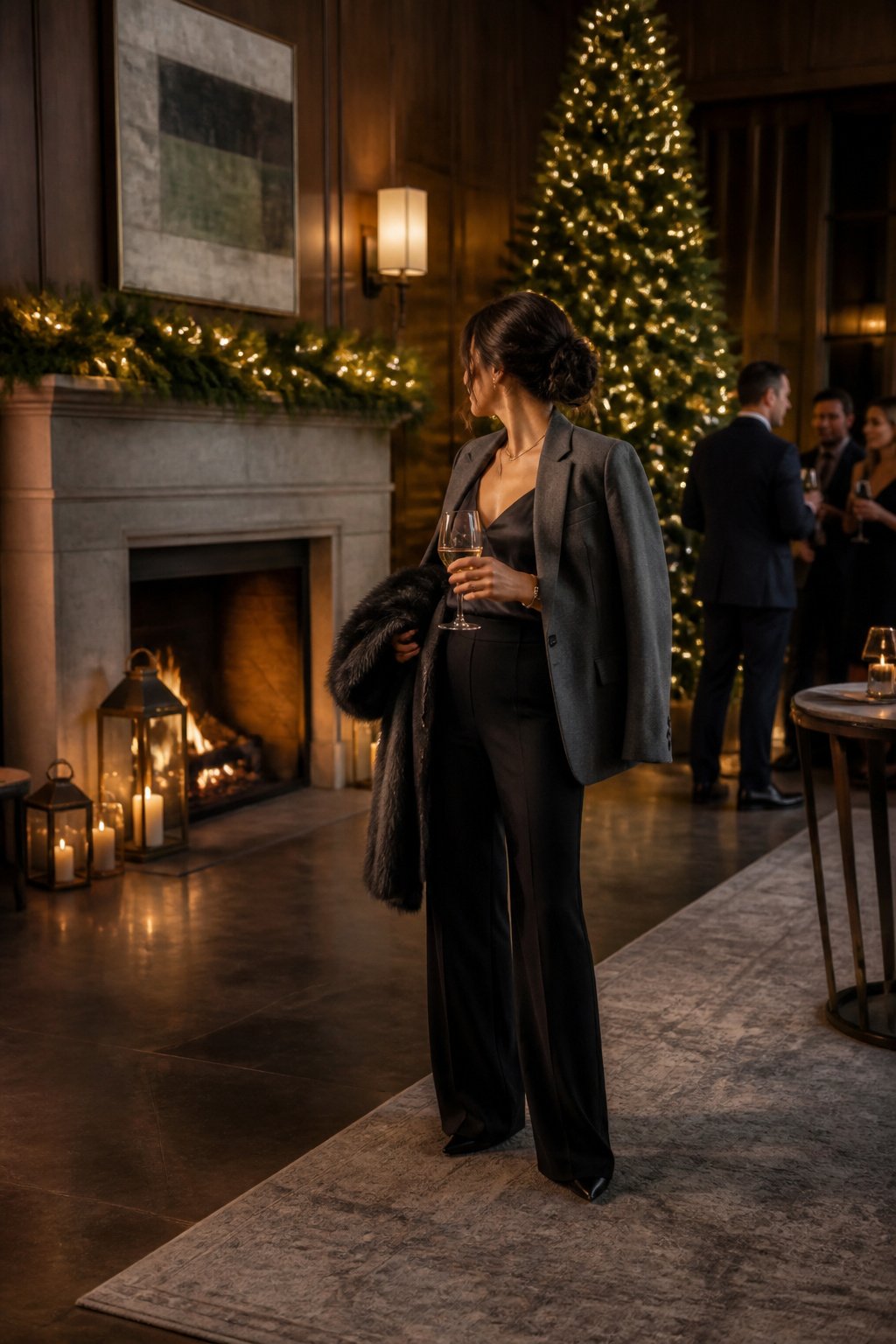
A tailored blazer is the layer you keep on. It sharpens a dress or a top into something office-appropriate, and it stays part of the look once you are through the door. Choose one in a weight that will not have you sweating during the cocktail hour; a lightweight wool or a structured crepe works well. The cut matters more than the color here, since the blazer has to read as intentional, not as an afterthought thrown over your shoulders.
Faux-fur stoles and wraps are for the coat-check problem. In many venues there is none, so your outer layer becomes visible the entire evening. A faux-fur wrap reads as deliberate glamour rather than bundled-up practicality, and it delivers warmth without the bulk of a proper coat. Treat it as your main accessory, even if the rest of your outfit is restrained. It comes off easily once you are seated, or stays on if the room runs cold.
A long winter-white coat pairs with dressier looks and solves the arrival question cleanly, but it only works if there is somewhere to put it. Without a coat check, you are wearing it or draping it over a chair all night. The smarter move is to plan for the venue you actually have: a blazer or wrap that needs no storage, or a coat you are prepared to carry.
Comfort for Long Parties
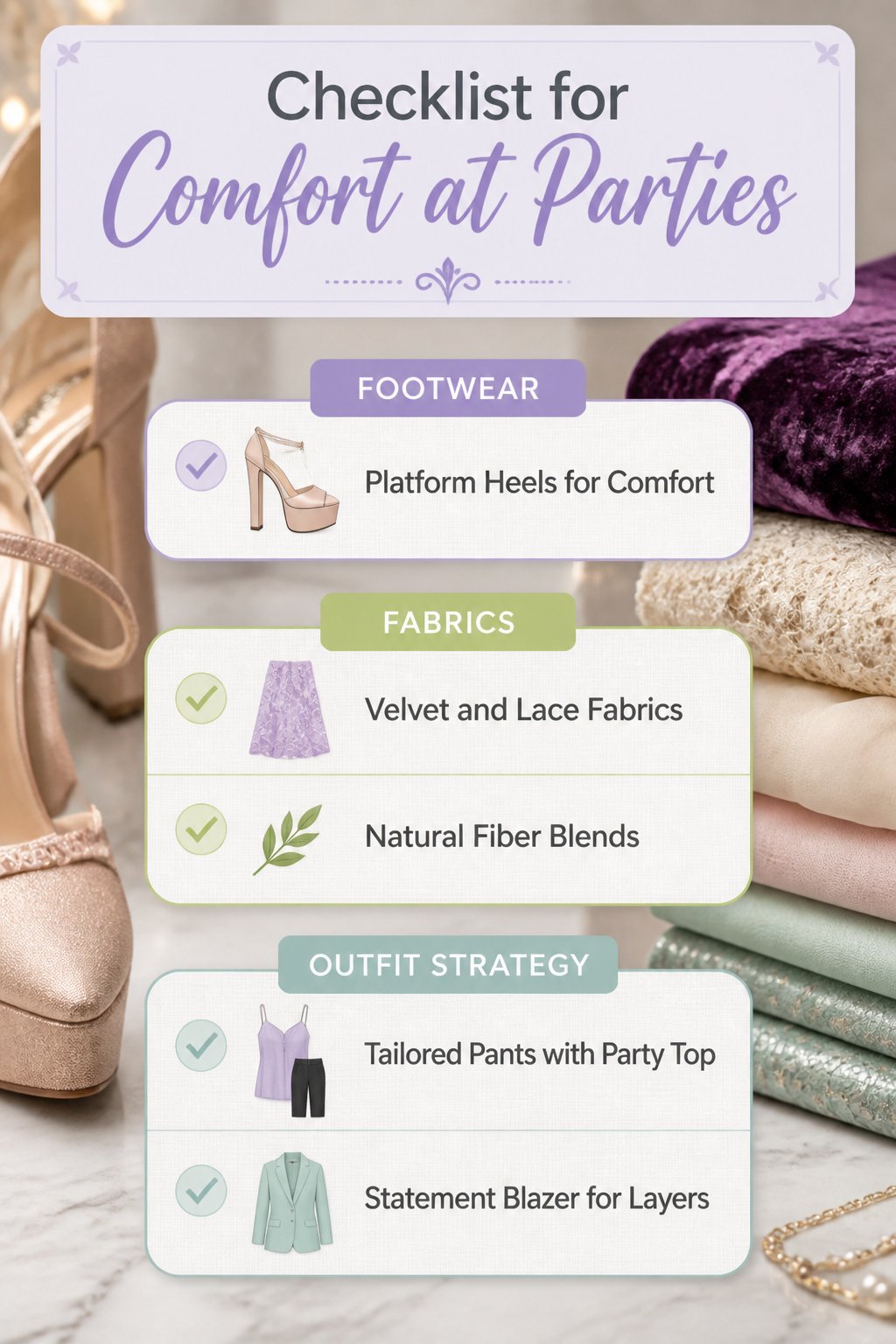
You will notice the mistake about two hours in, when your feet start talking louder than the person next to you. For a work Christmas party with dancing or long standing periods, the platform heel cuts the effective height while still giving you the lift. The Natalia heel by Loeffler Randall works this way, and the Hazel Pump from Sam Edelman handles uneven venue surfaces without the wobble of a stiletto. Kitten heels at one to two inches, like Sam Edelman’s Brit, give you the formality without the commitment.
Fabrics matter just as much. Velvet, chiffon, and lace look rich for the season, but a silk camisole underneath scratchy sequins or a soft turtleneck under a textured blazer keeps you in the room longer. Natural fiber blends breathe and stretch; synthetic performance fabrics hold their shape through the night. The party-top with tailored pants combination gives you dress-like elegance without the restriction, and a statement blazer layers on for work hours then comes off when the dancing starts.
Frequently Asked Questions
What defines a great holiday party outfit?
A great holiday party outfit mixes festive fabrics like velvet, satin, or metallic jacquard with structured, flattering cuts. Jewel tones and metallic finishes signal the season without shouting, while modest necklines and balanced hemlines keep the look polished. The fabric does the holiday work so the silhouette can stay refined.
How should holiday outfits be styled for different occasions?
Formal events call for a velvet dress with simple heels and minimal jewelry, letting the fabric carry the celebration. For office conference rooms, lean business casual with a holiday touch: a jewel-tone blouse with black trousers, or a blazer over a silk shell. When the venue is vague, check company social media for past party photos; they are the most reliable dress code intel you will find.
What are some quick ways to put together a standout office Christmas party look?
Start with one bold piece and build around it. A velvet blazer from last year over a silk shell you already own, with navy trousers from your regular rotation, looks assembled rather than borrowed. The pieces should each work with at least two other items in your closet; if a top only pairs with one specific skirt, it is a costume, not a separate.
What does work-appropriate festive attire mean?
Work-appropriate festive attire adds holiday spirit without sacrificing professionalism. Jewel tones like emerald, sapphire, and burgundy signal the season through color alone, so the cut can stay modest. The rule of one keeps it practical: pick one bold piece, one statement earring or one metallic-detail watch, and keep the rest quiet. Sequins plus bright color plus bare skin reads costume; tailored fits in classic tones say you still belong in the room where decisions get made.